The African Development Bank Group and OCP Group have signed a €450 million partial credit guarantee in Rabat.
The deal is designed to help OCP raise long-term green financing for industrial transition.
For Morocco and Africa, it signals how development banks can de-risk private capital for cleaner industry, food systems and climate-aligned growth.
A Guarantee Signals Industrial Change
The African Development Bank Group and Morocco’s OCP Group have signed a €450 million partial credit guarantee to accelerate OCP’s industrial transition and support its green investment programme.
The agreement was signed in Rabat, with AfDB positioning the instrument to help OCP mobilise long-term finance from international financial institutions.
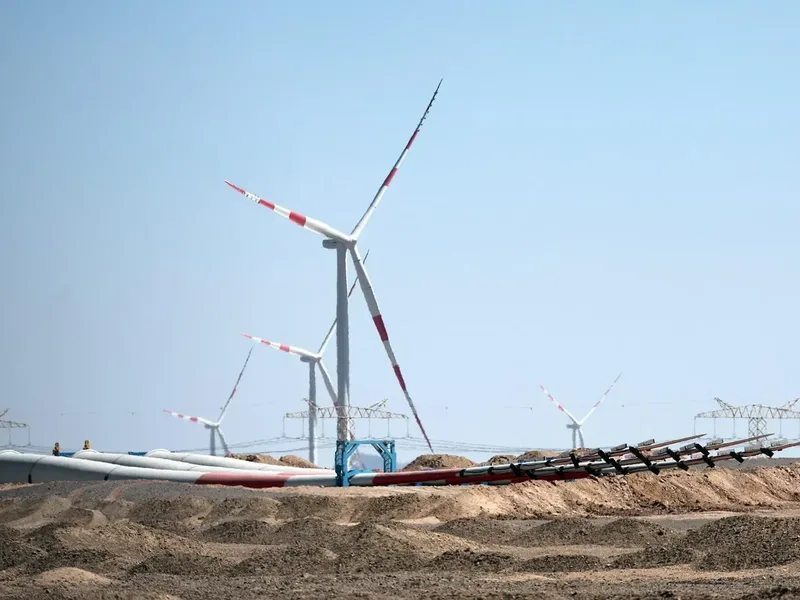
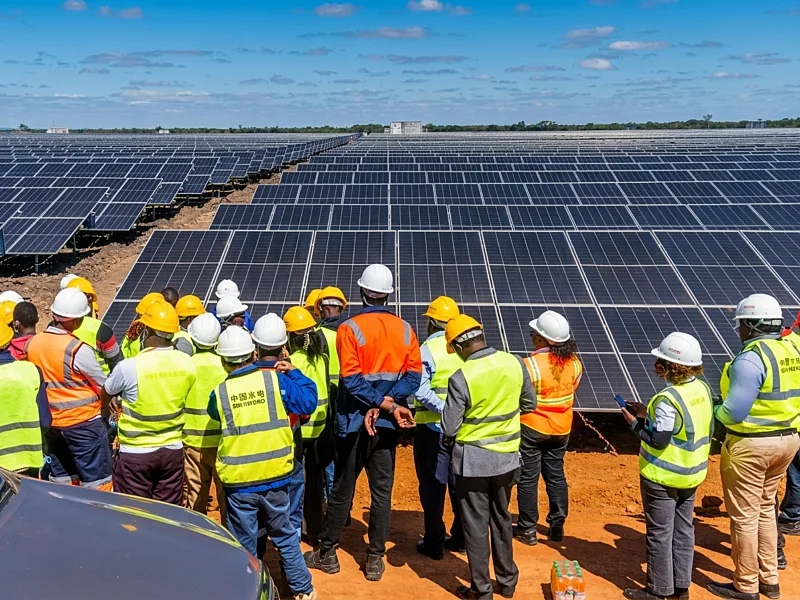
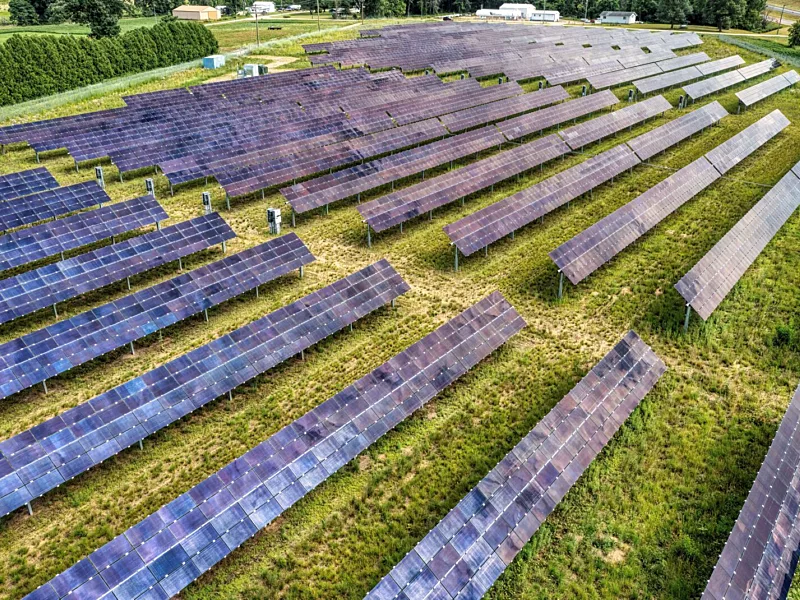
The guarantee follows AfDB’s earlier approval of support for OCP to increase to €530 million for its green investment programme, including projects tied to lower-carbon production, clean energy, water efficiency and sustainable agriculture.
For Africa, the story is larger than one company. It is about whether the continent can finance industrial growth without locking itself into high-carbon systems.
Why The Deal Matters Now
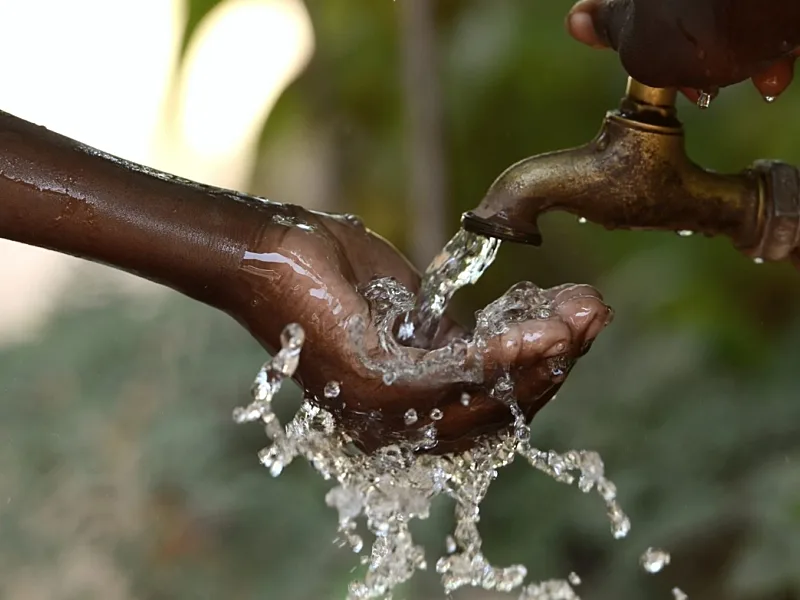
OCP is central to Morocco’s industrial identity and Africa’s fertiliser supply chains. Its transition matters because fertilisers sit at the intersection of food security, energy demand, water use and emissions.
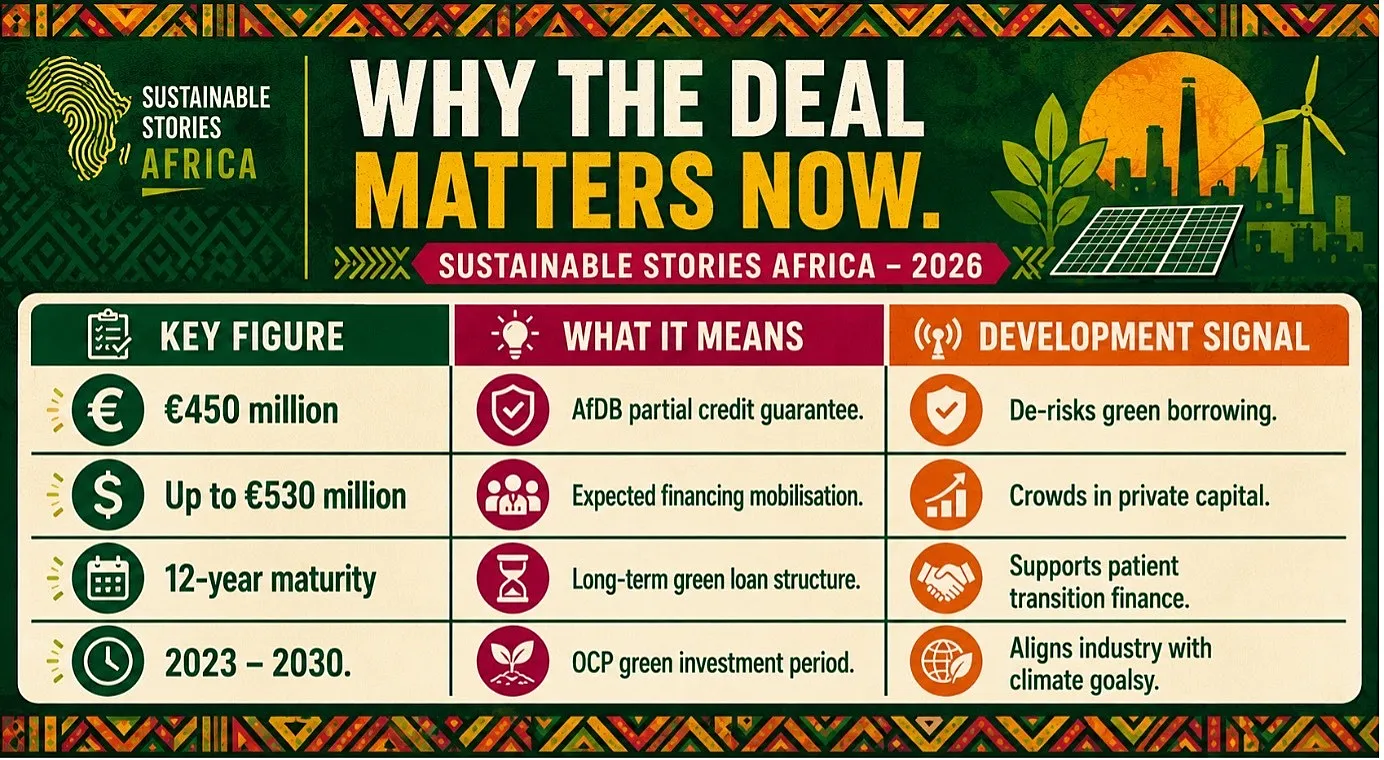
In practical terms, this means financing can move beyond short-cycle loans into longer-term industrial transformation.
- For farmers, it could eventually mean more sustainable fertiliser systems.
- For workers, it could support cleaner production jobs.
- For policymakers, it shows how public balance sheets can unlock private finance.
Cleaner Industry Can Protect Growth
The positive case is clear: if Morocco succeeds, it strengthens the argument that African industrialisation need not copy the emissions-heavy pathway of older economies.
The financing is expected to support projects that reduce greenhouse gas emissions, improve energy and water efficiency, and advance sustainable agricultural practices.
Previous AfDB-linked project information also points to avoided emissions and job creation as intended development outcomes.
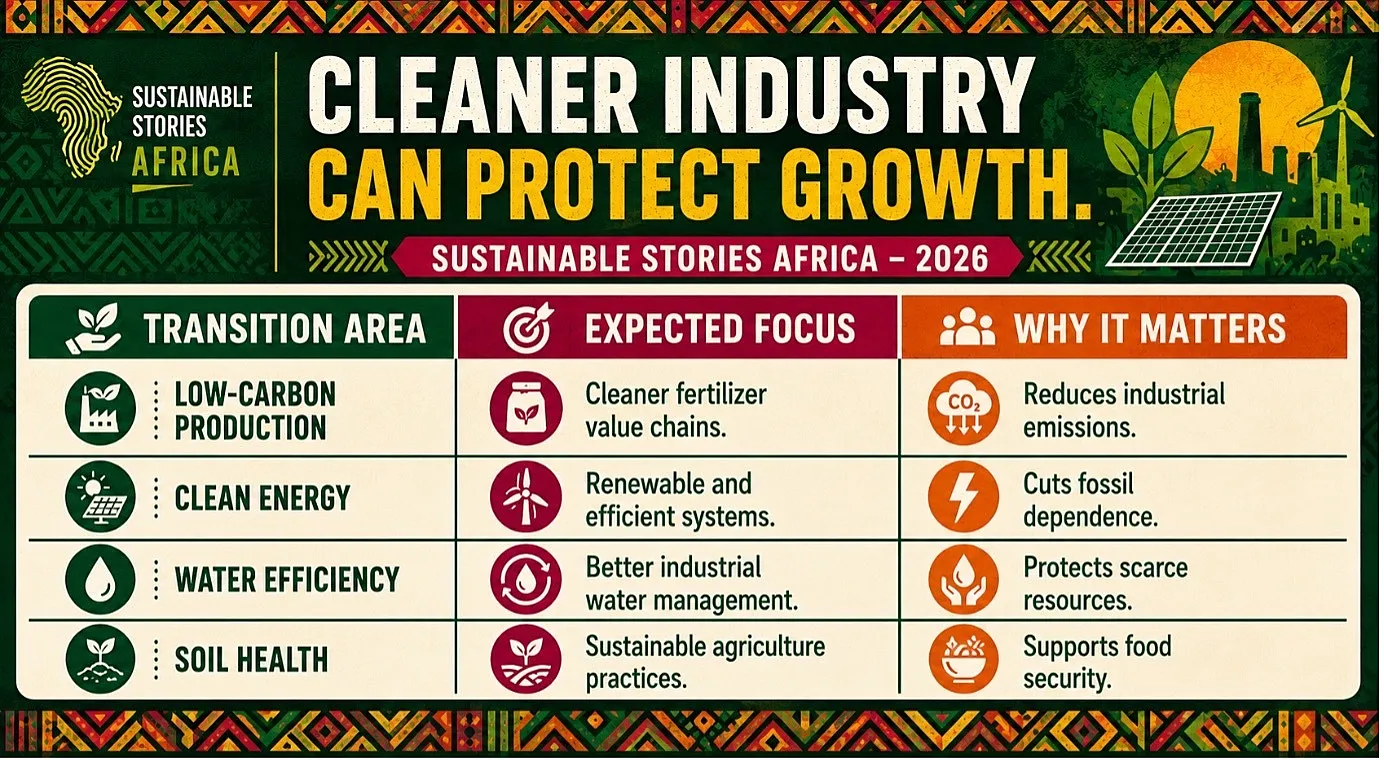
The risk is also clear. Without patient finance, the African industry may remain caught between growth pressure and climate constraint.
That would weaken competitiveness as global markets increasingly reward cleaner supply chains.
Finance Must Drive Real Transition
The next test is implementation. Guarantees are powerful, but only if they produce measurable change: lower emissions, stronger water stewardship, credible reporting and clear benefits for people and communities.
AfDB and OCP should make transparency central to the programme. Investors need data.
Citizens need accountability. African markets need proof that green finance can move from announcement to industrial delivery.
For other African economies, the lesson is direct: development banks can do more than lend.
They can use guarantees to reduce risk, attract private capital and make long-term sustainability projects bankable.
Path Forward – Build Industry With Climate Discipline
Morocco’s deal with AfDB and OCP points to a financing model Africa will need more often: blended, long-term and tied to measurable transition outcomes.
The priority now is delivery. A cleaner industry must mean lower emissions, better resource use, stronger jobs and more resilient food systems across African markets.