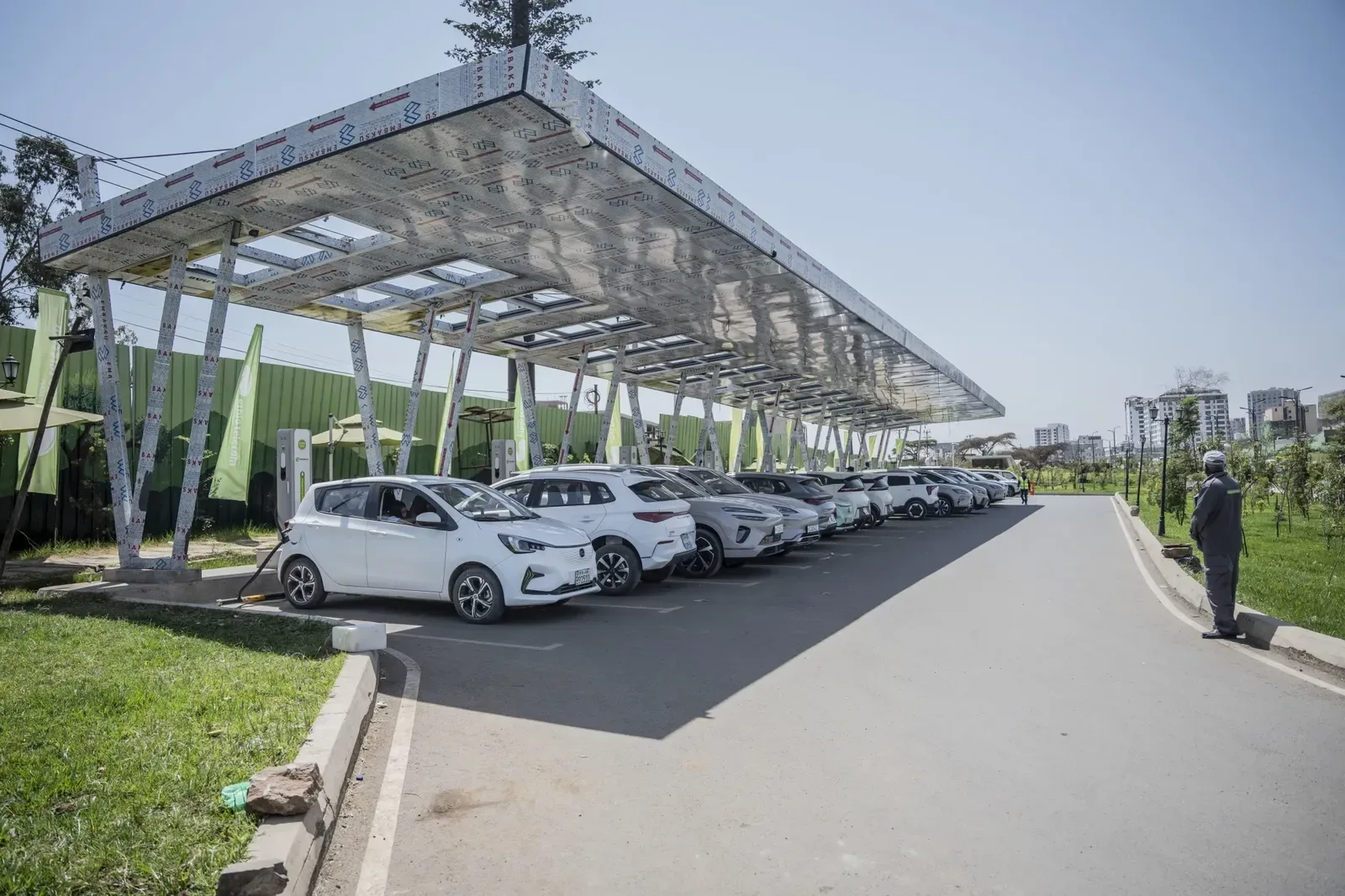
Africa is realigning its carbon-market strategy to unlock climate finance and support low-carbon development.
From forest conservation to renewable-energy projects, carbon credits are increasingly relied upon as tools to fund adaptation, protect ecosystems, and create jobs.
But credibility, governance, and market integrity will determine whether Africa's carbon ambitions deliver real climate and economic benefits.
Africa's Carbon Finance Inflexion Point
Africa is stepping up efforts to develop robust carbon markets to mobilise climate finance, support emissions-reduction projects, and fund sustainable development across the continent.
Policymakers, climate experts, and financial institutions are increasingly positioning carbon credits as a bridge between global climate commitments and local investment needs.
With Africa contributing less than 4% of global greenhouse-gas emissions yet facing disproportionate climate impacts, carbon finance is being framed as both a climate-justice tool and an economic opportunity.
The push comes as global demand for high-quality carbon credits grows, driven by corporate net-zero pledges and international climate agreements.
Why Carbon Markets Matter for Africa
Africa holds vast potential for nature-based and clean-energy carbon projects, from tropical forests and mangroves to solar farms and improved cookstove programmes.
Carbon markets can channel funding into:
- Forest conservation and reforestation
- Renewable-energy deployment
- Climate-smart agriculture
- Methane reduction and waste management
- Community-based adaptation projects
For countries facing fiscal constraints, carbon revenues create an alternative source of climate finance without increasing debt burdens.
However, the continent's carbon market remains underdeveloped in comparison to Latin America and Asia.
Many African projects are struggling with complex certification processes, limited technical capacity, and investor confidence challenges.
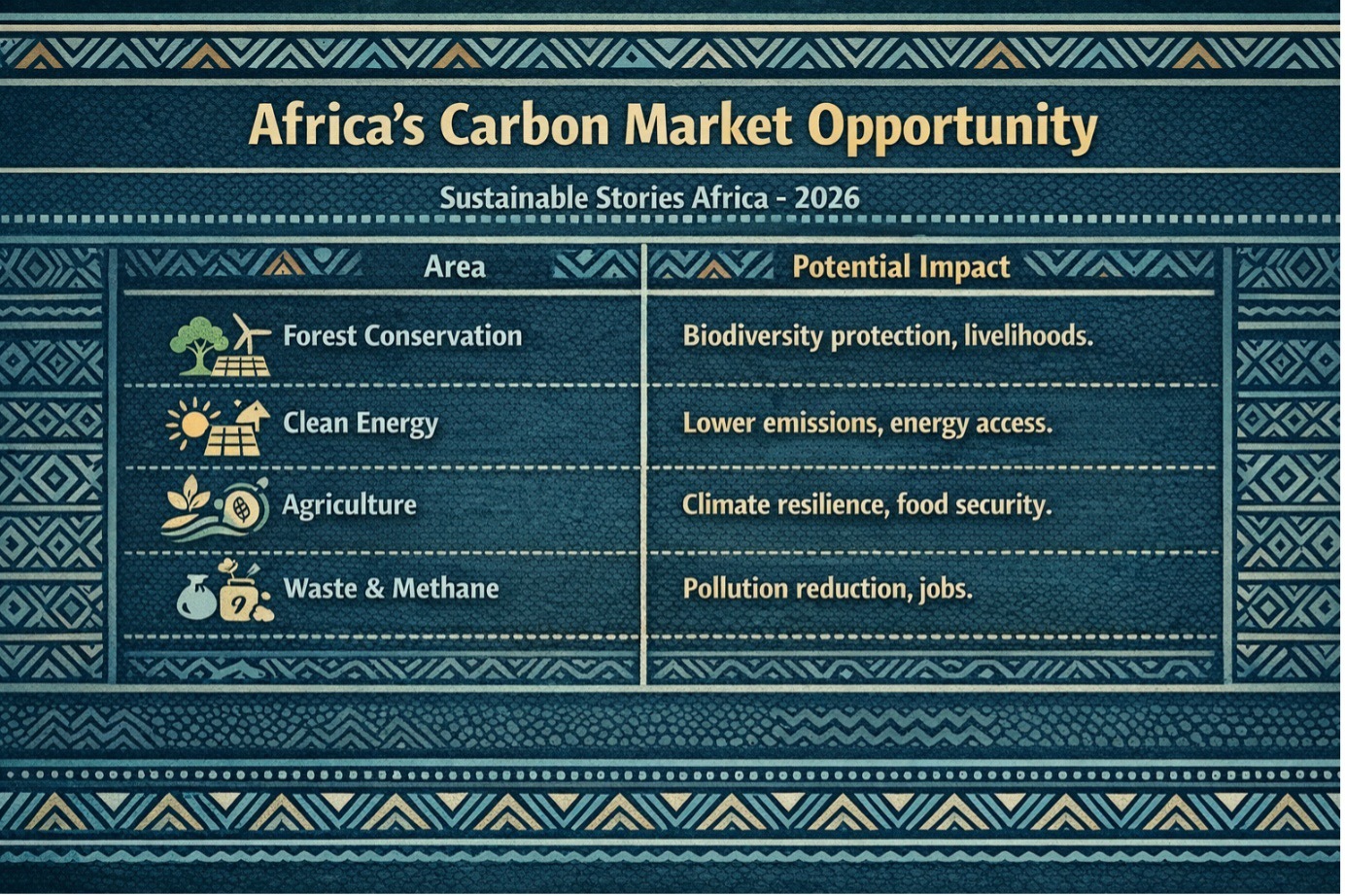
Africa's Carbon Market Opportunity
| Area | Potential Impact |
|---|---|
| Forest conservation | Biodiversity protection, livelihoods |
| Clean energy | Lower emissions, energy access |
| Agriculture | Climate resilience, food security |
| Waste & methane | Pollution reduction, jobs |
The strategic goal now is to build credibility, transparency, and scale.
Building Trust in African Credits
A central focus of Africa's carbon-market strategy is improving governance and integrity.
Governments and regional bodies are working to:
- Establish clear national carbon-market frameworks
- Align projects with international standards
- Strengthen monitoring, reporting, and verification (MRV) systems
- Ensure local communities benefit financially
High-quality credits must demonstrate real, measurable, and permanent emissions reductions by avoiding accusations of "greenwashing."
Countries such as Kenya, Ghana, Rwanda, and South Africa are developing regulatory guidelines to integrate carbon trading into broader climate and development strategies.
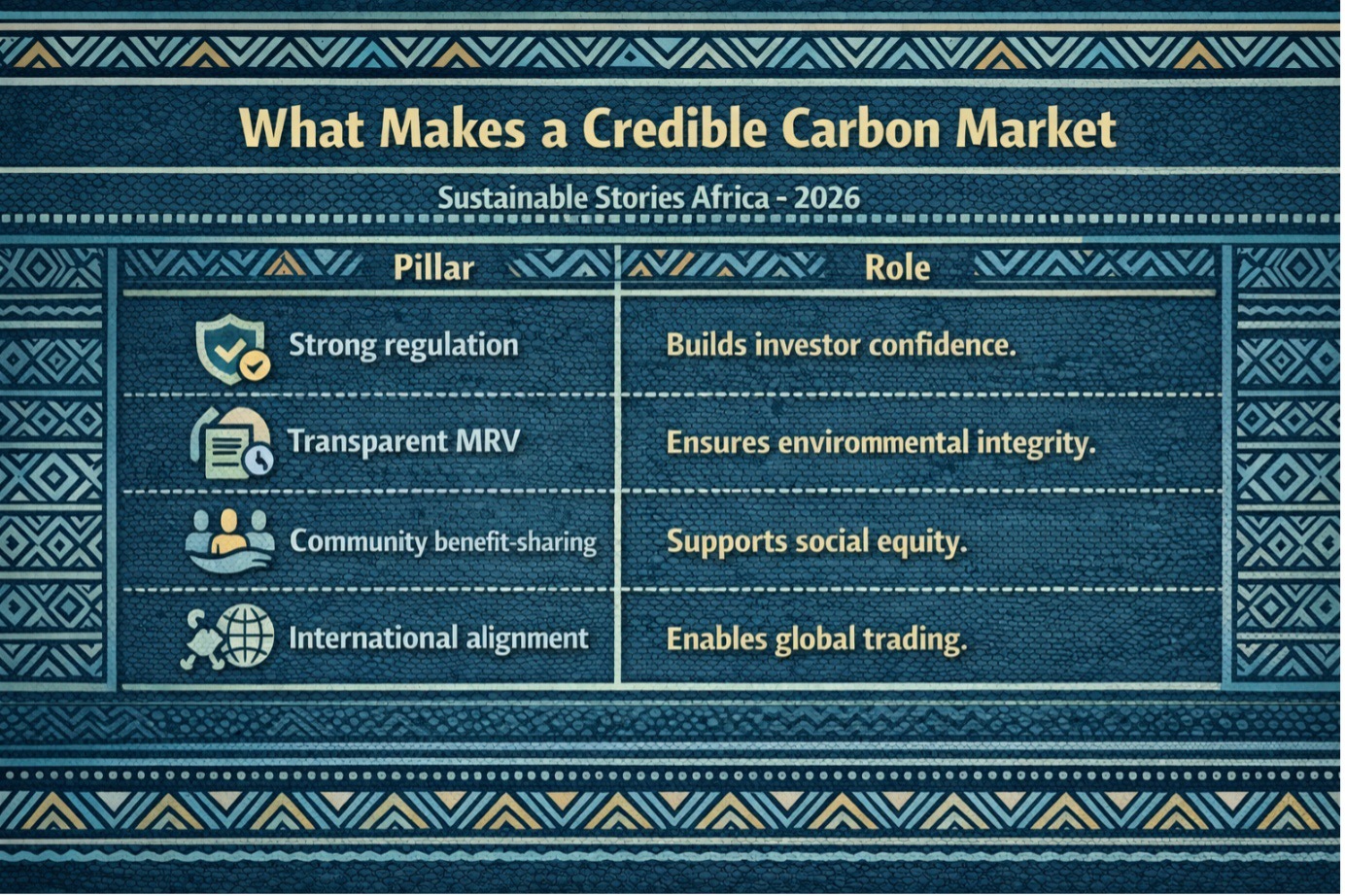
What Makes a Credible Carbon Market
| Pillar | Role |
|---|---|
| Strong regulation | Builds investor confidence |
| Transparent MRV | Ensures environmental integrity |
| Community benefit-sharing | Supports social equity |
| International alignment | Enables global trading |
Without these safeguards, African credits risk being discounted in global markets.
From Strategy to Scalable Projects
Despite growing policy momentum, practical challenges remain.
Many African carbon projects still face:
- High upfront development costs
- Lengthy certification timelines
- Limited access to technical expertise
- Currency and political risks
To unlock scale, stakeholders are calling for:
- Public-sector support for project preparation
- Private-sector partnerships for financing and implementation
- Regional coordination to harmonise standards
- Capacity-building for local developers
Carbon markets are linked to broader strategies for climate finance, including green bonds, blended finance, and adaptation funds.
The aim is to ensure carbon revenues complement, rather than replace, traditional climate finance flows.
PATH FORWARD – Making Carbon Finance Work
Africa's carbon-market strategy hinges on strong governance, credible standards, and community-centred project design.
With the right safeguards, carbon finance can support conservation, clean energy, and climate resilience.
If implementation keeps pace with ambition, carbon markets could become a pillar of Africa's climate finance architecture, delivering both environmental and development gains.
Culled From: https://responsibleus.com/africa-advances-carbon-market-strategy-for-climate-finance