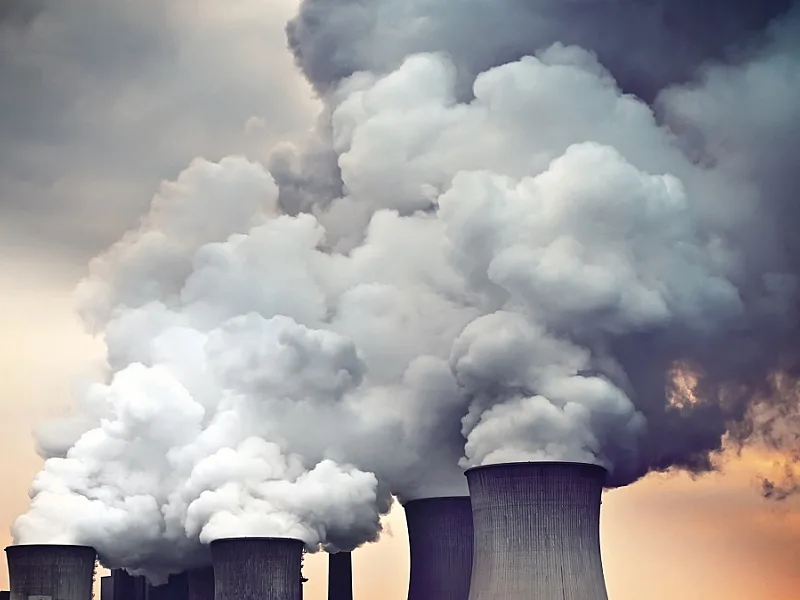
African energy leaders unveiled a $5 billion Africa Energy Bank at MSGBC 2025, signalling a decisive shift toward continent-led financing for oil, gas and power projects.
The move reflects growing resolve to close energy gaps amid tightening global capital and selective climate finance.
Backed by African institutions, the bank aims to anchor energy security and transition pathways on Africa’s terms.
Africa Unveils $5billion Energy Bank
African leaders and energy stakeholders have launched a $5 billion Africa Energy Bank at MSGBC Oil, Gas & Power 2025, marking a pivotal moment in the continent’s push to finance its own energy future.
The institution is designed to mobilise capital for oil, gas and power projects at a time when global lenders are increasingly cautious about hydrocarbon exposure.
Proponents say the bank will address a structural financing gap that has slowed project execution, constrained power generation and exposed Africa to energy insecurity, despite abundant resources.
Why Africa Is Funding Its Own Energy
Africa faces a widening energy paradox: vast reserves of hydrocarbons and renewables, however, chronic power shortages and underinvestment.
International banks have tightened energy lending, while climate finance often favours mitigation projects in advanced economies.
The new bank aims to counter this by mobilising African capital, from sovereigns, DFIs and private investors, to support bankable projects across the value chain.
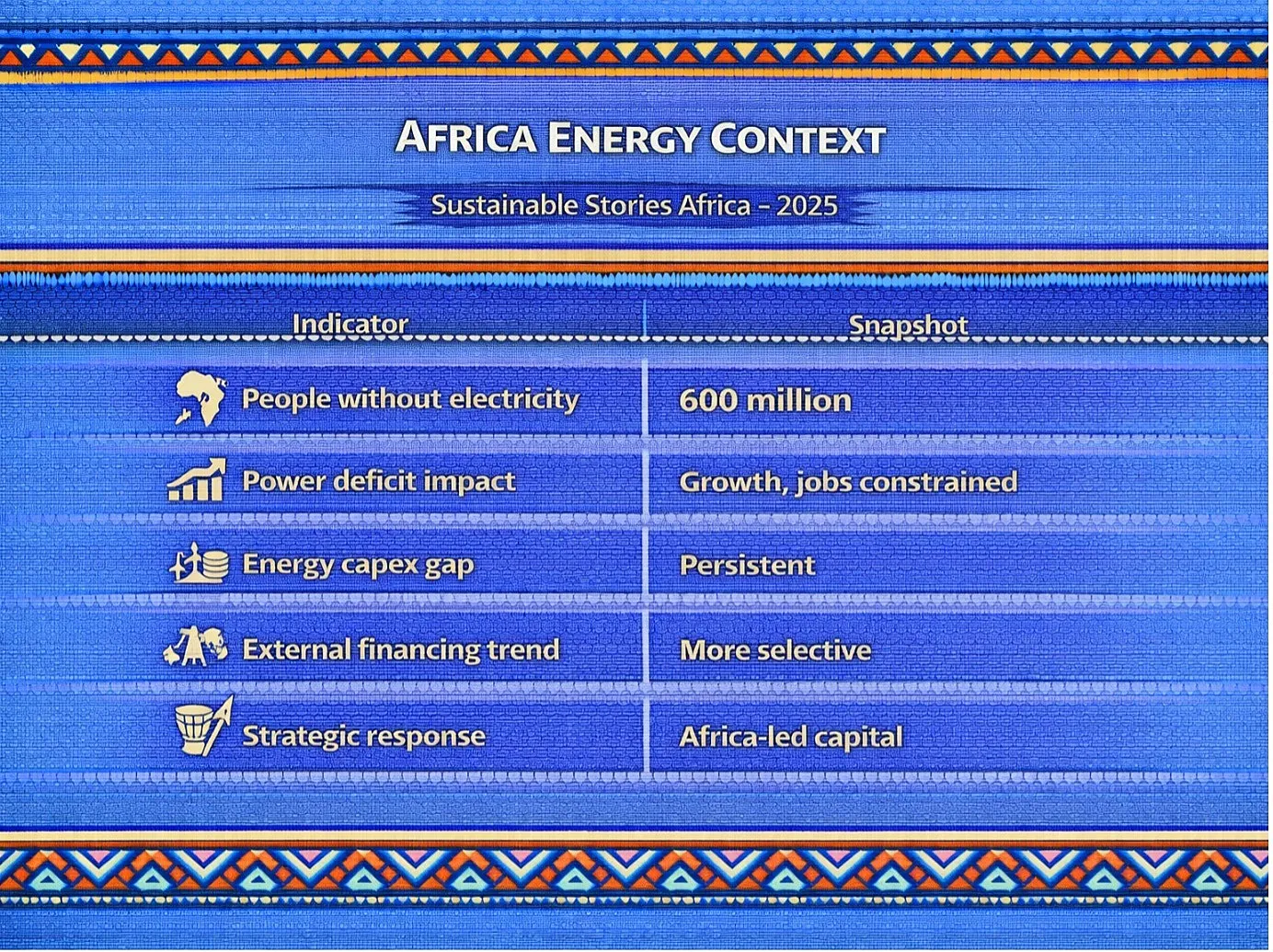
Africa Energy Context
Indicator | Snapshot |
|---|---|
People without electricity | 600 million |
Power deficit impact | Growth, jobs constrained |
Energy capex gap | Persistent |
External financing trend | More selective |
Strategic response | Africa-led capital |
Leaders argue that energy security and transition must proceed in parallel, recognising Africa’s development realities while investing in cleaner systems over time.
What the Energy Bank Will Finance
The Africa Energy Bank is expected to support oil and gas development, gas-to-power, refining, midstream infrastructure and electricity generation, with an emphasis on projects that unlock domestic value and regional integration.
Supporters frame the mandate as pragmatic: gas as a transition fuel, power as an economic enabler, and hydrocarbons as revenue anchors for development.
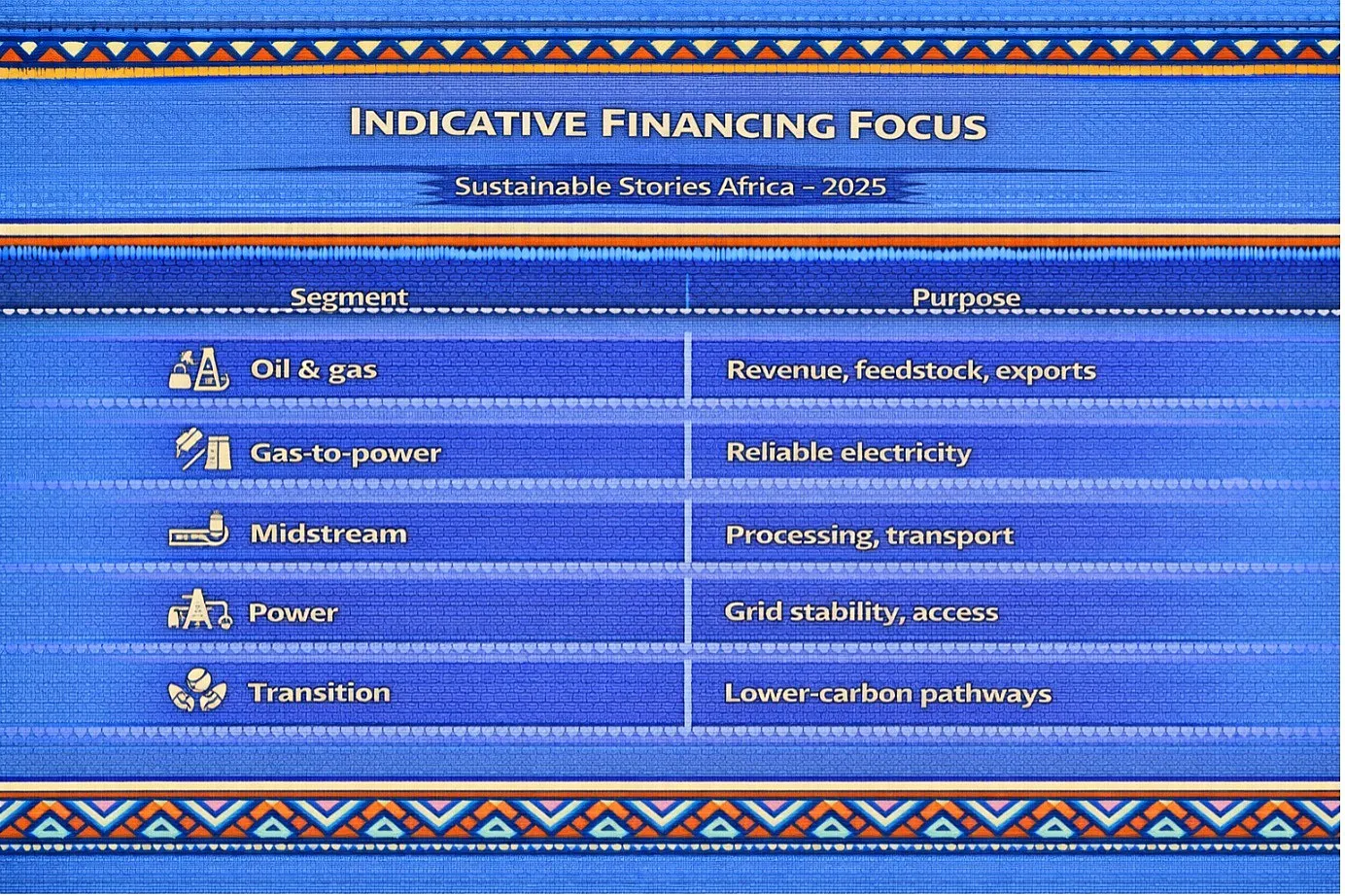
Indicative Financing Focus
Segment | Purpose |
|---|---|
Oil & gas | Revenue, feedstock, exports |
Gas-to-power | Reliable electricity |
Midstream | Processing, transport |
Power | Grid stability, access |
Transition | Lower-carbon pathways |
By providing patient capital and local expertise, the bank seeks to shorten funding timelines and reduce exposure to volatile external markets.
Mobilising Capital and Confidence
Backers say the bank will deploy risk-sharing instruments, project finance and co-lending to catalyse private participation. Governance structures are expected to reflect African priorities while meeting international standards to attract institutional investors.
The launch also sends a signal to policymakers: energy policy certainty and project readiness will be essential to turn capital into capacity.
Analysts note that bankability requires permits, offtake agreements and transparent tariff systems, which will determine early success.
Path Forward: Anchoring Africa’s Energy Sovereignty
The Africa Energy Bank represents a strategic pivot toward self-reliant energy financing, which could balance security alongside transition.
By mobilising African capital for African projects, the institution aims to unlock power, jobs and growth while managing climate pathways pragmatically.
Sustained impact will depend on disciplined governance, credible pipelines and regional cooperation, which would turn the $5 billion anchor into a scalable platform for Africa’s energy future.
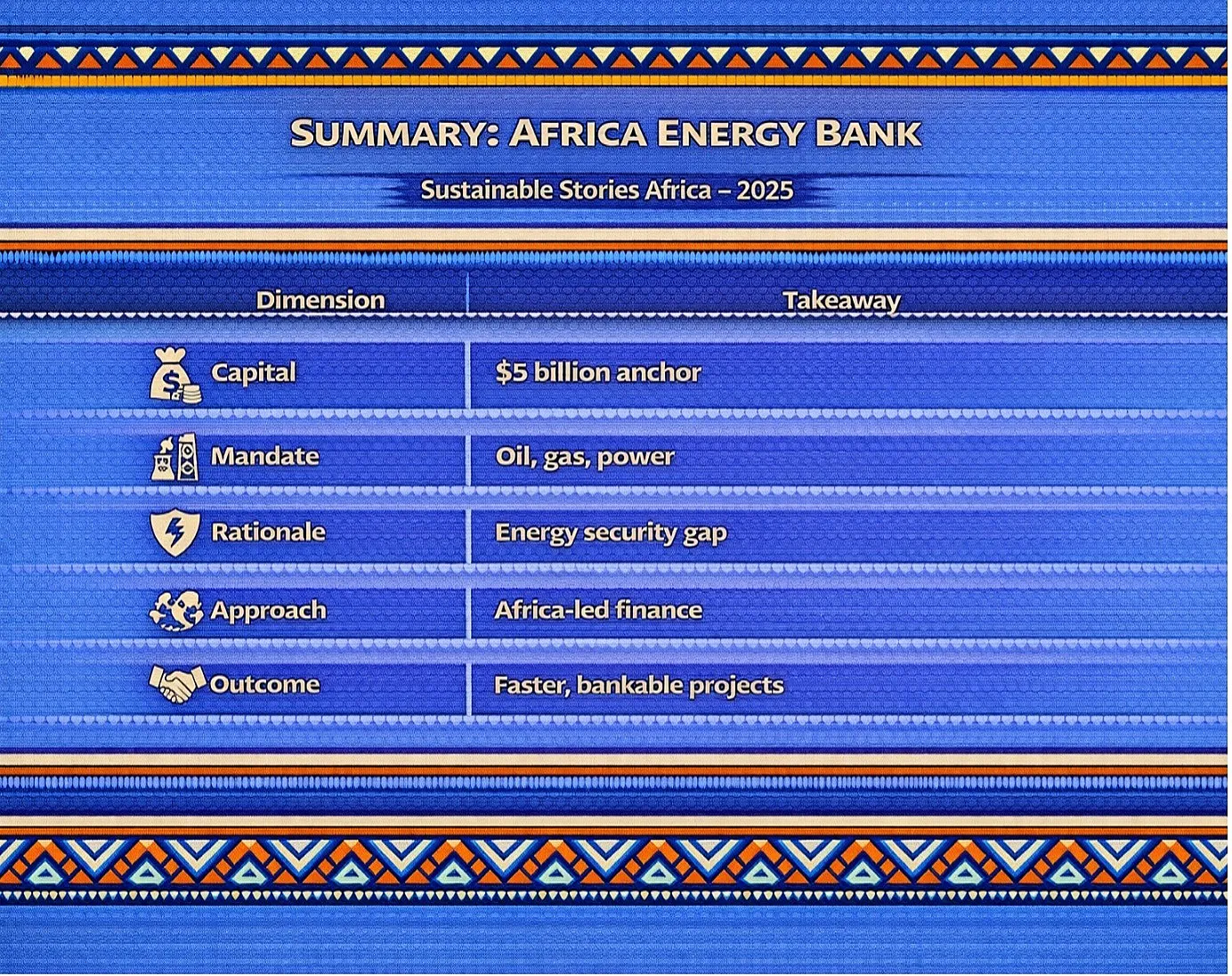
Summary: Africa Energy Bank
Dimension | Takeaway |
|---|---|
Capital | $5 billion anchor |
Mandate | Oil, gas, power |
Rationale | Energy security gap |
Approach | Africa-led finance |
Outcome | Faster, bankable projects |