Africa’s industrialisation challenge is increasingly being framed as an energy challenge, with South Africa placing power at the centre of its new industrial strategy.
The shift matters because unreliable electricity has weakened factories, jobs, exports and competitiveness across the continent.
If energy and industry are planned together, Africa can build cleaner factories, stronger value chains and more resilient economies.
Power Has Become Industrial Policy
Africa’s industrial future will not be decided only in factories, ports or trade ministries. It will be decided in power systems.
South Africa’s new Industrial Development Strategy has placed energy at the centre of economic renewal, identifying it as the “biggest and most urgent enabler” of industrial development.
The message is direct: without reliable, affordable and increasingly clean electricity, African manufacturing cannot compete.
The lesson is painfully familiar. South Africa’s power crisis has contributed to factory shutdowns, weaker manufacturing performance and declining industrial competitiveness.
Once the continent’s leading industrial economy, the country now faces a sharper regional contest as Morocco and other markets position themselves around energy, logistics and manufacturing capability.
For Africa, this is not just a South African story. It is a warning. Industrial policy without an energy strategy becomes ambition without machinery.
Factories Cannot Grow In Darkness
Across the continent, manufacturers operate under a quiet tax: unreliable electricity.
- A textile producer runs diesel generators.
- A food processor loses cold-chain quality.
- A small manufacturer delays orders because power cannot be trusted.
- A mining project exports raw material because processing locally is too expensive.
The International Energy Agency has warned that as Africa’s industry, commerce and agriculture expand, demand for productive energy will increase sharply.
In its Sustainable Africa Scenario, energy demand from industry, freight and agriculture grows by almost 40% by 2030.
That demand reflects a bigger development truth. Africa cannot industrialise on household electrification alone.
It needs power for factories, irrigation, cold storage, cement, steel, fertiliser, transport, data centres and clean technology manufacturing.
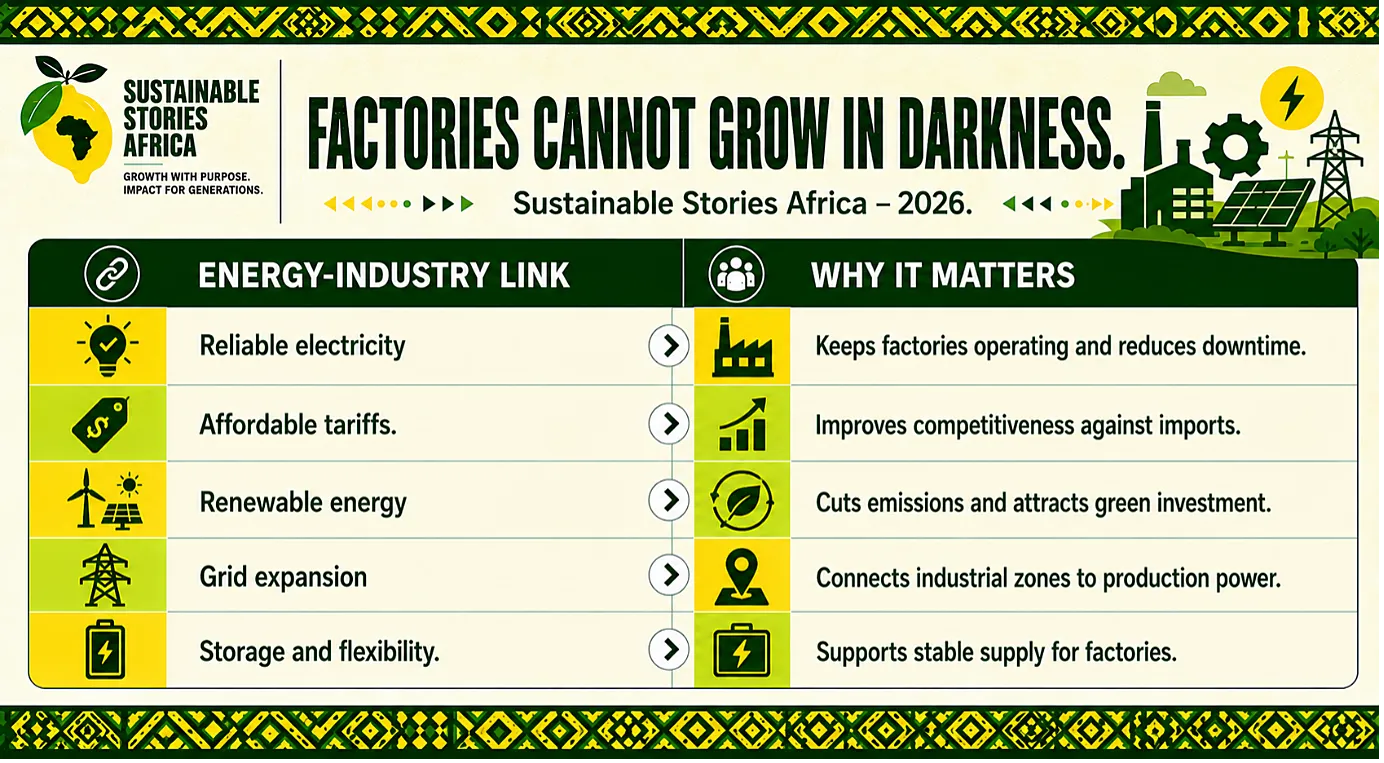
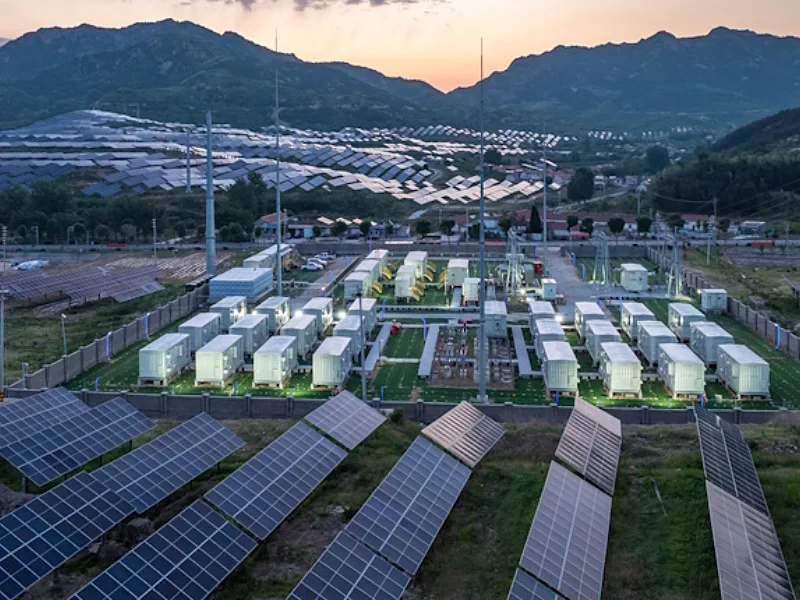
The continent has a major opportunity. Africa holds some of the world’s best solar resources, but only a small share of the installed global solar capacity.
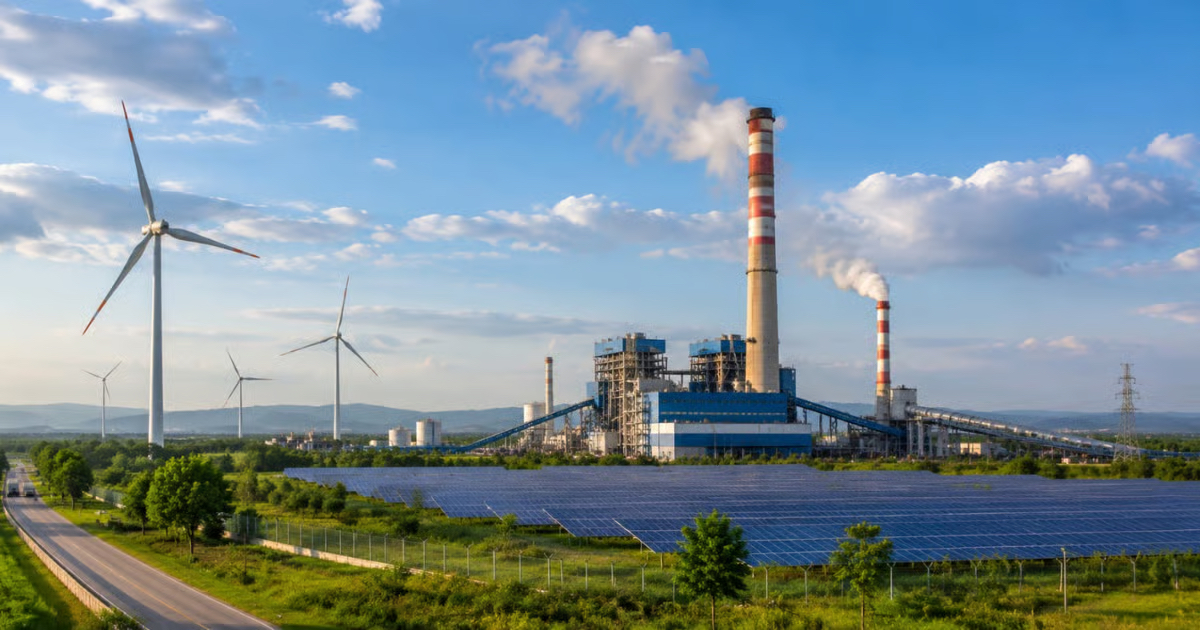
If planned properly, countries beginning their industrial journey can build green factories from the start rather than retrofitting dirty, expensive systems later.
Green Power Can Build Green Industry
Linking energy and industry could change Africa’s development pathway.
Instead of treating electricity as a social service alone, governments can treat power as productive infrastructure.
That means designing energy systems around agro-processing hubs, special economic zones, mining corridors, industrial parks and export clusters.
The gains could be significant. Reliable power can reduce import dependence by supporting local production of fertiliser, cement, steel, appliances, vehicles and clean energy technologies.
It can also help agriculture move beyond raw produce by powering irrigation, processing, refrigeration and storage.
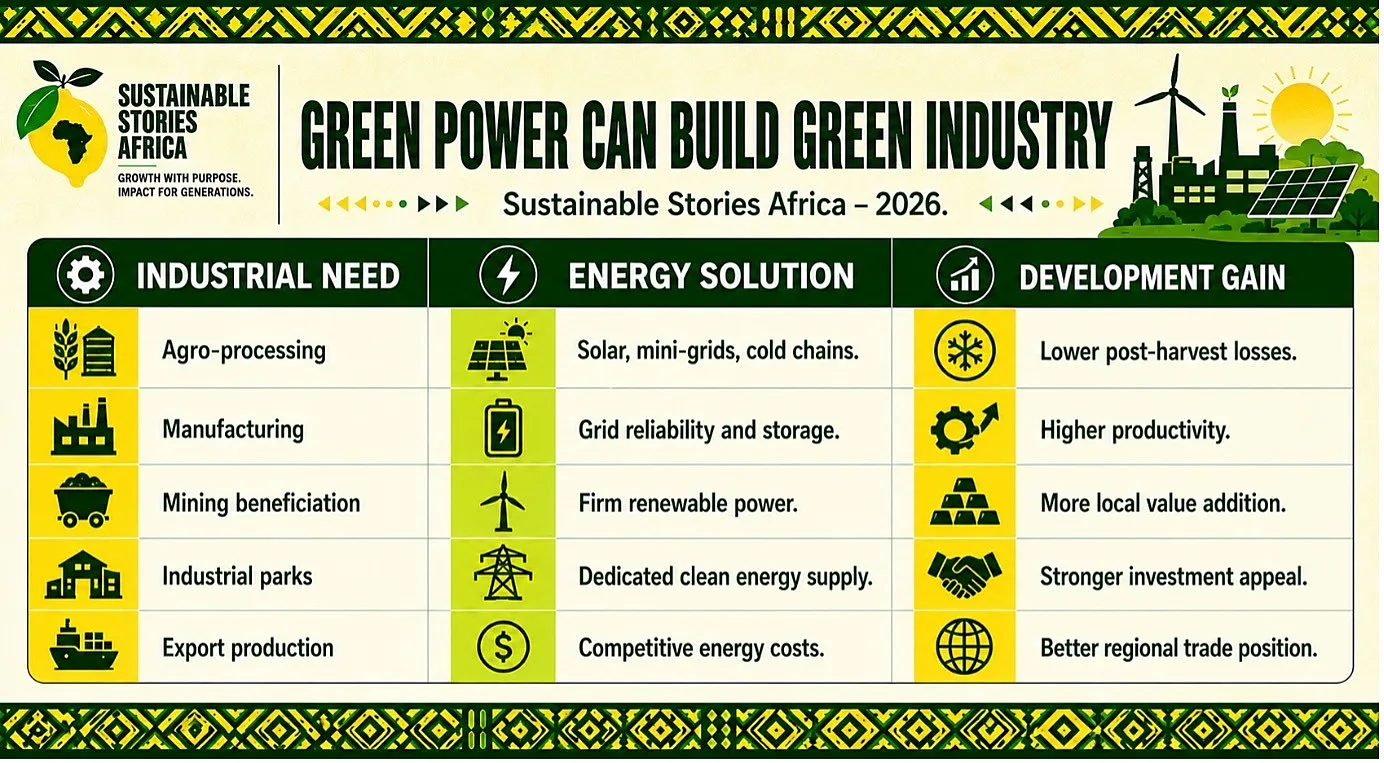
The human story is clear. When factories have power, jobs become more stable. When cold storage works, farmers earn more.
When local processing grows, African economies capture more value before goods leave their borders.
Energy Markets Need Industrial Purpose
Africa now needs policy coordination, not policy silos.
Energy ministries must work with industry, trade, finance and planning ministries. Power projects should be mapped against industrial demand.
Industrial zones should be designed with embedded generation, storage, grid access and clear tariff frameworks.
Utilities should plan for productive loads, not only household connections.
Market reform is also essential. Liberalised and well-regulated power markets can allow factories to buy electricity from independent producers, unlock private capital and accelerate renewable deployment.
However, reform must be fair, transparent and socially responsible, so industrial users do not benefit while households are left behind.
Governments should also prioritise regional power pools. No country can optimise energy and industry alone.
Cross-border electricity trade can reduce costs, balance supply and create larger markets for industrial production.
The core call to action is simple: Africa must stop building energy plans that ignore factories, and industrial plans that ignore electricity.
Path Forward – Power Must Drive Productive Growth
Africa’s next industrial policy must begin with energy realism: reliable, affordable and clean power is the foundation for competitiveness, jobs and value addition.
The priority is integrated planning across electricity, manufacturing, trade, agriculture and finance.
If Africa links power to production, the energy transition can become more than a climate agenda. It can become an industrial development strategy.
Culled From: Why Africa needs to link energy and industry