African governments are accelerating efforts to process critical minerals at home.
The push is gaining urgency as lithium, cobalt, copper, manganese and rare earths become central to clean energy, electric vehicles and digital supply chains.
For African economies, the question is no longer only who mines the minerals. It is who captures the jobs, technology and industrial value.
Africa Wants More Than Ore
Africa is trying to rewrite its role in the global critical minerals economy, moving from a supplier of raw materials to a continent that processes, refines and adds value before exports leave its ports.
The shift is being driven by governments seeking a larger share of the battery, renewable energy and advanced manufacturing value chains.
From Zimbabwe’s restrictions on raw mineral and lithium concentrate exports to wider policy debates in the Democratic Republic of Congo, Namibia, Zambia and South Africa, the message is clear: the old extraction model is under pressure.
For decades, African countries exported minerals while most of the refining, manufacturing and pricing power sat elsewhere.
Now, as the clean energy transition increases demand for copper, cobalt, lithium, manganese, graphite and rare earths, policymakers are asking whether Africa can use its mineral wealth to build factories, skills and industrial corridors.
The Value Gap Is Large
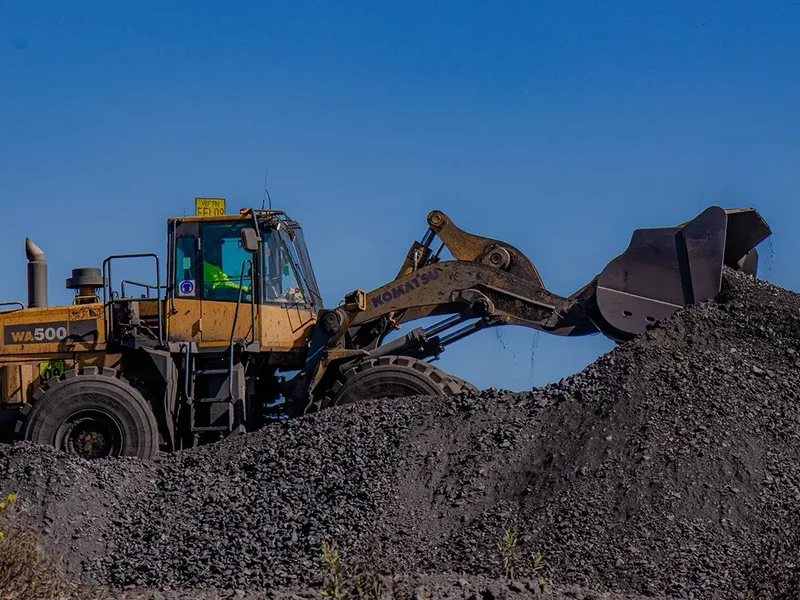
Africa is rich in the minerals the world needs for electric vehicles, batteries, power grids, wind turbines and digital infrastructure. But much of the continent’s export value still leaves in raw or semi-processed form.
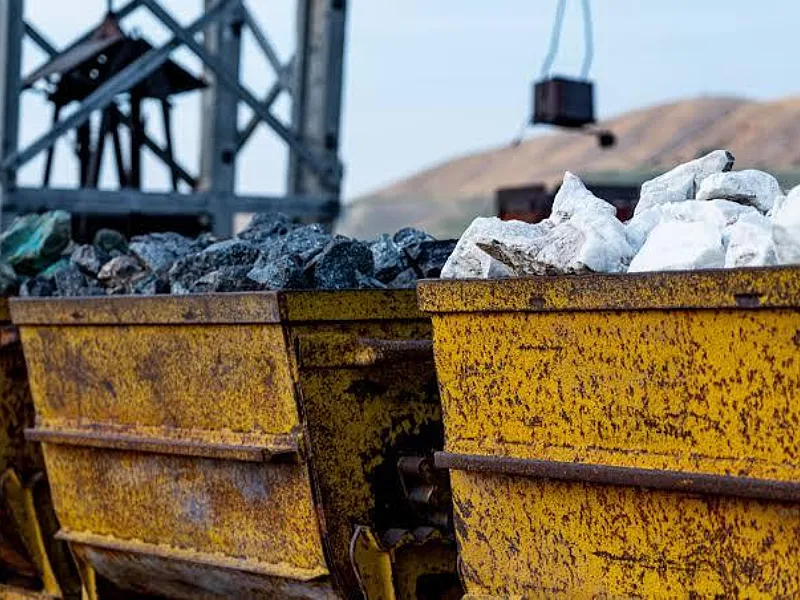
An OECD regional note on critical minerals found that 24% of African critical mineral exports are raw, while 72% are semi-processed, largely ores and concentrates.
That means the continent is already part of the supply chain, but often not at the highest-value stages.
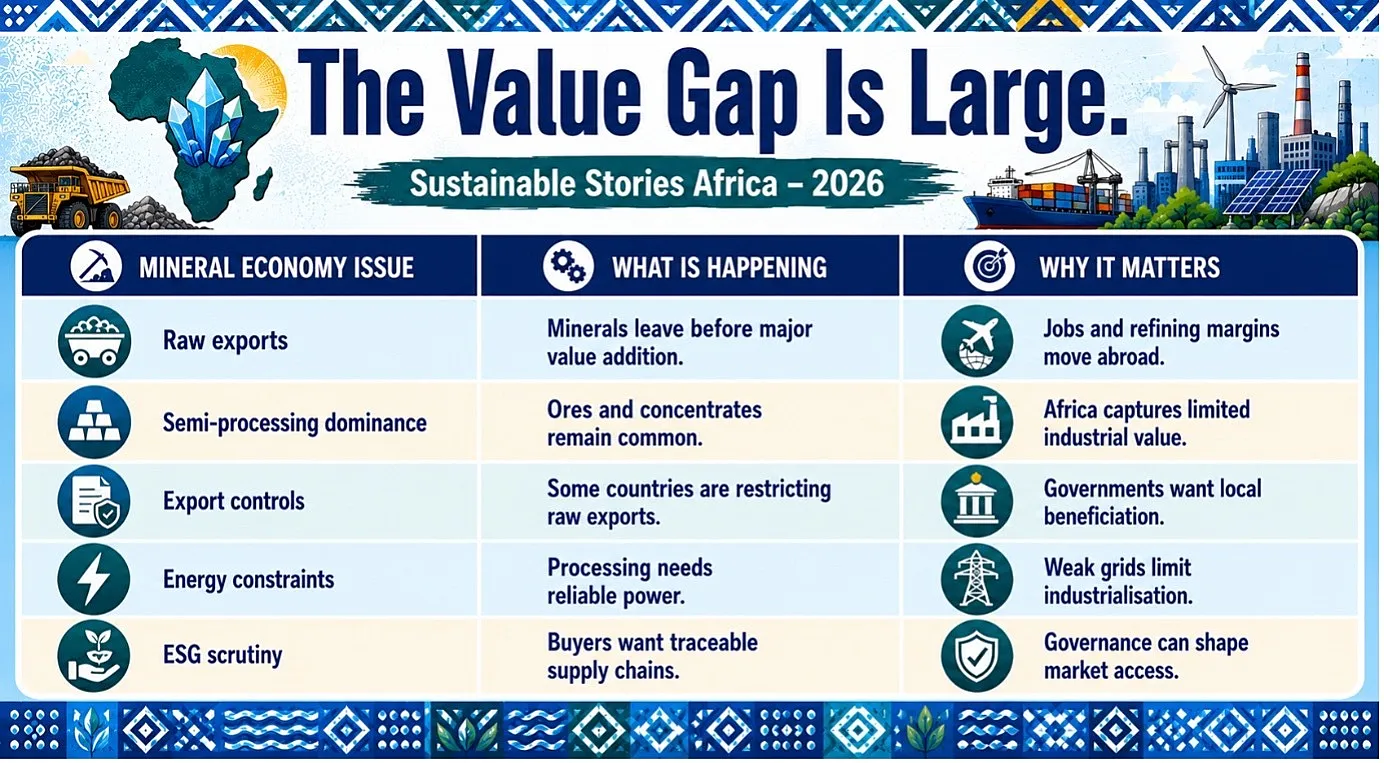
Zimbabwe’s February 2026 ban on raw mineral and lithium concentrate exports reflected this new assertiveness.
The country said it wanted stronger local value addition, compliance and accountability.
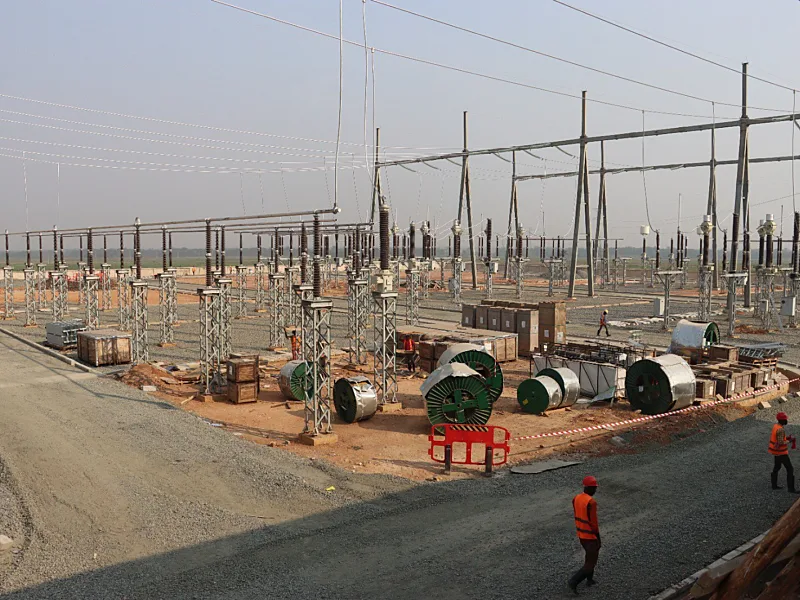
However, export bans alone will not build industries. Processing plants require electricity, water, transport, skilled labour, financing and stable regulation.
Without those foundations, restrictions can slow exports without creating enough factories.
Processing Can Build New Economies
If Africa gets the strategy right, critical minerals could do more than feed global supply chains.
They could support local manufacturing, industrial parks, technical jobs, logistics networks and cleaner energy systems.
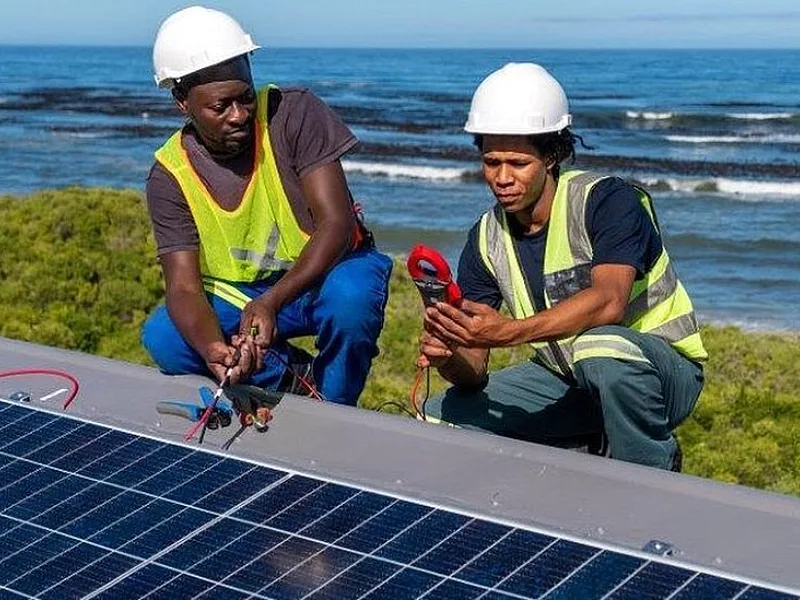
- A lithium mine linked to local processing can create demand for engineers, electricians, laboratory technicians, transport firms and safety auditors.
- A copper corridor connected to regional power and rail can support manufacturing beyond mining.
- A rare earths project with transparent standards can attract ESG-focused investors.
This is why the African Union’s Green Minerals Strategy places beneficiation, local content, regional value chains and sustainability at the centre of the agenda. The aim is not simply to mine more. It is to use minerals as a platform for structural transformation.
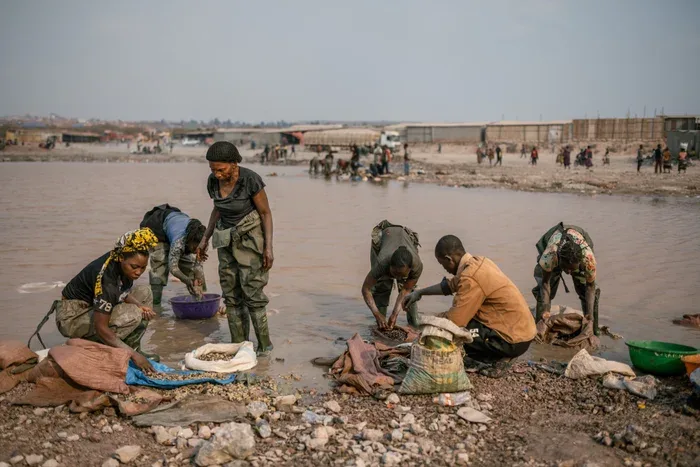
The risk is equally clear. With better governance, Africa could translate from the old familiar cycle: extraction, export, limited jobs, environmental damage and missed industrial opportunities.
Build Processing Around Systems
For the processing race to deliver prosperity, African governments need more than policy announcements. They need industrial systems.
That means investing in reliable power, rail, ports, skills, geological data, environmental safeguards and project preparation.
It also means coordinating regionally, because not every country can build every segment of the value chain alone.
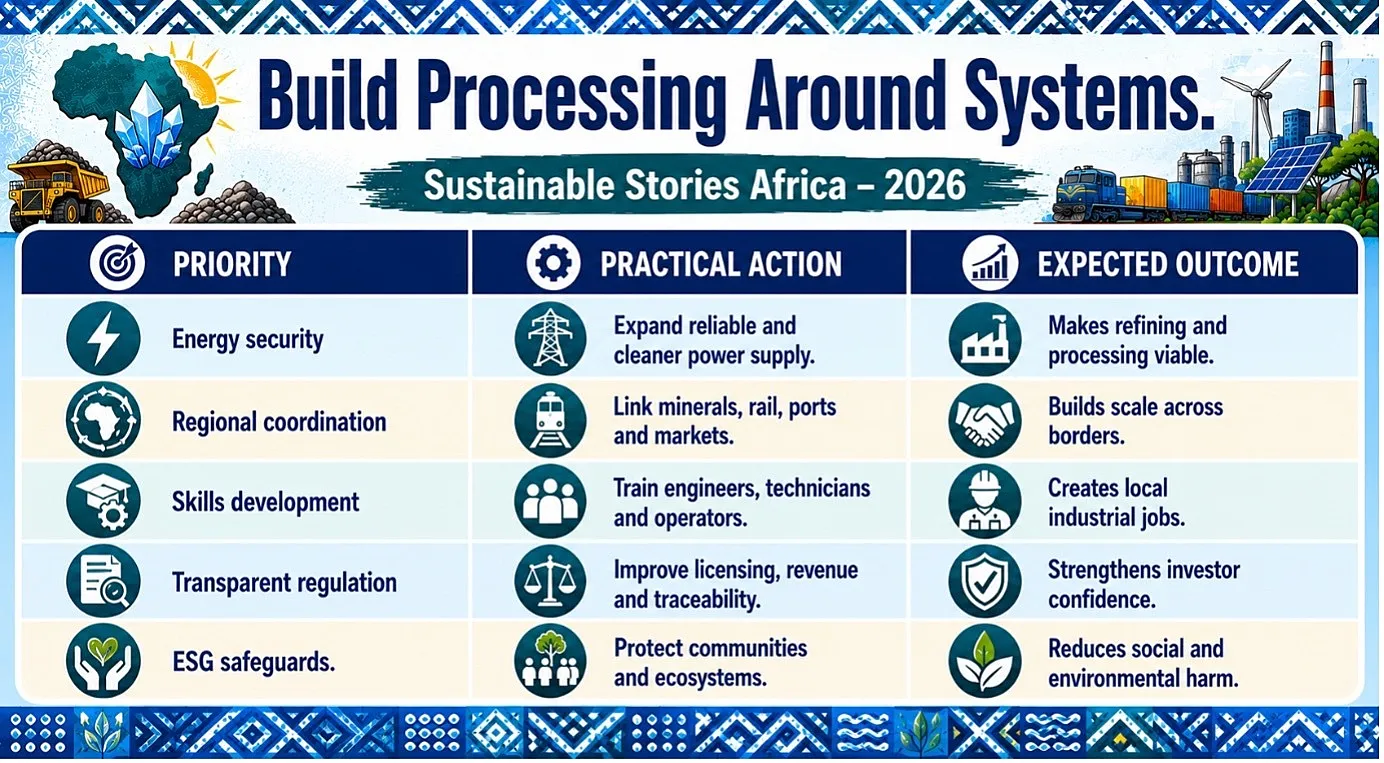
Development finance institutions, sovereign investors and private capital also have a role.
They can support processing projects, but only where risks are clear, contracts are credible, and infrastructure can sustain operations.
The call to action is direct: Africa must move from mineral nationalism to mineral industrialisation.
Path Forward – Process Minerals, Build Shared Prosperity
Africa’s critical minerals moment will be judged by whether it creates factories, skills, revenues and resilient communities, not only higher export volumes.
The next step is coordinated investment: cleaner power, regional corridors, transparent rules and ESG safeguards that turn mineral wealth into sustainable industrial value for African markets.
Culled From: Africa races to process critical minerals at home