African cities are beginning to turn waste into electricity, fuel and biogas.
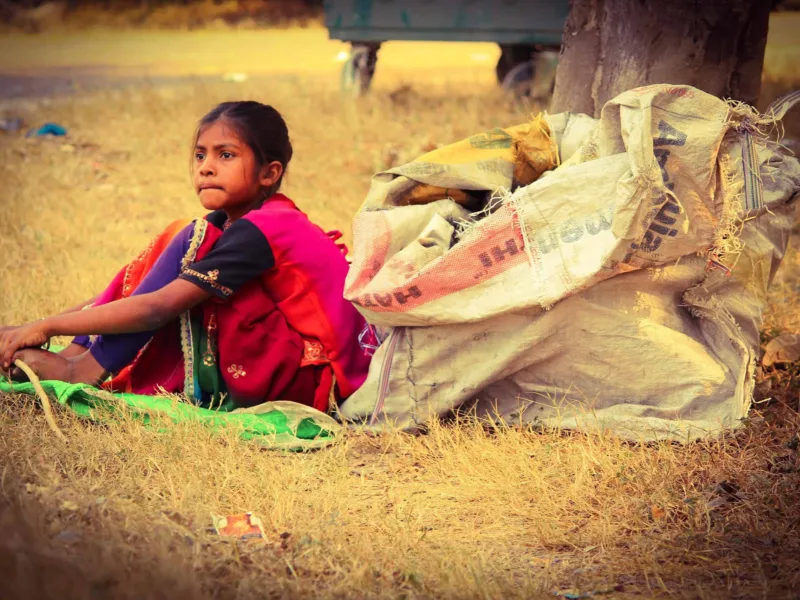
The shift comes as urban waste rises faster than many collection systems can manage.
For communities, the promise is cleaner streets, lower methane emissions and more reliable local energy.
Waste Is Becoming An Energy Asset
Africa’s waste problem is becoming an energy opportunity, as cities, utilities and investors explore ways to convert municipal rubbish, agricultural residues, organic waste and landfill gas into power, cooking fuel and industrial heat.
The urgency is growing: World Bank projections show global waste could rise to 3.86 billion tonnes annually by 2050, with Sub-Saharan Africa expected to record the fastest growth at 124%.
In Lagos, Africa’s largest city economy, the state government signed a 2024 agreement with a Dutch company to generate electricity from solid waste, signalling how major urban centres are rethinking dumpsites as infrastructure assets.
Cities Are Searching For Alternatives
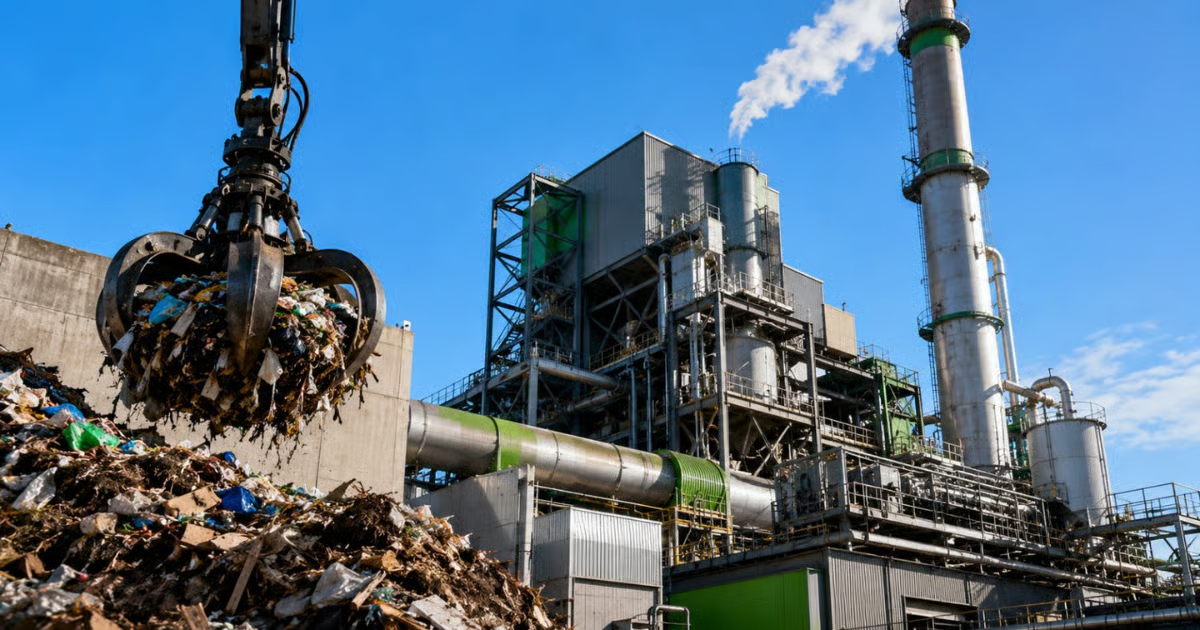
The waste-to-power story is not one technology. It includes landfill gas capture, anaerobic digestion, biogas, briquettes, gasification, pyrolysis and controlled thermal treatment.
UNEP notes that diverting waste from open dumps and burning can reduce methane emissions from decomposition, although projects require careful planning, regulation and environmental safeguards.
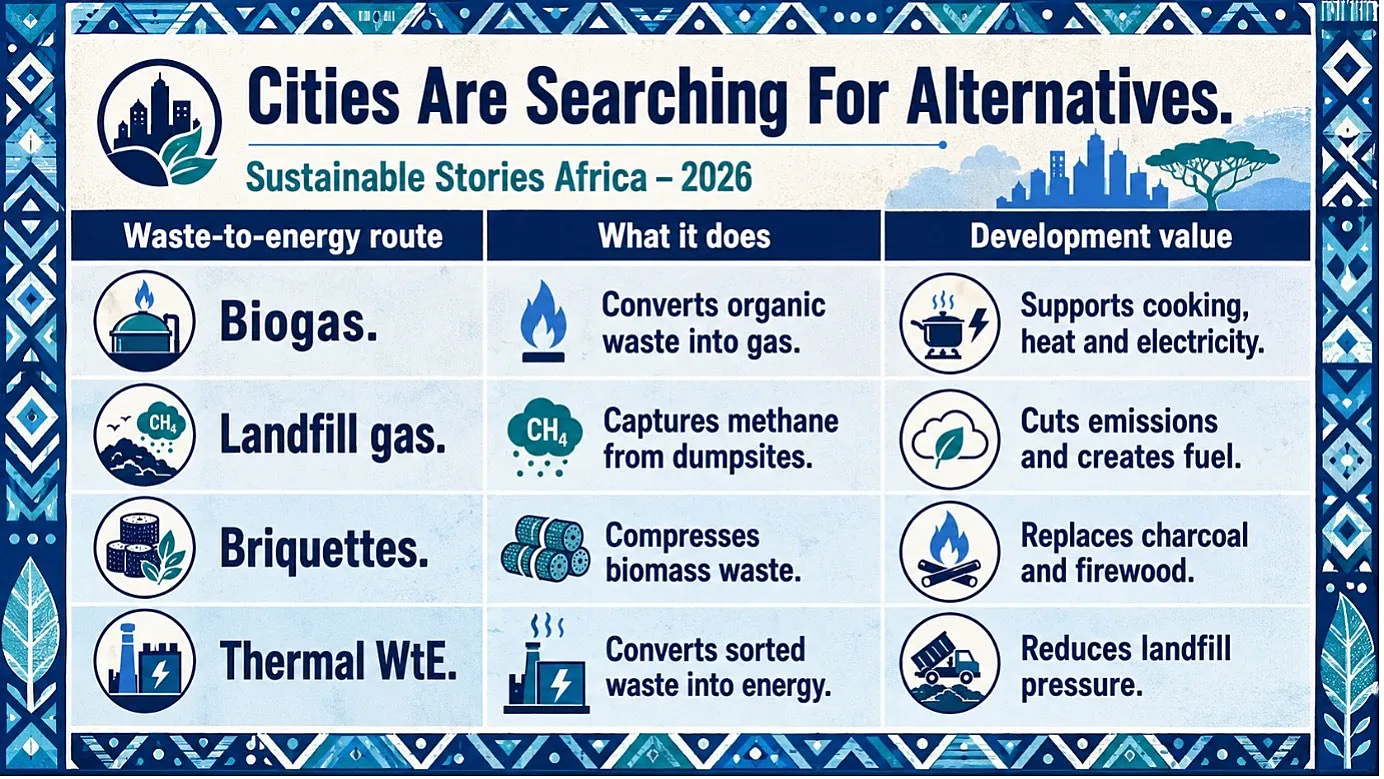
Across the continent, the model is also appearing in smaller, practical forms. SWITCH Africa Green has supported circular waste projects in countries including Ghana, Kenya, Mauritius, South Africa and Uganda, covering biogas production, briquettes and integrated waste management.
Cleaner Cities, Safer Energy, New Jobs
If done well, waste-to-energy can solve several problems at once. It can reduce open dumping, lower methane emissions, improve sanitation, create jobs for waste workers and add decentralised energy to underserved communities.
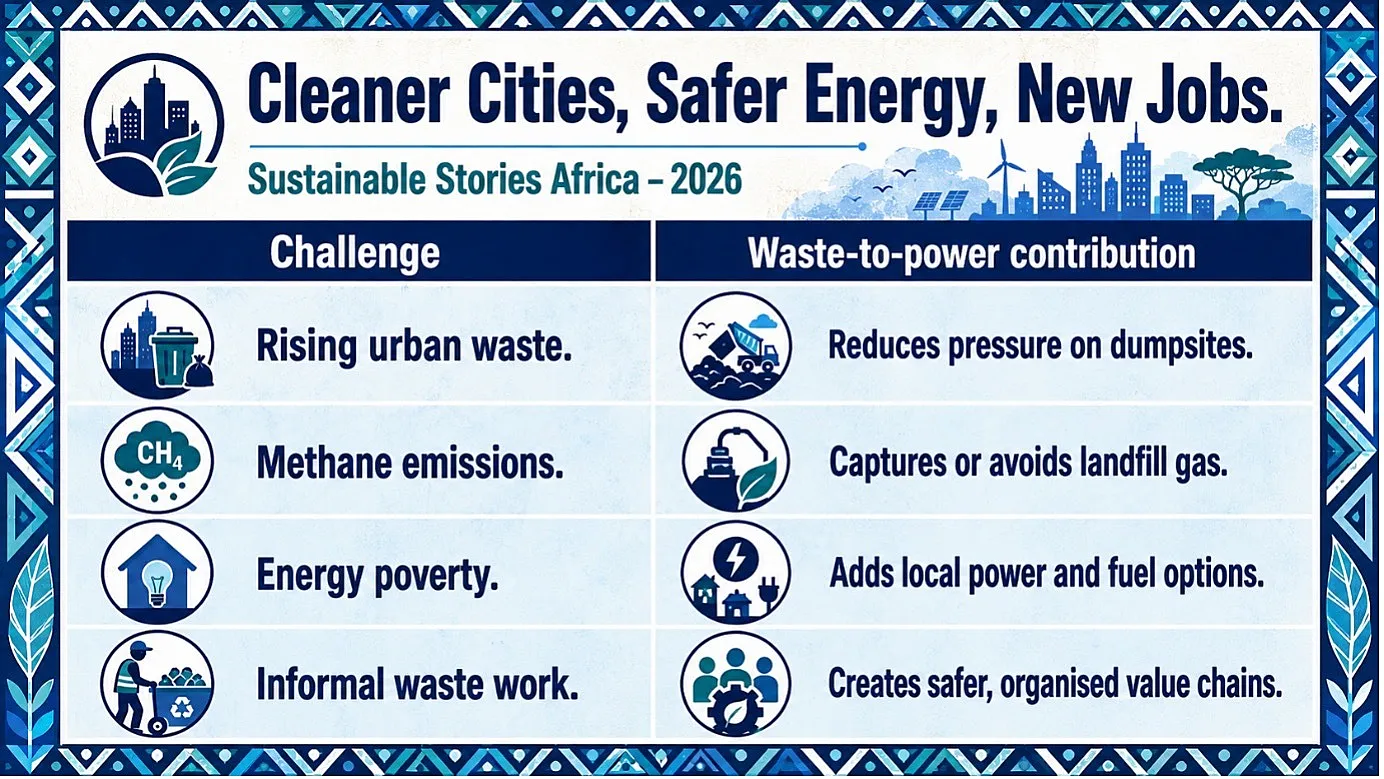
The opportunity also extends beyond cities. IRENA has identified significant long-term energy potential from Africa’s biomass residues and waste resources, though estimates vary widely depending on assumptions and location.
Regulation Must Match Ambition
The lesson for African governments is clear: waste-to-energy should not be treated as a shortcut around proper waste management. It works best when cities first improve collection, sorting, recycling, environmental standards and community engagement.
Projects also need transparent contracts, credible feedstock data, bankable power purchase arrangements and protections for informal waste pickers. Without these, plants can become expensive, underfed or socially contested.
Path Forward – Power Must Follow Waste Reform
Africa’s waste-to-power future depends on disciplined execution, not hype.
The priority is to build systems that sort waste, protect communities, reduce methane and finance clean local energy.
Properly done, waste-to-energy can advance ESG goals while turning a public health burden into productive infrastructure.
Culled From: How Africa is turning waste into power