Africa’s energy sector recorded a reported $12.5 billion in funding and investment commitments during August, with banks contributing one quarter.
Kenya’s KCB plans a $2.32 billion renewables-focused corporate bond programme, while regional and development banks backed hydropower and battery manufacturing.
The figures suggest rising lender confidence, but delivery will depend on whether announced capital reaches bankable projects and produces affordable, reliable energy.
Banks step into renewable financing centre
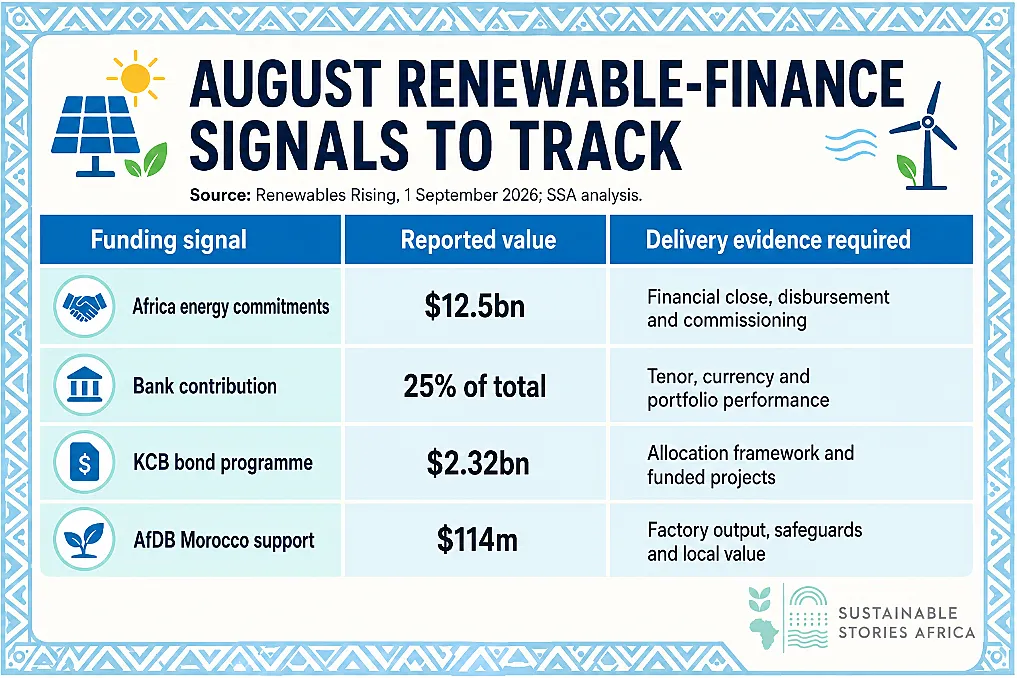
African energy funding and investment commitments reached a reported record $12.5 billion in August, with banks accounting for a quarter of the total.
The result suggests that lenders are becoming more willing to finance renewable-energy and transition assets rather than leaving the market largely to development institutions and specialist climate investors.
The largest signal came from Kenya, where KCB plans to raise $2.32 billion through a corporate bond programme focused on renewables. Renewables Rising described it as the largest corporate debt programme undertaken in the country.
- If successfully placed and allocated, the programme could widen the pool of capital available to developers and demonstrate how domestic financial institutions can connect local savings with long-term infrastructure.
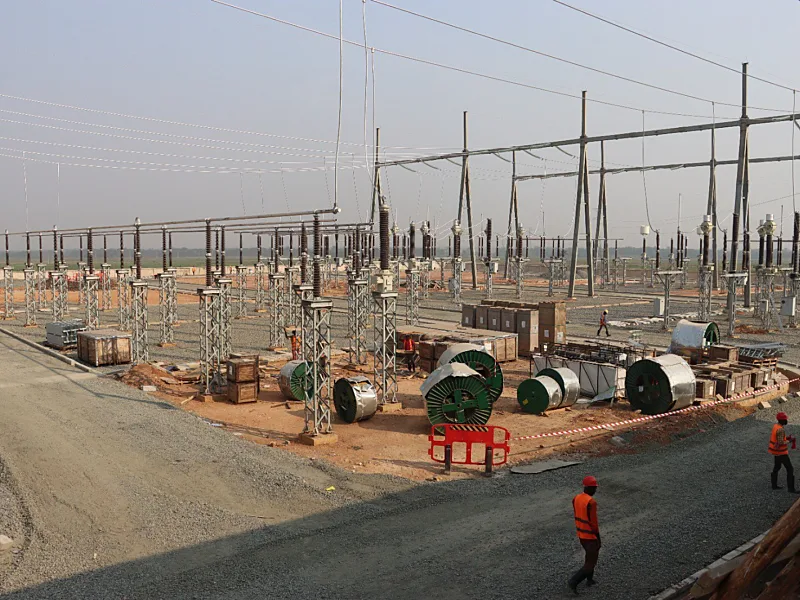
Elsewhere, the ECOWAS Bank for Investment and Development approved $510 million for five West African projects, including $70.3 million for Guinea’s Tinkisso II hydropower project.
The African Development Bank also provided $114 million for Africa’s first gigafactory in Morocco, which is expected to manufacture cathodes and anodes and export much of its output to Europe.
Big commitments need stronger delivery evidence
The headline total is encouraging; however, commitments are not the same as disbursements, completed assets or electricity delivered.
- Large programmes may take years to allocate, while project delays, foreign-exchange movements, permitting and weak grids can reduce the development impact of announced finance.
For that reason, the market should track each deal through a clear chain:
- Announcement, financial close, disbursement, construction, commissioning and operating performance.
- A record month becomes meaningful only when capital survives that chain, and the resulting assets provide dependable energy at a cost businesses and households can sustain.
Domestic lenders can lower transition friction
Greater bank participation can still change the market.
- Local lenders understand domestic regulation, customer payment patterns and political context.
- They may also be better placed to lend in local currency, reducing the mismatch created when projects earn local revenues but service dollar or euro debt.
The Morocco investment points to another prize: renewable finance can support industrial value chains, not only power plants.
- Manufacturing battery components could connect clean-energy deployment to jobs, exports and automotive growth.
However, public institutions must examine water, energy sourcing, labour conditions and local value creation if industrial policy is to deliver credible sustainability outcomes.
The composition of the $12.5 billion matters as much as the total.
- Debt, equity, guarantees and expressions of intent carry different levels of certainty and risk.
- Publishing those categories would help market participants compare one month with another and avoid treating early announcements as immediately available construction capital.
- It would also reveal whether finance is concentrated in a few large transactions or reaching smaller distributed-energy businesses.
Small developers often struggle to meet conventional collateral requirements even when their customer demand is strong.
- Banks can widen participation through portfolio lending, receivables finance and standardised due-diligence templates, supported where appropriate by partial guarantees.
- That would allow the confidence visible in landmark transactions to reach companies supplying mini-grids, commercial solar, clean cooking and productive-use systems.
Consistent reporting would also show whether capital is balanced across countries and technologies.
- Concentration can create impressive totals without building a continent-wide transition market or addressing communities where reliable energy remains scarce.
Convert funding headlines into operating assets
Banks should disclose portfolio-level information on currency, tenor, technology, geography, financial close and expected development outcomes.
Regulators can support green and transition lending through consistent taxonomies and disclosure standards, while avoiding rules that reward labels without testing underlying asset quality.
Project sponsors, meanwhile, must improve preparation: robust feasibility studies, credible offtake agreements, environmental and social safeguards and realistic construction plans.
Better projects reduce perceived risk and make it easier for banks to move from cautious participation to repeat financing.
Path Forward – Make bank confidence visible through delivery
African lenders can turn a strong funding month into a durable market by publishing allocation and impact data, expanding local-currency structures and maintaining rigorous environmental and social due diligence.
The next benchmark should not be another record announcement. It should be a larger share of projects reaching operation, performing reliably and demonstrating that African financial institutions can finance the continent’s transition at scale.
Culled from: Funding update: Banks grow confidence in renewables investments