Green, social and sustainability-linked finance is taking a larger role in funding African power, transport, water, housing and climate resilience.
Yet the continent faces a reported annual development-financing gap of about $402.2 billion and a climate-finance gap exceeding $213 billion.
The market’s credibility will depend less on labels and more on prepared projects, affordable capital, transparent allocation and measurable assets delivered.
Green capital meets a vast deficit
Africa’s sustainable-finance market is expanding as governments, development banks and private investors search for alternatives to constrained public budgets and expensive conventional borrowing.
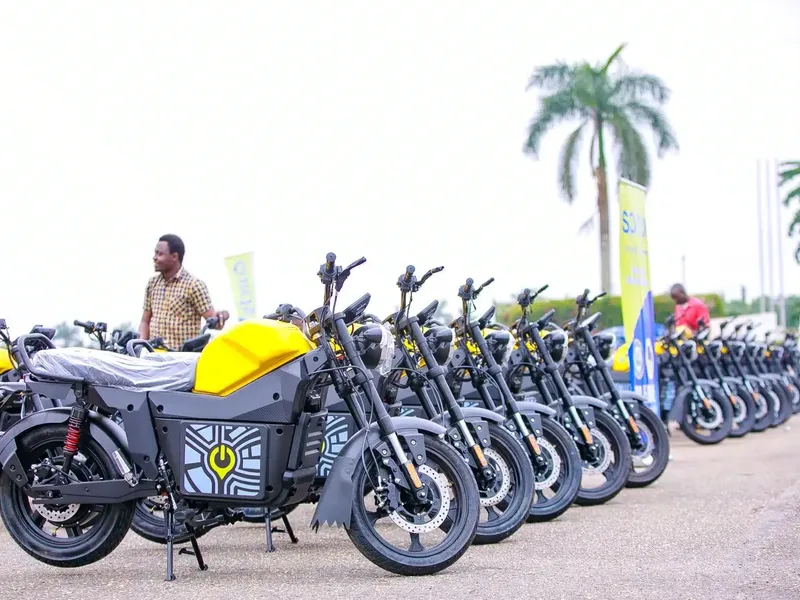
Green, social and sustainability-linked bonds, blended finance and guarantees are increasingly being directed towards renewable energy, transport, water, housing and climate-resilient infrastructure.
The need is immense.
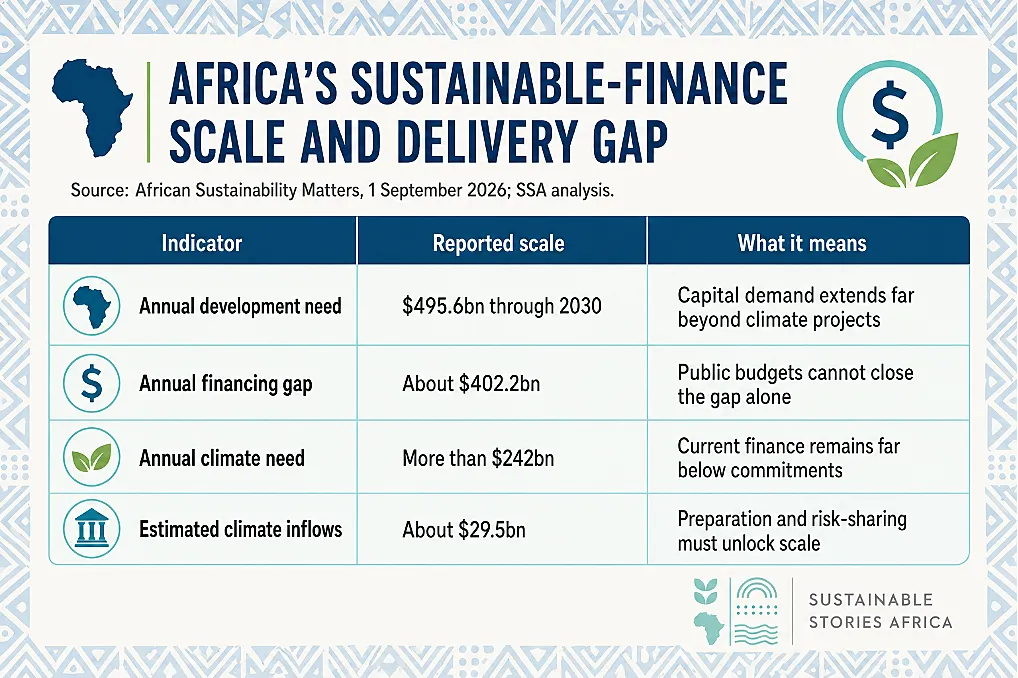
- African Sustainability Matters, citing African Development Bank estimates, reports that the continent requires about $495.6 billion annually through 2030 for transport, energy, education, technology and innovation.
- Current public spending leaves a gap of roughly $402.2 billion a year. Climate commitments require more than $242 billion annually, compared with estimated inflows of about $29.5 billion.
That scale changes the question.
- The test is no longer whether Africa can issue a green bond. It is whether sustainable-finance structures can convert investor demand into projects that reach financial close, survive construction and deliver useful infrastructure without creating debt burdens that governments, utilities or consumers cannot afford.
Transactions grow closer to physical assets
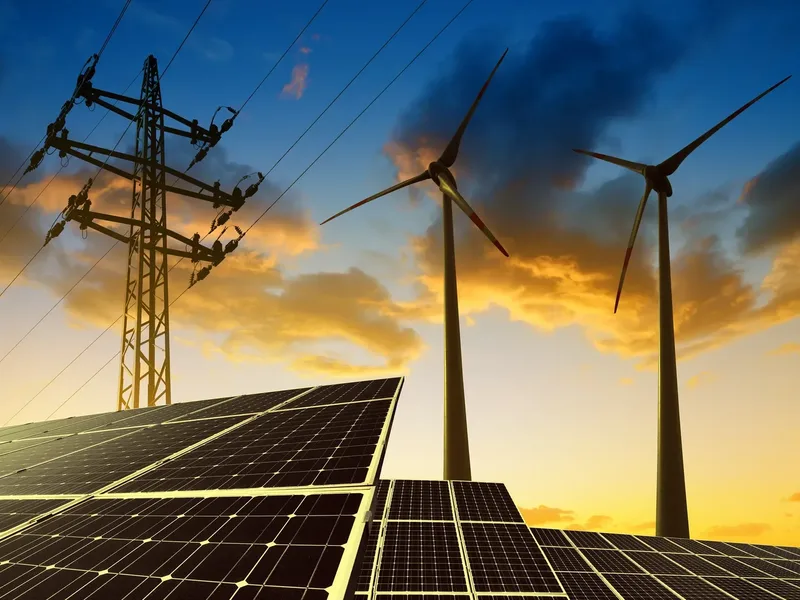
A €65 million dual-currency green-bond facility for a 66-megawatt solar plant in northern Côte d’Ivoire illustrates the market’s shift towards asset-linked financing.
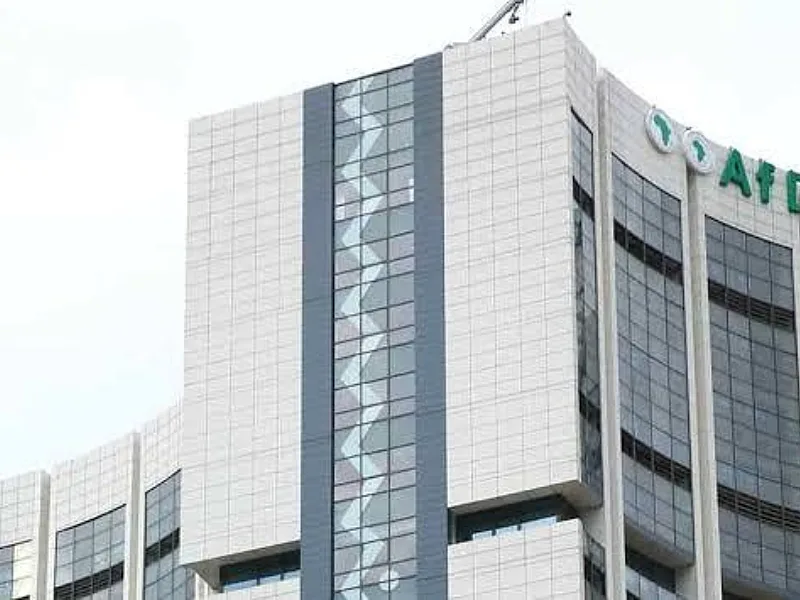
- Africa Finance Corporation reached financial close on the transaction in April 2026, with €43 million already disbursed.
- A specific project can give investors a clearer connection between capital and measurable infrastructure.
The Alliance for Green Infrastructure in Africa is also seeking $500 million in early-stage blended finance to build a pipeline that can attract up to $10 billion.
- This targets a persistent bottleneck: projects need feasibility work, safeguards, revenue models, approvals and sensible risk allocation before institutional investors can participate.
Labels cannot neutralise financial risk
A green label does not remove currency, refinancing or credit risk.
- Many projects earn local-currency revenues while equipment and debt are priced in foreign currency.
- Depreciation can damage an otherwise viable project, and high risk premiums can translate into tariffs or user charges that make essential services unaffordable.
Blended finance and guarantees can absorb selected early-stage, political or credit risks, but they should mobilise rather than replace private capital.
- Domestic pension and insurance assets could provide longer-term local-currency funding, although shallow bond markets and investment limits remain constraints in several countries.
New instruments are already widening the definition of sustainable infrastructure.
- Kenya’s proposed $300 million Go Blue-Green Bond Programme targets fisheries, aquaculture, ports, coastal tourism, biodiversity, blue carbon and climate resilience.
- Shelter Afrique Development Bank has also established a sustainable-finance framework ahead of planned bond issuance in West and East African currencies for housing investment.
These examples show why social and economic tests belong alongside environmental eligibility.
- A resilient water system, affordable home or cleaner transport corridor must still work for its intended users.
- Reporting should therefore connect tonnes of emissions avoided with service reliability, jobs, household affordability and resilience to physical climate risks.
- Otherwise, technically compliant finance may fail to produce meaningful development outcomes.
Regional integration can strengthen the pipeline.
- Cross-border power, transport, digital and water systems may offer scale and diversified demand, but they require coordinated regulation and credible agreements between governments.
- The African Continental Free Trade Area increases the value of infrastructure that lowers the cost of moving goods, services and information across borders.
Measure infrastructure, affordability and additionality
Issuers should report how proceeds are allocated, what outcomes projects deliver and whether the finance created additional investment rather than relabelling existing spending.
- Independent verification, credible taxonomies and comparable indicators can protect investor confidence and help regulators challenge greenwashing.
Governments must also integrate sustainable finance with public planning, tariff policy and debt management.
- The best instrument cannot rescue a poorly prepared project or an unstable fiscal framework.
- Capital becomes sustainable only when the assets it finances remain useful, affordable and resilient over time.
Path Forward – Build pipelines before celebrating green capital
African governments and financiers should fund project preparation, expand local-currency instruments and publish comparable allocation, impact and affordability data.
Guarantees should target risks the private market cannot efficiently carry.
Sustainable finance will earn public trust when it produces reliable infrastructure and measurable additionality without hiding fiscal costs.
Volume matters, but delivery quality will determine whether green capital narrows Africa’s infrastructure gap.