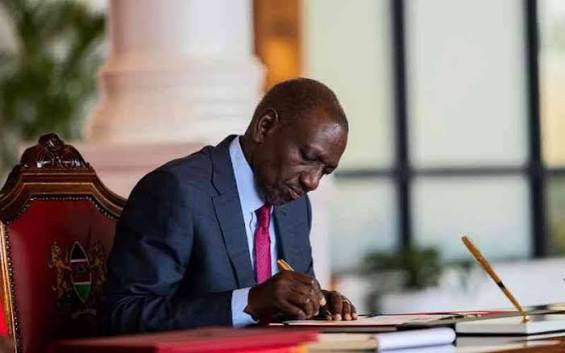
Kenya’s Sovereign Wealth Fund Act, No. 25 of 2026, creates a legal foundation for building, investing and preserving national wealth.
The proposal shifts attention from annual tax-and-debt choices towards dividends, strategic public assets and protected long-term revenues.
Its success will depend on governance: clear funding rules, professional investment, public reporting and protection from short-term political demands.
A law reframes Kenya’s fiscal choices
Kenya’s Sovereign Wealth Fund Act, No. 25 of 2026, has created a legal basis for the country to build, invest and preserve national wealth over the long term.
The development moves an idea long discussed in policy circles into law and invites a wider debate about how the state manages its balance sheet, not only its annual budget.
Writing in Business Daily, Public Service Superannuation Fund chief executive Jonah Aiyabei argues that Kenya’s familiar choice between more taxes and more borrowing misses a third possibility:
- Deliberately investing public assets and long-term revenues so their returns can support future generations.
Kenya does not begin with Norway’s oil wealth or the diamond revenues that supported Botswana’s savings.
It does have commercially valuable state enterprises, pension savings, an expanding digital economy, established capital markets and a large, young population.
The central policy question is whether those assets can be governed as sources of patient national capital.
Architecture matters more than fund branding
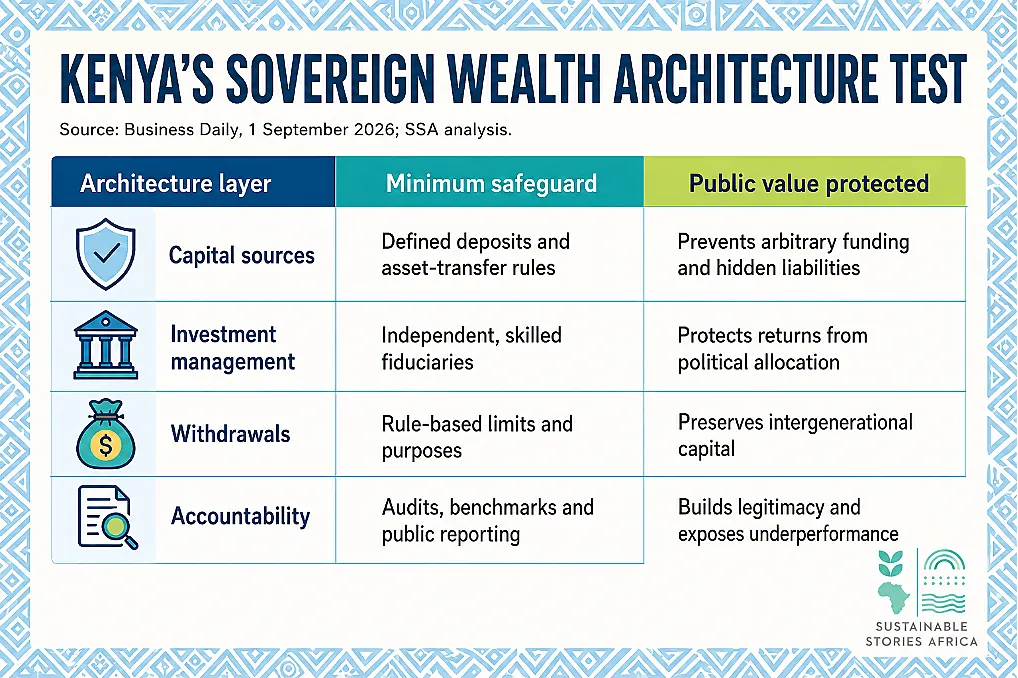
A sovereign wealth fund should receive clearly defined capital, invest professionally and reinvest returns over generations.
- Possible sources include dividends from viable state-owned enterprises, returns from strategic assets and specified revenues protected from everyday expenditure.
- Such a vehicle should complement, rather than raid pension funds or crowd out private capital.
International examples point to different starting points but a common institutional lesson.
- Norway converted resource revenue into a globally diversified fund
- Singapore built respected investment institutions without major natural resources
- Botswana saved part of its mineral wealth
- Angola has aligned its strategy with the Santiago Principles.
Governance and compounding matter more than the label attached to the source of capital.
Long-term wealth needs public legitimacy
A well-run architecture could reduce pressure to finance every development priority through new debt or higher taxes.
- Returns from existing public wealth could support future investment, while clearer asset management may reveal underperforming holdings and improve dividend discipline.
The risks are equally clear.
- Political withdrawals, opaque appointments, inflated asset transfers or domestic investments chosen for patronage could destroy value.
- A fund can also become a way to move liabilities or spending away from normal budget scrutiny.
- It should never be treated as free money or as a substitute for sound taxation, debt management and service delivery.
The funding base deserves particular scrutiny.
- Dividends from state enterprises can be volatile, and transferring public assets into a fund does not create new wealth unless those assets are valued honestly and managed better.
- Independent valuation, disclosure of contingent liabilities and a clear rule for retaining versus distributing returns would protect the fund from beginning with an overstated balance sheet.
Investment strategy must also balance domestic development ambitions with portfolio discipline.
- Concentrating the fund inside Kenya could amplify the same economic shocks affecting tax revenue and public assets.
- Global diversification can protect savings, while a separately governed domestic investment window may support commercially sound infrastructure.
- The mandates, risk limits and expected returns should be explicit, so public-purpose investment is not confused with political spending.
Public communication will matter from the beginning.
- Citizens should understand what the fund owns, why assets were transferred and when returns can be used.
- Clear expectations can protect managers from demands for immediate spending and make intergenerational saving a visible national commitment rather than an elite financial exercise.
Lock discipline into the institution
Implementation should define deposits and withdrawals in law, separate ownership from day-to-day investment decisions and publish audited statements, portfolio exposure, fees and performance against transparent benchmarks.
Parliamentary oversight and independent directors should coexist with operational freedom from election-cycle pressure.
Kenya should also clarify how the fund relates to existing public investment institutions and pension assets.
- The goal is a coherent architecture in which each institution has a distinct mandate, safeguards beneficiaries and contributes to productive national investment without double-counting the same pool of savings.
Path Forward – Govern Kenya’s wealth beyond election cycles
Kenya should translate the 2026 law into transparent funding, withdrawals, investment and reporting aligned with the Santiago Principles.
Existing pension and investment institutions must retain clear, protected mandates.
A sovereign fund will reduce fiscal pressure only if it builds real assets and compound returns over time.
Strong governance is therefore not an administrative detail; it is the source of the fund’s credibility and value.
Culled from: Can Kenya build a sovereign wealth architecture? - Business Daily