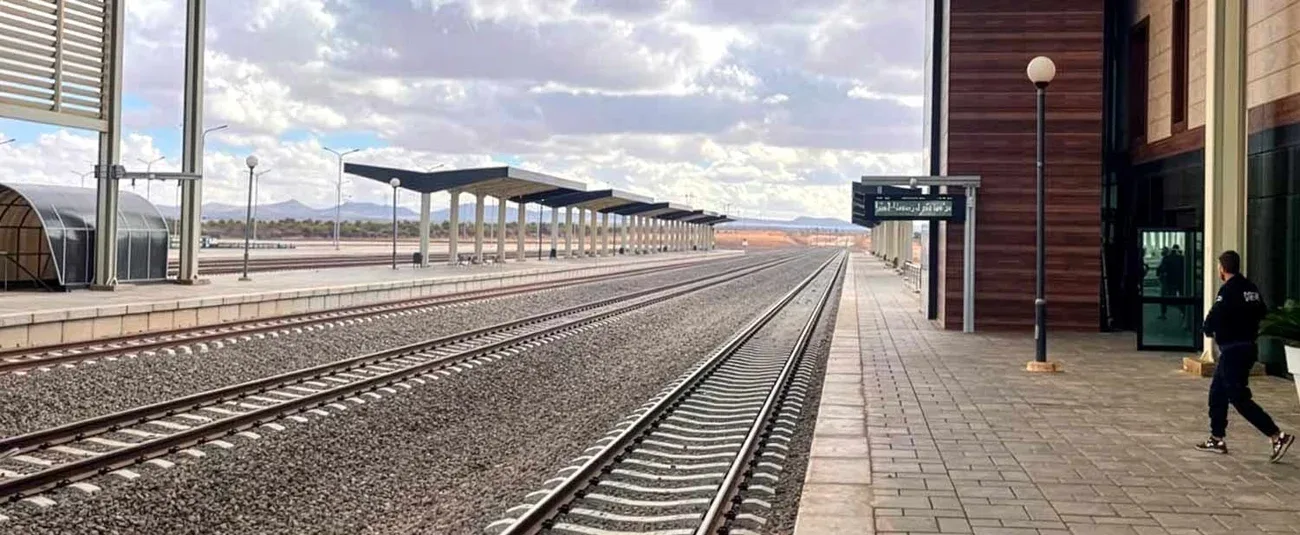
The African Development Bank has approved $878 million to finance the second phase of Algeria's Laghouat–Ghardaïa–El Meniaa railway project.
The investment aims to strengthen transport infrastructure, improve regional connectivity and unlock economic opportunities across southern Algeria.
For businesses and communities, the railway promises faster trade, lower logistics costs and more inclusive regional development while advancing sustainable infrastructure.
A Railway Designed To Move More Than Trains
Railways have always connected places. Increasingly, they are connecting opportunities.
The African Development Bank (AfDB) has approved $878 million in financing for the second phase of Algeria's Laghouat–Ghardaïa–El Meniaa railway line, marking one of the Bank's largest recent transport infrastructure commitments.
The project is expected to improve freight mobility, strengthen passenger transport and deepen economic integration between Algeria's northern industrial centres and its vast southern territories.
At a time when African economies are seeking resilient infrastructure to support industrialisation and regional trade, the railway represents more than a transport investment.
It is a strategic corridor intended to unlock opportunities in mining, agriculture, tourism and logistics while improving access to essential services for communities across the Sahara.
Infrastructure Is Becoming Algeria's Competitive Advantage
Efficient transport networks increasingly determine whether natural resources become economic prosperity or remain stranded assets.
Southern Algeria possesses significant mining resources, agricultural potential and renewable energy opportunities; however, long distances and high transport costs have historically constrained development.
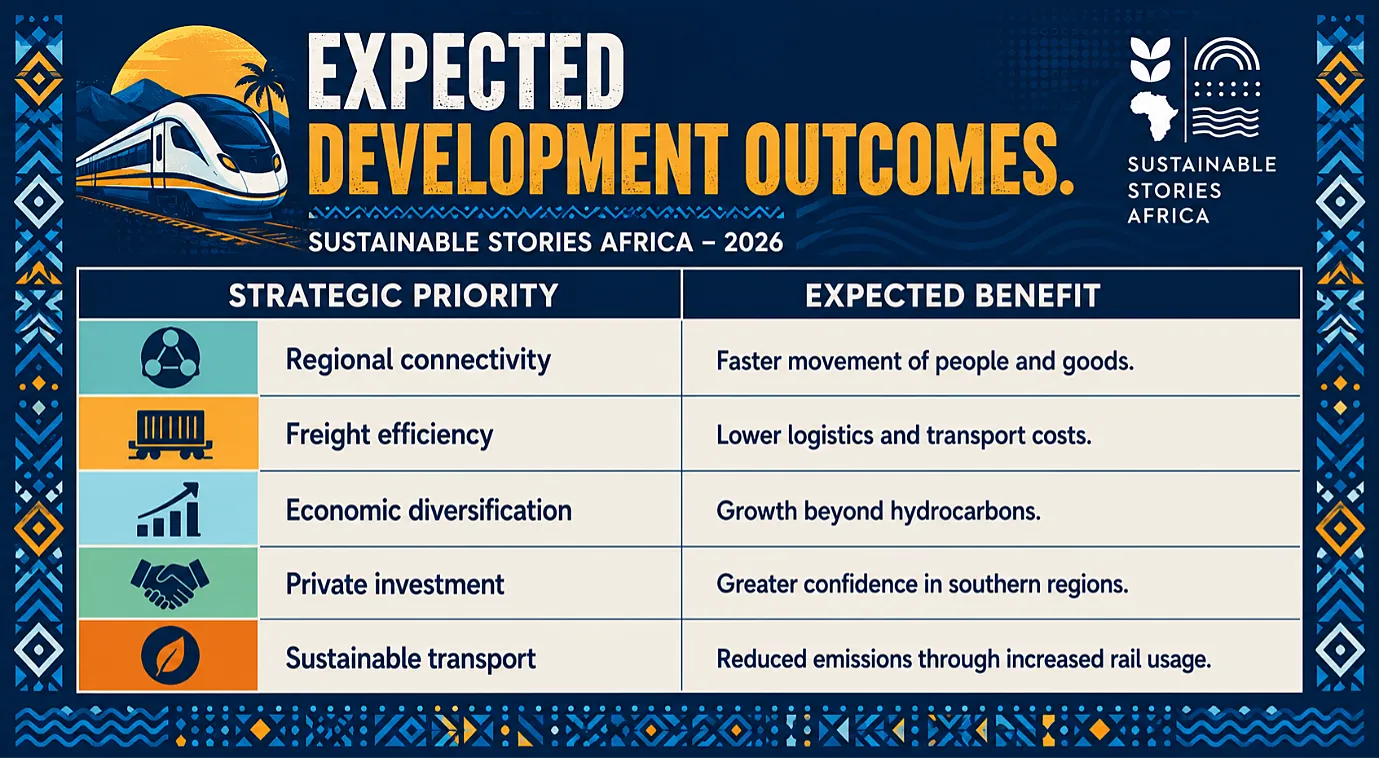
The railway extension is designed to reduce those barriers by providing faster, safer and more efficient movement of people and goods between regions.
- For businesses, lower logistics costs can improve competitiveness, reduce delivery times and encourage new private investment.
- Manufacturers gain more reliable supply chains, while producers can access domestic and international markets more efficiently.
The project also aligns with Algeria's broader ambition to diversify its economy beyond hydrocarbons by strengthening infrastructure that supports mining, manufacturing, agriculture and regional commerce.
Beyond economic benefits, rail transport offers important environmental advantages.
Compared with long-distance road freight, modern railways generally consume less energy per tonne transported and produce lower greenhouse gas emissions, making them an important component of sustainable transport systems.
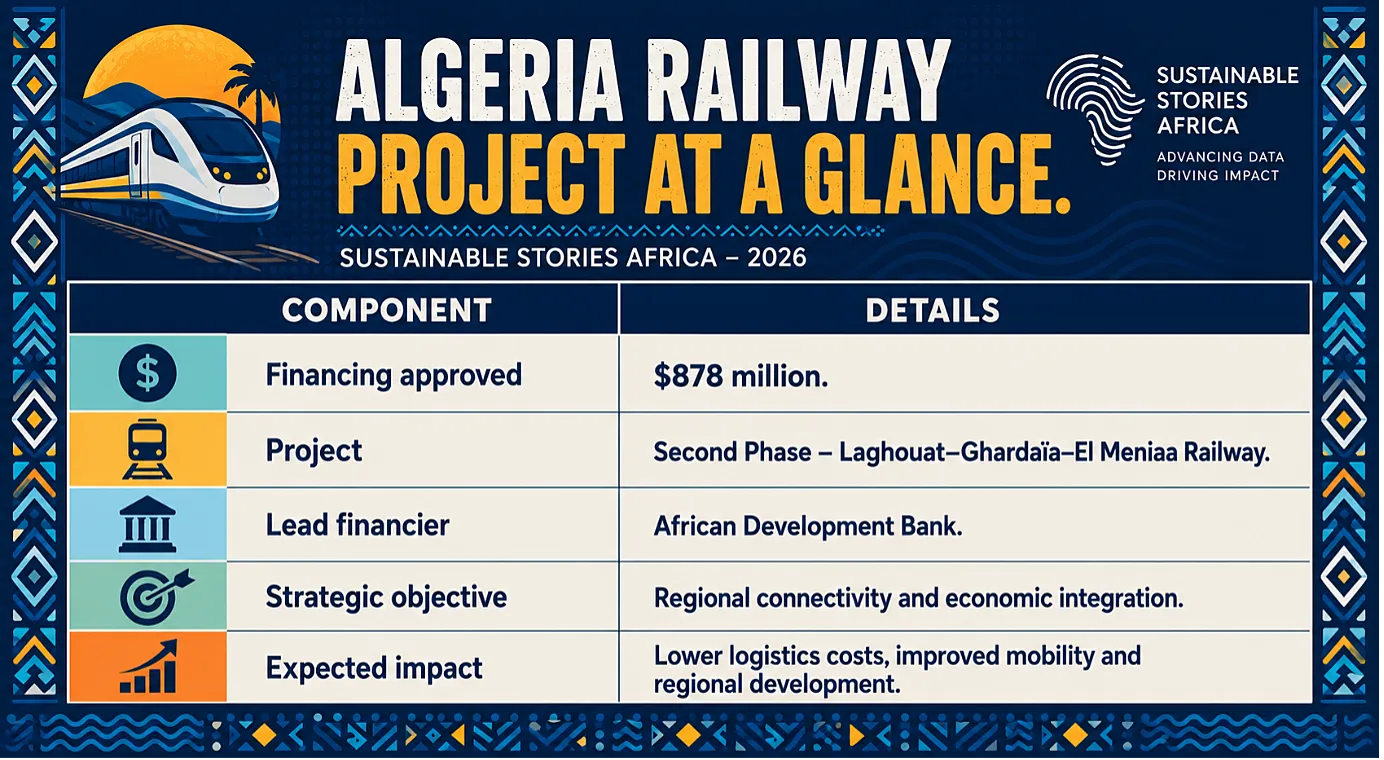
The investment also supports the African Development Bank's broader priorities of improving infrastructure, promoting regional integration and strengthening economic resilience across the continent.
Better Transport Creates Broader Economic Possibilities
Major transport infrastructure rarely transforms only the transport sector.
Reliable rail connectivity can stimulate industrial clusters, attract logistics companies, encourage tourism and expand employment opportunities across regions that have traditionally remained economically isolated.
- For local communities, improved transport often means easier access to healthcare, education and commercial centres.
- Farmers can move produce more efficiently, and mining companies can transport bulk commodities at lower cost
- Businesses gain greater confidence to invest in previously underserved regions.
The railway also strengthens resilience by diversifying transport options and reducing dependence on congested road corridors.
However, infrastructure alone cannot guarantee transformation.
Its success will depend on complementary investments in industrial zones, logistics facilities, skills development and policies that encourage private-sector participation.
Without these supporting measures, the railway’s full economic value could remain underutilised.
Turn Rail Investment Into Regional Prosperity
The approval of financing marks the beginning—not the conclusion—of Algeria's infrastructure ambition.
Successful implementation will require coordinated action among government agencies, contractors, financiers and local communities to ensure timely delivery, operational efficiency and long-term maintenance.
- Policymakers should complement the railway with industrial parks, logistics hubs and investment incentives that encourage businesses to establish operations along the corridor.
- Financial institutions can support enterprises seeking to leverage improved connectivity
- Private investors should identify opportunities in manufacturing, mining, agriculture and transport services.
If executed effectively, the railway could become a model for how strategic infrastructure accelerates economic diversification, strengthens regional integration and advances sustainable development across North Africa.
Path Forward – Integrated Infrastructure Must Drive Inclusive Growth
The Laghouat–Ghardaïa–El Meniaa railway demonstrates how strategic transport investment can unlock economic opportunity beyond major urban centres.
Continued collaboration between government, financiers and private investors will be essential to maximise its long-term impact.
By connecting infrastructure with industrial development and regional trade, Algeria can strengthen economic resilience, promote inclusive growth and advance ESG objectives through efficient, low-carbon transport systems that support future prosperity.