Development finance, business and investment leaders have called for private- sector-led structural transformation of African economies.
The message came at AfDB’s 2026 Annual Meetings in Brazzaville, where attention turned to industrial corridors and regional trade.
For African firms, the challenge is clear: grow from survival businesses into engines of jobs, production and competitiveness.
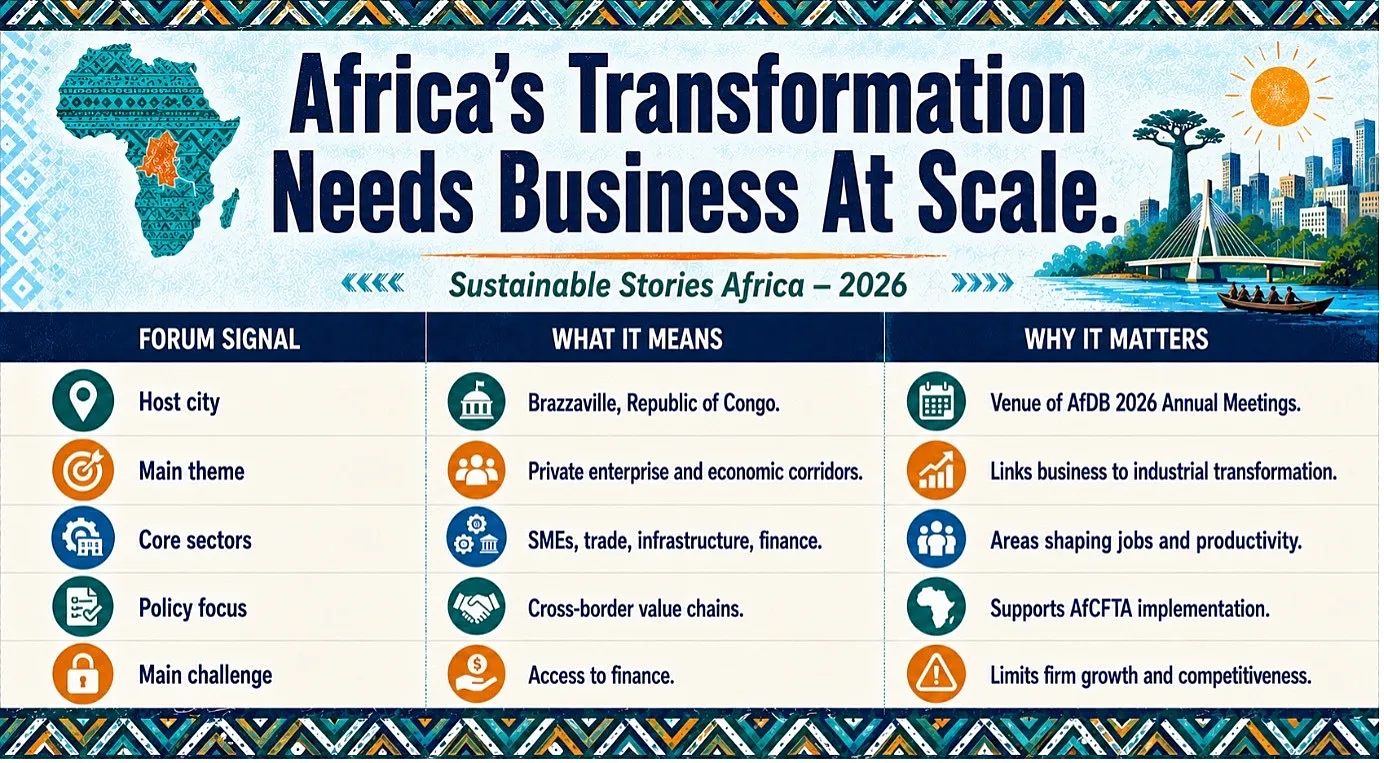
Africa’s Transformation Needs Business At Scale
Africa’s next development leap will not come from public finance alone.
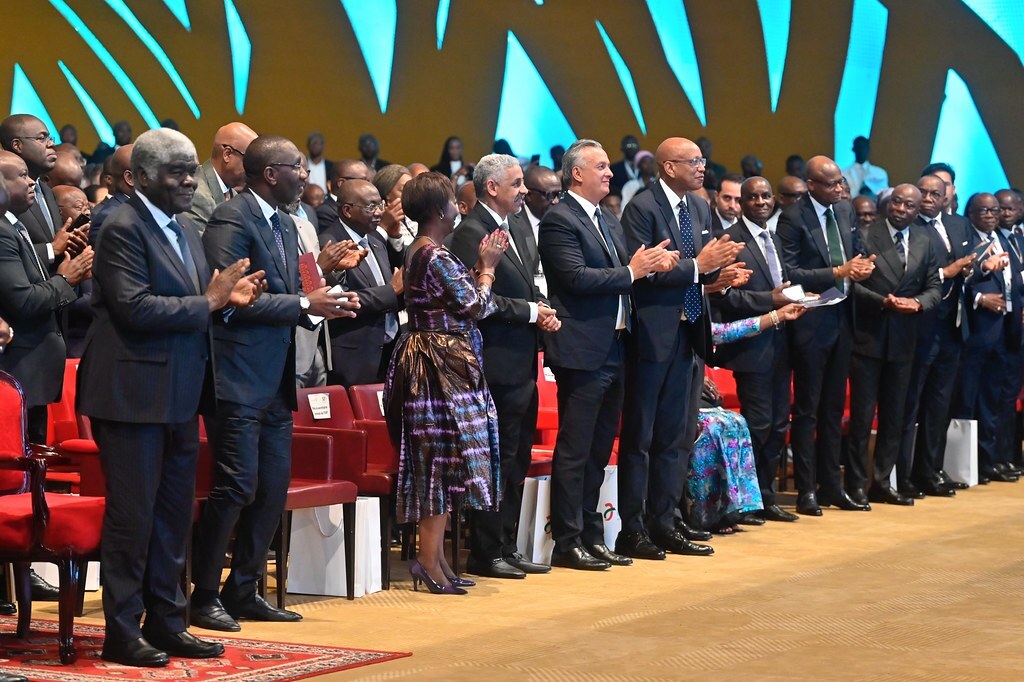
That was the central message from development finance leaders, ministers, investors and entrepreneurs who met in Brazzaville on the sidelines of the African Development Bank Group’s 2026 Annual Meetings.
At the Bank Group’s Private Sector Forum, participants argued that private enterprise, intra-regional trade and industrial value chains must become the main engines of Africa’s structural transformation.
The forum focused on the role and challenges of private enterprise in developing economic corridors and transforming African economies through industrialisation, cross-border value chains and intra-regional trade.
The discussion landed at a critical moment. Africa faces a large development financing gap, tighter global aid flows, debt pressure and rising jobs demand from a young population.
In that context, leaders said the continent must move beyond fragmented markets and unlock its own productive capacity.
SMEs Carry Africa, But Remain Constrained
The forum’s most important message was that Africa’s private sector is already central to the continent’s economy.
In developing African economies, private enterprise generates more than 80% of public revenue and more than 90% of jobs, while SMEs account for roughly 90% of private firms.
However, many of these businesses remain trapped below scale.
- A manufacturer may have local demand but lack working capital.
- A food processor may have regional buyers but no affordable trade finance.
- A logistics company may see opportunity across borders but face poor roads, customs delays and fragmented regulation.
This is the gap the forum sought to confront. Leaders argued that Africa would require not only more businesses but also stronger firms capable of producing, exporting, employing and competing across regional markets.
That requires development finance institutions, governments and commercial banks to align around infrastructure, de-risking tools, guarantees and investment-ready value chains.
The AfDB’s private sector agenda also connects directly to the African Continental Free Trade Area.
AfCFTA can only deliver if African firms can move goods, services and capital efficiently across borders.
Without finance, energy, logistics and predictable rules, the promise of a continental market risks remaining underused.
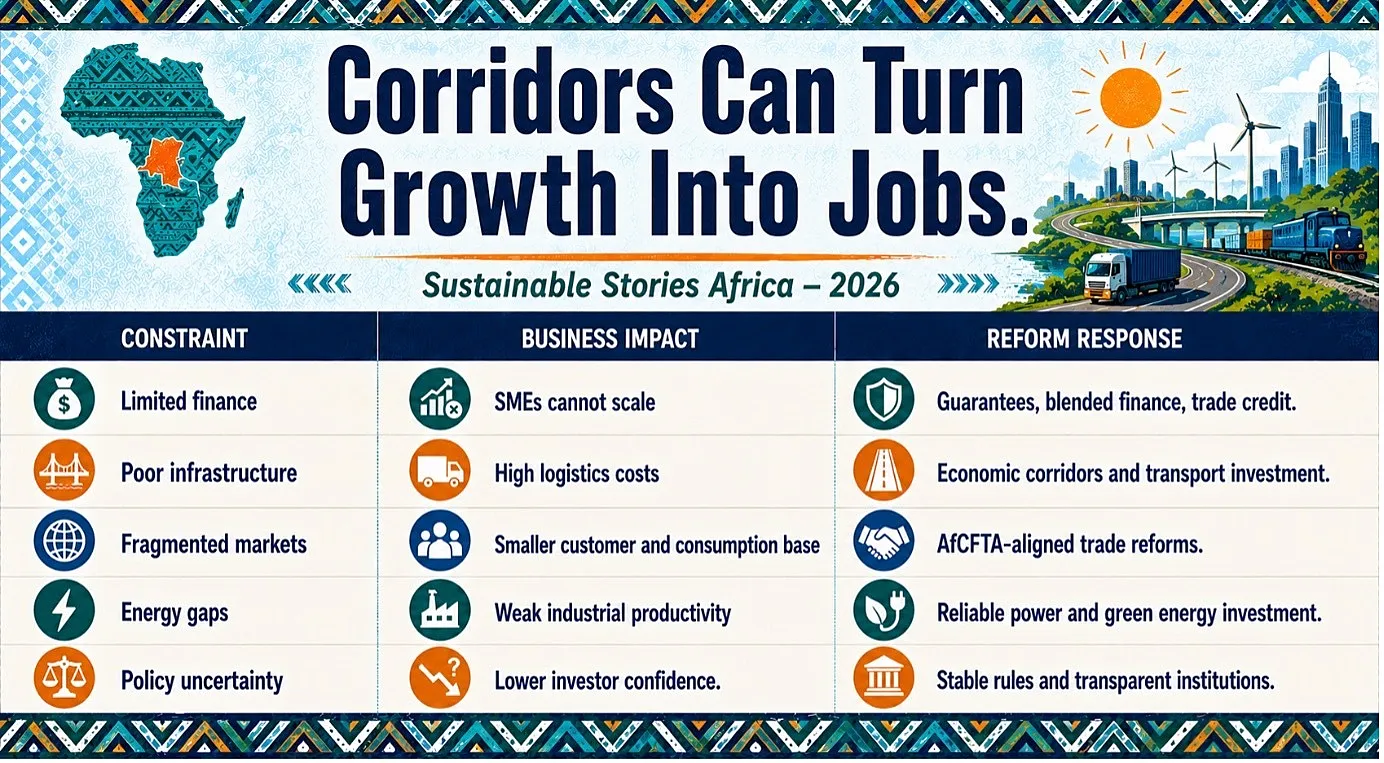
Desire: Corridors Can Turn Growth Into Jobs
The opportunity is substantial. Economic corridors can connect farms to processors, factories to ports, and small firms to larger regional buyers. When they work, they do more than move goods. They create clusters, reduce costs, attract investors and help countries shift from exporting raw materials to producing higher-value goods.
For a cassava farmer, that could mean access to a processor. For a young welder, it could mean work in an industrial park. For a woman-owned SME, it could mean a chance to supply a regional supermarket chain. For governments, it could mean a broader tax base and less dependence on commodity cycles.
The private sector-led model is not a retreat of the state. It is a call for smarter public action: better regulation, reliable infrastructure, stronger institutions, cleaner procurement and policies that help firms grow rather than remain informal and underfinanced.
Finance Must Reach Productive Firms
The forum’s call to action is straightforward: Africa must make private investment easier, safer and more productive.
- Governments should cut red tape, improve customs systems, strengthen contract enforcement and prioritise infrastructure that connects markets.
- Development finance institutions should expand risk-sharing instruments, local currency financing and guarantees for SMEs, national champions and cross-border projects.
- Commercial banks should move beyond short-term lending and support firms with patient capital, trade finance and advisory services.
Investors also have a role. Africa’s structural transformation will require capital willing to back manufacturing, agribusiness, logistics, clean energy, digital infrastructure and regional value chains.
The winners will be markets that combine policy credibility with bankable projects.
For citizens, the stakes are practical. Private sector transformation is not only about balance sheets. It is about jobs, wages, food prices, reliable services and the dignity of productive work.
Path Forward – Build Firms That Transform Economies
Africa’s next priority is to turn private enterprise into an engine of industrialisation, trade and decent jobs. That means finance, infrastructure and regulation must work together.
If implemented well, the AfDB forum’s message can advance sustainable development by backing productive firms, widening inclusion, strengthening regional markets and helping African economies grow through value creation rather than extraction.