The global race for critical minerals is accelerating as demand surges for electric vehicles, batteries, renewable energy systems, and digital technologies.
For Africa, home to some of the world’s most important mineral reserves, the moment presents an opportunity to move beyond raw commodity exports toward industrialisation and value creation.
The challenge is whether governments, investors, and institutions can turn mineral wealth into jobs, infrastructure, and long-term prosperity rather than another resource boom with limited local benefits.
Global Demand Creates Historic Opportunity
The global scramble for critical minerals is reshaping international trade, investment, and industrial policy. For Africa, the shift could become one of the most significant economic opportunities in decades.
According to a recent analysis by the Brookings Institution, the continent is uniquely positioned to benefit from rising demand for minerals essential to clean energy technologies, electric vehicles, batteries, semiconductors, and advanced manufacturing.
The report argues that Africa's challenge is no longer simply extracting minerals but capturing greater value from them through processing, industrialisation, and stronger participation in the supply chain.
The stakes are enormous. Africa possesses roughly 30% of the world's known mineral reserves, including major deposits of cobalt, lithium, manganese, copper, platinum group metals, and rare earth elements that are becoming increasingly important to the global energy transition.
As governments and companies worldwide seek secure supplies of critical minerals, competition for access is intensifying.
What happens next could determine whether Africa becomes merely a supplier of raw materials or a strategic industrial partner in the emerging green economy.
Moving Beyond Extraction Economics
For decades, many African economies have exported unprocessed minerals, with most of the value creation occurring elsewhere.
Refined materials, batteries, industrial components, and finished products generated jobs and tax revenues outside the continent.
Brookings argues that the current mineral rush offers a chance to break that pattern. Rather than focusing solely on extraction, African countries can develop processing capacity, strengthen regional value chains, and build industrial ecosystems around strategic minerals.
Early-stage processing of copper and lithium, for example, could translate to anchors for greater manufacturing development.
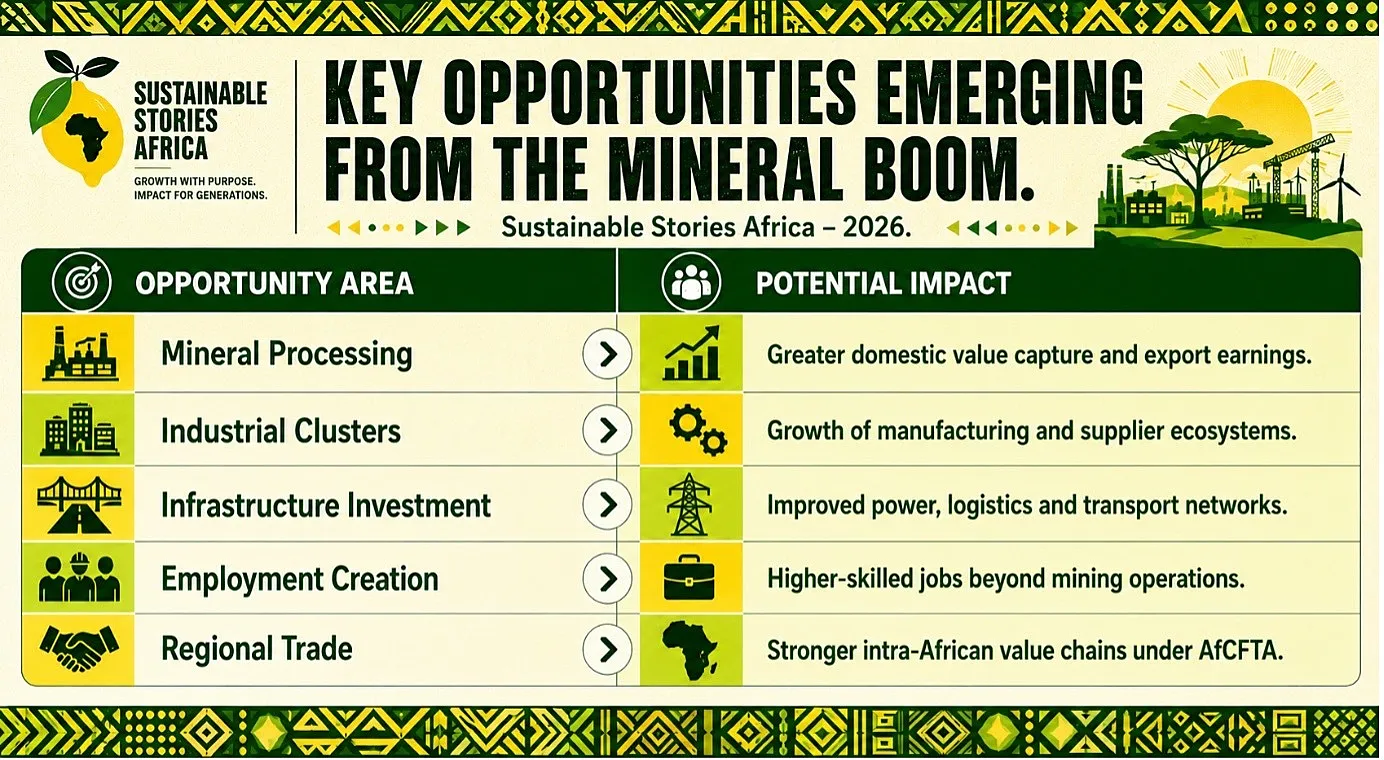
The opportunity is already attracting global attention. Countries and corporations are increasingly seeking diversified mineral supply chains amid concerns about concentration risks and geopolitical competition.
Africa's resource base has therefore become strategically important not only economically but also geopolitically.
However, history offers a cautionary lesson.
- Previous commodity booms often delivered growth without widespread prosperity.
Research shows mining can stimulate local economic activity, but long-term gains depend heavily on governance quality, institutional strength, and revenue management.
Building Prosperity Through Value Addition
The most compelling aspect of the Brookings argument is that Africa does not need to replicate past industrial models.
Instead, the continent can leapfrog older systems by developing transparent, ESG-compliant, and digitally enabled supply chains from the outset.
This approach could help African producers meet growing investor and buyer expectations around sustainability, traceability, and responsible sourcing.
The benefits extend far beyond mining.
Countries that develop processing facilities can create industrial jobs, attract manufacturing investment, strengthen export earnings, and deepen technology transfer.
Regional specialisation could also allow countries to focus on specific stages of production while benefiting from integrated African markets.
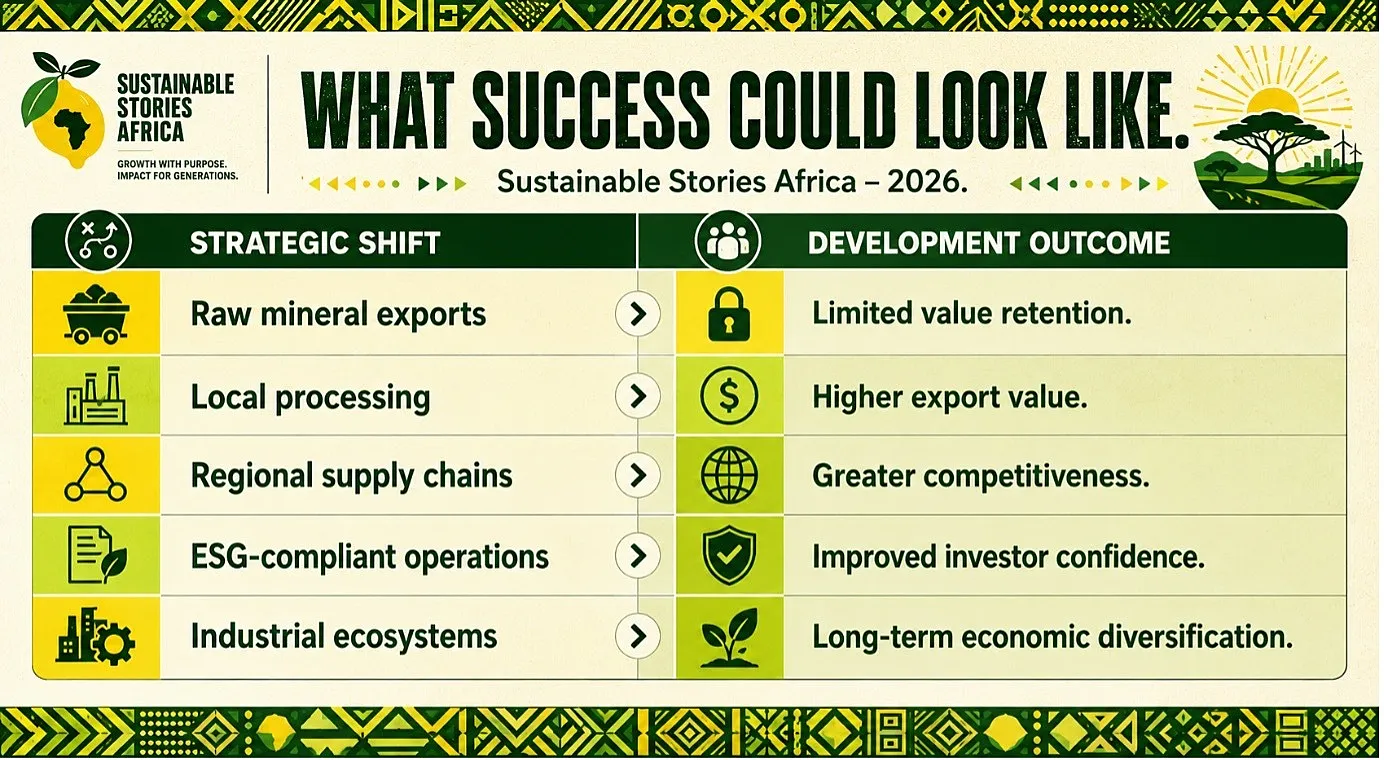
The broader prize is economic transformation. If managed effectively, the mineral boom could support infrastructure development, accelerate industrialisation, increase fiscal revenues, and strengthen Africa's role within global supply chains.
Policies Must Match The Opportunity
Capturing these benefits will require deliberate action.
Brookings and other analysts point to several priorities: improving regulatory certainty, investing in energy and transport infrastructure, expanding processing capacity, strengthening environmental and social governance standards, and promoting regional cooperation.
- Governments must also negotiate investment agreements that support local content development, skills transfer, and industrial upgrading.
- Investors, meanwhile, will need confidence that projects can operate within predictable policy environments.
The urgency is growing. Demand for critical minerals continues to rise as countries accelerate clean energy deployment and digital transformation.
The decisions made today will shape who captures the economic value generated by that demand over the coming decades.
Path Forward – Converting Resources Into Industrial Strength
Africa's critical minerals opportunity is ultimately a development challenge rather than a mining challenge.
Success will depend on converting geological wealth into industrial capability, infrastructure, jobs, and innovation.
The next phase requires coordinated action across governments, regional institutions, financiers, and industry leaders.
If the continent can move up the value chain while maintaining strong ESG standards, the global mineral rush could become a foundation for sustainable and inclusive economic transformation.
Culled From: How Africa can benefit from the global mineral rush | Brookings