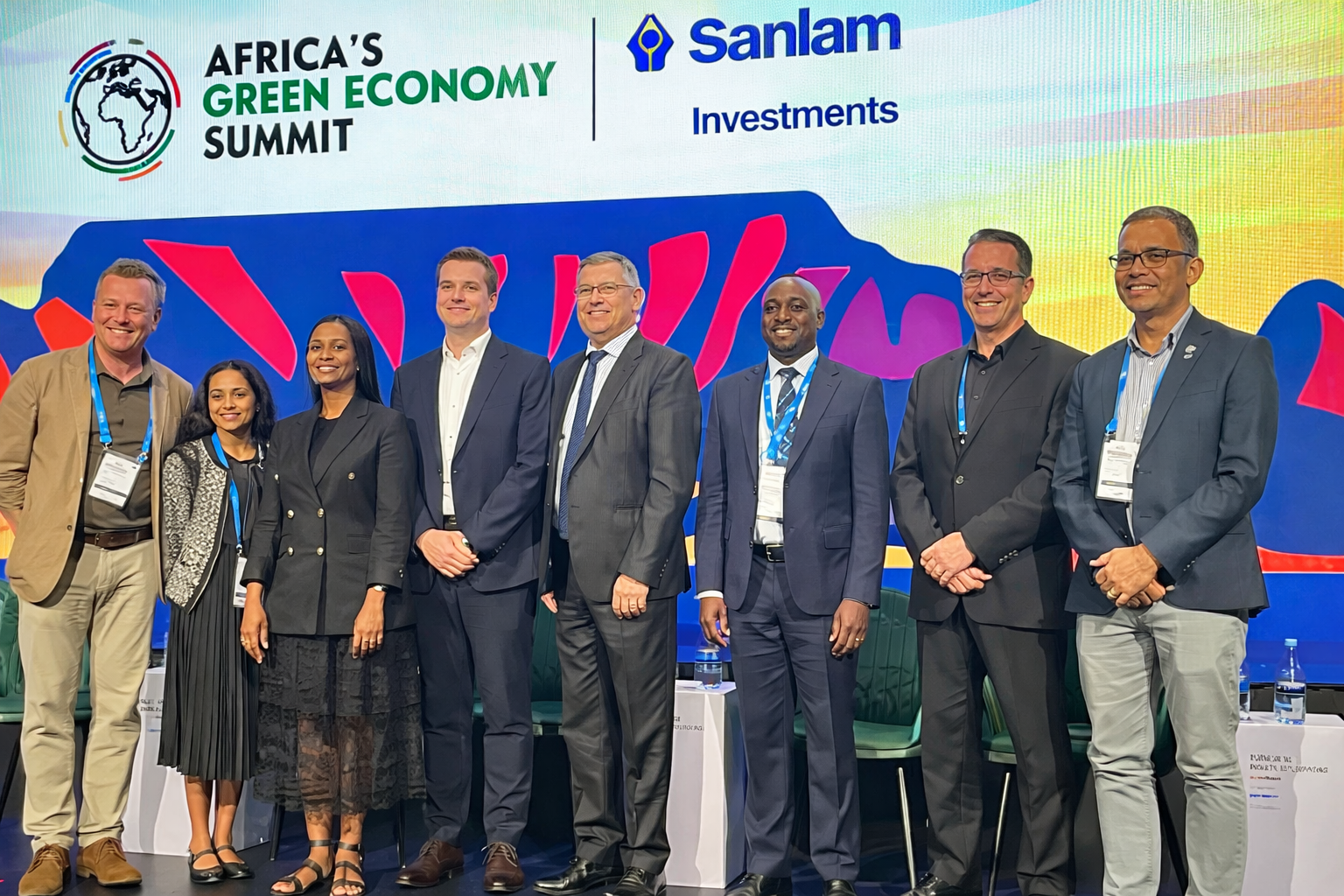
African policymakers and investors have called for a decisive shift toward a circular economy and scaled-up green investment at the 2026 Africa Green Economy Summit.
Leaders warned that without systemic reform, climate ambition risks outpacing implementation capacity.
The summit concluded that circular production models and blended finance structures will determine whether Africa converts climate vulnerability into industrial opportunity.
Africa Green Summit Calls Circular Reset
Delegates at the 2026 Africa Green Economy Summit urged governments and financiers to accelerate the continent’s transition to a circular economic model, arguing that linear “extract–use–discard” systems are undermining both environmental and fiscal sustainability.
Participants stressed that Africa’s green transition cannot rely solely on the deployment of renewables, but must embed resource efficiency, recycling industries and green industrialisation at scale.
The summit, hosted in Cape Town, convened policymakers, development banks, private equity leaders and sustainability advocates.
Discussions centred on closing Africa’s climate financing gap and mobilising domestic capital.
Linear Growth Models Under Pressure
Speakers noted that Africa contributes a small fraction of global emissions yet faces disproportionate climate risks.
Rapid urbanisation, waste mismanagement and commodity dependence expose economies to volatility.
Challenge | Current Model | Proposed Circular Shift |
|---|---|---|
Resource extraction | Export raw materials | Value-added processing |
Waste management | Disposal-focused | Recycling & reuse |
Industrial policy | Import dependence | Local green manufacturing |
Climate finance | Fragmented | Blended, scalable |
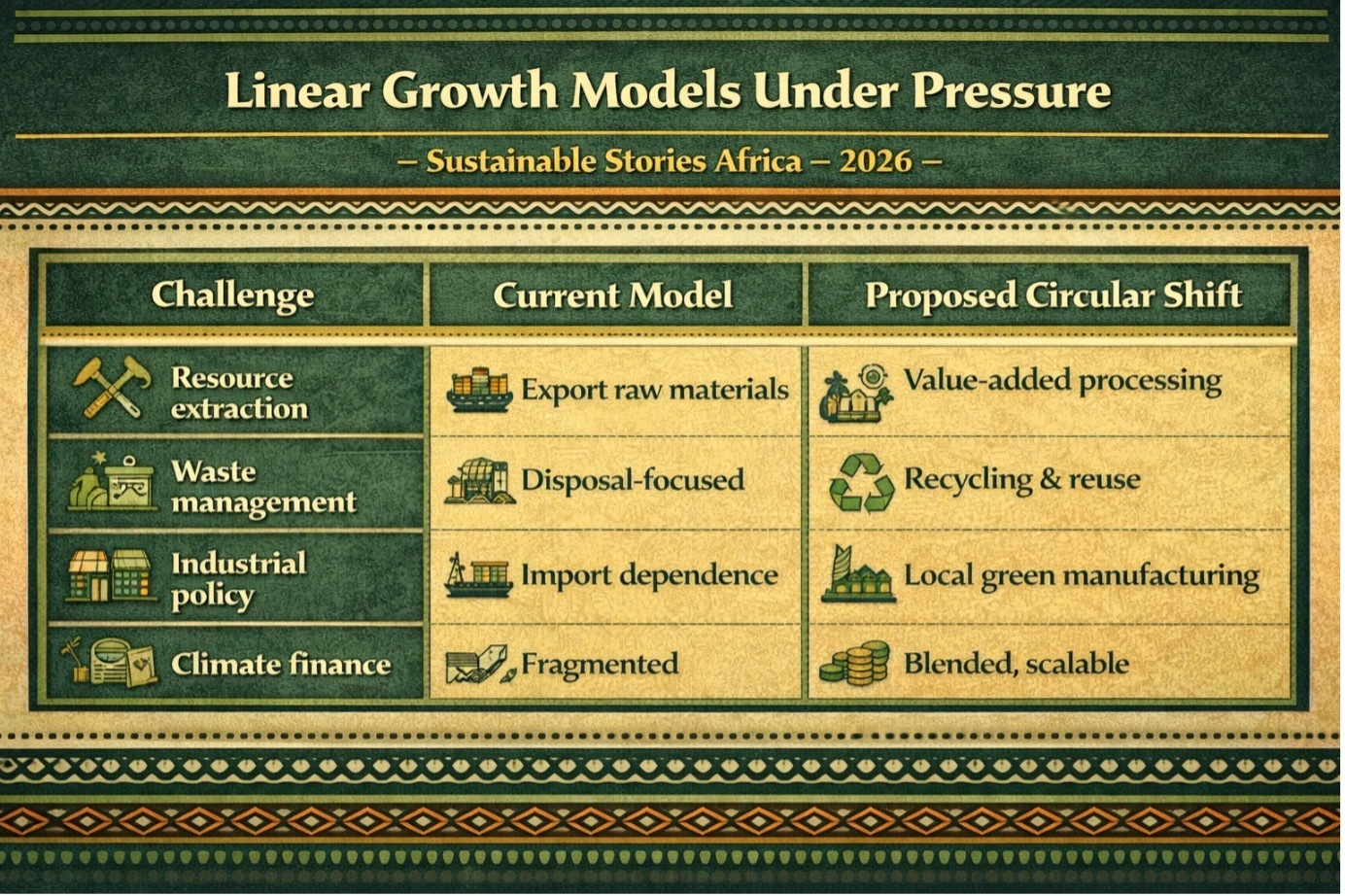
Delegates warned that failure to localise green value chains could replicate past extractive economic patterns.
Financing Determines Implementation Pace
Investment emerged as the central theme. Multilateral lenders highlighted blended finance as critical to de-risk private capital.
Domestic pension funds were encouraged to allocate greater volumes of their funds to infrastructure aligned with sustainability mandates.
Officials from the African Development Bank underscored that green bonds and sustainability-linked loans could mobilise billions if regulatory certainty improves.
Industry leaders emphasised that circular industries, including battery recycling, waste-to-energy, green hydrogen input and agro-processing, offer potential job creation and emissions reduction.
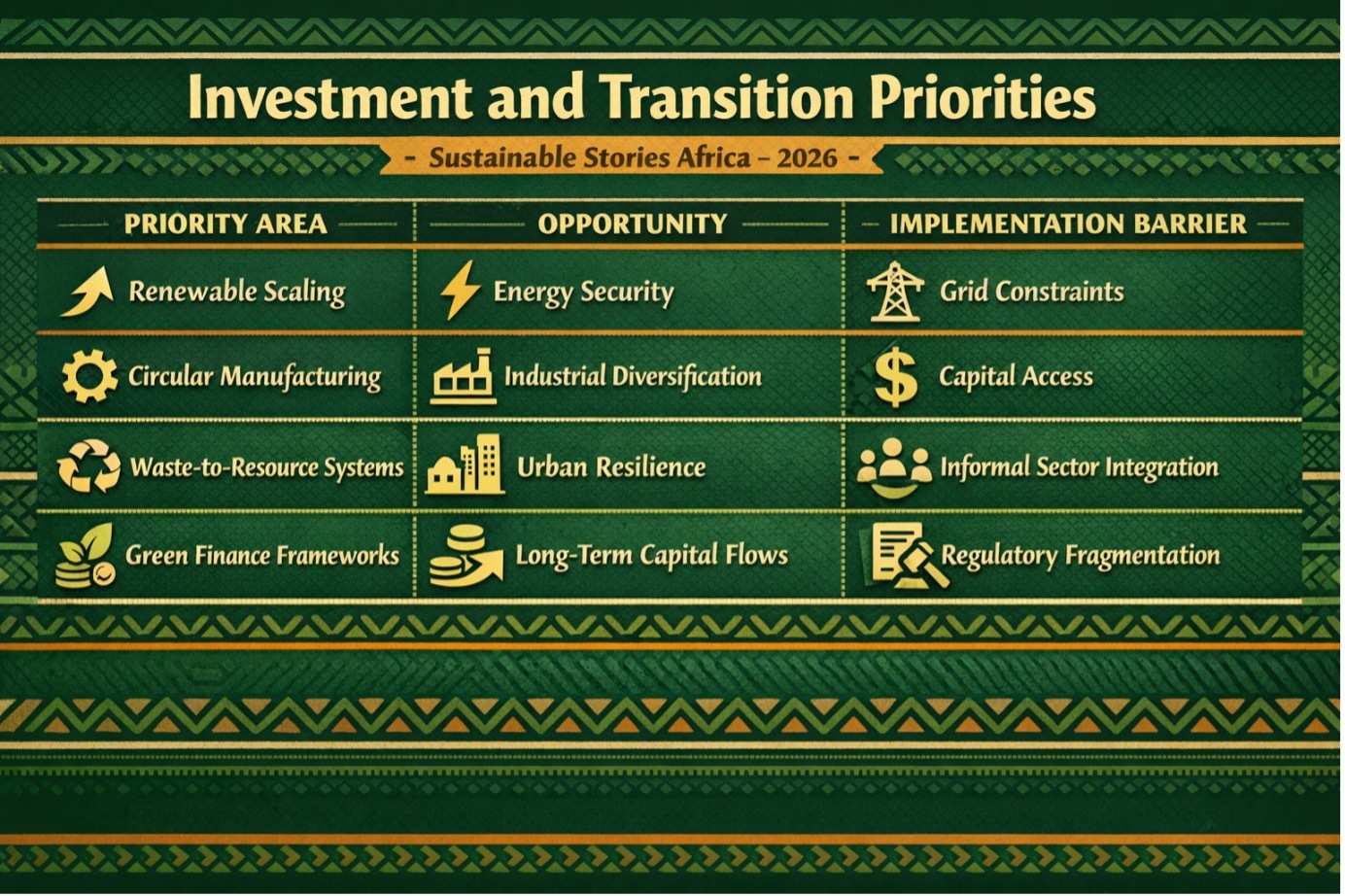
Investment and Transition Priorities
Priority Area | Opportunity | Implementation Barrier |
|---|---|---|
Renewable scaling | Energy security | Grid constraints |
Circular manufacturing | Industrial diversification | Capital access |
Waste-to-resource systems | Urban resilience | Informal sector integration |
Green finance frameworks | Long-term capital flows | Regulatory fragmentation |
Analysts noted that harmonised standards across African markets would ease cross-border investment.
Align Policy, Capital and Industry
Summit participants called for stronger policy coherence between trade, industrial and environmental ministries.
Incentives for recycled inputs, tax credits for green manufacturers and procurement mandates were proposed.
Private sector representatives argued that Africa must move from climate rhetoric to bankable project pipelines.
Transparent carbon markets and ESG-aligned reporting standards were cited as enablers of investor confidence.
“The circular economy is not environmental charity; it is industrial strategy,” one panellist remarked.
Path Forward – Scale Circular Finance, Harmonise Standards
Africa must institutionalise blended finance platforms and harmonised sustainability regulations to unlock green capital at scale.
By embedding circular principles into industrial policy and regional trade frameworks, governments can transform climate exposure into a competitive advantage.