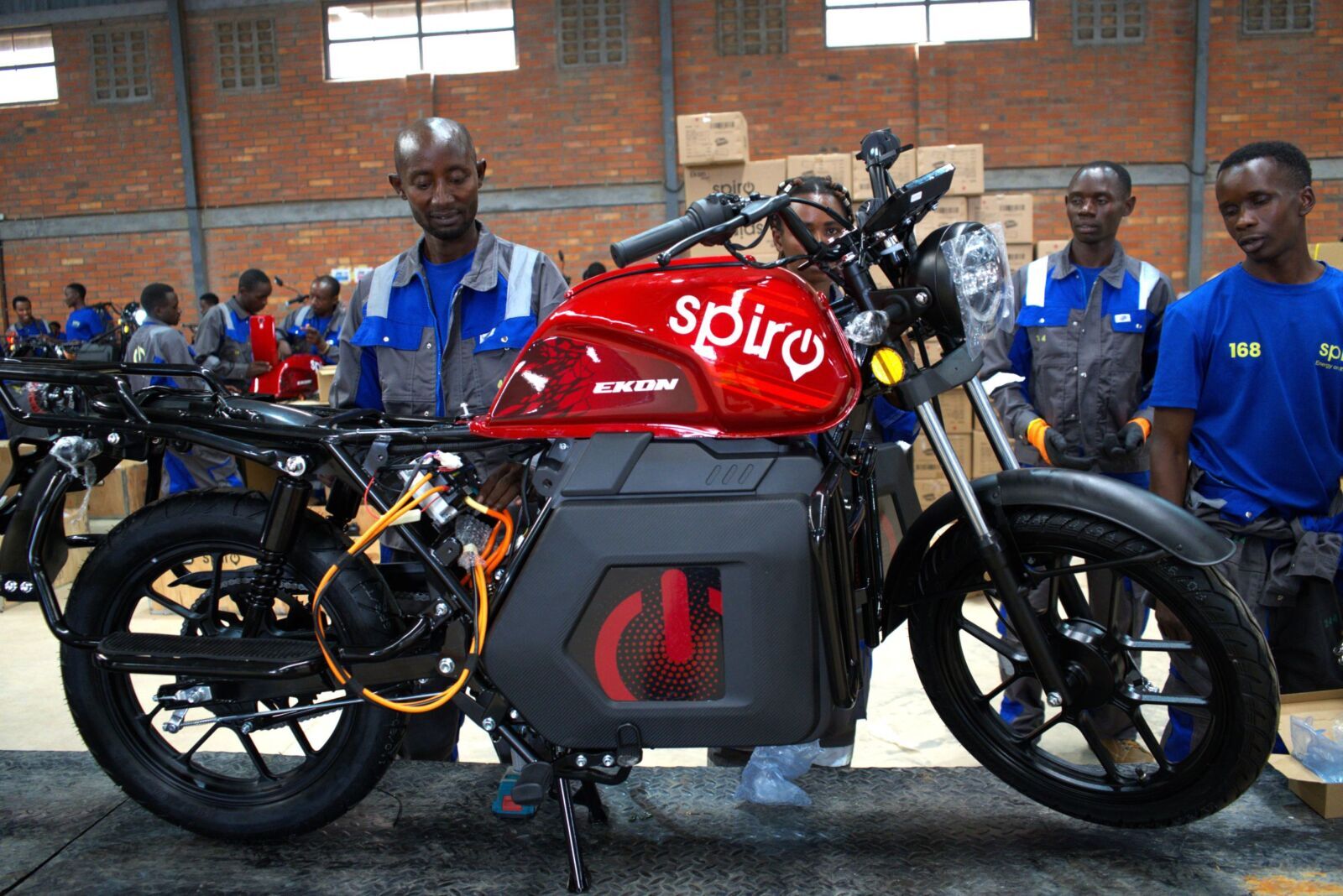
Spiro is rapidly expanding its electric motorcycle and battery-swapping network across African cities, betting that affordability and infrastructure innovation will unlock mass EV adoption.
The company’s model sidesteps charging constraints by separating vehicle ownership from access to the battery.
As fuel costs rise and climate pressures intensify, investors see Africa’s two-wheeler market as a pivotal frontier for electrification.
Electric Motorcycles Drive Spiro’s Pan-African Expansion
Spiro is accelerating the rollout of electric motorcycles and battery-swapping stations across several African markets, positioning itself at the centre of the continent’s evolving clean mobility transition.
The company’s strategy is built on a practical insight: Africa’s urban transport ecosystem is dominated by commercial two-wheelers, where cost sensitivity and daily mileage patterns favour rapid battery exchange over fixed charging infrastructure.
By decoupling battery ownership from vehicle purchase, Spiro reduces upfront costs for riders while retaining control of the most capital-intensive asset, the battery.
Electric Two-Wheelers Reshape Urban Transport
In many African cities, motorcycles are seen as the backbone of short-distance transportation and delivery services.
Rising petrol prices and currency volatility have increased operational costs for riders, squeezing already thin margins.
Electric motorcycles offer lower running costs but charging access and high upfront prices have slowed adoption.
Spiro’s battery-swapping model addresses both constraints: riders subscribe to energy access rather than owning the battery outright, enabling faster refuelling and reduced capital expenditure.
The approach mirrors emerging energy-as-a-service models seen in distributed solar markets.
Infrastructure Innovation Unlocks Market Scale
Spiro’s expansion strategy focuses on dense urban corridors where utilisation rates are highest. By deploying swapping stations strategically, the company ensures minimal downtime for commercial riders.
Investors are increasingly viewing the electrification of mobility not just as an environmental shift but as an economic restructuring of urban transportation systems.
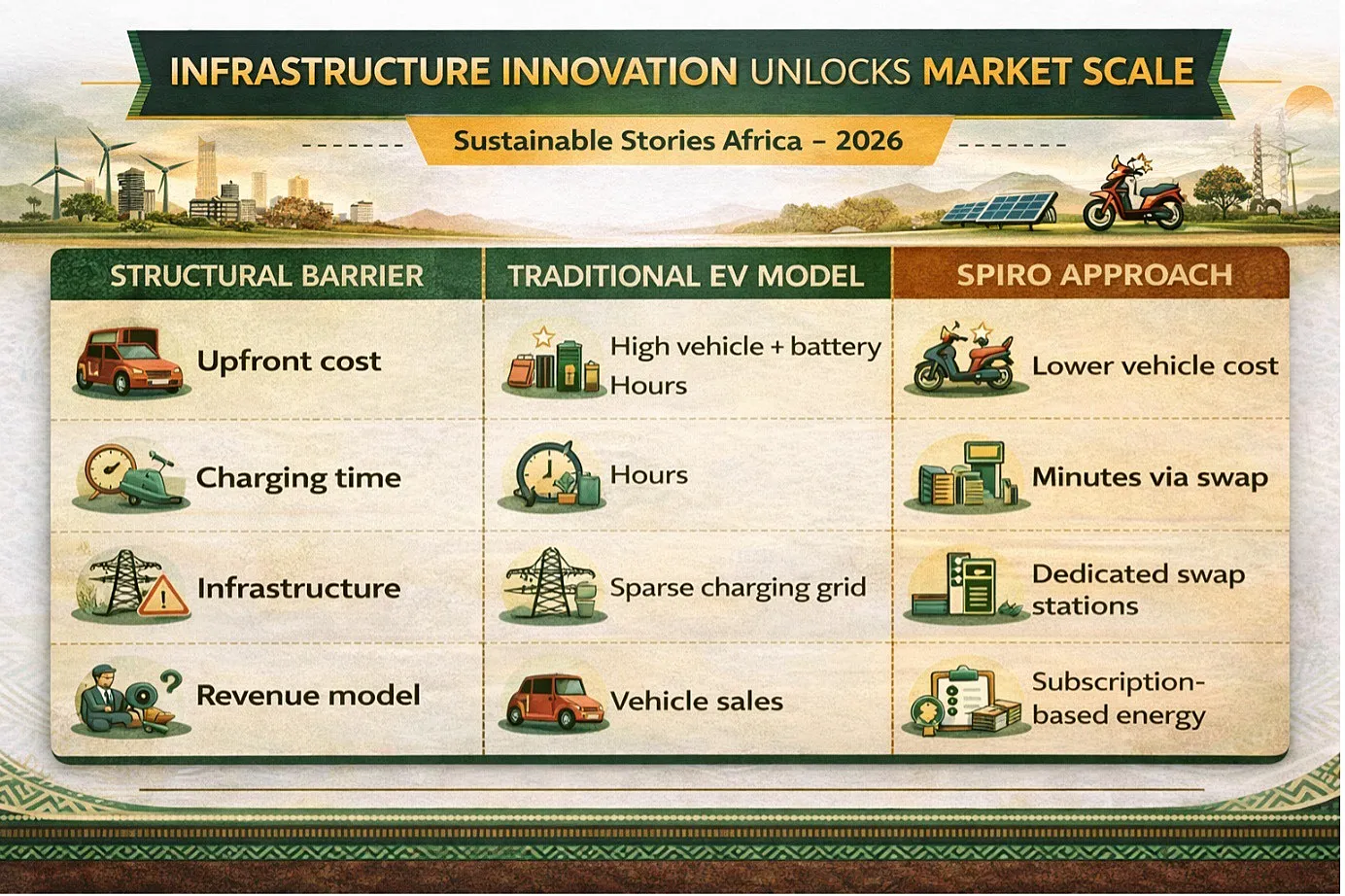
Structural Barrier | Traditional EV Model | Spiro Approach |
|---|---|---|
Upfront cost | High vehicle + battery | Lower vehicle cost |
Charging time | Hours | Minutes via swap |
Infrastructure | Sparse charging grid | Dedicated swap stations |
Revenue model | Vehicle sales | Subscription-based energy |
Energy analysts note that the battery remains the most expensive component of electric vehicles.
By centralising ownership, Spiro can manage lifecycle optimisation, maintenance and recycling more efficiently.
Growth Signals Emerging Mobility Shift
Spiro’s expansion spans multiple African markets, targeting high-density urban hubs. The company is expanding its fleet while building out its swapping infrastructure network.
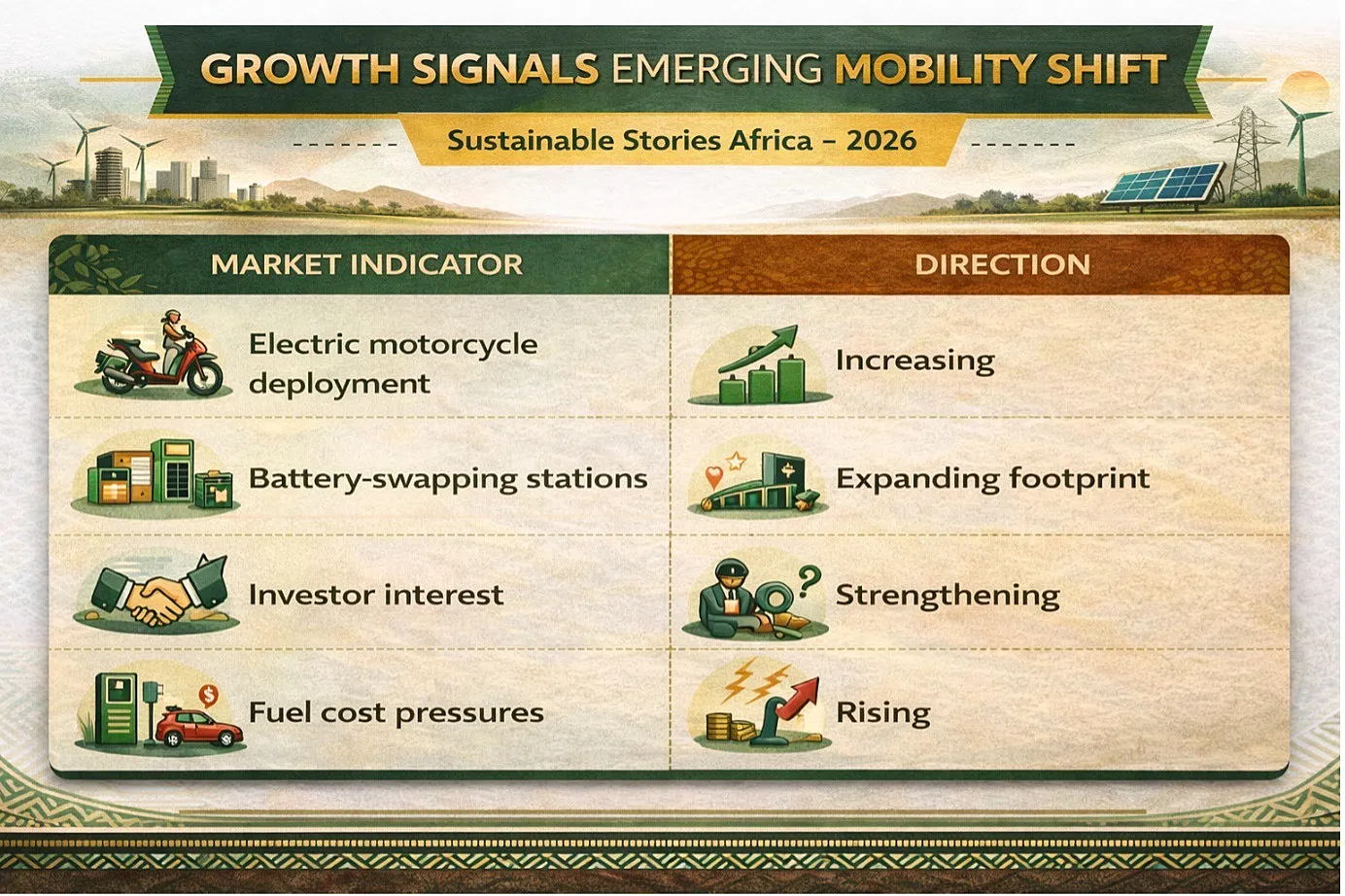
Market Indicator | Direction |
|---|---|
Electric motorcycle deployment | Increasing |
Battery-swapping stations | Expanding footprint |
Investor interest | Strengthening |
Fuel cost pressures | Rising |
As battery costs decline globally and climate finance mechanisms expand, electric mobility models are gaining institutional attention.
However, grid reliability, import duties and regulatory clarity remain critical variables that could influence scaling speed.
Action – Mobility Electrification Meets Climate Imperative
Transport accounts for a growing share of urban emissions in African cities. Electrifying high-frequency commercial motorcycles presents an opportunity to cut pollution while improving rider economics.
Policymakers face choices: streamline EV import rules, incentivise local assembly or integrate electric mobility into national energy transition plans.
Spiro’s model suggests that innovation tailored to local realities—rather than direct replication of Western charging networks—may be key to scaling adoption.
The broader implication is clear: Africa’s energy transition will likely unfold through decentralised, high-utilisation solutions that address cost sensitivity and infrastructure gaps simultaneously.
Path Forward – Scaling Infrastructure Anchors Mobility Transition
Spiro’s expansion underscores the importance of business models aligned with Africa’s transport realities. Battery-swapping reduces cost barriers while improving utilisation efficiency.
Future progress will depend on regulatory support, grid integration planning and capital flows that enable rapid station deployment—ensuring electric mobility becomes commercially sustainable at scale.
Prepared in line with the SSAL News Template and structured using Sustainable Stories Africa’s AIDAP framework.
Culled From: Spiro fuels electric vehicle expansion in Africa | Semafor