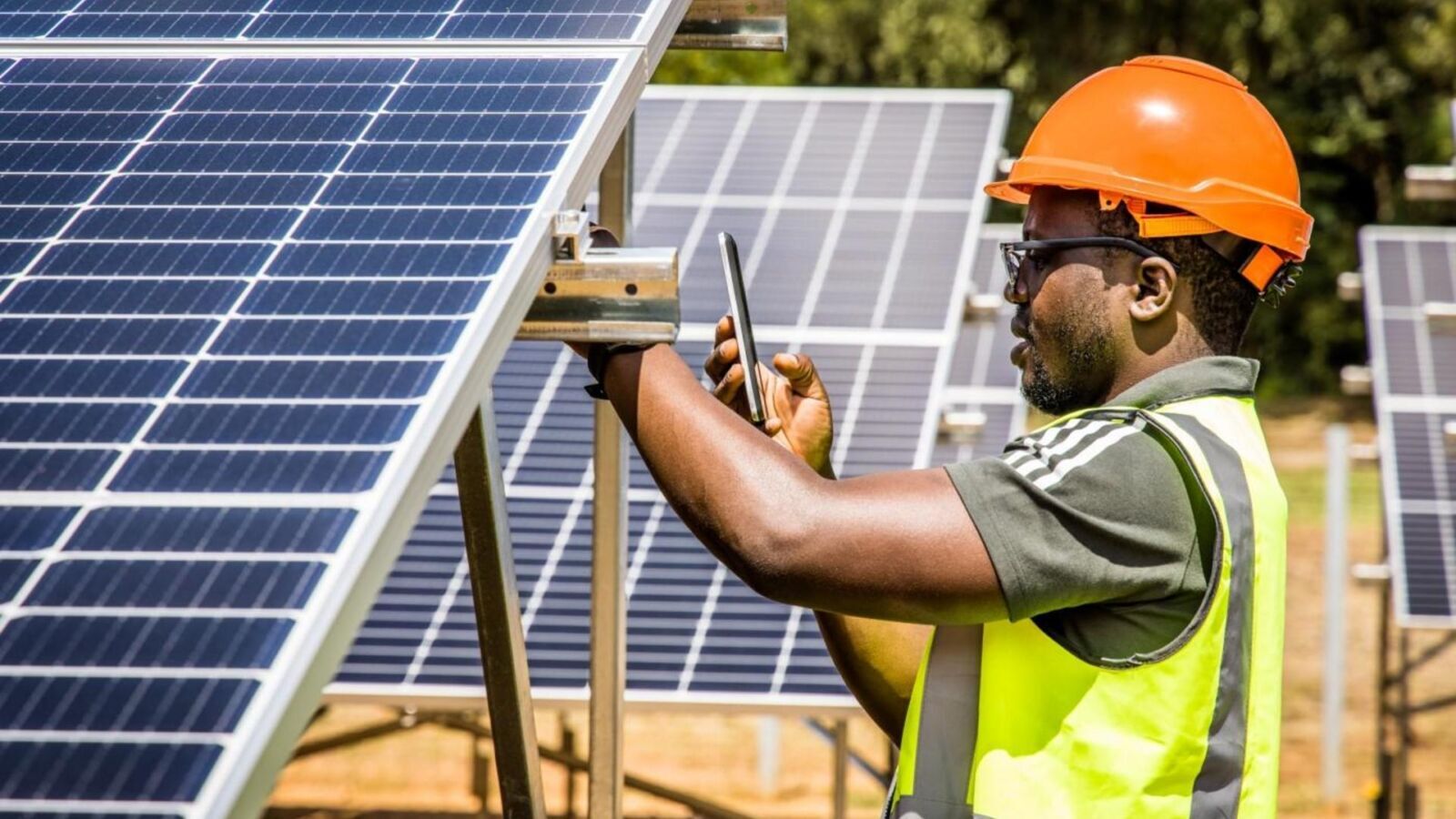
Businesses across Africa are installing solar panels at a record pace; however, many are discovering their electricity bills remain stubbornly high.
Energy experts say solar generation, while critical, does not eliminate grid charges, demand tariffs or backup fuel costs.
The reality: without storage, efficiency upgrades and smarter tariff structures, solar alone rarely delivers full financial relief.
Solar Alone Won’t Solve Energy Bills
Companies racing to escape volatile electricity tariffs are turning to rooftop solar and embedded generation.
However, analysts caution that solar installations, while reducing daytime grid consumption, rarely eliminate the structural drivers of high energy bills.
An energy consultant interviewed in a recent industry Q&A noted that businesses often underestimate fixed network charges, peak-demand tariffs and maintenance costs.
In markets such as South Africa, Eskom’s grid fees remain payable even when solar systems are operational.
Generation Cuts Consumption, Not Costs
Solar panels primarily reduce energy drawn during sunlight hours. However, commercial energy bills typically comprise multiple components:
Cost Component | Impact of Solar | Residual Exposure |
|---|---|---|
Energy usage (kWh) | Reduced during daylight | Evening consumption remains |
Demand charges | Limited impact | Peak tariffs still apply |
Network fees | No change | Fixed monthly costs persist |
Backup generation | Partial reduction | Diesel or storage required |
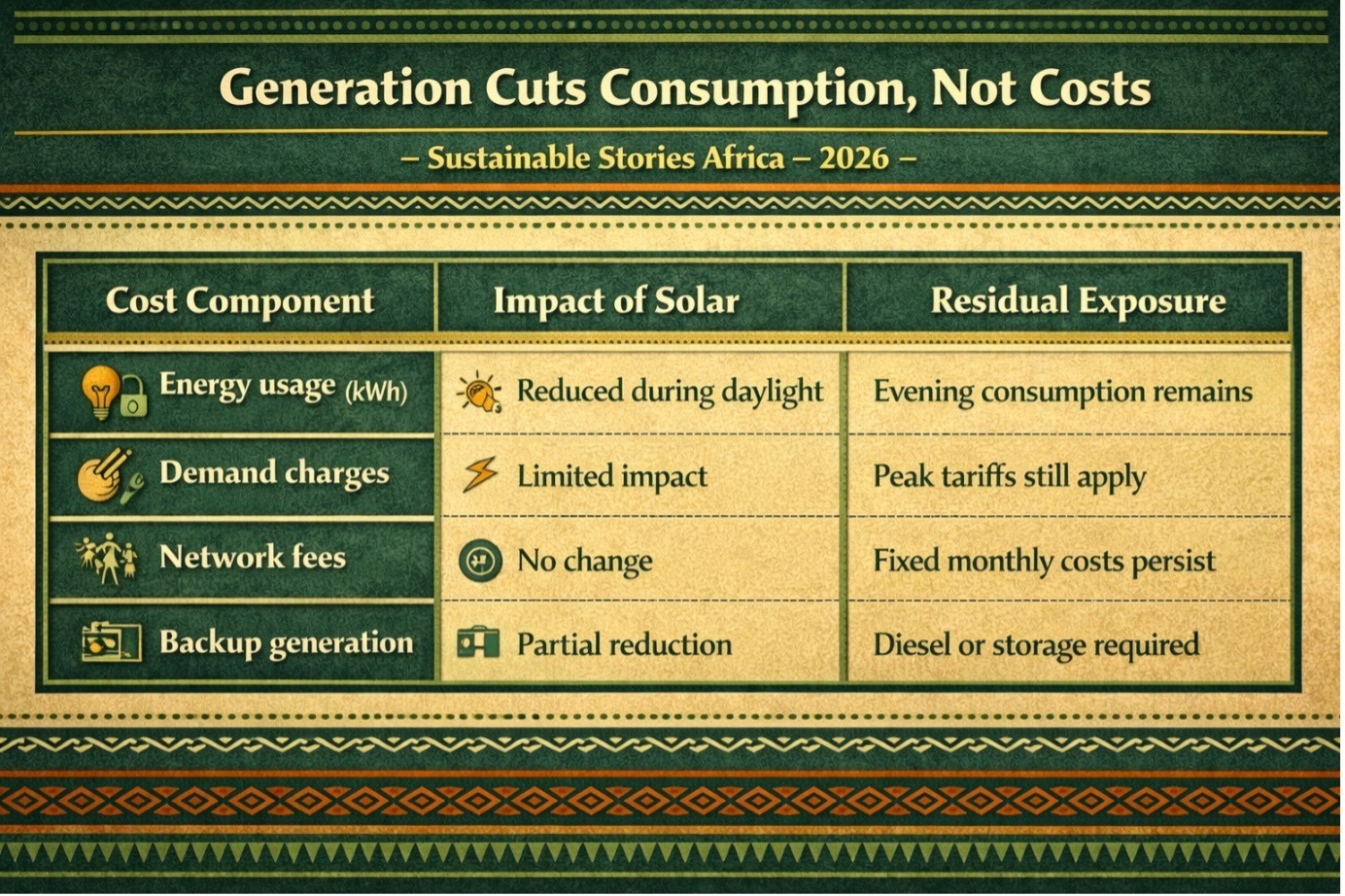
Experts stress that without battery storage, businesses must still draw from the grid at night or during cloudy periods.
This exposes firms to peak tariffs that can significantly inflate monthly costs.
Storage and Efficiency Are Critical
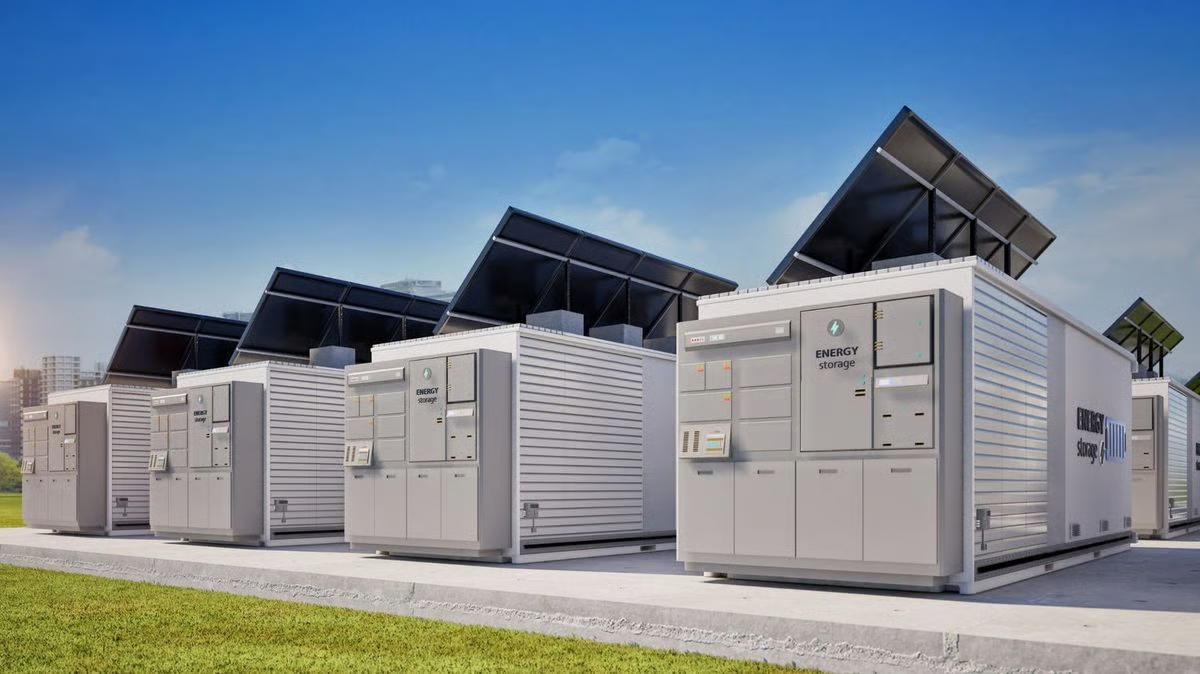
Energy strategists argue that pairing solar with storage systems is essential to flatten demand spikes.
Batteries allow companies to store surplus midday generation and discharge during evening peaks, reducing exposure to high tariffs.
Equally important are efficiency upgrades, such as LED retrofits, smart metering and process optimisation.
These measures lower baseline consumption, ensuring solar capacity is not overwhelmed by inefficient operations.
The Interviewee summarised the challenge: “Solar is generation; cost reduction is system design.”
Solar Versus Integrated Energy Strategy
Strategy | Capital Outlay | Bill Reduction Potential | Risk Profile |
|---|---|---|---|
Solar Only | Moderate | Partial | Tariff volatility remains |
Solar + Storage | Higher | Significant | Reduced peak exposure |
Solar + Efficiency | Moderate | Improved returns | Lower demand charges |
Integrated Model | Strategic investment | Maximum optimisation | Policy-dependent |
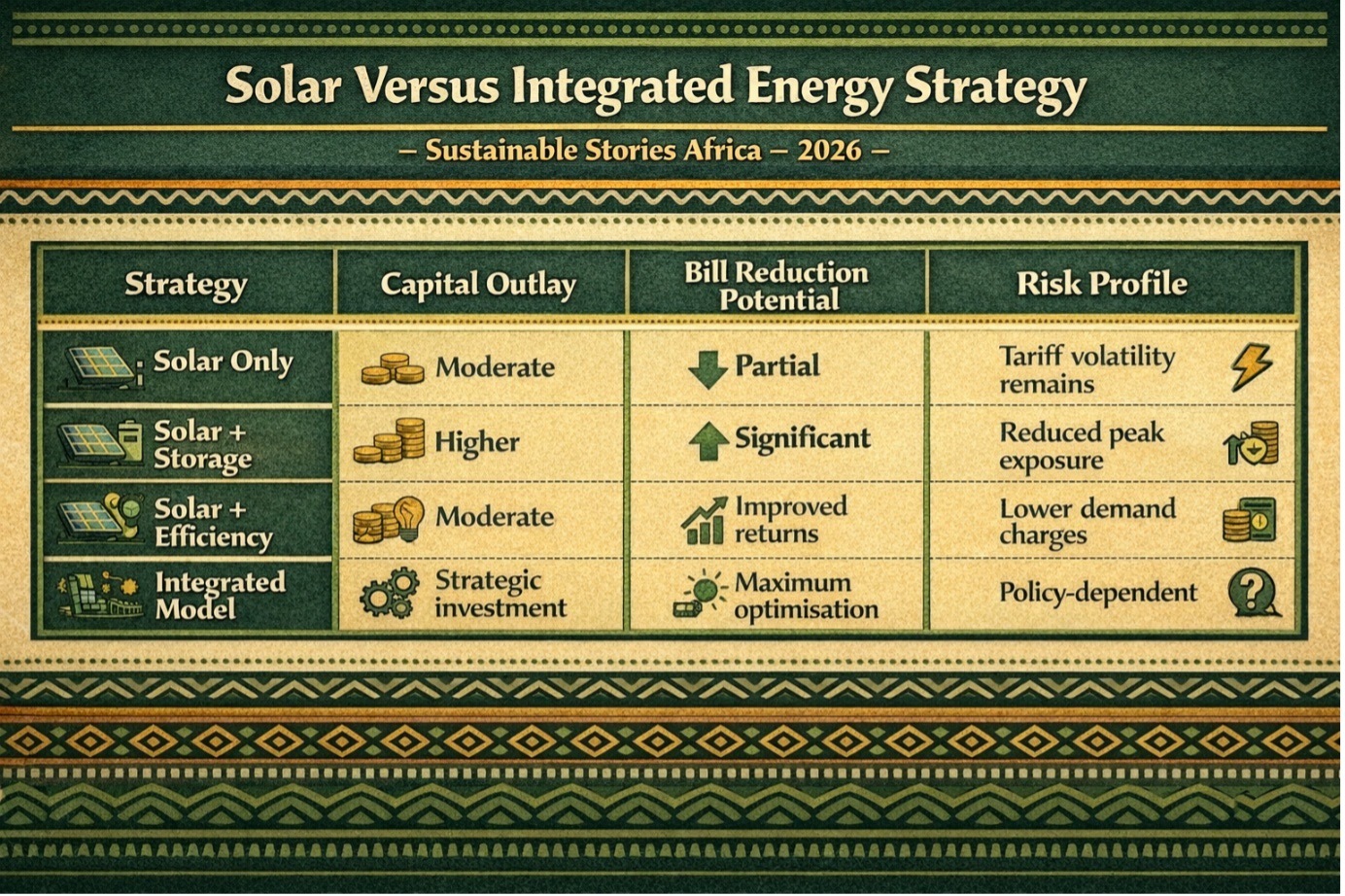
Industry modelling suggests integrated energy strategies deliver materially higher savings over five to ten years rather than standalone installations.
Rethink Tariffs and Financing Models
Experts say regulatory reform is also necessary. Tariff structures designed around centralised generation may inadvertently penalise embedded producers.
Financing mechanisms, including power purchase agreements (PPAs), leasing models and concessional green loans, can lower upfront costs and encourage integrated solutions.
Businesses are advised to conduct detailed load analyses before installation, to ensure that system sizing aligns with consumption patterns.
Advisers warn against viewing solar as a “plug-and-play” solution. Instead, firms should treat energy strategy as a portfolio decision that balances generation, storage and efficiency.
Path Forward – Integrate Generation, Storage, Efficiency
Businesses must adopt comprehensive energy management strategies rather than relying solely on rooftop installations.
Policy reform, smarter tariffs and accessible financing can unlock full savings, transforming solar from partial relief into durable cost stability.
Culled From: Q&A: Why solar alone won’t fix your business energy bills