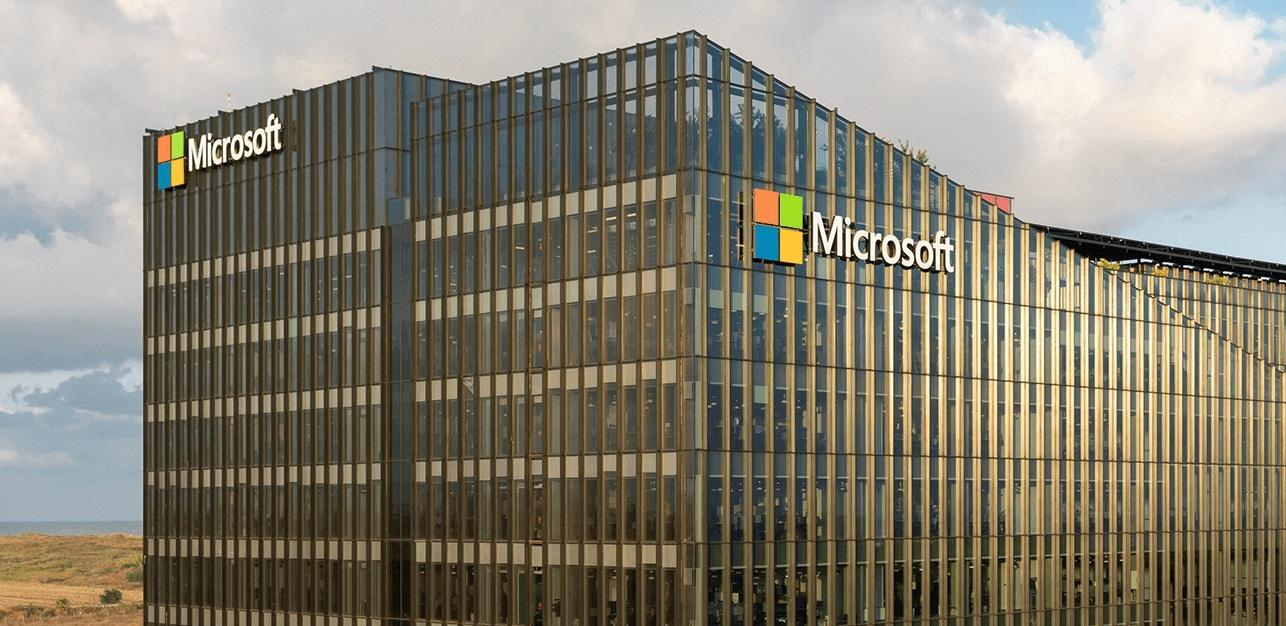
Microsoft has indicated that it has reached 100% renewable electricity coverage for its global operations.
The milestone marks a significant checkpoint in the company’s pledge to become carbon negative by 2030.
However, as artificial intelligence infrastructure expands, the question shifts from procurement to permanence: can renewable matching keep pace with the growth of energy demand?
Microsoft Achieves Renewable Electricity Milestone in Carbon Journey
Microsoft Corp. has announced that it has reached 100% renewable electricity coverage for its global operations, a key target within its broader commitment to become carbon negative by 2030.
The achievement means the company now procures enough renewable energy, through power purchase agreements (PPAs) and direct investments, to match its annual electricity consumption across offices, campuses and data centres.
The milestone reinforces Microsoft’s position as one of the largest corporate buyers of renewable power globally.
However, sustainability analysts note that electricity decarbonisation represents only one component of the company’s wider emissions profile, which includes supply chain (Scope 3) emissions and embodied carbon in infrastructure.
Renewable Procurement Milestone Achieved
Microsoft’s renewable electricity target forms part of its Climate Pledge framework, under which the company has committed not only to reduce emissions but to remove more carbon than it emits by 2030.
The renewable milestone was achieved through long-term agreements supporting solar and wind projects across multiple regions. These agreements contribute to the addition of new clean energy capacity to grids.
However, renewable matching operates primarily on an annual accounting basis. Grid variability and regional energy mixes suggest that real-time decarbonisation remains complex, especially with the expansion of energy-intensive AI services.
Carbon Negative Ambition Expands Scope
Microsoft’s strategy extends beyond electricity. The company has pledged to halve its Scope 1 and 2 emissions and address Scope 3 emissions tied to suppliers, construction materials and hardware manufacturing.
AI-driven cloud growth presents both opportunity and emissions pressure. Data centre expansion increases electricity demand and embodied carbon in physical infrastructure.
Key climate levers include:
- Scaling carbon removal investments
- Enhancing supplier decarbonisation requirements
- Deploying energy-efficient server architectures
- Supporting grid decarbonisation through long-term PPAs
Microsoft has also established a climate innovation fund to accelerate the decarbonisation of technologies and sustainable materials.
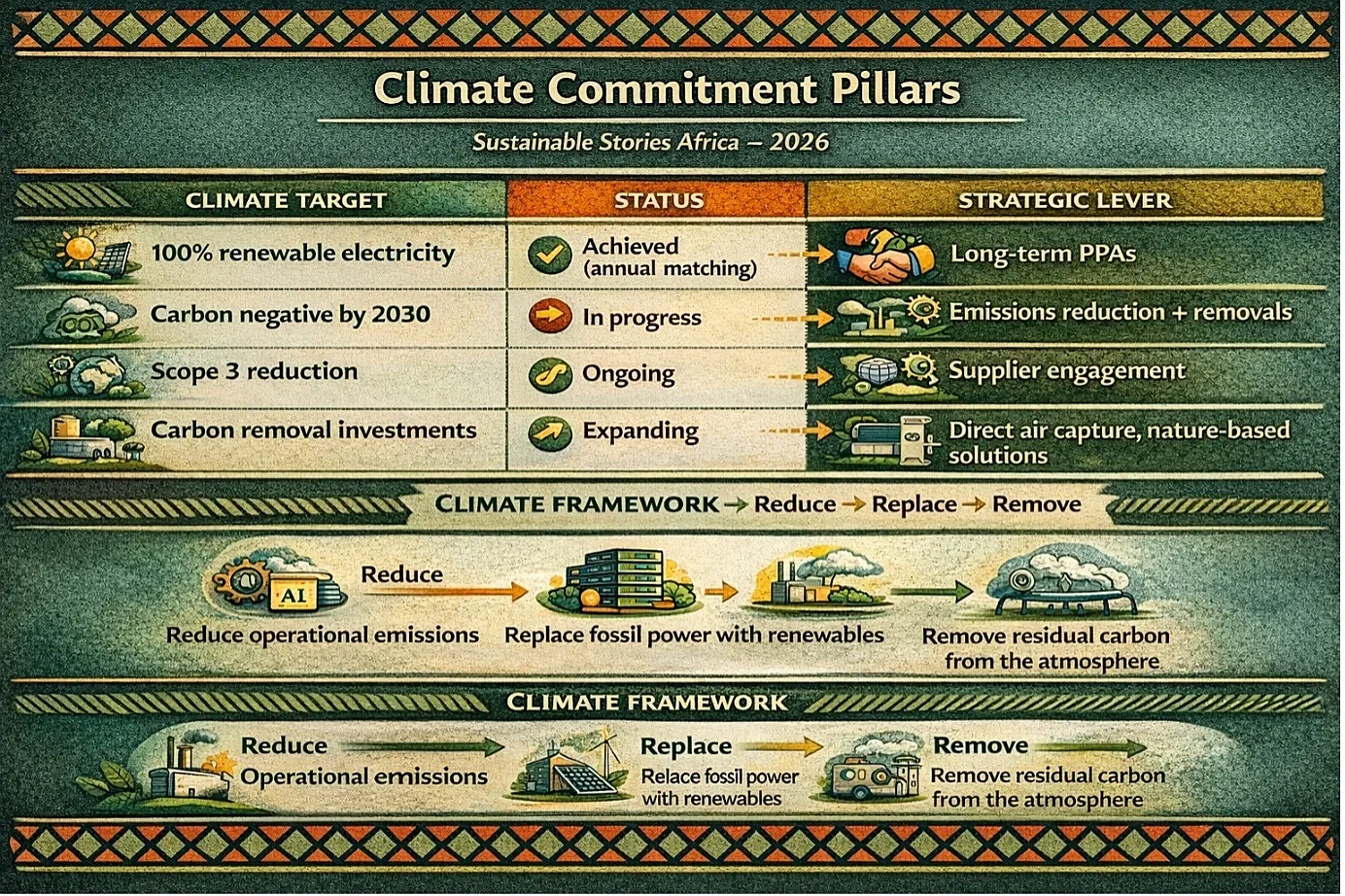
Climate Commitment Pillars
| Climate Target | Status | Strategic Lever |
|---|---|---|
| 100% renewable electricity | Achieved (annual matching) | Long-term PPAs |
| Carbon negative by 2030 | In progress | Emissions reduction + removals |
| Scope 3 reduction | Ongoing | Supplier engagement |
| Carbon removal investments | Expanding | Direct air capture, nature-based solutions |
From Matching to Real-Time Decarbonisation
Climate analysts argue that the next frontier for technology firms is hourly carbon accounting, which aligns electricity consumption with renewable generation on a per-hour basis rather than annual balancing.
Microsoft has indicated interest in advancing grid transparency and supporting 24/7 carbon-free energy models. Achieving this will require infrastructure upgrades, deployment of energy storage and policy coordination.
For investors, the renewable milestone strengthens Microsoft’s ESG profile. However, credibility will hinge on measurable progress toward absolute emissions reductions and scalable carbon removal.
The company’s trajectory illustrates a broader corporate shift: climate pledges are increasingly judged not by announcements alone, but by verifiable data and systemic impact.
Path Forward - Shift From Matching to Permanence
Microsoft’s next climate chapter centres on durability, ensuring renewable procurement translates into real-time grid decarbonisation and lasting carbon removal.
Embedding hourly energy matching, accelerating supplier transformation and scaling high-quality carbon removals will determine whether its carbon-negative ambition becomes a structural reality.
Culled From: Microsoft Reaches 100% Renewable Electricity Milestone in Carbon Negative Journey