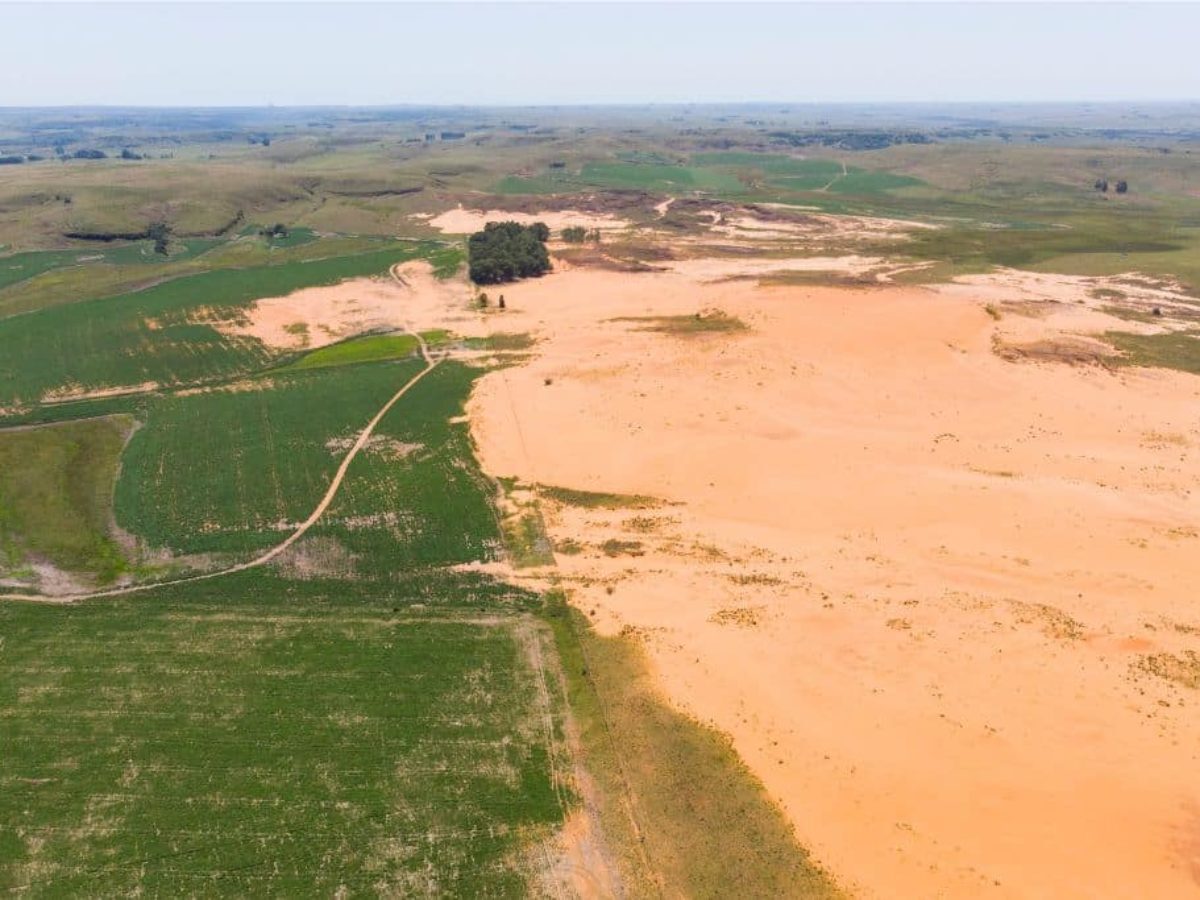
Grasslands, the world’s overlooked carbon vaults, are disappearing nearly four times faster than forests, according to a new global study.
The findings challenge long-held conservation priorities that have focused overwhelmingly on tree cover, leaving savannahs, prairies and rangelands exposed to conversion and degradation.
For Africa, home to some of the planet’s largest savannah ecosystems, the implications are immediate: climate resilience, food security and biodiversity are at stake.
Grasslands Vanish Faster Than Forests
A major global study has found that grasslands are being lost at nearly four times the rate of forests, underscoring a blind spot in international conservation policy.
Researchers warn that the rapid conversion of these ecosystems, largely for agriculture, infrastructure and urban expansion, is accelerating biodiversity collapse and weakening global carbon storage systems.
While deforestation has dominated climate headlines for decades, grasslands, including savannahs, pampas and prairies, have received comparatively little protection.
However, scientists say they play a critical role in regulating the climate, supporting livestock economies and sustaining rural livelihoods across continents.
The study highlights that grasslands store significant carbon below ground in extensive root systems and soil layers. When converted, it is released, intensifying greenhouse gas emissions.
Overlooked Ecosystems Face Accelerating Loss
Grasslands account for roughly 40% of the Earth’s land surface and support millions of species, including pollinators essential to global food systems.
In Africa alone, savannahs underpin pastoral economies and wildlife tourism.
However, global conservation funding has disproportionately favoured forest protection.
Researchers argue that this imbalance has allowed grasslands to be ploughed, fragmented or misclassified as “degraded land,” despite their ecological richness.
The findings reveal that conversion to cropland is the dominant driver of loss, followed by infrastructure expansion and settlement growth.
Carbon Storage Beyond Tree Cover Narratives
Unlike forests, where carbon is visibly stored in trunks and canopies, grasslands store most of their carbon underground.
This makes their climate value less obvious and less politically compelling.
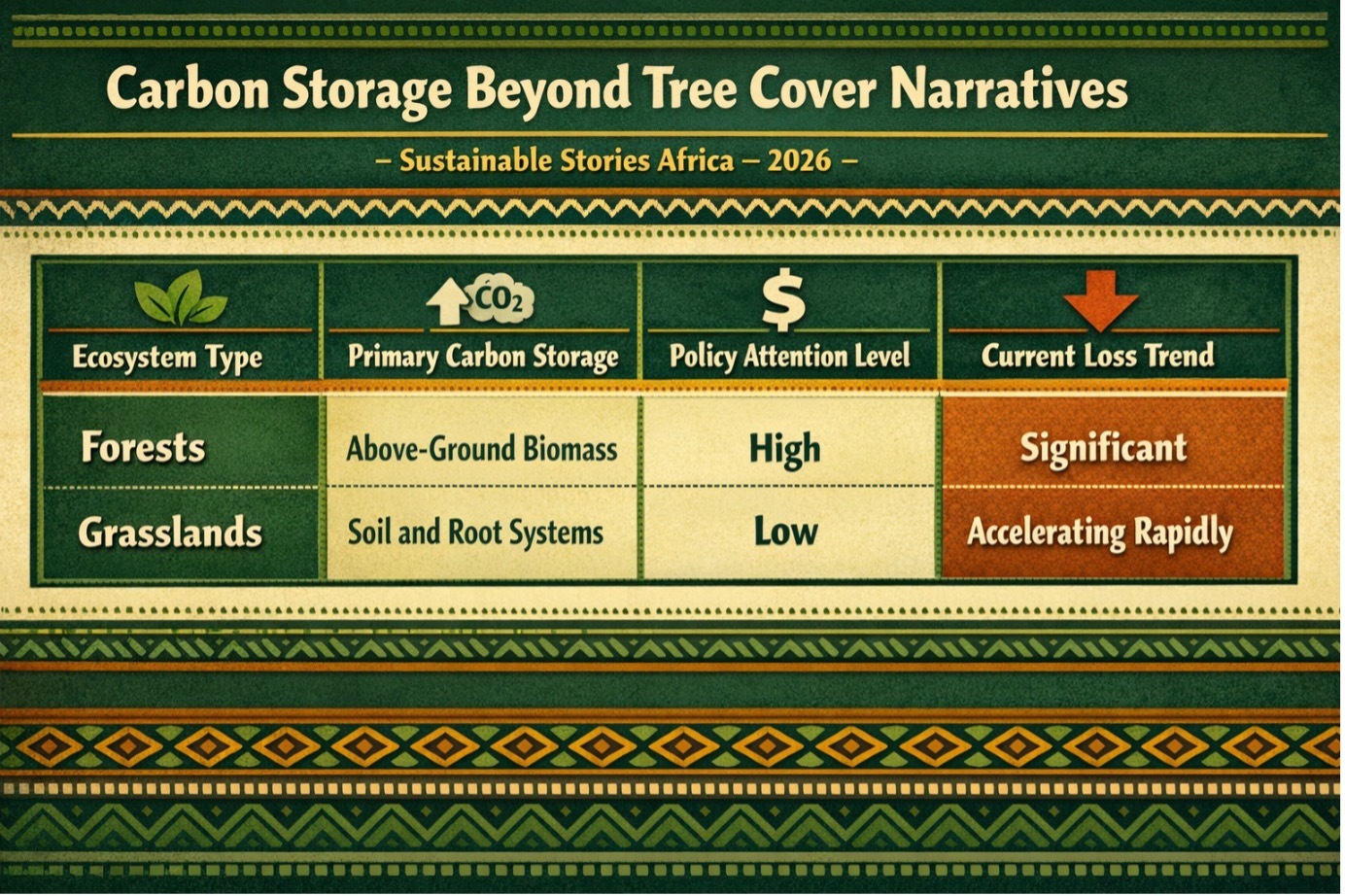
Below is a summary of ecosystem comparison metrics:
Ecosystem Type | Primary Carbon Storage | Policy Attention Level | Current Loss Trend |
|---|---|---|---|
Forests | Above-ground biomass | High | Significant |
Grasslands | Soil and root systems | Low | Accelerating rapidly |
Scientists caution that restoration strategies centred solely on tree planting may inadvertently harm native grasslands, alter hydrological systems and threaten endemic species.
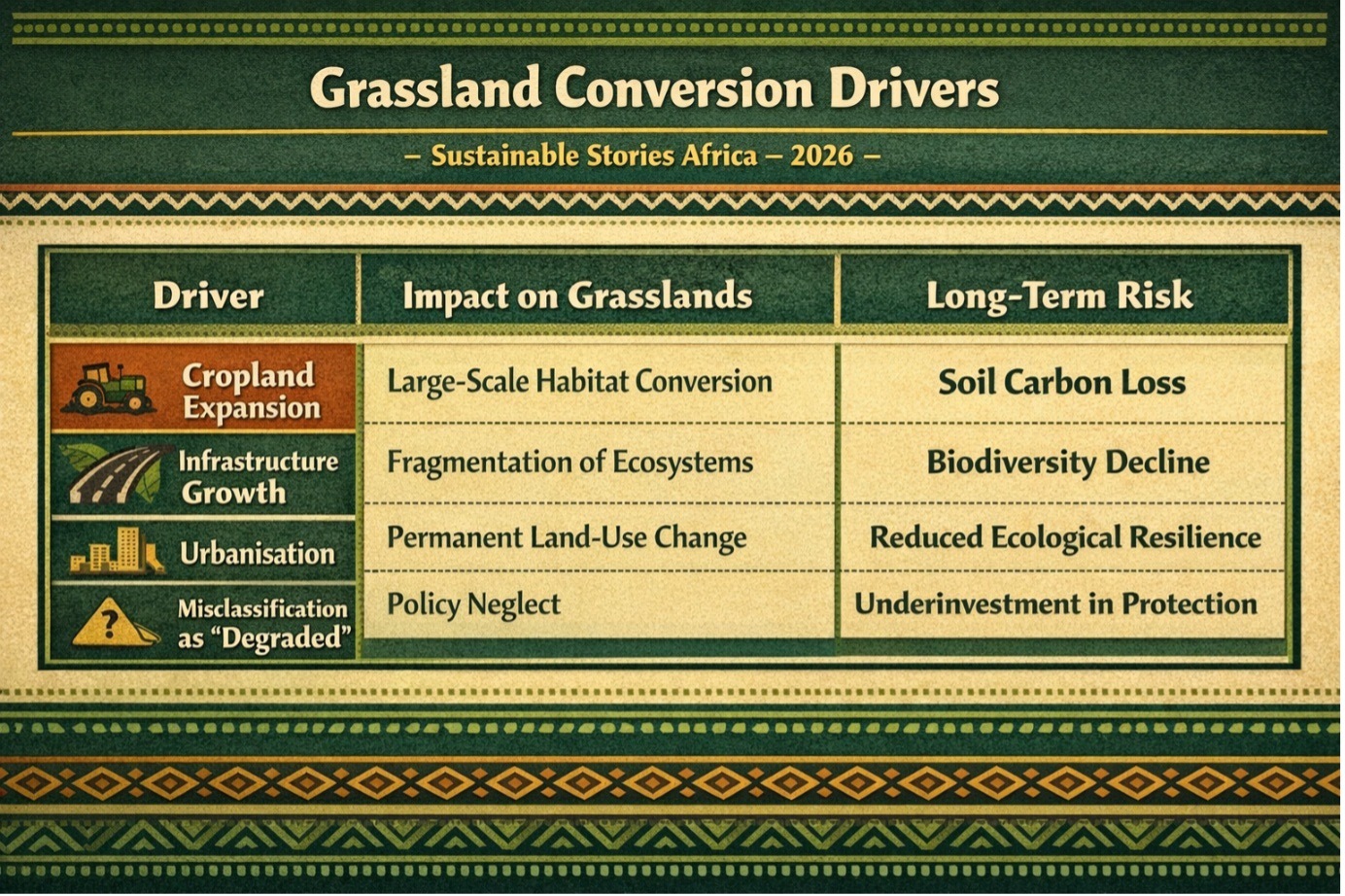
Grassland Conversion Drivers
Driver | Impact on Grasslands | Long-Term Risk |
|---|---|---|
Cropland Expansion | Large-scale habitat conversion | Soil carbon loss |
Infrastructure Growth | Fragmentation of ecosystems | Biodiversity decline |
Urbanisation | Permanent land-use change | Reduced ecological resilience |
Misclassification as ‘Degraded’ | Policy neglect | Underinvestment in protection |
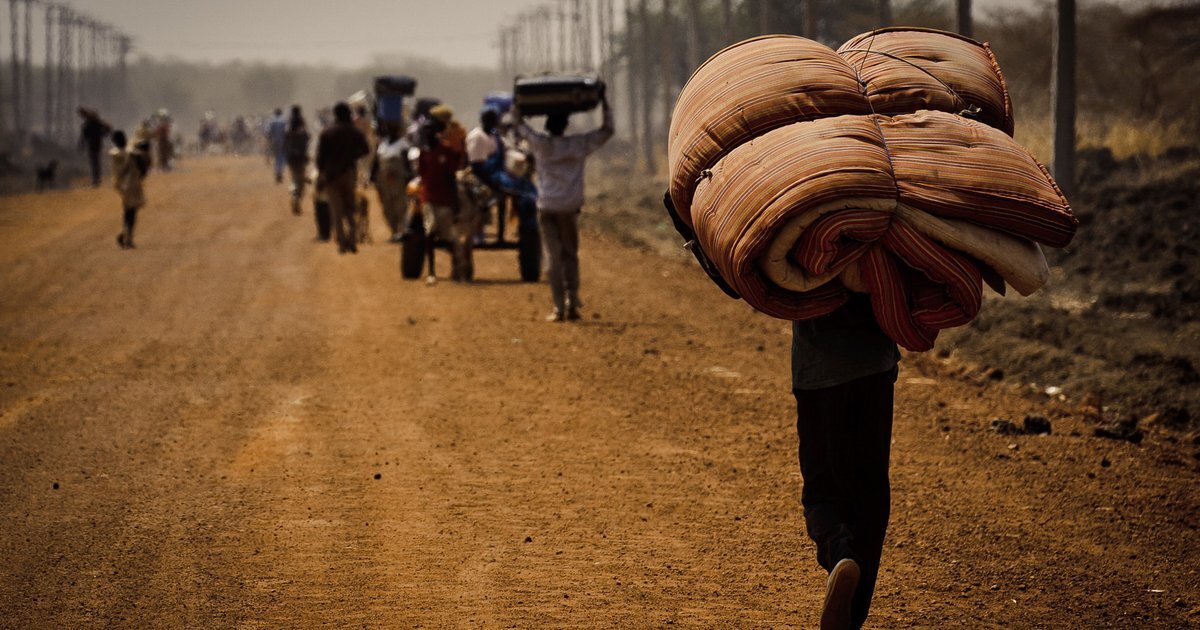
The imagery above underscores the paradox: landscapes often perceived as “empty” are in fact biologically dense and economically vital.
Align Conservation Finance With Reality
Experts are urging governments and multilateral lenders to rebalance conservation priorities. This includes expanding protected-area designations for rangelands, integrating grasslands into carbon accounting frameworks, and preventing inappropriate afforestation.
In Africa, where grasslands form the backbone of livestock systems and wildlife corridors, the study reinforces calls for region-specific conservation strategies.
Policymakers face a delicate balance between food production, economic development and ecosystem preservation.
Climate finance mechanisms, including voluntary carbon markets, may need methodological revisions to ensure grassland carbon stocks are accurately valued and safeguarded.
Path Forward – Protect Soil Carbon, Reform Policy
Global climate strategies must recognise grasslands as carbon-critical ecosystems, not transitional landscapes awaiting trees.
Reform requires targeted funding, updated land-use classifications and inclusion in national climate commitments before irreversible soil carbon losses reshape fragile economies.
Culled From: Grasslands are vanishing nearly four times faster than forests, global study finds