Africa’s economies are projected to grow 4.2% in 2026, according to the African Development Bank’s 2026 African Economic Outlook.
The forecast signals resilience despite geopolitical tensions, supply shocks and tighter global financing conditions.
For households, investors and governments, the question is whether growth can become jobs, stability and shared prosperity.
Africa Defies A Difficult Global Economy
Africa’s economy is holding firmer than many expected, even as global turbulence tests the continent’s recovery, investment flows and public finances.
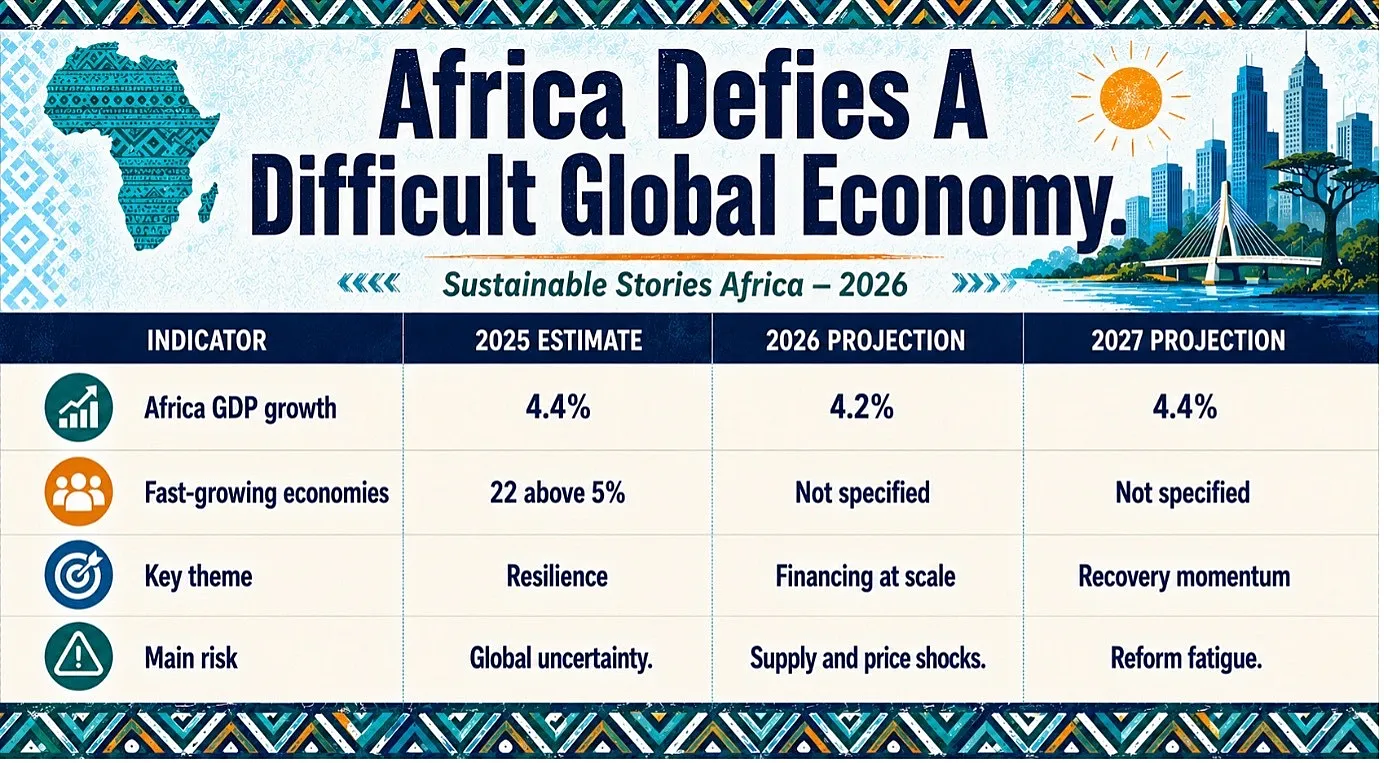
The African Development Bank’s 2026 African Economic Outlook projects that Africa will grow by 4.2% in 2026, after an estimated 4.4% expansion in 2025, before rebounding to 4.4% in 2027.
The report, released during the Bank’s Annual Meetings in Brazzaville, presents a continent that is expanding despite geopolitical tensions, supply chain disruptions, tighter financial conditions and uncertainty in global trade.
The headline is not that Africa is untouched by shocks. The continent remains one of the world’s more resilient growth regions, with 22 economies estimated to have grown above 5% in 2025.
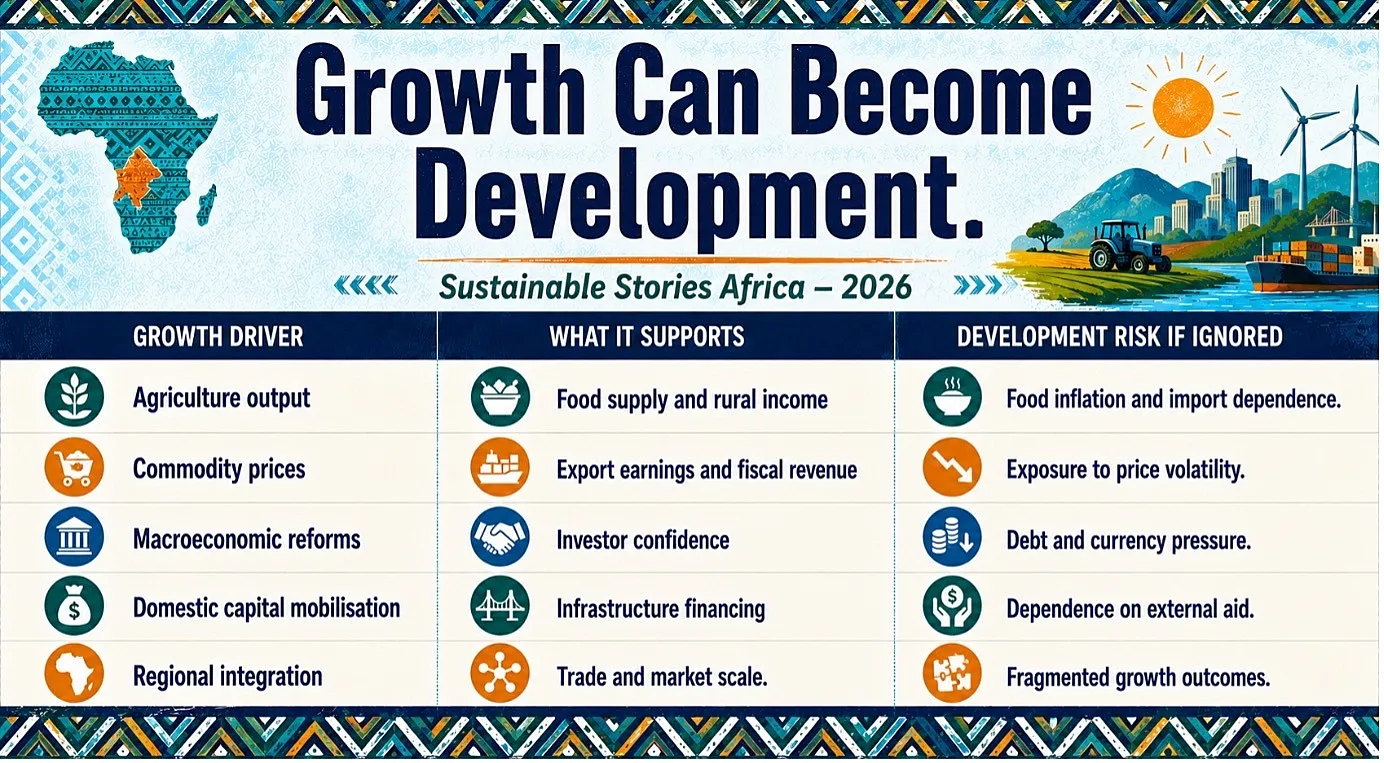
That resilience is being supported by stronger agricultural output, improved macroeconomic management, elevated commodity prices and continuing structural reforms.
Resilience Is Real, But Uneven
The numbers tell a story of momentum; however, they also show vulnerability. A 4.2% growth rate can look strong on a chart; however, its real meaning is felt in markets, farms, ports, classrooms and job queues.
- For a food trader in Lagos, global fuel and fertiliser costs still affect prices.
- For a farmer in Zambia or Madagascar, good rainfall and better access to inputs can turn growth projections into income.
- For a young graduate in Nairobi, Accra or Dakar, the real test is whether headline expansion becomes employment.
The AfDB report places Africa’s performance in a fragmented world. Global trade tensions, geopolitical conflict and supply shocks continue to shape commodity prices, borrowing costs and investment decisions.
Middle East tensions could weigh on growth by raising fuel and food prices, with the Bank projecting a slight moderation in 2026 followed by a recovery in 2027.
Still, the continent is not standing still. Several countries are improving fiscal management, reforming energy markets, investing in agriculture and exploring ways to mobilise domestic capital.
The Outlook’s core theme, mobilising Africa’s development financing at scale, reflects a hard truth: growth will not be enough unless countries can fund infrastructure, food systems, climate resilience, energy access and job creation.
Growth Can Become Development
Africa’s growth outlook matters because it gives governments and investors a window of opportunity. If managed well, this resilience can be used as a platform for industrialisation, private-sector expansion and climate-smart development.
The continent’s young population, natural capital, renewable energy potential and expanding consumer markets remain powerful assets.
However, these advantages need financing systems that work. The AfDB has repeatedly argued that Africa must mobilise more domestic resources, deepen capital markets, integrate financial systems and strengthen its agency in global finance.
That means pension funds, sovereign wealth funds, development banks and private investors must be better connected to bankable projects.
It also means public institutions must improve planning, procurement and execution. Without that, growth risks becoming statistical comfort rather than lived transformation.
Finance Must Follow Reform
Africa’s next challenge is not simply to grow, but to finance the right kind of growth.
- Governments must turn resilience into credible reform pipelines: stable macroeconomic policy, stronger tax systems, deeper local capital markets, better project preparation and transparent public spending.
- Development finance institutions must also shift from announcements to catalytic delivery. Their role should be to reduce risk, mobilise private capital and support countries building climate-resilient infrastructure.
- For African policymakers, the signal is clear: global conditions remain uncertain, but domestic choices still matter.
Countries that protect fiscal credibility, invest in productivity and build investor confidence will be better placed to withstand external shocks.
For businesses and financiers, the Outlook is a reminder that Africa’s growth story remains active; however, increasingly selective.
Capital will follow countries and sectors where governance, energy access, logistics and policy clarity improve.
Path Forward – Make Growth Work For People
Africa’s resilience must now translate into jobs, food security, cleaner energy and stronger public systems.
Growth alone will not be enough if households remain exposed to inflation, debt stress and weak service delivery.
The 2026 Outlook points to a clear priority: mobilise African capital at scale, strengthen institutions and align investment with sustainable development.
That is where growth becomes transformation.
Culled From: Africa’s growth holds firm amid global turbulence, says 2026 African Economic Outlook