Africa’s renewable energy expansion is entering a new industrial phase.
Gigascale projects are accelerating across solar, wind and grid infrastructure markets.
The shift signals a structural transformation in energy supply, investment flows and economic competitiveness.
Gigascale Renewables Redefine Africa’s Energy Landscape
Africa is entering a gigascale phase of renewable energy development, as accelerating demand for electricity, climate commitments and industrial expansion drive unprecedented investment in solar, wind and grid infrastructure.
Governments, investors and utilities are scaling projects to historic levels, signalling a structural shift in how the continent generates and distributes power.
This transition reflects both urgency and opportunity. Africa must significantly expand its electricity capacity to support population growth, industrialisation and economic development, reducing its reliance on fossil fuels and improving energy security.
Gigascale renewable deployment represents a foundational shift in Africa’s energy architecture, positioning the continent to meet both development and climate objectives simultaneously.
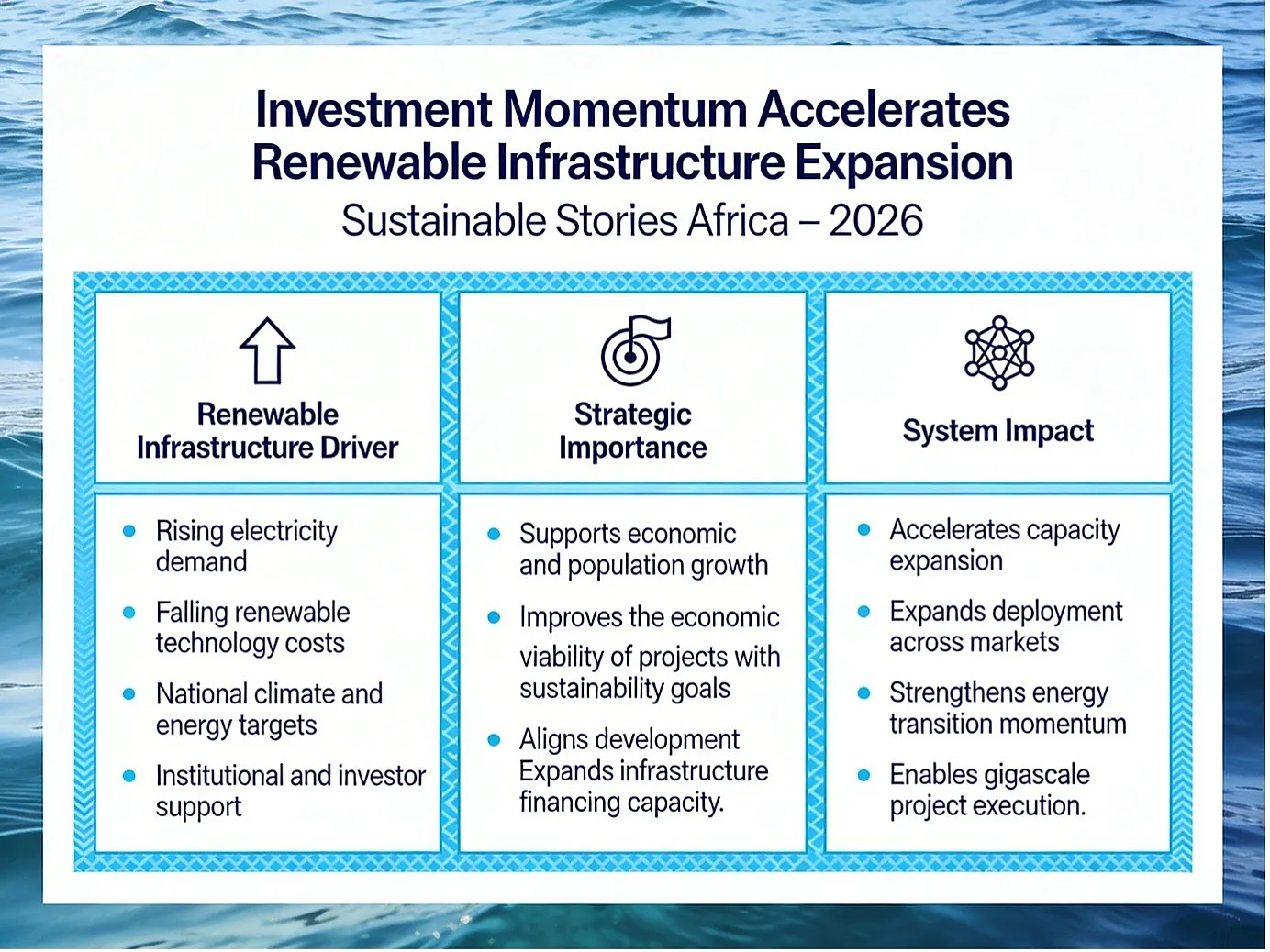
Investment Momentum Accelerates Renewable Infrastructure Expansion
The deployment of renewable energy is accelerating rapidly, driven by rising electricity demand, falling technology costs and stronger policy support.
Governments are increasingly prioritising renewable energy within national development strategies, while investors view clean energy infrastructure as a critical long-term growth sector.
Gigascale projects, distinguished by their scale, capacity and strategic impact, are transforming national power systems and enabling large-scale electrification.
Renewable Infrastructure Driver | Strategic Importance | System Impact |
|---|---|---|
Rising electricity demand | Supports economic and population growth | Accelerates capacity expansion |
Falling renewable technology costs | Improves the economic viability of projects | Expands deployment across markets |
National climate and energy targets | Aligns development with sustainability goals | Strengthens energy transition momentum |
Institutional and investor support | Expands infrastructure financing capacity | Enables gigascale project execution |
This momentum reflects a broader global shift toward electrification, where renewable energy becomes the backbone of industrial growth.
Gigascale Projects Unlock Industrial And Economic Growth
The expansion of renewable energy infrastructure offers Africa transformative economic opportunities.
The reliable supply of electricity is essential for industrial development, technological advancement and economic productivity.
Gigascale renewable projects reduce energy shortages, improve grid stability and enable new industries, from manufacturing to digital services.
The transition also strengthens economic resilience by reducing dependence on imported fossil fuels and improving long-term cost stability.
Strategic Outcome | Economic Benefit | Long-Term Development Impact |
|---|---|---|
Expanded renewable generation | Improved electricity availability | Accelerates industrial development |
Strengthened grid infrastructure | Improved system reliability | Supports economic competitiveness |
Reduced fossil fuel dependence | Improved energy cost stability | Strengthens economic resilience |
Increased infrastructure investment | Job creation and industrial growth | Supports sustainable economic expansion |
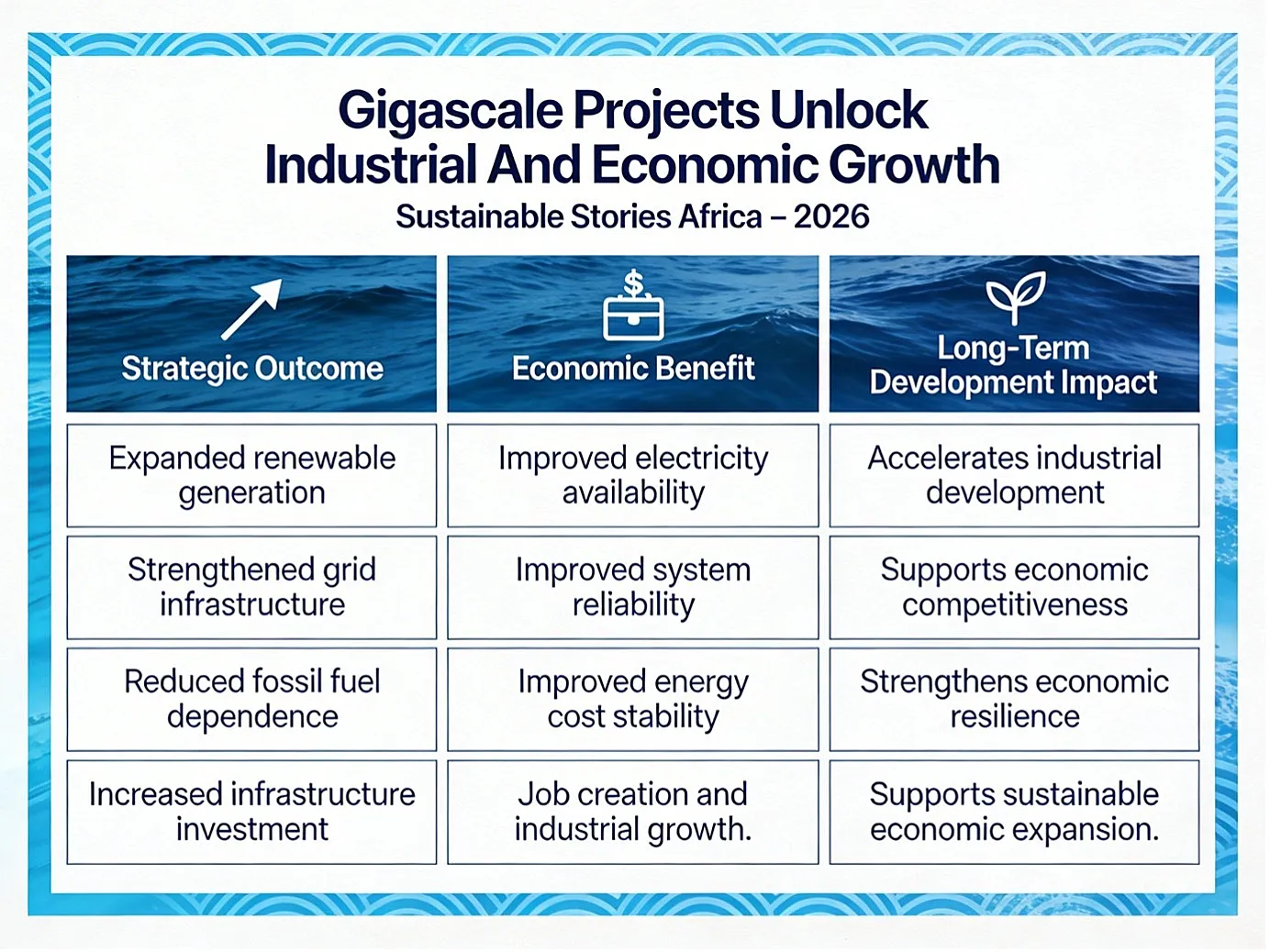
These developments position renewable energy as a foundational pillar of Africa’s economic transformation.
Strategic Coordination Drives Renewable Infrastructure Scaling
Achieving gigascale renewable deployment requires coordinated action across policy, finance and infrastructure development.
Governments must strengthen regulatory frameworks, expand grid infrastructure and ensure investment certainty.
Investors and development institutions play a critical role in financing large-scale renewable projects and supporting infrastructure development.
The deployment of technology, grid modernisation and industrial integration will determine the long-term success of Africa’s renewable energy expansion.
Africa’s gigascale renewable transition represents not just an energy shift, but a broader industrial transformation shaping the continent’s economic future.
Path Forward – Gigascale Renewables Anchor Africa’s Industrial Future
Africa must strengthen regulatory stability, expand its grid infrastructure and accelerate renewable investment to support gigascale deployment.
Coordinated policy and financing frameworks will ensure long-term system reliability and infrastructure scalability.
By prioritising renewable infrastructure, Africa can accelerate industrial growth, strengthen energy security and establish a sustainable foundation for long-term economic competitiveness.
Culled From: Renewables demand drives Africa’s gigascale buildout