Brookings says Africa’s transport and logistics sector is entering a historic transformation.
AfCFTA, digital platforms, e-commerce and megaprojects are driving new demand across roads, ports, rail and freight systems.
For businesses and households, better transport could mean cheaper goods, faster trade, stronger jobs and wider access to markets.
Transport Is Africa’s Next Growth Test
Africa’s transport sector is becoming one of the continent’s most important economic battlegrounds, as trade integration, digital logistics and infrastructure investment reshape how goods move between farms, factories, ports and consumers.
A Brookings analysis by Landry Signé argues that the sector is no longer just a development challenge. It is now an investment frontier.
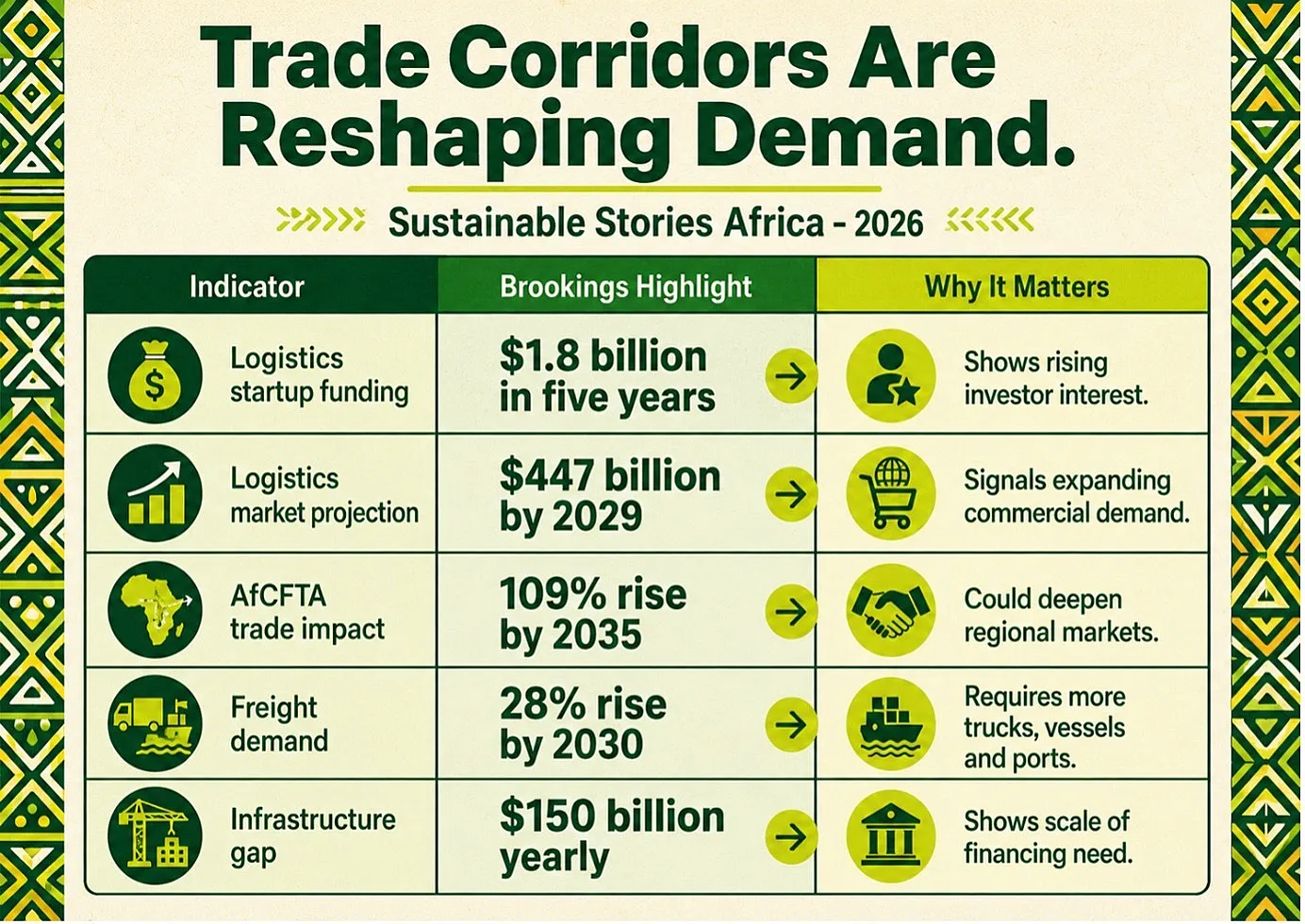
African logistics startups attracted $1.8 billion in five years, while the market is projected to grow from $344 billion in 2020 to $447 billion by 2029.
The stakes are immediate. If transport systems improve, a farmer can reach urban buyers faster, a manufacturer can move inputs across borders more cheaply, and a young e-commerce business can deliver beyond one city.
If they fail, high costs, delays and fragmented regulation will continue to tax ordinary people and small firms.
Trade Corridors Are Reshaping Demand
Brookings identifies the African Continental Free Trade Area as a major driver of future freight demand. AfCFTA is expected to increase intra-African trade by 109% by 2035 and raise intra-African freight demand by 28% by 2030.
That shift will require more than ambition. Brookings notes that the continent may need 2 million additional trucks and 100 vessels to meet future freight requirements.
Maritime trade could rise from 58 million tonnes to 132 million tonnes by 2030.
Digital logistics is also changing the sector. Real-time tracking, mobile payments, fuel monitoring and route optimisation are helping firms manage weak infrastructure more efficiently.
Nigeria, Egypt, Algeria and Kenya have attracted the largest logistics startup investments between 2020 and 2025.
E-commerce is adding pressure. Brookings says Africa’s e-market value could reach $2.35 billion by 2030, more than double its 2021 level.
Every online order depends on delivery systems, warehousing, payments, road access and reliable last-mile networks.
Better Logistics Can Cut Daily Costs
For African households, transport reform is not abstract. It affects the price of tomatoes in a market, medicine in a rural clinic, cement at a building site and spare parts for small businesses.
Brookings notes that African transport costs average $1.8 per kilometre per container, compared with an international benchmark of $1.0.
In Nigeria, the Lagos Chamber of Commerce and Industry estimates that poor roads, electricity challenges, seaport delays and customs inefficiencies cost the country $8 billion yearly.
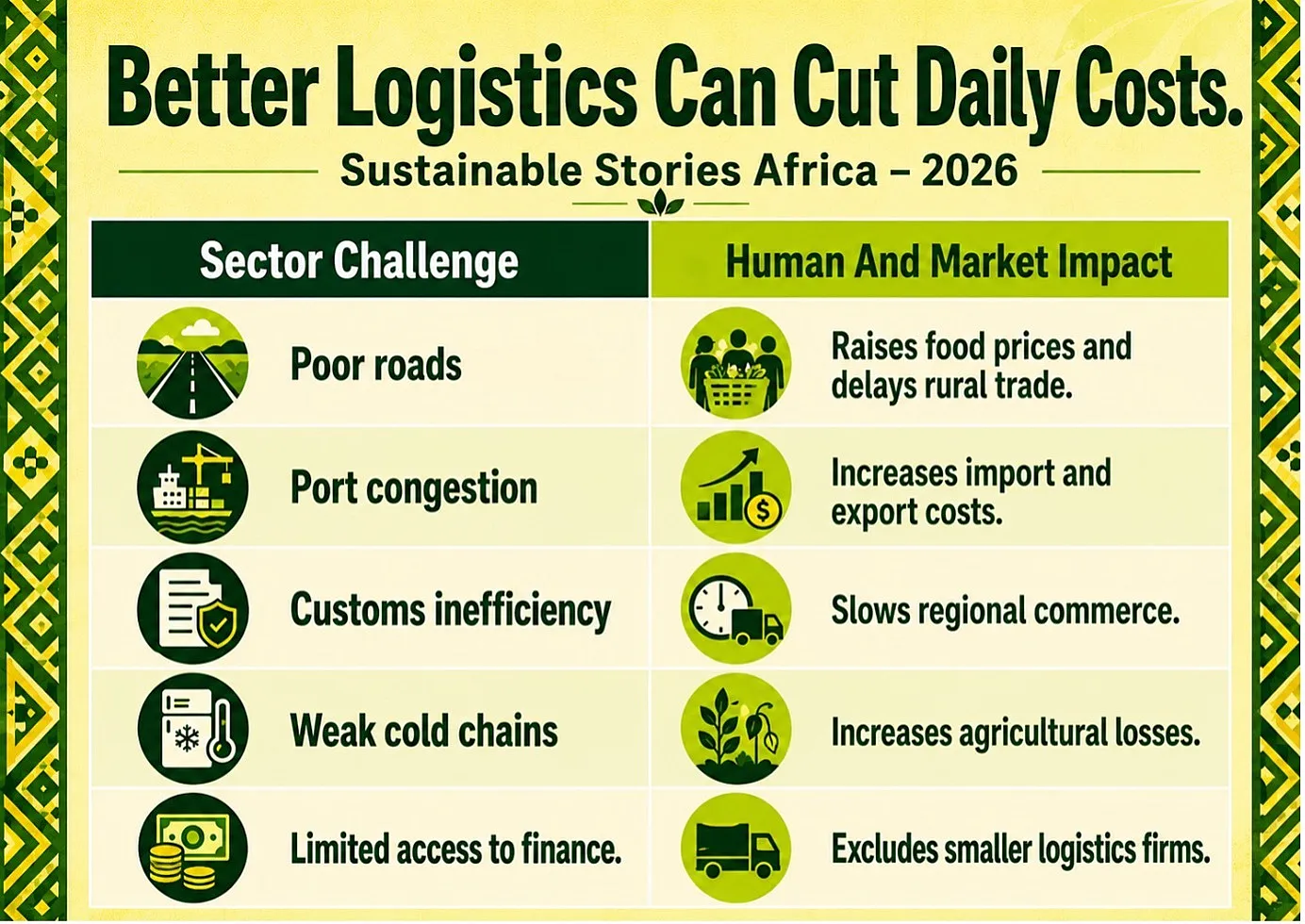
The opportunity is equally large. Strategic corridors such as Cotonou-Niamey and Abidjan-Lagos can connect ports, producers and consumers across borders.
Green ports, electric vehicles and solar-powered cold chains can reduce emissions while protecting food systems.
This is where ESG becomes practical. Cleaner logistics can reduce carbon intensity.
Better roads and ports can expand inclusion. Digital systems can improve transparency, safety and efficiency.
Investment Must Follow Real Bottlenecks
Africa’s transport transformation will not happen through megaprojects alone.
It requires targeted investment in the bottlenecks that make trade expensive: border delays, fragmented regulations, poor roads, weak rail systems, limited warehousing and unreliable cold-chain infrastructure.
Governments should align transport plans with AfCFTA implementation, simplify customs procedures, support regional corridor development and create bankable public-private partnership pipelines.
Investors should back technological platforms, port modernisation, freight digitisation, green logistics and Special Economic Zone transport systems.
The strongest transport strategy will connect infrastructure with people’s daily economic lives.
A modern port matters most when small exporters can use it. A trade corridor matters most when farmers, manufacturers and retailers can move goods at a lower cost.
Path Forward – Build Corridors That Serve People
Africa’s transport future depends on integrated corridors, digital tools, green logistics and smarter financing.
The goal should be lower costs, faster trade and wider market access.
For African economies, this is a sustainability opportunity. Transport systems that connect people, cut emissions and strengthen regional commerce can turn infrastructure from a bottleneck into a foundation for inclusive growth.
Culled From: The future of Africa’s transport sector | Brookings