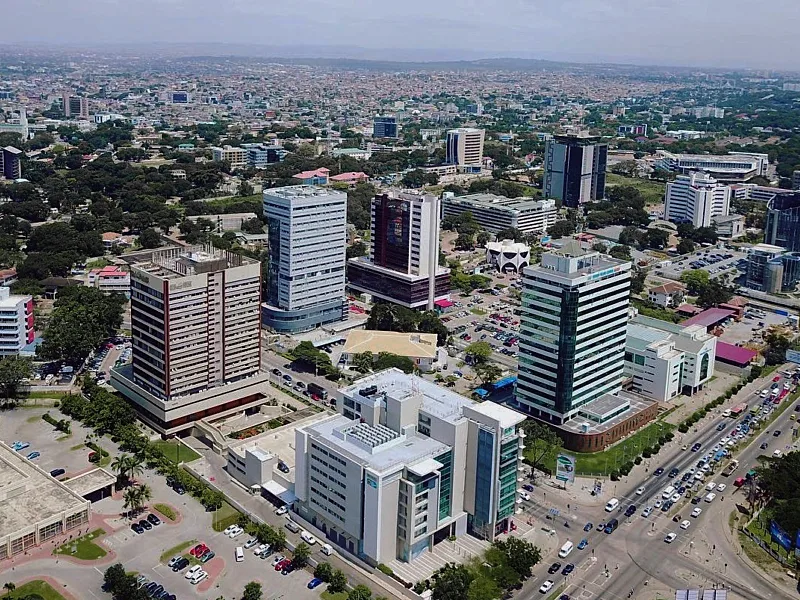
Brookings says Africa’s transport sector is becoming central to trade, urban growth and regional integration.
The issue matters now as AfCFTA raises demand for freight, logistics and cross-border movement.
Better roads, railways, ports and digital systems could cut costs, connect producers and expand opportunity.
Transport Now Decides Africa’s Growth
Africa’s next growth frontier may depend less on what countries produce and more on how efficiently they can move it.
A Brookings analysis argues that transport will be central to Africa’s productivity, competitiveness and integration as economies urbanise and trade routes expand.
The urgency is clear. The African Continental Free Trade Area is projected to increase intra-African trade by 109% by 2035, while demand for intra-African freight could rise 28% by 2030, according to Brookings.
For a tomato farmer trying to reach a city market, a textile exporter waiting at a border, or a commuter spending hours in traffic, transport is not an abstract infrastructure debate. It is the daily difference between income and loss.
Corridors Must Match Trade Ambition
Brookings frames transport as the physical backbone of Africa’s economic future. Roads, railways, ports, airports and logistics systems will determine whether AfCFTA becomes a real market or remains a policy promise.
The continent is already moving. Nigeria has launched an AfCFTA air corridor to export goods to African countries, beginning with Kenya, Uganda and South Africa.
That signals a shift from trade diplomacy to the practical movement of goods.
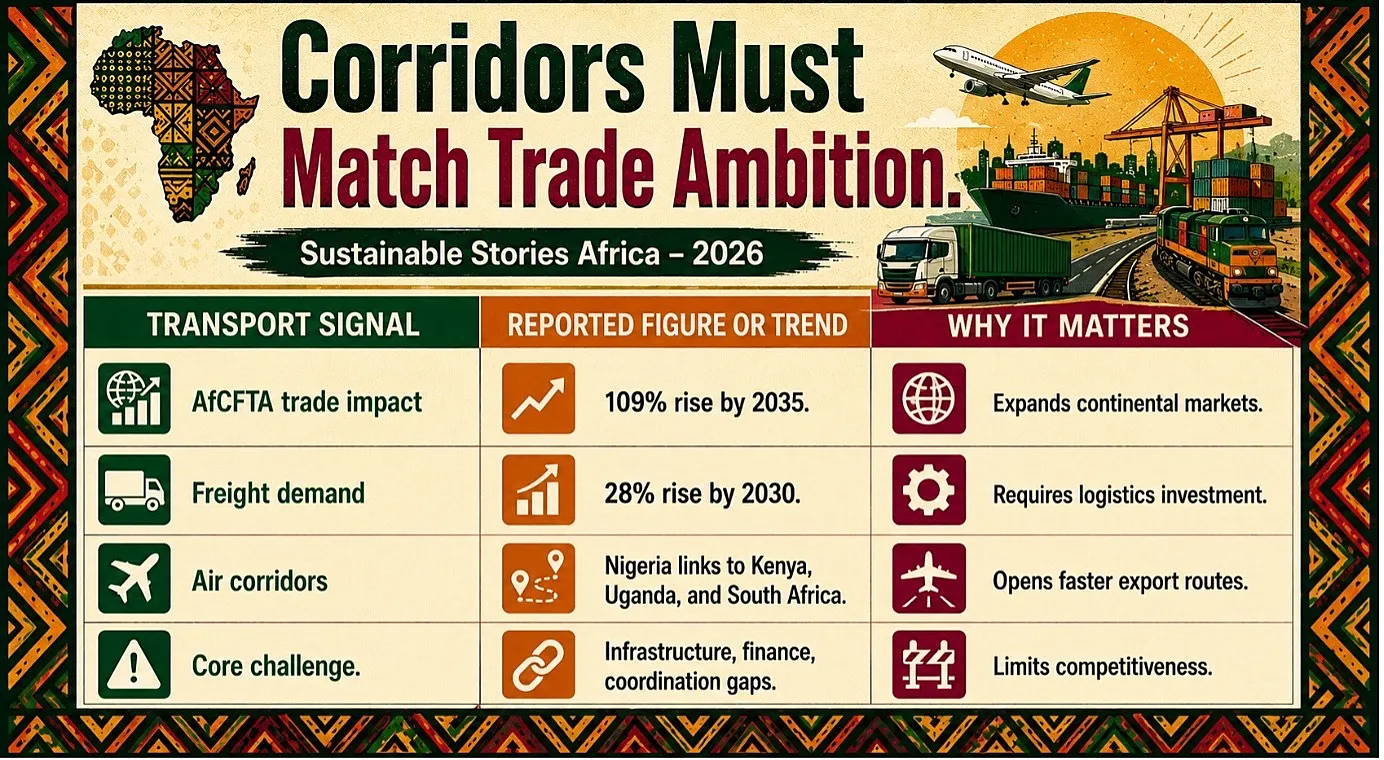
The problem is that infrastructure gaps still raise costs. Weak road links delay goods. Poor rail connectivity limits bulk trade.
Congested ports slow exporters. Fragmented regulation makes cross-border logistics harder than it should be.
Better Movement Can Build Inclusion
A stronger transport system would do more than speed up trucks. It could reshape livelihoods.
- Reliable corridors can help farmers reach buyers before their produce spoils. Better public transport can reduce the time workers lose in traffic.
- Modern ports and freight systems can help small exporters join regional value chains.
- Rail and multimodal systems can cut emissions if designed around clean energy and efficient logistics.
This is where transport becomes an ESG issue. Good infrastructure supports economic inclusion.
Clean mobility supports climate goals. Safer transport protects communities. Better planning reduces inequality between major cities and secondary towns.
Finance Must Follow The Corridors
The priority now is execution. Governments, development banks and private investors need to fund transport corridors that connect production zones, ports, borders and urban markets.
However, money alone will not fix the problem. Africa needs coordinated planning, bankable projects, regional standards, digital customs systems and maintenance budgets.
Too many projects fail because roads are built without logistics systems, ports expand without rail connections, or cities grow without mass transit.
- For policymakers, the task is to treat transport as economic infrastructure, not just construction.
- For financiers, the opportunity is to back assets that reduce trade costs and strengthen climate-resilient growth.
- For citizens, the payoff is simpler: less waiting, lower costs and better access to jobs and markets.
Path Forward – Build Corridors That Connect People
Africa’s transport future depends on integrated corridors, climate-smart investment, digital trade systems and stronger regional coordination.
If delivered well, transport can advance ESG goals by lowering emissions, improving market access, reducing inequality and turning AfCFTA’s promise into real economic movement.
Culled From: The future of Africa’s transport sector | Brookings