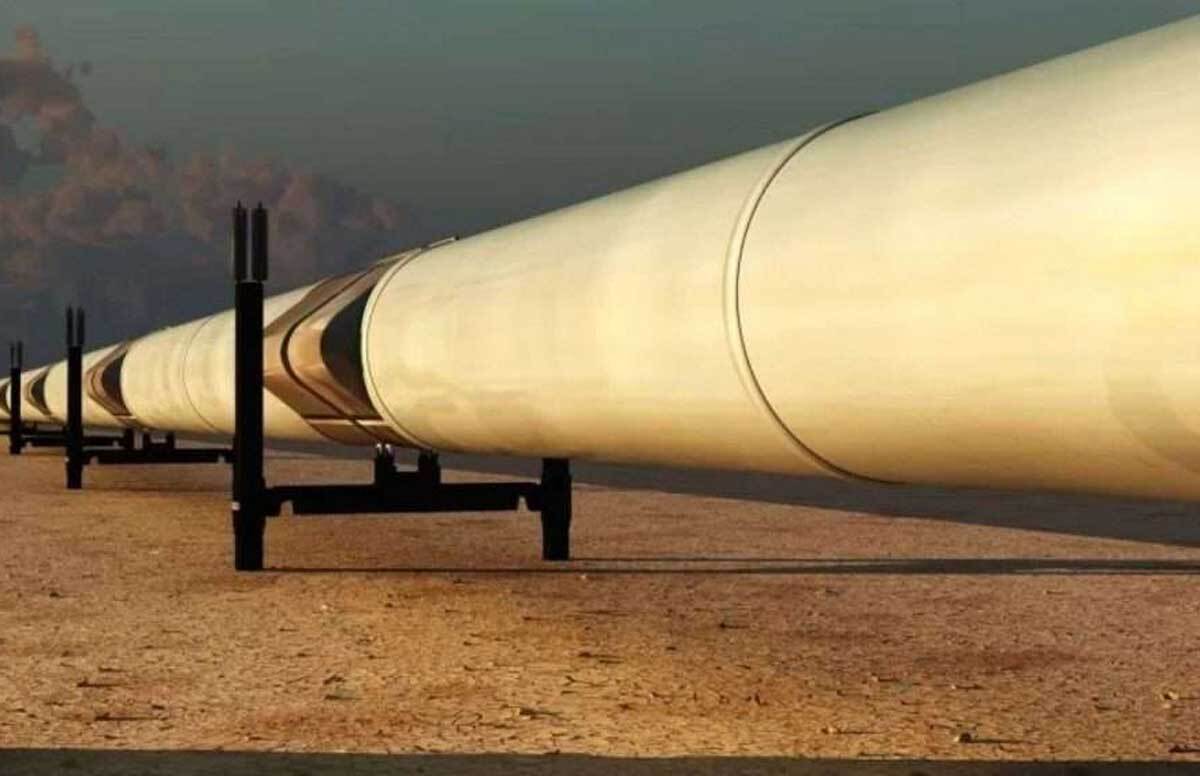
Algeria has begun construction on its section of the Trans-Saharan Gas Pipeline.
The project matters because it could move Nigerian gas through Niger and Algeria into European markets.
For Africa, the promise is bigger than exports: energy corridors can drive industrialisation, jobs and regional integration if governance holds.
A Pipeline Dream Finally Meets Steel
Algeria has started construction on a key section of the Trans-Saharan Gas Pipeline, reviving one of Africa’s most ambitious energy infrastructure projects and reopening a long-debated export route for Nigerian natural gas.
Businessfront reported that Algeria has broken ground on a 1,210-kilometre section of the pipeline, advancing a project estimated between $13 billion and $19.5 billion.
The corridor is designed to connect Nigeria’s gas fields to European buyers through Niger and Algeria, using Algeria’s Mediterranean export infrastructure.
The launch, held in Aoulef in Algeria’s Adrar province, brought together energy officials from Algeria, Nigeria and Niger.
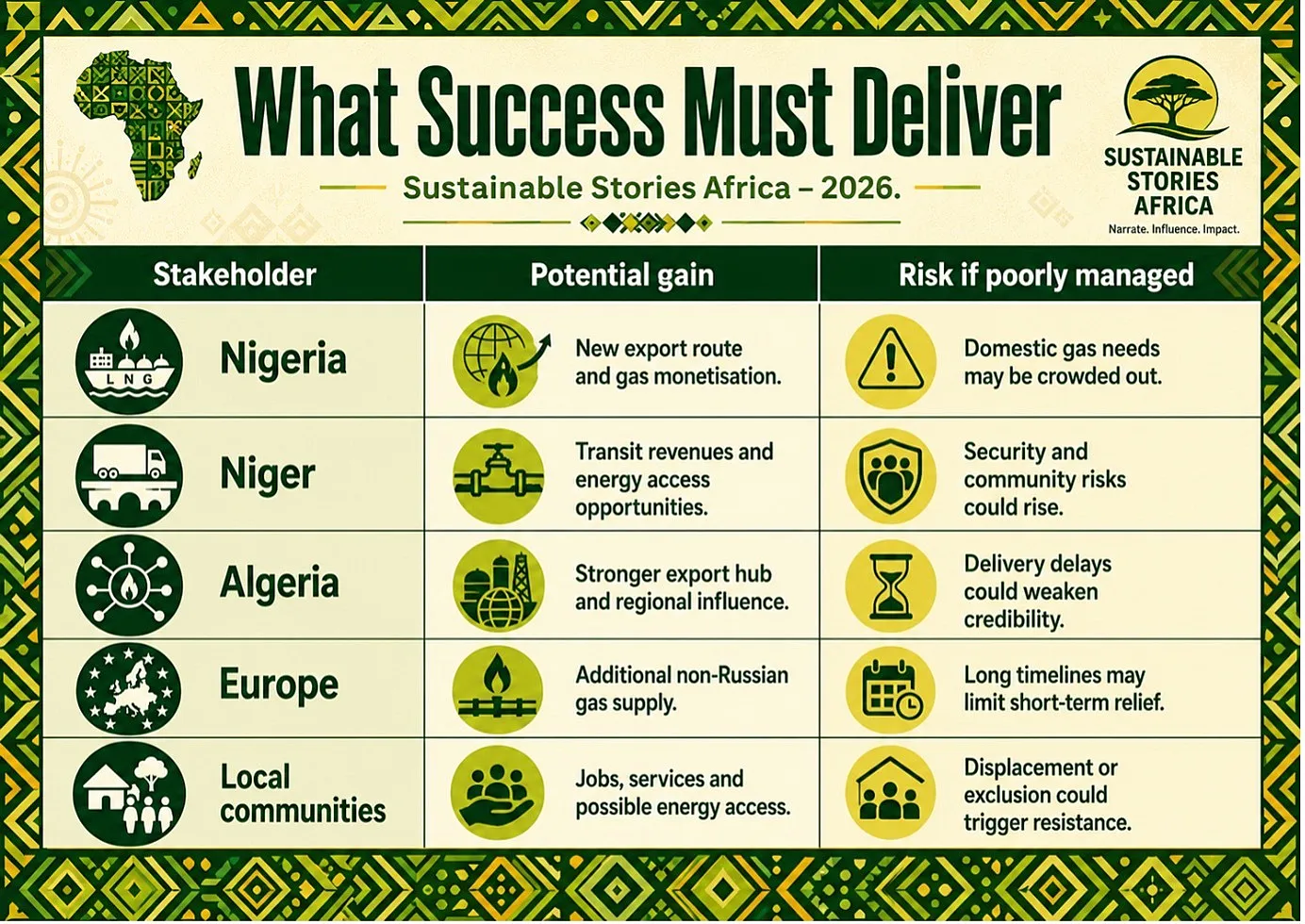
- For Nigeria, the project offers a potential route to monetise vast gas reserves that have often remained trapped by infrastructure gaps, domestic supply constraints and delayed export projects.
- For Africa, the development is also a reminder that resources alone do not transform economies.
Pipelines, policy, security, financing and regional cooperation determine whether underground wealth becomes industrial power.
Why This Corridor Matters Now
The Trans-Saharan Gas Pipeline has been debated for decades, but renewed momentum arrives amid shifting global energy politics.
Europe's search for diversified gas supplies, accelerated by Russia's invasion of Ukraine, has repositioned African gas, particularly from Nigeria and Algeria, as a credible diversification option.
The full pipeline will stretch more than 4,000 kilometres across Nigeria, Niger and Algeria, with the capacity to transport up to 30 billion cubic metres of natural gas annually.
Algeria's section under construction runs from the Niger border toward Aoulef, connecting onward to Hassi R'Mel, a strategic hub and gateway to European export terminals.
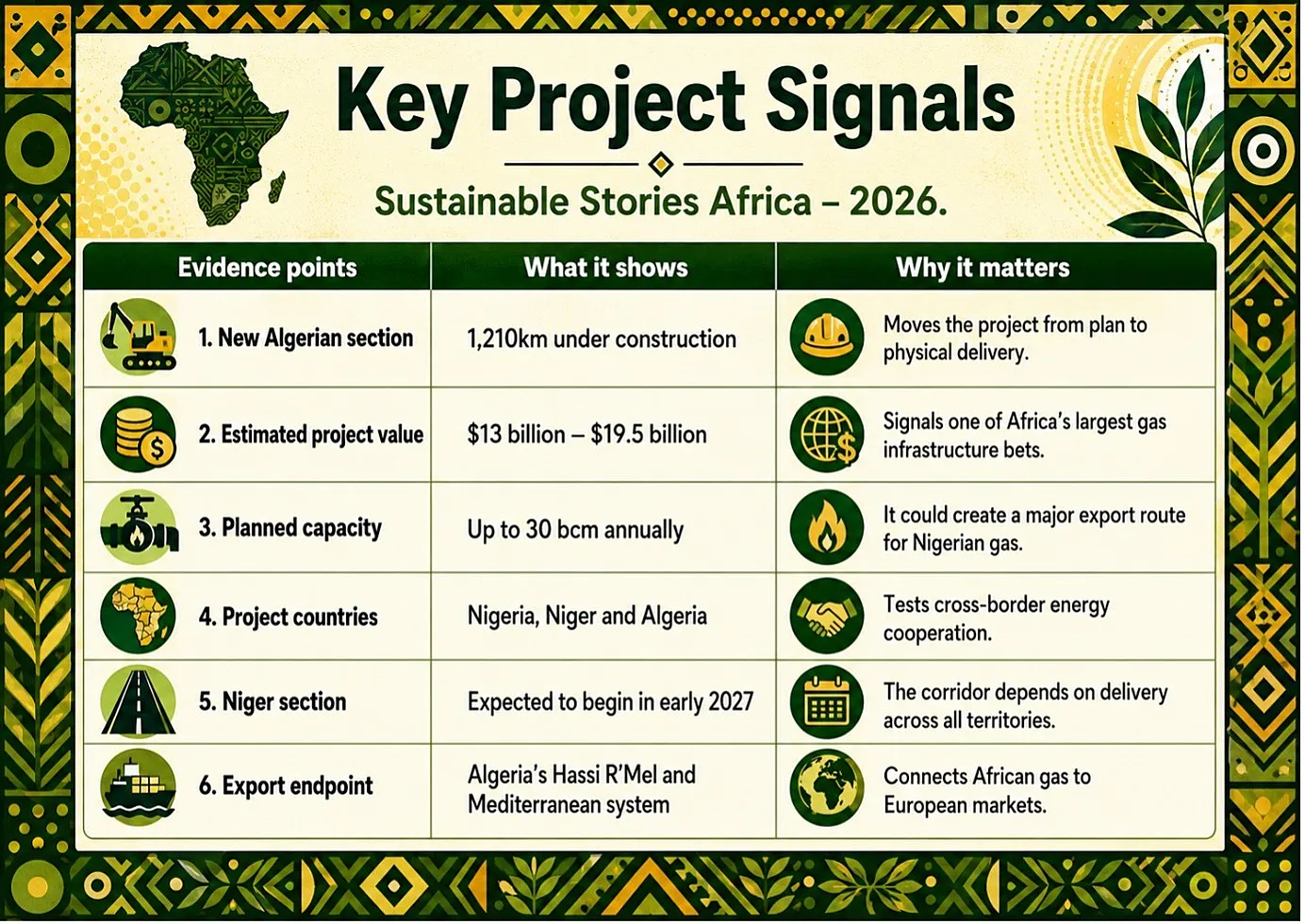
The project carries layered significance.
- For Nigeria, it could unlock value from Africa's largest proven gas reserves, long constrained by flaring, weak infrastructure and slow execution, especially if linked to the Ajaokuta-Kaduna-Kano corridor.
- For Niger, it offers transit revenues, construction employment and future energy access.
- For Algeria, it consolidates its position as a North African energy hub.
This is infrastructure with geopolitical weight, connecting African supply to European demand while reshaping continental energy interdependence.
Gas Corridors Can Build More Than Exports
The strongest case for the pipeline is not only Europe’s need for gas. It is Africa’s need for connected energy markets.
If delivered transparently and safely, the corridor could support regional industrialisation, power generation, fertiliser production, pipeline services, engineering jobs and local procurement.
Communities along the route could benefit from construction employment, improved roads, new service hubs and energy access investments.
However, the risks are significant. The route passes through difficult terrain and politically sensitive regions.
- Financing must be clear. Security coordination must be credible.
- Environmental and community safeguards must be built into execution, not added after disputes emerge.
A gas pipeline that exports resources without strengthening local economies would repeat an old extractive model.
A pipeline that supports domestic supply, regional offtake, jobs and industrial value chains could become a different kind of infrastructure story.
Africa Must Build With Discipline
The next phase should be governed by transparency, bankable contracts and public -interest safeguards.
Nigeria, Niger and Algeria should clarify financing structures, project timelines, security arrangements, environmental standards and community-benefit commitments.
- Nigeria also needs to ensure the pipeline complements, rather than competes with, domestic gas use.
- Gas should power factories, fertiliser plants, industrial parks and cleaner cooking markets at home, even as export revenues are pursued abroad.
- Development partners, financiers and private investors should treat the project as a regional-integration test.
The corridor will require not just capital, but also credible institutions, predictable regulation and strong dispute-resolution mechanisms.
For African policymakers, the message is clear: mega-projects must now be judged not only by kilometres laid, but by value retained.
Path Forward – Turn Gas Into Shared Growth
The Trans-Saharan pipeline should come as a platform for regional energy security, not only a route to Europe.
Nigeria, Niger and Algeria must align export goals with domestic supply, jobs, local content and community safeguards.
If executed well, the project can deepen African integration, strengthen gas-based industrialisation and create a more credible bridge between resource wealth and sustainable development.
Culled From: Algeria begins construction on trans-Saharan gas pipeline to unlock Nigeria's export potential - Businessfront