Africa has secured a new €40 million adaptation finance window, launched at COP30, as climate impacts intensify across the continent.
The facility is designed to channel targeted funding into resilience, food systems and climate-vulnerable communities, which have been underserved by global climate finance.
Climate Finance Turns Toward Survival
At COP30, climate finance took a decisive turn toward resilience as a €40 million adaptation finance window was launched to support African countries facing escalating climate shocks.
The initiative responds to mounting evidence that adaptation, not mitigation alone, now defines the frontline of Africa's climate challenge.
Announced on the sidelines of COP30, the new window aims to mobilise targeted resources for communities exposed to droughts, floods, heat stress and food insecurity. While modest in absolute size, the facility reflects a broader recalibration in climate finance priorities.
For Africa, where climate impacts are intensifying faster than funding flows, the signal matters.
Why Adaptation Finance Matters More Than Ever
Africa contributes minimally to global emissions; however, it b
ears a disproportionate share of climate damage. Extreme weather is eroding agricultural productivity, straining infrastructure and amplifying humanitarian risks across the continent.
Despite this exposure, adaptation has historically received a fraction of global climate finance, largely dominated by mitigation projects.
The DevelopmentAid report highlights that the new €40 million window is intended to help close this imbalance by supporting locally grounded adaptation projects with measurable outcomes of resilience.
The facility is expected to focus on sectors such as climate-smart agriculture, water management, resilient infrastructure and early-warning systems — areas critical to protecting livelihoods and economic stability.
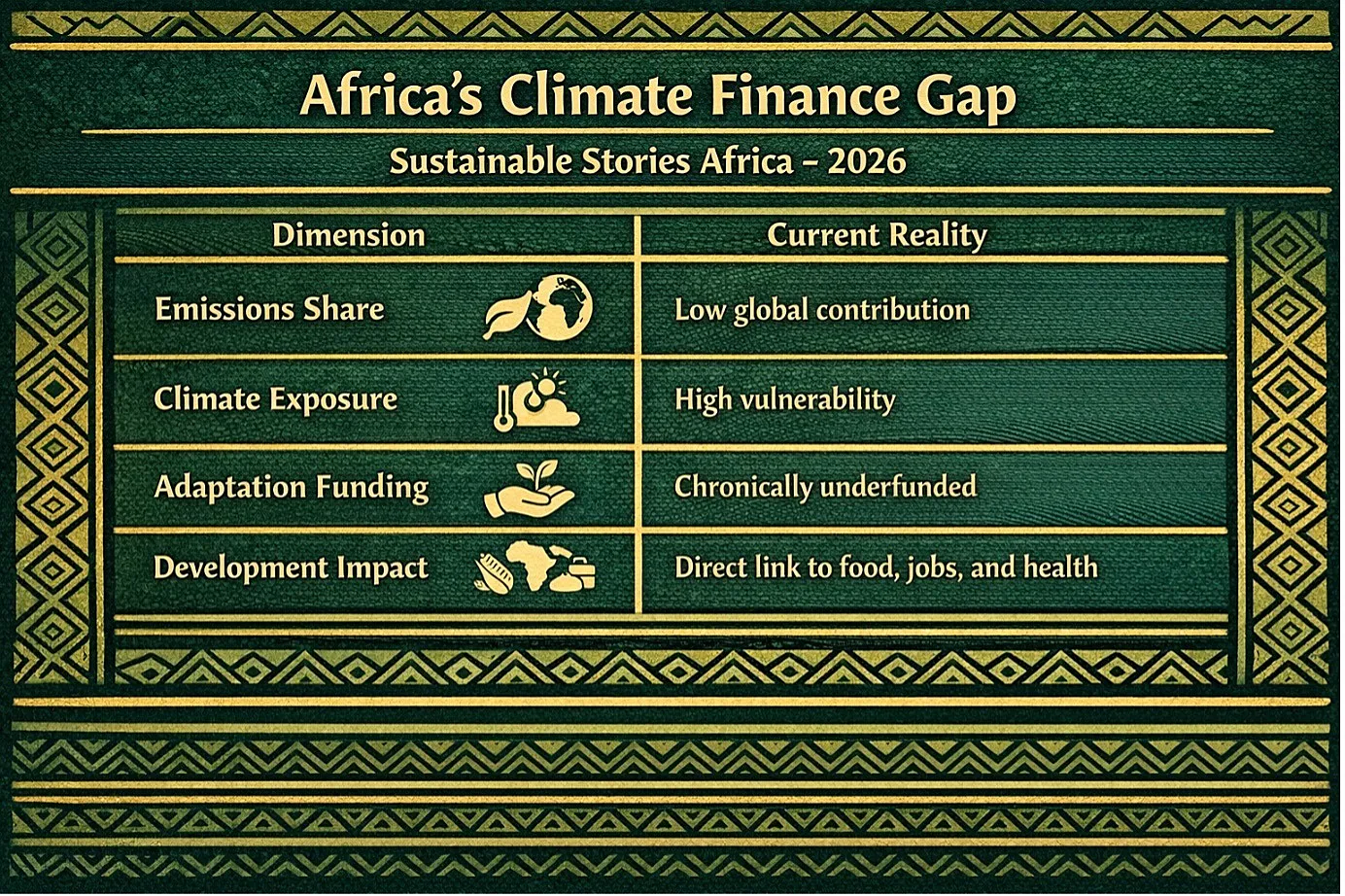
Africa's Climate Finance Gap
| Dimension | Current Reality |
|---|---|
| Emissions share | Low global contribution |
| Climate exposure | High vulnerability |
| Adaptation funding | Chronically underfunded |
| Development impact | Direct link to food, jobs, and health |
The initiative also aligns with growing calls to treat adaptation as development finance, not charity, given its role in safeguarding growth.
What the New Window Signals
While €40 million is small relative to Africa's estimated adaptation needs, analysts view the launch as strategically significant.
It reflects recognition among donors and multilateral actors that resilience investments must accelerate ahead of worsening climate impacts.
The new window is expected to prioritise project readiness and speed, addressing a common bottleneck that prevents African countries from accessing available funds.
By simplifying access and targeting high-impact interventions, the facility could improve execution rates, which is a recurring weakness in adaptation finance.
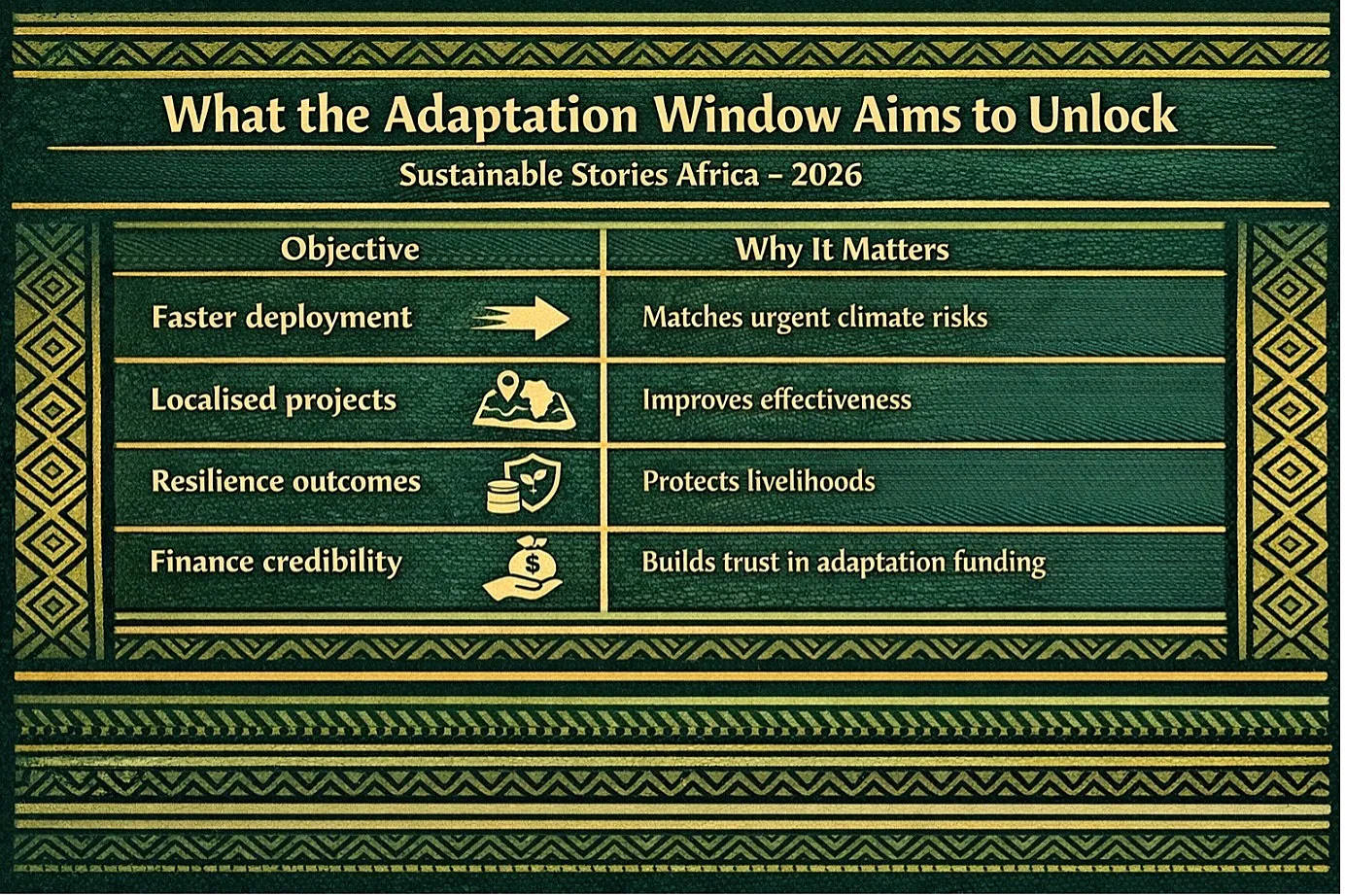
What the Adaptation Window Aims to Unlock
| Objective | Why It Matters |
|---|---|
| Faster deployment | Matches urgent climate risks |
| Localised projects | Improves effectiveness |
| Resilience outcomes | Protects livelihoods |
| Finance credibility | Builds trust in adaptation funding |
The initiative also complements Africa's broader push for predictable, concessional adaptation finance, which is embedded in national climate strategies.
From Announcement to Impact
For African governments, the challenge now is readiness: translating vulnerability assessments into bankable projects that meet funding criteria.
Strengthening institutions, data systems, and project pipelines will be essential to ensure the window delivers tangible results.
For donors and development partners, the launch raises expectations. Scaling adaptation finance beyond pilot facilities will be necessary to keep pace with climate realities on the ground.
Without follow-through, small windows risk becoming symbolic gestures rather than systemic solutions.
Path Forward – Making Adaptation Finance Count
The €40 million adaptation window marks a step toward rebalancing climate finance in Africa. Its success will depend on speed, local relevance and measurable resilience outcomes.
If scaled and replicated, such facilities could help shift adaptation from the periphery of climate talks to the core of development planning, turning COP30 commitments into real protection for Africa's most vulnerable populations.