Bangladesh has moved to deepen economic and diplomatic ties with Africa, using Morocco as a strategic entry point.
The push follows high-level talks in Rabat focused on trade, investment, agriculture, skills and technology.
For businesses, workers and exporters, the proposed cooperation could open new South-South pathways across textiles, jute, food systems and green industry.
Rabat Talks Open New Southern Corridor
Bangladesh is seeking a deeper foothold in Africa, inviting Moroccan investors into its economy while positioning Rabat as a bridge into wider African markets.
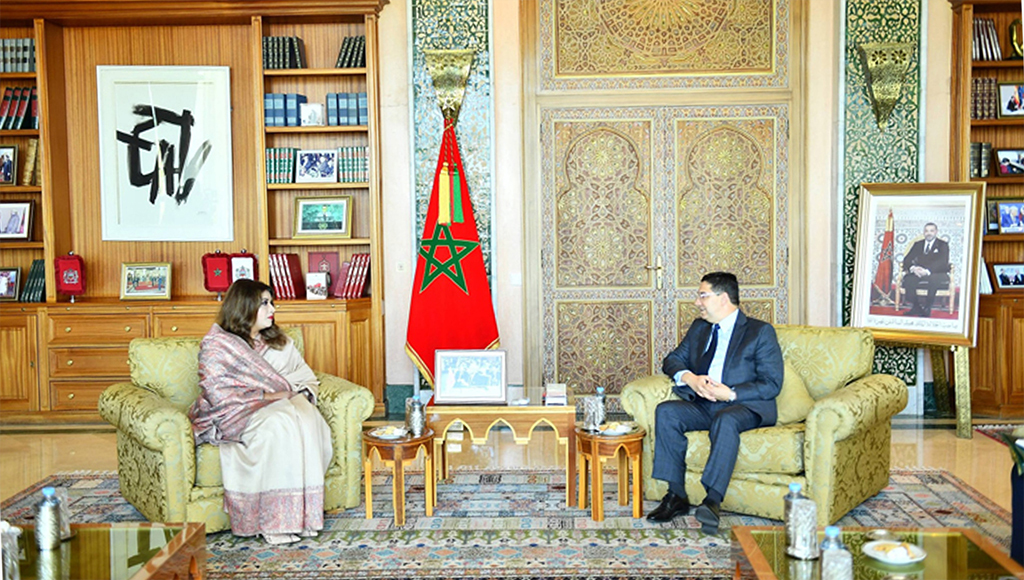
The move followed talks in Rabat between Bangladesh’s State Minister for Foreign Affairs, Shama Obaed Islam, and Morocco’s Foreign Minister, Nasser Bourita, with both sides agreeing to strengthen cooperation in trade, investment, agriculture, skills development and multilateral affairs.
The diplomatic message was clear: Dhaka wants its engagement in Africa to move beyond goodwill into commerce, industrial cooperation and market access.
Morocco, with its expanding African investment footprint, ports, banking links and industrial platforms, offers Bangladesh a route into North and West Africa.
Bangladesh, in return, is presenting itself as a manufacturing, skills and export partner for Moroccan capital.
Trade Talks Move Beyond Diplomacy
The talks covered a widening agenda for cooperation: investment, agriculture, industrial training, ICT, artificial intelligence and the possibility of a future Free Trade Agreement.
Bangladesh also proposed exchanges of business delegations to deepen commercial engagement, while Morocco’s industry minister expressed interest in sending a business delegation to Bangladesh by the end of 2026.
For Bangladesh, the opportunity is not only diplomatic visibility. It is market diversification.
Its exporters are looking beyond traditional markets, while African countries are seeking affordable manufactured goods, skills partnerships and value-chain investment.
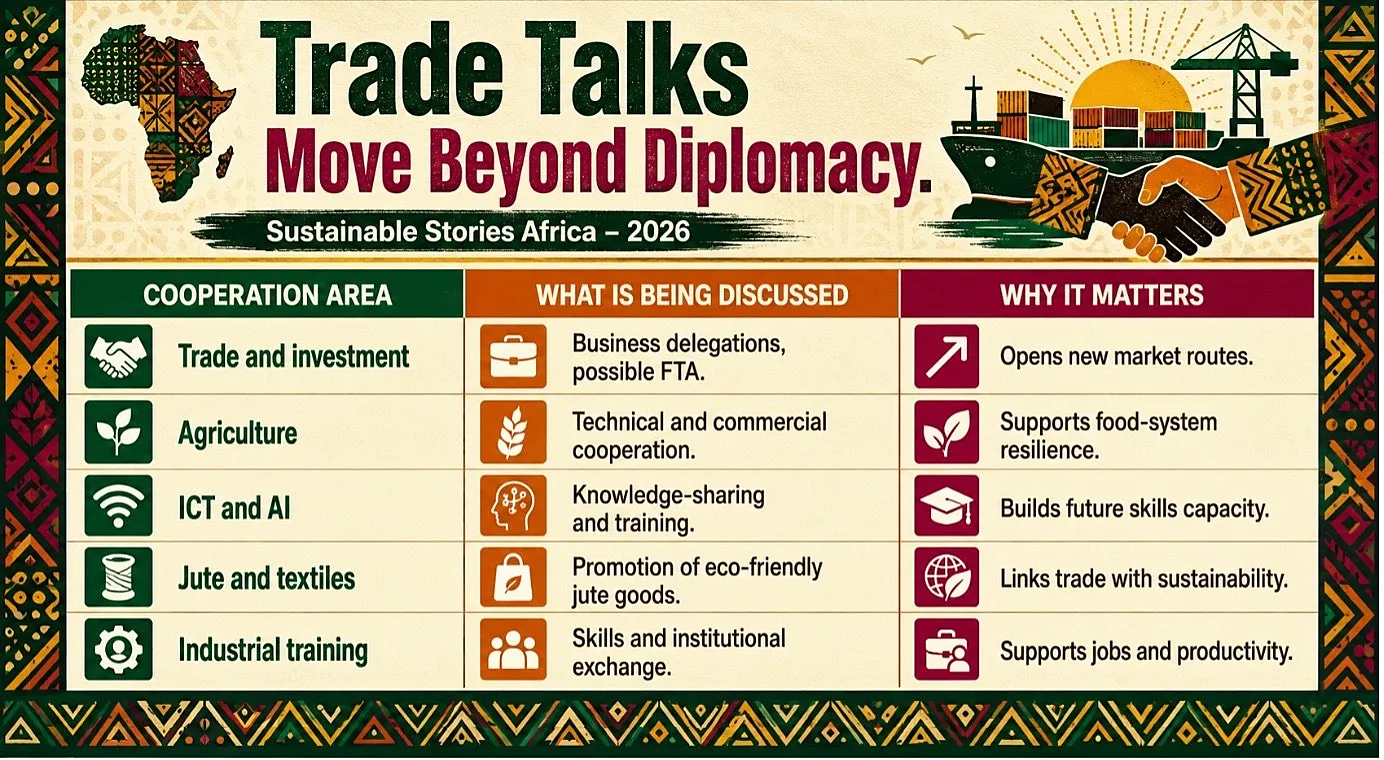
A notable sustainability angle is Bangladesh’s renewed interest in promoting eco-friendly jute and jute goods in Morocco.
That matters because African markets are also under pressure to reduce dependence on plastics, improve circular-economy practices and build cleaner consumer-goods supply chains.
South-South Trade Can Build Resilience
If the Bangladesh-Morocco opening is sustained, it could become more than another bilateral statement.
It could show how Global South economies connect manufacturing capacity, access to the African market and climate-conscious products.
- For Moroccan businesses, Bangladesh offers scale in textiles, pharmaceuticals, ceramics, shipbuilding and export manufacturing.
- For Bangladeshi firms, Morocco offers proximity to African and European markets, stronger logistics links and a commercial base in a country already positioning itself as an African industrial hub.
The human impact sits behind the trade language. A jute exporter in Dhaka, a logistics operator in Casablanca, a skills trainee in Rabat, or a small manufacturer looking for new buyers could all benefit if the political commitment turns into practical market access.
Institutions Must Convert Talks Into Deals
The next test is implementation. Diplomatic warmth will not be enough. Both countries need timelines, sector-specific business missions, investment matchmaking, standards alignment and clearer rules for exporters.
A possible FTA could help; however, only if it is paired with trade finance, customs cooperation, product certification support and stronger business-to-business platforms.
Bangladesh and Morocco have already launched their first bilateral B2B platform in Rabat to support trade, investment and green industrial cooperation.
The opportunity is timely. African countries are seeking new partners for industrialisation, food security and skills development.
Bangladesh is seeking wider export markets and investment channels. Morocco can act as a connector if both sides move from diplomatic language to bankable projects.
Path Forward – Turn Diplomacy Into Sustainable Trade
Bangladesh and Morocco now need a delivery roadmap: business delegations, sector targets, investment pipelines and measurable cooperation in green industry, agriculture, ICT and skills.
If executed well, the partnership can advance ESG goals by supporting cleaner products, job creation, South-South investment and more resilient trade links between Africa and Asia.
Culled From: Bangladesh wants deeper Africa ties and Moroccan investment