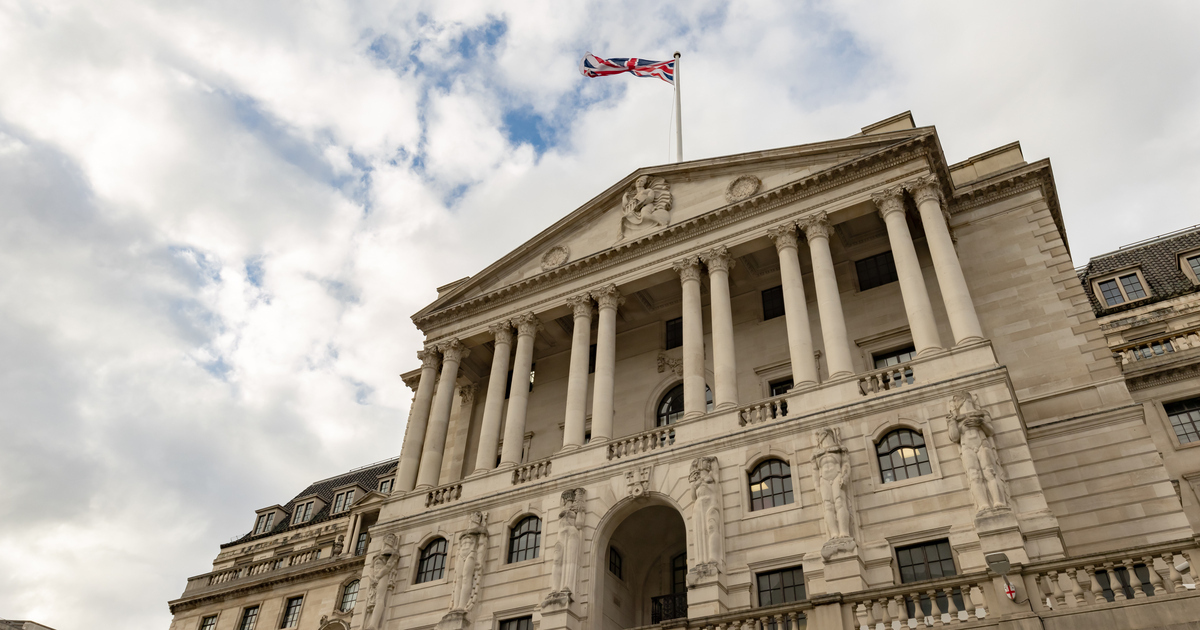
The Bank of England will incorporate climate transition risk into parts of its collateral framework from 31 October 2026.
The move matters because central banks are beginning to treat climate exposure as a financial risk, rather than a side ESG concern.
For African issuers, banks, and policymakers, the signal is clear: access to global capital will increasingly depend on credible transition planning.
Climate Risk Enters Central Bank Collateral
The Bank of England is embedding climate transition risk directly into market infrastructure.
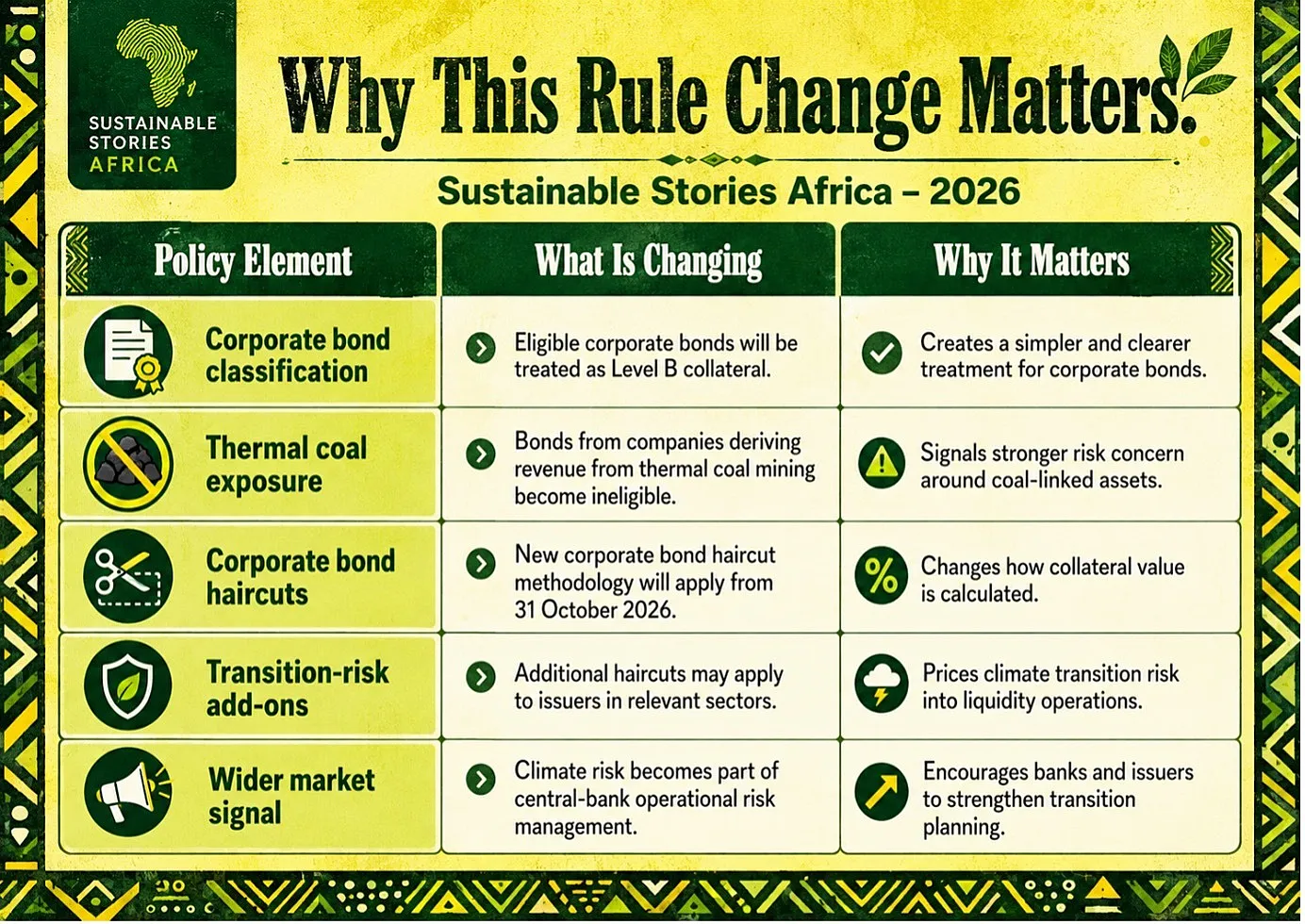
From 31 October 2026, new corporate bond haircuts and additional risk adjustments will apply to companies in sectors exposed to the net-zero transition.
Bonds issued by thermal coal mining companies will be excluded entirely from the Sterling Monetary Framework.
The change is technical, but its message is far-reaching. In central banking, collateral underpins liquidity, trust and financial stability.
By adjusting collateral treatment for transition risk, the Bank of England is signalling that climate exposure can materially affect the value and reliability of financial assets.
For African markets, this is not a distant regulatory footnote. London remains a critical centre for global debt issuance, insurance and investment.
When its central bank redefines risk, that signal travels through bond markets, development finance and cross-border capital allocation.
Why This Rule Change Matters
The Bank of England's shift sits within a broader central banking movement. The European Central Bank has similarly introduced climate factors into its collateral framework, protecting the Eurosystem against transition-related losses on corporate assets.
The Bank of England's approach targets two linked issues:
- Eligibility: whether an asset can be pledged as collateral.
- Valuation, determining borrowing power after haircuts are applied.
A higher haircut means less access to liquidity.
The human pathway is real: power utilities, industrial lenders and pension funds holding corporate debt may all face a future in which climate-risk credibility directly affects pricing and investor appetite.
For African economies, the stakes are complex. Energy expansion, industrialisation and infrastructure remain legitimate priorities.
However, if global finance applies sharper climate-risk filters, African issuers without credible transition plans risk facing higher capital costs and narrowing investor pools.
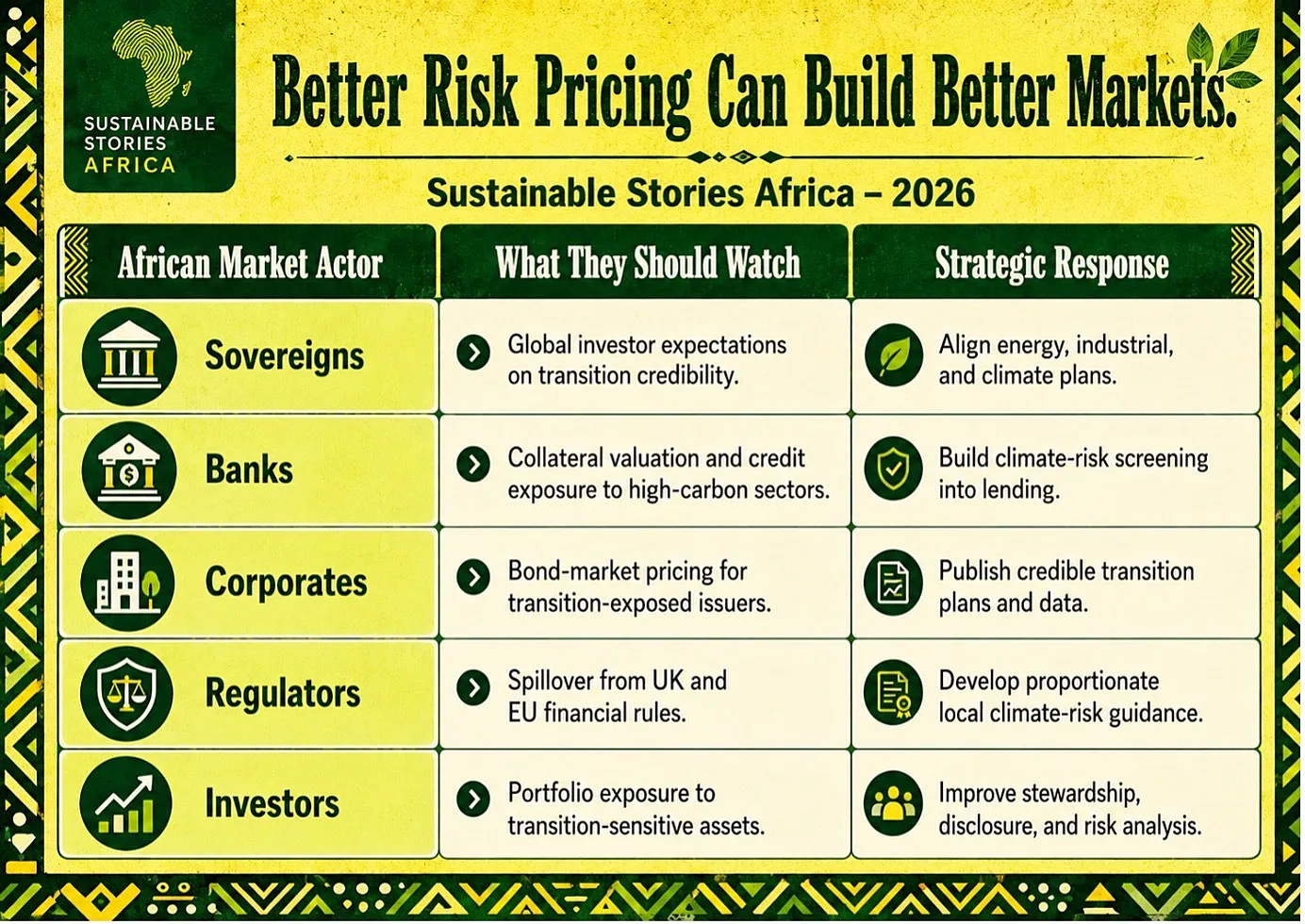
Better Risk Pricing Can Build Better Markets
Done well, this shift can help financial markets move from vague ESG language to disciplined risk management.
It can reward companies that disclose emissions, explain transition pathways, manage stranded-asset exposure, and invest in cleaner production.
For African banks and corporates, the opportunity is to prepare before the rules harden. Transition planning can become a competitive advantage.
- A cement company with credible decarbonisation milestones
- An energy firm with cleaner generation plans.
- A bank with climate-aware credit policies may be better positioned to access international finance.
The benefit is not only lower risk. Better transition planning can attract patient capital, reduce policy uncertainty, and protect jobs by helping industries adapt rather than collapse under sudden market pressure.
The risk, however, is a disorderly divide. If African firms are judged by standards they did not help design, capital could become more expensive for economies still trying to expand basic infrastructure.
That is why local realities must be integrated into global climate-finance rules.
Africa Must Prepare Before Pricing Tightens
The Bank of England's collateral update is an early warning that African finance ministries, central banks, regulators and corporate boards cannot afford to ignore.
Three priorities stand out. African issuers borrowing internationally need stronger climate and transition disclosures; investors increasingly demand viability roadmaps, not just emissions data.
- Regulators must develop climate-risk guidance that genuinely reflects Africa's development realities, balancing energy access, jobs, food security and industrial growth against long-term exposure to obsolete assets.
- Development finance institutions must help smaller issuers build technical capacity for climate scenario modelling and transition reporting.
Without this support, climate-risk pricing will deepen inequality between multinationals and domestic African firms.
The call to action is unambiguous: African markets should not wait until collateral rules and lending standards become punitive.
The work must begin now, in boardrooms, central banks, ministries and sustainability reporting systems.
Path Forward – Price Risk Without Punishing Development
The next priority is to align climate-risk pricing with the realities of African development.
Transition rules should encourage credible adaptation, not block growth for economies still expanding energy access and industry.
African regulators, banks, and issuers should use the Bank of England’s move as a signal for preparedness.
Better data, better disclosure, and better transition plans can protect market access while advancing ESG, resilience, and sustainable finance objectives.
Culled From: Bank of England Incorporates Climate Transition Risks into Collateral Framework from October 2026