A Cambridge University report says banks must overhaul credit risk frameworks to reflect rising physical climate damage, insurance gaps and resilience investment.
The warning matters as floods, fires, droughts and heat increasingly affect asset values, borrower stability and financial system resilience.
For African markets, the issue is urgent: climate damage is no longer only an environmental risk. It is becoming a credit risk.
Climate Damage Is Now Credit Risk
Banks can no longer treat physical climate damage as a distant environmental issue, a new report from the University of Cambridge Institute for Sustainability Leadership has warned.
The report, covered by Green Central Banking, argues that credit risk frameworks should be overhauled to account for accelerating physical climate risks, declining insurance adequacy and borrower investment in resilience.
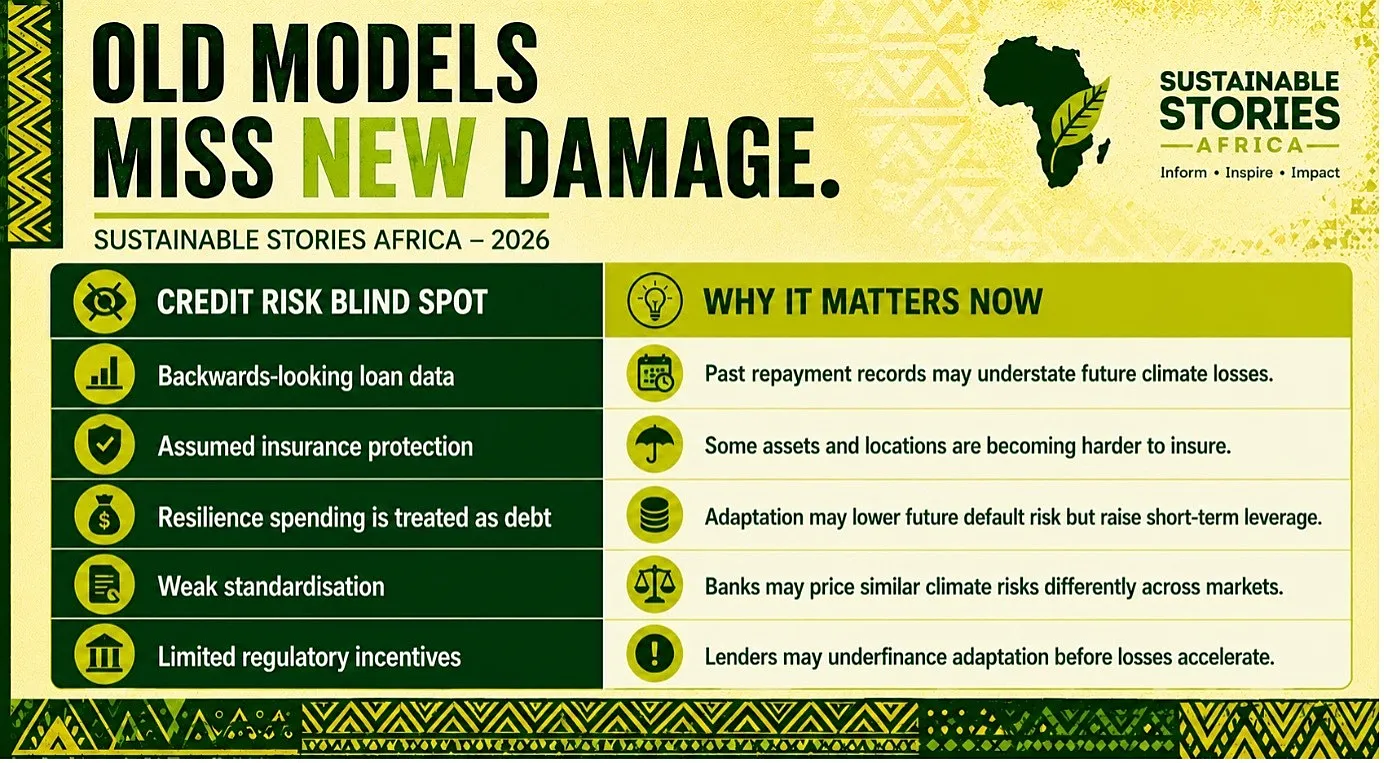
Current systems remain too backwards-looking, relying heavily on historical loan performance even as climate hazards move faster than past data can capture.
The core message is clear: a factory protected against flooding, a farm investing in irrigation or a logistics firm strengthening supply-chain resilience may be a safer borrower in future, even if those investments increase debt in the short term.
That is a difficult fit for traditional bank lending models. However, as floods, wildfires and heatwaves become more frequent and costly, the cost of ignoring resilience may exceed the cost of financing it.
Old Models Miss New Damage
The Cambridge report points to a structural weakness in credit risk practice. Banks often assess borrowers using past performance, collateral quality and expected repayment capacity.
However, climate change is altering the risk profile of locations, sectors and assets faster than historical records can reflect.
One example is flooding. Green Central Banking reports that flood-related disasters have risen 134% since 2000, a signal that past loss patterns may no longer be reliable guides for future lending decisions.
For African economies, this is not theoretical.
- A flood can destroy inventory in a market cluster.
- Drought can weaken farm income and repayment capacity.
- Coastal erosion can reduce property values.
- Heat stress can lower worker productivity in agriculture, construction and manufacturing.
A small business owner who borrows to raise shop floors, improve drainage or install cooling systems may not generate immediate extra revenue.
However, that investment could keep the business alive during the next climate shock.
That is the gap the report wants banks and regulators to address.
Resilience Should Count As Strength
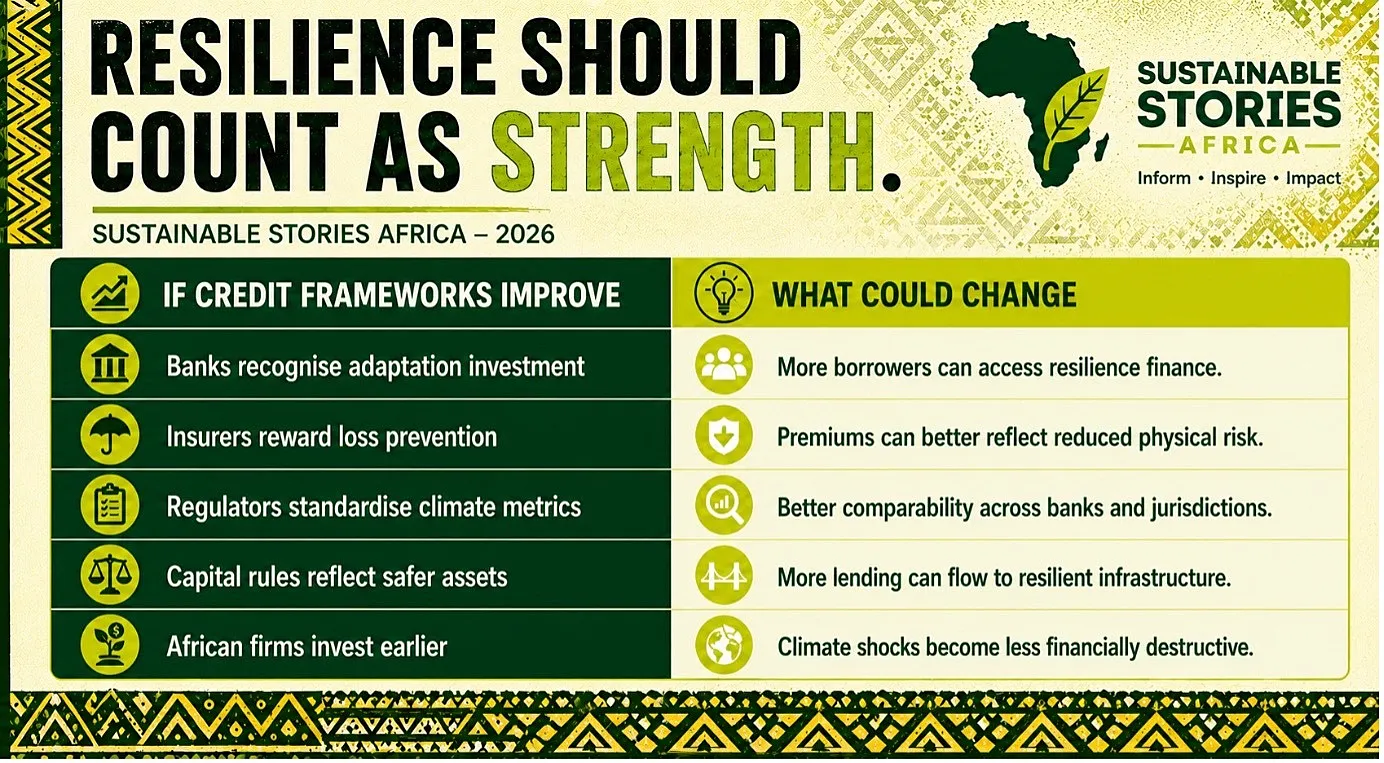
The better future is one where banks recognise climate adaptation as credit-positive, not merely as additional debt.
If borrowers invest in flood defences, water efficiency, resilient buildings, backup power, stronger logistics or climate-smart agriculture, lenders should be able to reflect those decisions in risk assessment, loan pricing and capital allocation.
Green Central Banking notes that the Cambridge framework attempts to price both the risks and opportunities of adaptation and resilience.
It also highlights the need for regulators to standardise methodologies and create incentives that strengthen financial stability before losses accelerate.
The opportunity is especially important for African markets, where adaptation finance remains far below the needs, and many businesses depend on bank credit.
If lenders continue to treat resilience investment as ordinary leverage, companies may delay protective spending until after disasters strike.
That is the wrong sequence. Climate finance must move before the flood, not after the damage.
Regulators Must Update The Rules
The next step is regulatory reform.
- Central banks, supervisors, and banking regulators should require financial institutions to integrate physical climate risk into credit assessment, collateral valuation, stress testing and portfolio monitoring.
- Banks should also build climate-risk capability across lending teams, not only sustainability departments.
- Credit officers need to understand how location, sector exposure, insurance availability and adaptation spending affect borrower risk.
For African regulators, this is an opportunity to move early. Prudential guidelines can encourage banks to recognise the effects of resilience investment, support climate-smart infrastructure and avoid concentration in highly exposed assets.
- Development finance institutions can help by sharing risk, building datasets and supporting blended finance structures.
The key is balance. Banks must not weaken underwriting standards. However, they should update standards so that resilience is properly valued.
A borrower investing in protection should not automatically be seen as riskier than one doing nothing.
Path Forward – Price Risk, Reward Resilience
Credit risk frameworks must shift from historical comfort to forward-looking realism.
Banks need better physical climate data, clearer supervisory expectations and practical tools to recognise adaptation as a credit-strengthening investment.
For Africa, the priority is urgent and strategic: build financial systems that fund resilience before climate damage becomes default, loss and exclusion.
Culled From: Credit risk frameworks need to respond to rising physical climate damage, report says - Green Central Banking