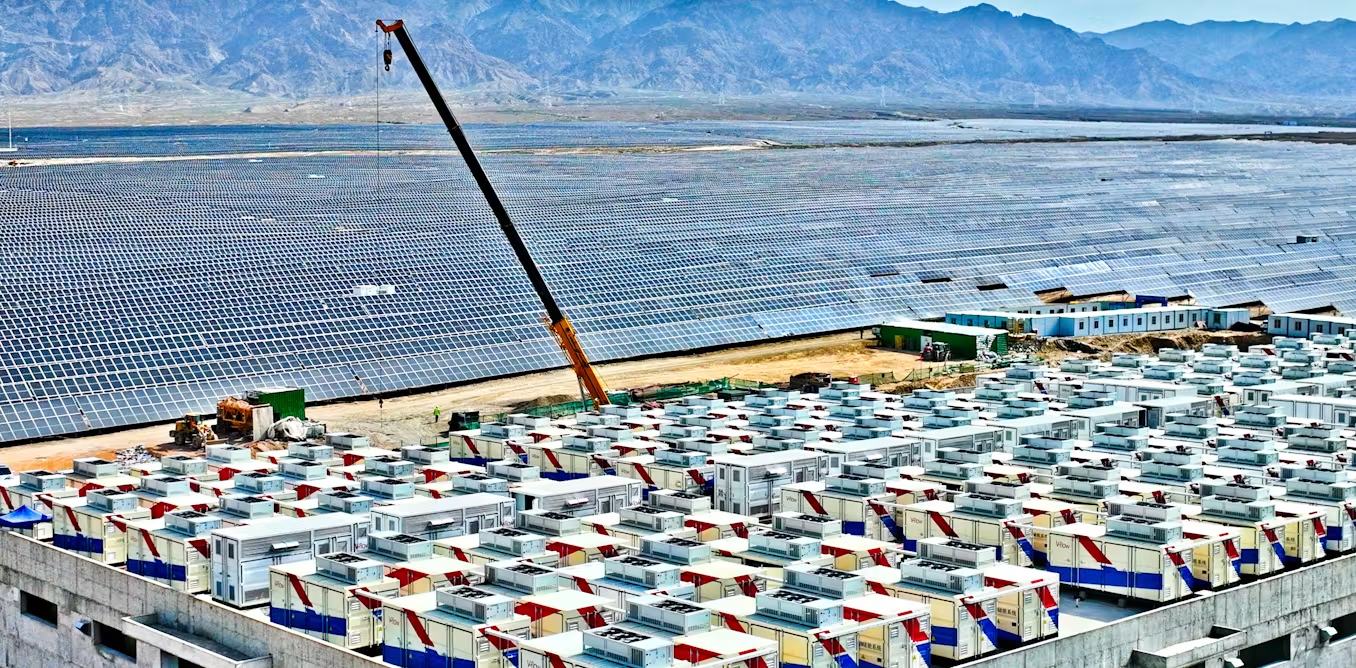
Battery storage is moving from the margins of clean energy into the centre of power-system planning.
Global deployment has reached record levels as grids absorb more solar and wind.
For Africa, the shift could reduce blackouts, cut dependence on diesel, and make renewable power more reliable.
The Grid’s Missing Piece Arrives
Battery storage is no longer a side technology in the clean energy transition. It is becoming the infrastructure that allows renewable power to work at scale.
Across global markets, utilities, developers and governments are deploying battery energy storage systems to store electricity when supply is high and release it when demand rises.
The technology is moving mainstream because power systems are changing faster than traditional grids were designed to handle.
Solar power peaks in the afternoon. Wind can rise or fall within hours. Demand often surges in the evening. Batteries help close that timing gap.
For Africa, where many countries face unreliable grids, expensive diesel backup and fast-growing electricity demand, storage is emerging as a practical tool for energy security, not just climate ambition.
From Backup Option to Market Infrastructure
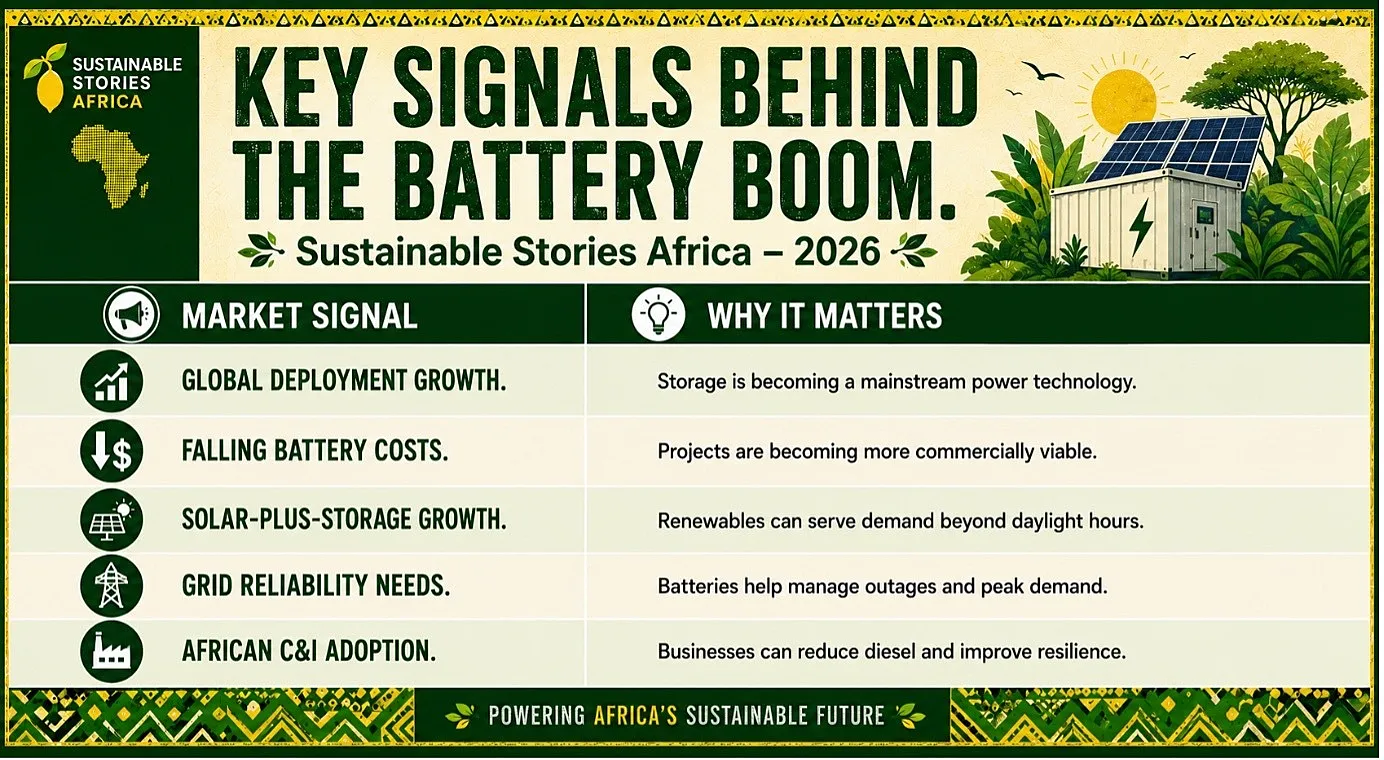
Battery storage has grown rapidly because the economics have improved. Falling technology costs, electric-vehicle manufacturing scale and better battery chemistries have made storage more competitive for utilities and businesses.
Globally, annual energy storage deployment passed a major milestone in 2025, exceeding 100 gigawatts for the first time.
The International Energy Agency has also reported that battery costs have fallen by about 90% in less than 15 years, helping storage become a serious competitor in power-system planning.
The shift is visible in Africa too.
South Africa has become one of the continent’s clearest examples, using battery projects to support grid stability and integrate renewable energy.
Across African commercial and industrial markets, businesses are also pairing solar with batteries to reduce diesel use and protect operations from outages.
- For a hospital, storage can mean keeping critical equipment running.
- For a cold-chain operator, it can protect vaccines, food and medicines.
- For a factory, it can reduce production losses caused by unstable supply
Cleaner Power Becomes More Reliable
The promise of battery storage is simple: make clean power dependable.
Without storage, renewable energy can be limited by timing. With storage, solar power generated during the day can support evening demand. Wind power can be smoothed.
Mini grids can serve communities more reliably. Utilities can reduce pressure during peak periods.
For African economies, this could change the competitiveness equation.
- Manufacturers often invest heavily in self-generation because the grid supply is unreliable. Small businesses lose revenue during outages.
- Households pay more when they depend on petrol or diesel generators. Battery storage can reduce these hidden costs if deployed at scale.
It can also support ESG goals. Lower diesel use means lower emissions, cleaner air and reduced noise pollution in cities and markets.
More reliable renewable power can improve schools, clinics, farms and digital businesses.
Africa Must Build Storage Markets
Battery storage will not scale automatically.
African governments need clear procurement frameworks, bankable contracts, import duty clarity, safety standards and grid codes that recognise storage as a distinct energy asset.
- Regulators must decide how batteries earn revenue: through capacity support, frequency response, peak shaving, arbitrage or reliability services.
- Development finance institutions can help by reducing early-stage risk and supporting local project preparation.
- Utilities must strengthen planning, so storage is placed where it solves real grid problems, not just where projects are easiest to build.
There is also a supply-chain question. Africa has critical minerals, rising energy demand and strong renewable resources.
The continent should not remain only a consumer of battery systems.
It needs a strategy for responsible mineral development, assembly, recycling, skills and local value creation.
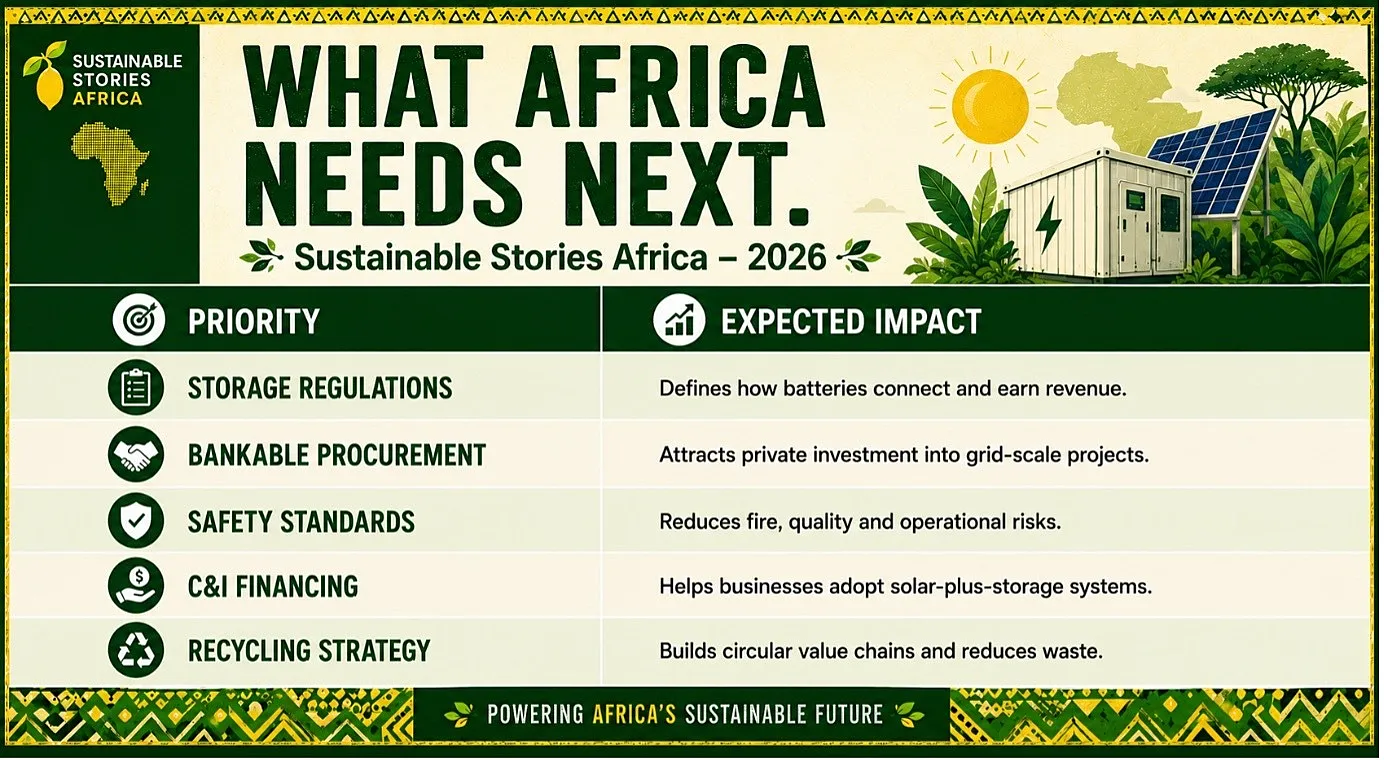
Path Forward – Store Power, Strengthen African Resilience
Battery storage is becoming central to reliable, clean and competitive electricity. Africa should treat it as grid infrastructure, not a luxury add-on.
The next step is coordinated action: better regulation, smarter financing, safer standards, and local value chain development. If well done, storage can reduce outages, support renewables, lower diesel dependence and make Africa’s energy transition more practical for households, businesses and communities.
Culled From: Battery storage goes mainstream