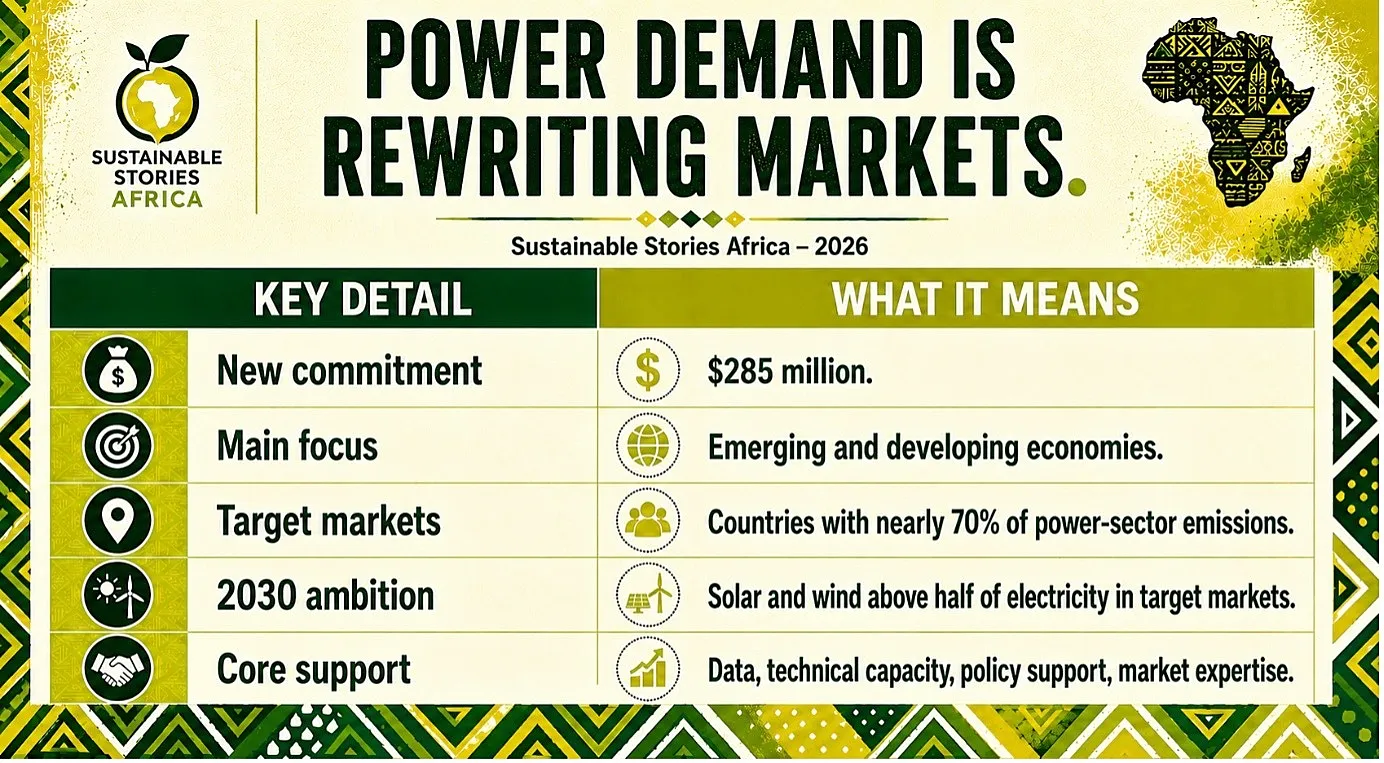
Bloomberg Philanthropies has committed $285 million to help clean energy scale faster across emerging and developing economies.
The funding comes as power demand increases towards industrial growth, electrification, artificial intelligence and energy security pressures.
For Africa and the Global South, the commitment could strengthen local clean energy industries, reduce fossil-fuel dependence and improve access to affordable power.
Clean Energy Gets A Bigger Push
Bloomberg Philanthropies has announced a $285 million commitment to help clean energy scale fast enough to meet rising global power demand, placing emerging and developing economies at the centre of its next climate push.
The commitment, announced in London by Michael R. Bloomberg, UN Secretary-General’s Special Envoy on Climate Ambition and Solutions, will support clean energy industries with institutional strength, technical capacity, market expertise and analytical tools.
The timing is significant. Electricity demand is rising as countries industrialise, cities expand, artificial intelligence increases power consumption, and governments seek more secure energy systems
For many African economies, this is not an abstract transition story. It is about whether homes, factories, schools and hospitals can access reliable, affordable and cleaner electricity.
Power Demand Is Rewriting Markets
The new funding targets countries responsible for nearly 70% of global power-sector emissions and aims to help solar and wind generate more than half of electricity in target markets by 2030.
Bloomberg Philanthropies says the effort will strengthen national clean energy industries so they can play a more influential role in energy planning, financing, and market decisions often shaped by incumbent energy interests.
For a small business owner in Lagos, Nairobi or Johannesburg, the outcome of these decisions is significant.
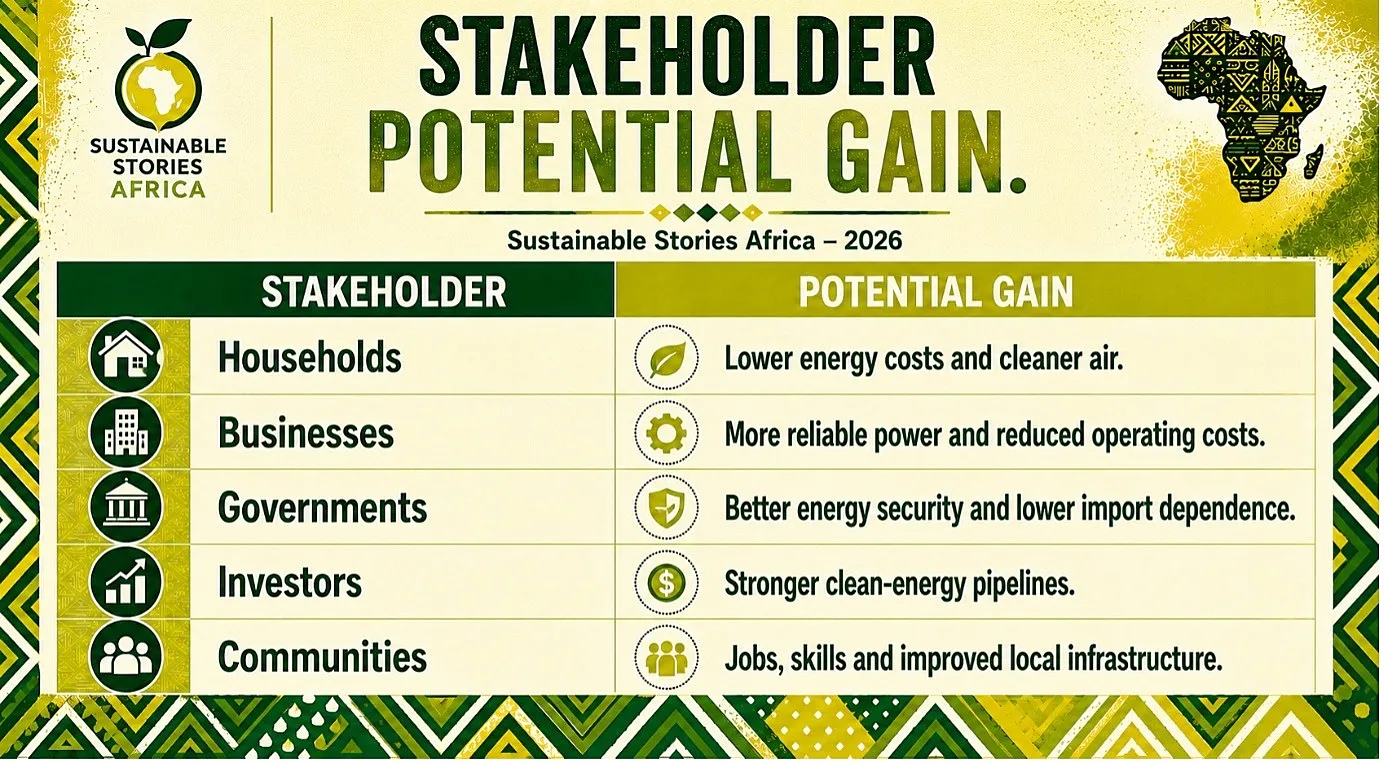
Expensive diesel, weak grids and unreliable electricity can lead to higher costs, lost working hours and reduced competitiveness. Clean energy, if scaled with the right systems, can reduce that pressure.
The commitment will also support industry associations, regional networks, technical research, economic analysis and regulatory assistance.
These are not glamorous parts of the transition, but they are essential. Solar panels and wind turbines need rules, finance, skilled institutions, stable markets and credible data to move from pilot projects to national systems.
Clean Power Can Drive Development
The positive case is clear. Clean energy is increasingly cost-competitive, but markets still need stronger institutions to scale it quickly and fairly.
If the new funding succeeds, it could help countries build electricity systems that are cleaner, cheaper and more resilient.
That matters for jobs, public health, household welfare and industrial growth.
For African markets, the opportunity is especially important. The continent needs far more electricity to power manufacturing, digital services, healthcare, cooling, education and transport.
However, if new demand is met mainly through fossil fuels, countries may face higher emissions, fuel-import exposure and stranded-asset risk.
The better path is to make clean energy a development engine, not just a climate obligation.
Build Markets, Not Just Projects
The $285 million commitment should be treated as a call to strengthen clean-energy ecosystems.
- Governments need bankable policies, transparent procurement, stronger grids and credible transition plans
- Investors need well-prepared projects and stable rules. Regulators need data and technical capacity.
- Local clean-energy companies need access to finance, skills and market intelligence.
For Africa, the priority should be clear: convert global climate capital into local value. That means more domestic participation in project development, operations, maintenance, manufacturing, data systems and skills training.
Clean energy will not scale through ambition alone. It will scale when institutions, markets and communities are strong enough to absorb investment and turn it into reliable power.
Path Forward – Clean Power Needs Strong Markets
Bloomberg Philanthropies’ commitment reinforces a major shift: clean energy is now central to economic competitiveness, energy security and climate action.
For African economies, the task is to prepare. Stronger policy, better data, local skills and credible financing pipelines can turn global clean-energy capital into affordable power, lower emissions and more resilient growth.
Culled From: Bloomberg Philanthropies Commits $285 Million to Scale Clean Energy Globally