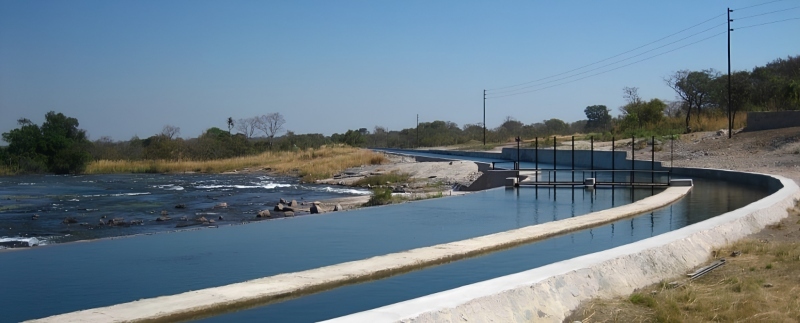
Small hydropower in Africa has received a $20 million financing boost.
British International Investment is backing Anzana Electric Group to scale run-of-river projects across East, Central and Southern Africa.
The deal targets a stubborn energy gap: how to finance smaller clean-power projects that can serve communities, businesses and reliable grids.
A Small Hydro Deal With Big Stakes
Africa’s small hydropower market has received a fresh vote of confidence after British International Investment, the UK’s development finance institution, committed $20 million to Anzana Electric Group to accelerate distributed renewable energy projects across the continent.
The senior secured portfolio debt facility is designed to support small and medium-scale run-of-river hydropower projects, with activity focused on East, Central and Southern Africa.
The first project is expected in Zambia, according to sector reporting on the transaction.
The deal matters because Africa’s electricity challenge is not only about building mega-projects.
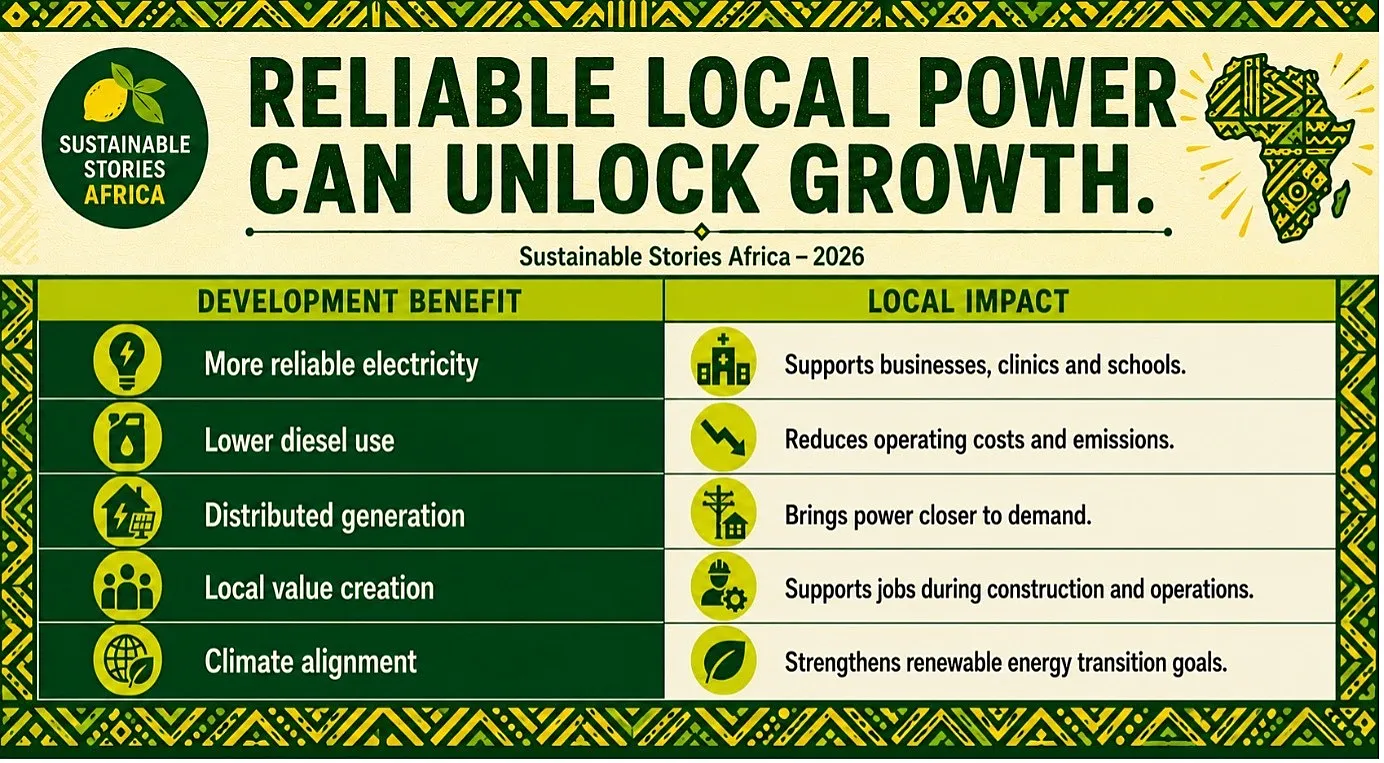
It is also about financing smaller, reliable systems that can power rural enterprises, clinics, schools, agro-processing sites and growing towns that sit beyond dependable grid supply.
For a health worker storing vaccines, a miller running evening shifts or a student reading after sunset, a few megawatts of reliable power can change daily life.
Why Small Projects Struggle To Scale
Small hydropower has long held promise in African energy planning. Run-of-river projects can generate electricity without the same large reservoirs associated with major dams.
They can also complement solar power by providing steadier generation where river flows are reliable.
However, the financing model has often been difficult.
- Projects below utility scale can face high development costs, long permitting timelines, complex environmental reviews and limited access to long-term debt.
- Many are too large for community finance, but too small to attract conventional infrastructure investors on a project-by-project basis.
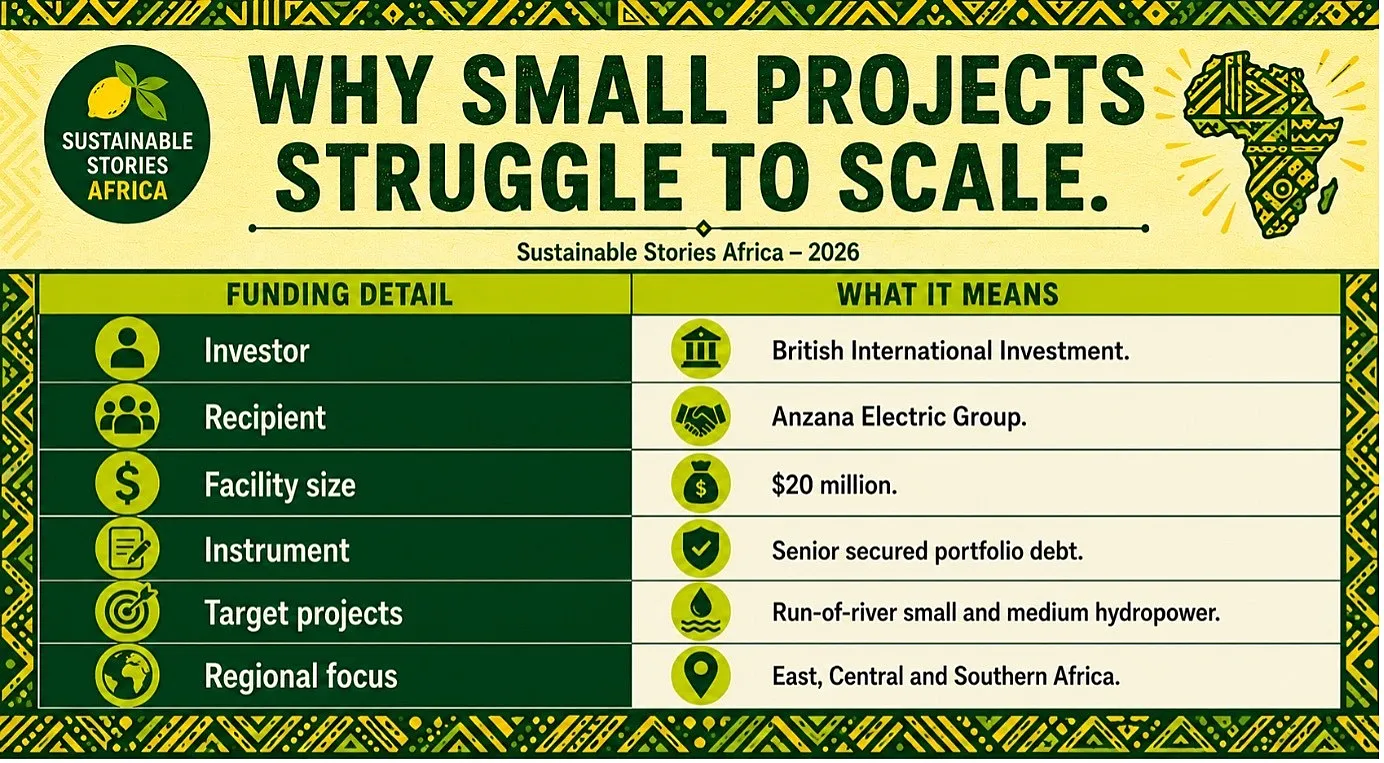
The importance of the Anzana facility lies in its portfolio approach.
Instead of backing only one plant, the financing can support a pipeline of projects, spreading risk across multiple assets and helping smaller clean-energy developments move from planning to construction.
That structure could be especially useful in African markets where developers often have viable sites but limited construction capital.
Reliable Local Power Can Unlock Growth
The promise of small hydro is not just electricity generation. It is development continuity.
Reliable power allows small manufacturers to reduce dependence on diesel, farmers to process crops closer to production sites and local businesses to stay open longer.
It can also improve the economics of mini-grids and distributed infrastructure by adding a renewable source that is less weather-variable than solar alone.
- For governments, the model supports energy access without waiting years for large transmission expansion.
- For investors, it offers a route into bankable distributed infrastructure.
- For communities, it can turn rivers and local resources into productive energy.
Still, the opportunity must be managed carefully. Hydropower projects, even smaller ones, must protect river ecosystems, community water needs and local livelihoods.
Financing Must Meet Community Trust
The $20 million facility should be seen as a financing breakthrough, but not a finish line.
To build trust, developers and financiers must pair capital deployment with strong environmental safeguards, transparent community engagement and clear benefit-sharing.
Governments must also improve permitting, tariff clarity and grid-connection rules so smaller projects can move faster without weakening accountability.
Africa’s clean-energy transition will not be built on a single technology alone. Solar, wind, storage, geothermal, grid upgrades and small hydro all have roles to play.
The task now is to match the right solution to the right geography, demand profile and community need.
If Anzana’s model works, it could help prove that small hydro is not a niche technology, but a practical part of Africa’s distributed power future.
Path Forward – Turn Rivers Into Resilient Power
The next priority is disciplined delivery: convert financing into operating projects, protect communities and prove that small hydro can be bankable at portfolio scale.
For African ESG and sustainability goals, the opportunity is clear. Clean, reliable distributed power can support energy access, local enterprise, emissions reduction and climate-resilient infrastructure.
Culled From: Small hydro gets $20m funding lift