Education systems worldwide are expanding expectations for schools without redesigning the structures that support teachers and learning.
A Brookings analysis argues that achieving "human flourishing" requires moving beyond policy aspirations to systemic institutional reform.
The findings carry important lessons for Africa as governments seek capable educational systems to prepare learners for an AI-driven, rapidly changing economy.
Better Schools Require Better System Design
The future of education will not be determined solely by what students learn; however, by how education systems are designed to help both learners and teachers thrive.
A Brookings Institution analysis, "From Aspiration to Architecture: Building Education Systems for Human Flourishing," argues that governments worldwide have steadily expanded expectations for schools while failing to redesign the institutions that enable teachers to meet those ambitions.
The result is a widening gap between educational aspirations and classroom realities.
The paper follows a Brookings–National Centre on Education and the Economy (NCEE) roundtable that brought together policymakers, researchers, teacher organisations, universities and education leaders to examine how education systems can move beyond academic achievement alone toward preparing learners for meaningful, ethical and resilient lives.
For African countries investing heavily in education reform, the message is clear: curriculum reforms alone will not deliver transformation unless institutions evolve alongside them.
Teachers Support Reform, But Systems Lag
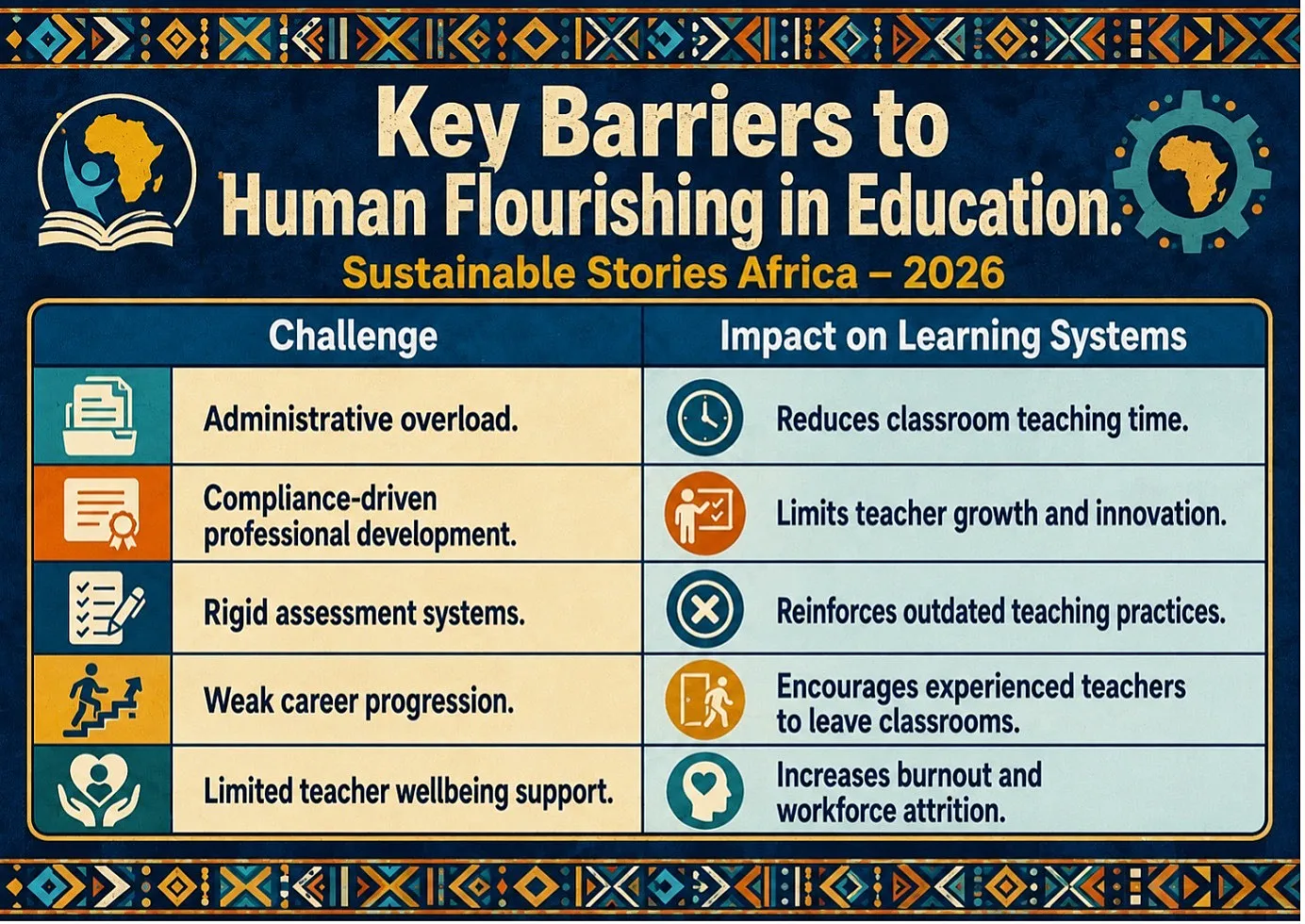
Brookings finds that educators are not resisting change; many are constrained by systems that reward compliance over innovation.
Research from Brookings' SPARKS initiative, spanning India, Mexico, and Egypt, found broad teacher support for competency-based, student-centred reforms. However, implementation stalled under administrative burdens, rigid assessments, and career structures that fail to reward collaborative teaching.
The report argues that these institutional barriers, not teacher motivation, remain the principal obstacle to transformation.
Some countries are redesigning systems around teachers:
- Estonia offers flexible recruitment, including second-career pathways
- Korea has strengthened preparation and professional standards
- Ireland has rebalanced teaching and administrative loads to free time for professional learning.
The analysis also links teacher wellbeing to student outcomes; supportive environments reduce stress and improve instructional practice, while excessive workloads and poor work-life balance drive rising global attrition.
Flourishing Learners Need Flourishing Teachers
The Brookings report argues that education systems should measure success not only through examination performance but also through learners' ability to build meaningful relationships, solve complex problems, adapt to change and contribute positively to society.
Achieving that vision requires redesigning the profession itself.
Rather than treating teachers as delivery agents for new policies, governments should invest in sustained professional development, collaborative learning, mentoring opportunities and career pathways that allow experienced educators to remain in classrooms while taking on leadership roles.
The report also places growing emphasis on artificial intelligence.
As AI increasingly performs routine academic tasks, Brookings argues that teachers' roles should shift towards facilitating deeper learning, critical thinking and real-world problem-solving.
However, AI integration should be developed in partnerships with educators, reducing workload rather than creating additional administrative pressures.
For Africa, where youthful populations and digital transformation are reshaping labour markets, these reforms could strengthen both educational quality and long-term economic competitiveness.
Redesign Systems Before Expectations Expand Further
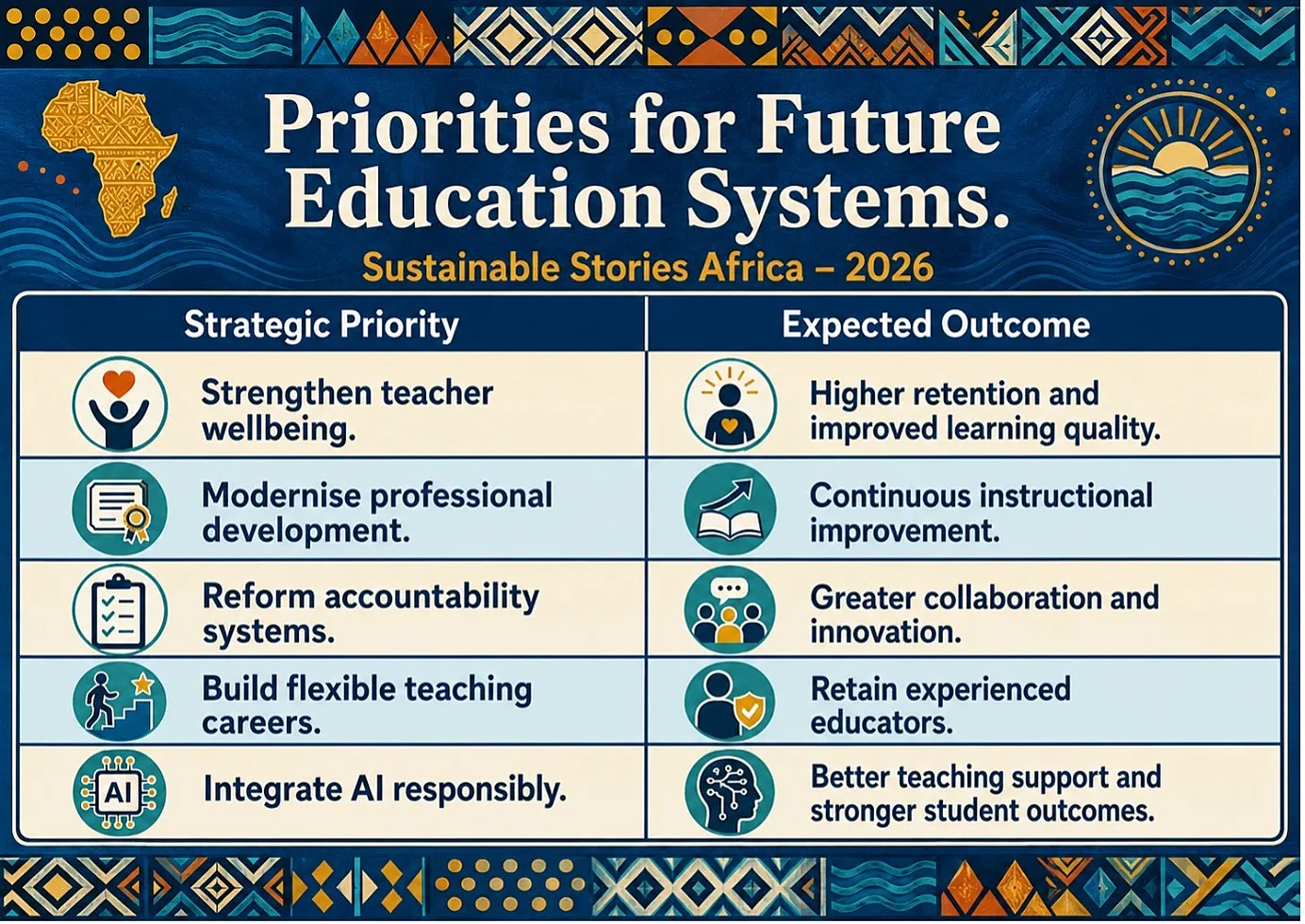
Brookings concludes that governments should move beyond aspirational education policies and invest in the institutional "architecture" that enables meaningful reform.
Priority actions include redesigning accountability systems to reward collaboration, improving teacher wellbeing, modernising professional development, creating flexible career pathways and ensuring AI supports, rather than replaces, human teaching expertise.
For African policymakers, the report offers a timely reminder that sustainable education reform depends not only on new curricula or technology investments, but also on institutions capable of supporting teachers throughout their professional journey.
Path Forward – Designing Systems That Enable Flourishing
Building education systems for human flourishing requires governments to match ambitious policy goals with equally ambitious institutional reform. Investments in teacher wellbeing, professional growth and collaborative school cultures must become central to education strategy.
For Africa, aligning these structural reforms with digital transformation, AI readiness and Sustainable Development Goal 4 can help create resilient education systems that prepare learners not only to succeed academically, but also to thrive throughout life.
Culled From: From aspiration to architecture: Building education systems for human flourishing | Brookings