Bureau Veritas has launched AITrack’s Supply Chain Engagement solution to improve supplier-level Scope 3 emissions data.
The tool helps companies collect, validate and integrate product-specific emissions information across value chains.
For African exporters and suppliers, it signals a market shift: the quality of climate data may increasingly determine access to global buyers.
Scope 3 Data Becomes A Market Test
Bureau Veritas has launched a new Supply Chain Engagement solution under its AITrack platform, targeting one of the hardest problems in corporate sustainability reporting: obtaining reliable, granular and auditable Scope 3 emissions data from suppliers.
The company said the solution supports supplier data collection, validation and integration across value chains, expanding AITrack’s existing corporate footprinting, product footprinting and capabilities for mitigation strategy.
The uploaded SSAL News Template calls for an inverted-pyramid, AIDA-led article structure, beginning with a clear excerpt before building context, implications and action.
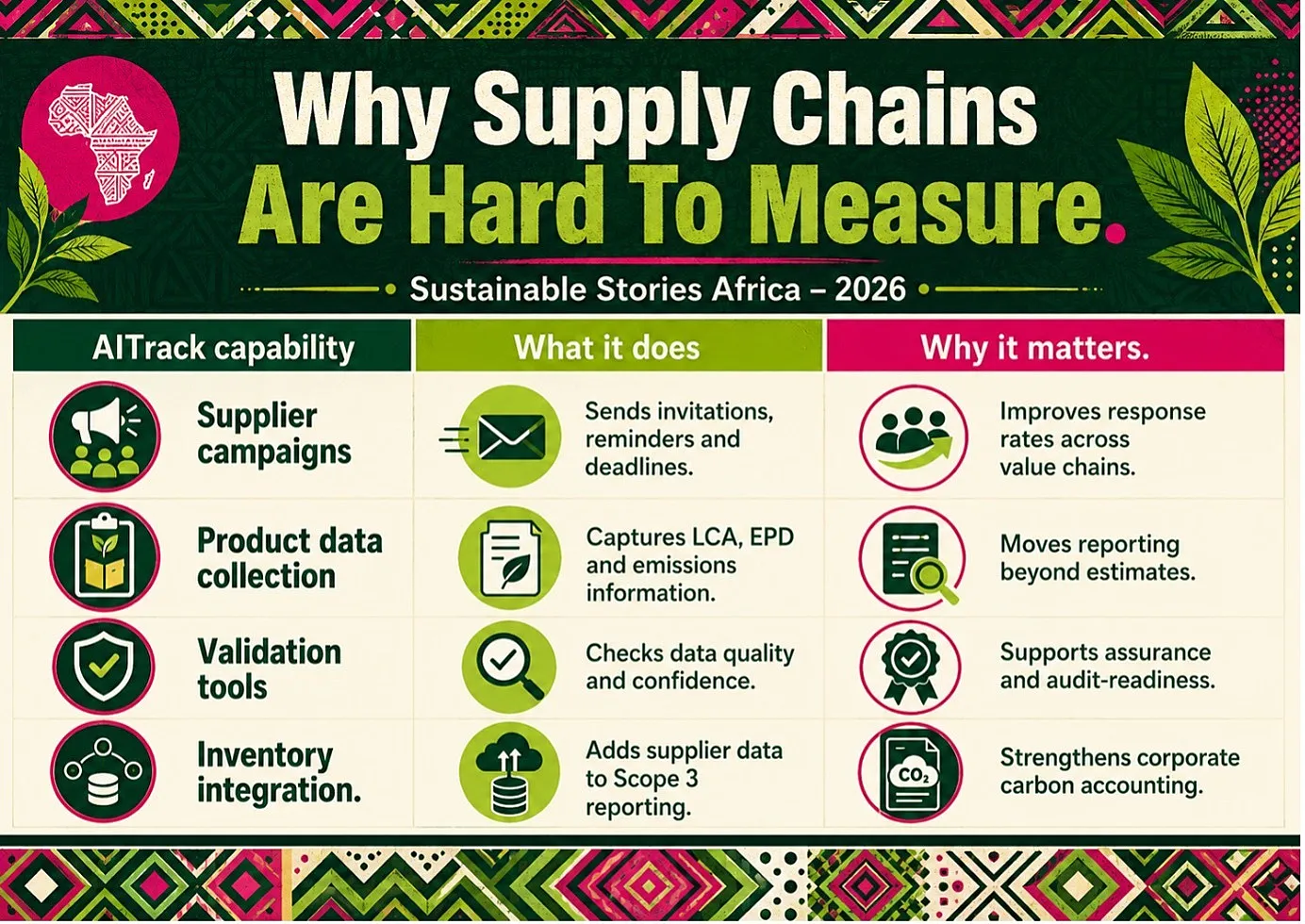
Why Supply Chains Are Hard To Measure
Scope 3 emissions often sit outside a company’s direct operations, covering suppliers, logistics, product use and end-of-life impacts. That makes them difficult to measure; however, they are increasingly difficult to ignore as regulators, investors, and buyers demand more credible climate reporting.
AITrack’s new tool is designed to help organisations run supplier engagement campaigns, collect product-specific lifecycle assessment data, environmental product declarations and emissions information, and integrate high-confidence supplier data into Scope 3 inventories with an audit trail.
Rui Fernandes Teixeira, Vice President of Global Sales & Marketing Sustainability at Bureau Veritas, said supply-chain emissions remain one of the biggest challenges for organisations pursuing credible sustainability progress.
He said AITrack helps companies move beyond estimates and generic supplier surveys toward “product-specific, supplier-powered insights at scale.”
Africa’s Exporters Face A Data Future
For African businesses, this is not just a software story. It is a trade and competitiveness story.
A cocoa processor in Ghana, a textile supplier in Ethiopia, a minerals exporter in Zambia or a packaging manufacturer in Nigeria may increasingly face requests from global buyers for product-level carbon data.
The buyer may be in Europe, North America or Asia, but the reporting burden travels down the supply chain.
If African suppliers cannot provide credible emissions information, they risk being treated as higher-risk partners, even when their actual footprint may be lower than assumed.
If they can provide verified data, they gain a stronger position in procurement conversations, sustainability-linked contracts and export markets.
Bureau Veritas says AITrack can provide visibility beyond Tier 1 suppliers and broader emissions coverage across the value chain, helping organisations make decisions across procurement, product strategy, mitigation planning and reporting.
Better Data Can Protect Market Access
The opportunity is clear: better Scope 3 data can turn climate compliance into a commercial advantage.
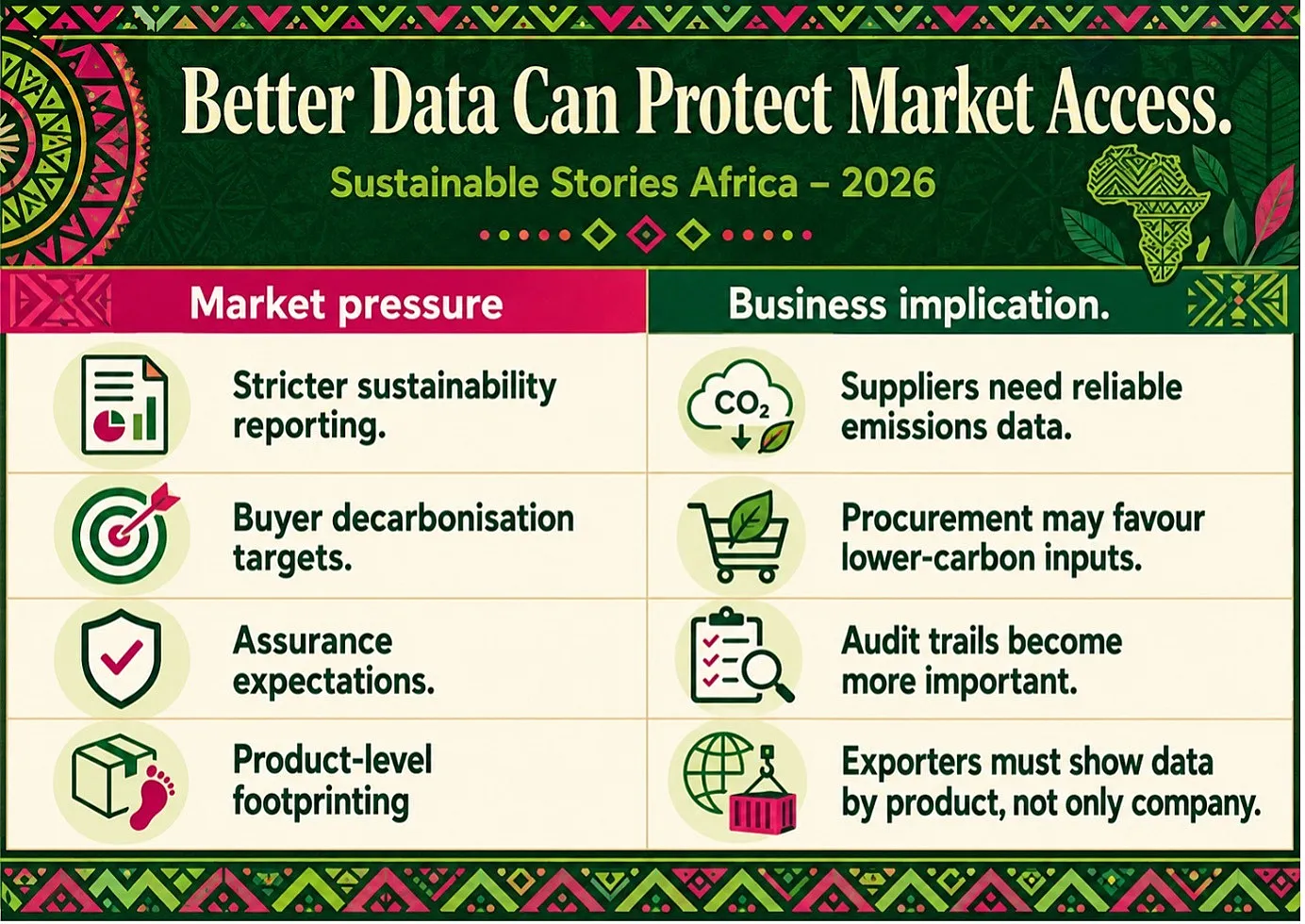
For African markets, this creates a practical pathway. Governments, chambers of commerce and development finance institutions can support supplier-readiness programmes, shared carbon-data tools, local verification capacity and sector-specific emissions baselines.
The risk is a widening data divide: large multinationals become audit-ready, while small and medium-sized suppliers lose access to premium markets because they cannot document their climate performance.
Institutions Must Close The Data Gap
The next step is capacity-building.
- African regulators, exporters and industry groups should treat Scope 3 data as part of trade infrastructure, alongside standards, customs systems and quality certification.
- Companies should map their highest-emission supply chain categories, train suppliers, digitise product data and prepare for assurance.
- Banks and development partners should help SMEs meet reporting demands before climate data becomes another barrier to market entry.
Path Forward – Make Supplier Data Trade-Ready
African markets need practical systems that help suppliers measure, verify and share emissions data with confidence.
The priority is to build local assurance capacity, sector baselines and affordable digital tools. #
As global buyers demand granular Scope 3 evidence, climate data readiness can protect exports, improve ESG performance and strengthen market access.
Culled From: Bureau Veritas Launches AITrack Supply Chain Engagement Solution for Granular Scope 3 Data