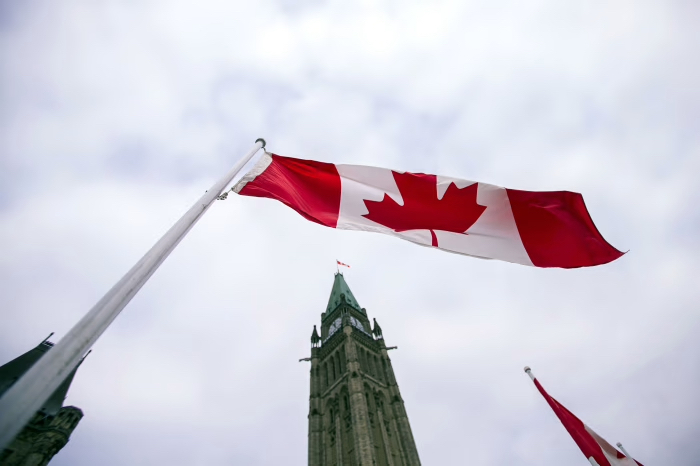
Canada has tabled new legislation to strengthen its ban on the import of goods produced with forced labour.
The bill matters because supply-chain ethics are moving from disclosure statements to border enforcement, traceability and market access.
For African exporters, manufacturers and financiers, the signal is clear: responsible sourcing is becoming a trade requirement, rather than an ESG promise.
A Border Test For Ethical Trade
Canada has tabled Bill C-35, proposing a standalone legislative framework to block goods made with forced labour from entering one of the world's most regulated consumer markets.
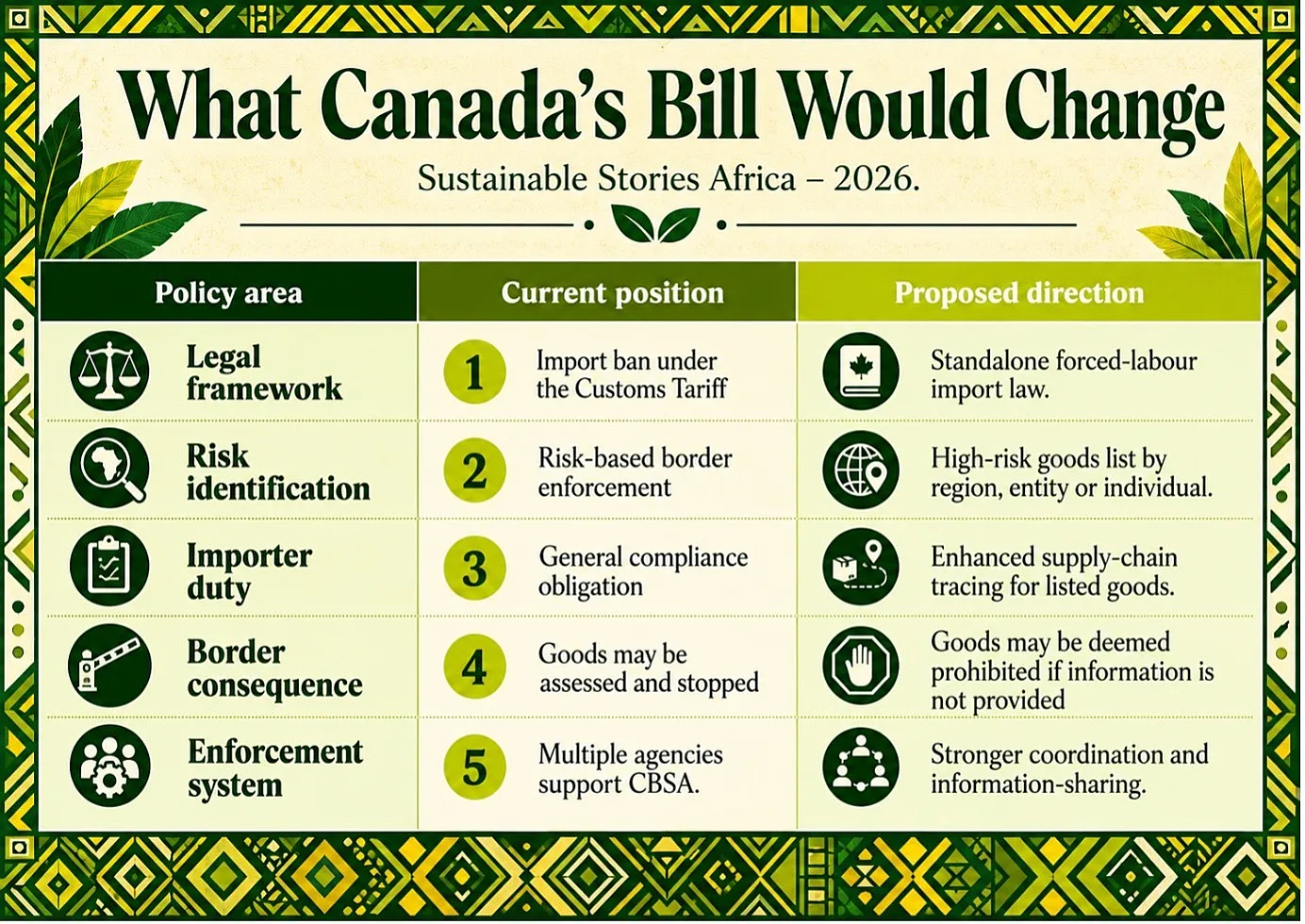
Announced on 12 June 2026 by Foreign Affairs Minister Anita Anand, the bill would replace the existing import prohibition under the Customs Tariff, giving authorities clearer tools to identify high-risk goods, demand supply-chain tracing, and act where importers cannot provide adequate evidence.
Canada first banned forced-labour imports in July 2020 under the Canada-United States-Mexico Agreement; however, enforcement has remained a persistent challenge. Bill C-35 is designed to close that gap.
The message for businesses is unambiguous: if a company cannot explain where and how its goods are made, its products risk detention, prohibition, or reputational damage at the border.
Voluntary sustainability statements are no longer sufficient.
Why Supply Chains Now Face Scrutiny
Canada's Bill C-35 sits within a greater global enforcement shift.
- The United States already uses customs tools to detain suspected forced-labour goods.
- The EU's forced-labour product ban is expected from December 2027.
- Germany and France have enacted corporate due diligence laws
- Britain relies primarily on modern-slavery transparency requirements.
Canada's proposal targets the enforcement gap between reporting and action. The Minister of Foreign Affairs would be empowered to list high-risk goods by region, entity, or individual where forced labour is reasonably suspected. Importers of flagged goods must provide enhanced supply-chain tracing, or face prohibition.
The bill also proposes stronger inter-agency information sharing and a cost-recovery model applied to non-compliant importers.
For African and Global South suppliers, the stakes are concrete. A cocoa cooperative, garment manufacturer, mining services firm, or agricultural exporter may sit several layers below a Canadian importer.
However, market access could depend on documentation collected across that entire chain.
Wage records, recruitment practices, worker grievance channels, and supplier contracts are becoming instruments of trade compliance.
Ethical sourcing is rapidly transforming into paperwork, systems, and governance tests.
Cleaner Trade Can Protect Workers
The positive case for enforcing stricter forced-labour trade is straightforward: it protects vulnerable workers, rewards responsible producers, and exposes exploitation hidden inside long supply chains.
The ILO estimates 27.6 million people remain in forced labour globally, concentrated in sectors that directly feed international trade, such as manufacturing, agriculture, mining, construction, and fishing.
For African markets, early preparation converts compliance pressure into a competitive advantage.
- Exporters building credible traceability systems gain buyer trust.
- Banks can embed supply-chain due diligence into trade finance risk assessment.
- Regulators can help smaller businesses prepare before requirements become market barriers.
The risk, however, is exclusion. If compliance costs rise without targeted support, smaller suppliers may be dropped by global buyers, even where no abuse exists.
Capacity-building, digital traceability tools, labour inspection reform, and supplier education must therefore accompany enforcement, not follow it.
Businesses Must Treat Traceability As Strategy
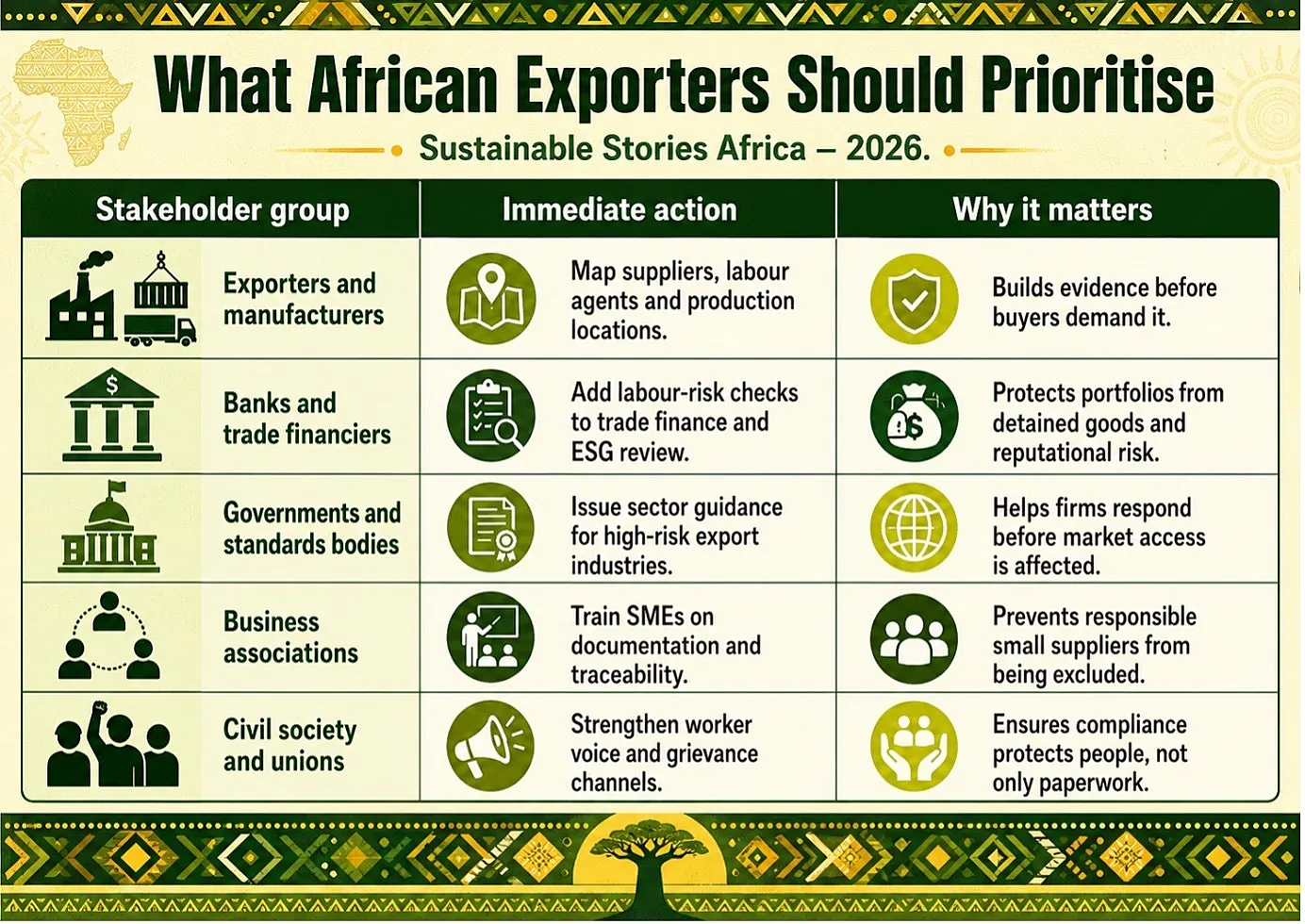
The next step for companies is not to panic. It is preparation. Businesses trading with Canada should review their exposure, identify high-risk inputs, improve supplier contracts, strengthen worker-protection policies and keep records that can withstand scrutiny.
African policymakers should also treat Canada’s move as part of a broader ESG trade architecture.
Climate rules, deforestation rules, human rights due diligence and forced-labour bans are increasingly shaping access to premium markets. Countries that wait until shipments are detained will need to navigate from a position of weakness.
Responsible trade should not become another burden placed on the least powerful suppliers.
However, neither should human dignity be left outside the warehouse gate. The companies that win in this new environment will be those that can show not only what they sell, but how it was made.
Path Forward – For Responsible African Trade
African exporters, regulators and financiers should begin forced-labour risk mapping now, especially in sectors exposed to Canadian, U.S. and European buyers.
The priority is practical: stronger documentation, worker protections, supplier transparency and affordable compliance support for SMEs.
Well done, this can turn ESG from a reporting exercise into a market-access advantage rooted in dignity, fairness and trust.
Culled From: Canada Tables Legislation to Strengthen Forced Labour Import Prohibition