Africa's carbon-finance landscape is heading toward a defining moment, as new rules, scrutiny and market discipline reshape how credits are created and traded.
By 2026, analysts expect sharper standards, fewer speculative projects and a stronger link between carbon markets and development outcomes.
For African countries, the opportunity is large, but only if credibility, governance and transparency keep pace with ambition.
Carbon Markets Face Credibility Test
Carbon finance is entering a more demanding phase. After years of rapid growth, voluntary carbon markets are under pressure to prove their integrity, additionality and real climate impact.
According to analysis by The Cable, 2026 could mark a turning point, separating credible carbon finance from speculative excess.
For Africa, the stakes are particularly high. The continent holds vast potential for nature-based solutions, renewable energy and avoided-emissions projects; however, this has captured only a small share of global carbon-credit revenues.
As scrutiny intensifies, Africa's ability to meet tougher standards will determine whether carbon finance becomes a durable development tool or a missed opportunity.
Why the Rules Are Tightening
The next two years are expected to bring greater standardisation and enforcement across carbon markets.
International initiatives are pushing for clearer methodologies, improved verification and stronger safeguards against double-counting and greenwashing.
This shift responds to growing criticism that some credits overstate climate benefits or deliver little value to host communities.
Buyers, particularly corporates facing regulatory and reputational risk, are increasingly selective, favouring high-integrity credits even at higher prices.
For African project developers, this means higher upfront costs but potentially more stable long-term demand. Governments, meanwhile, are moving to assert greater control, integrating carbon markets into national climate strategies and fiscal planning.
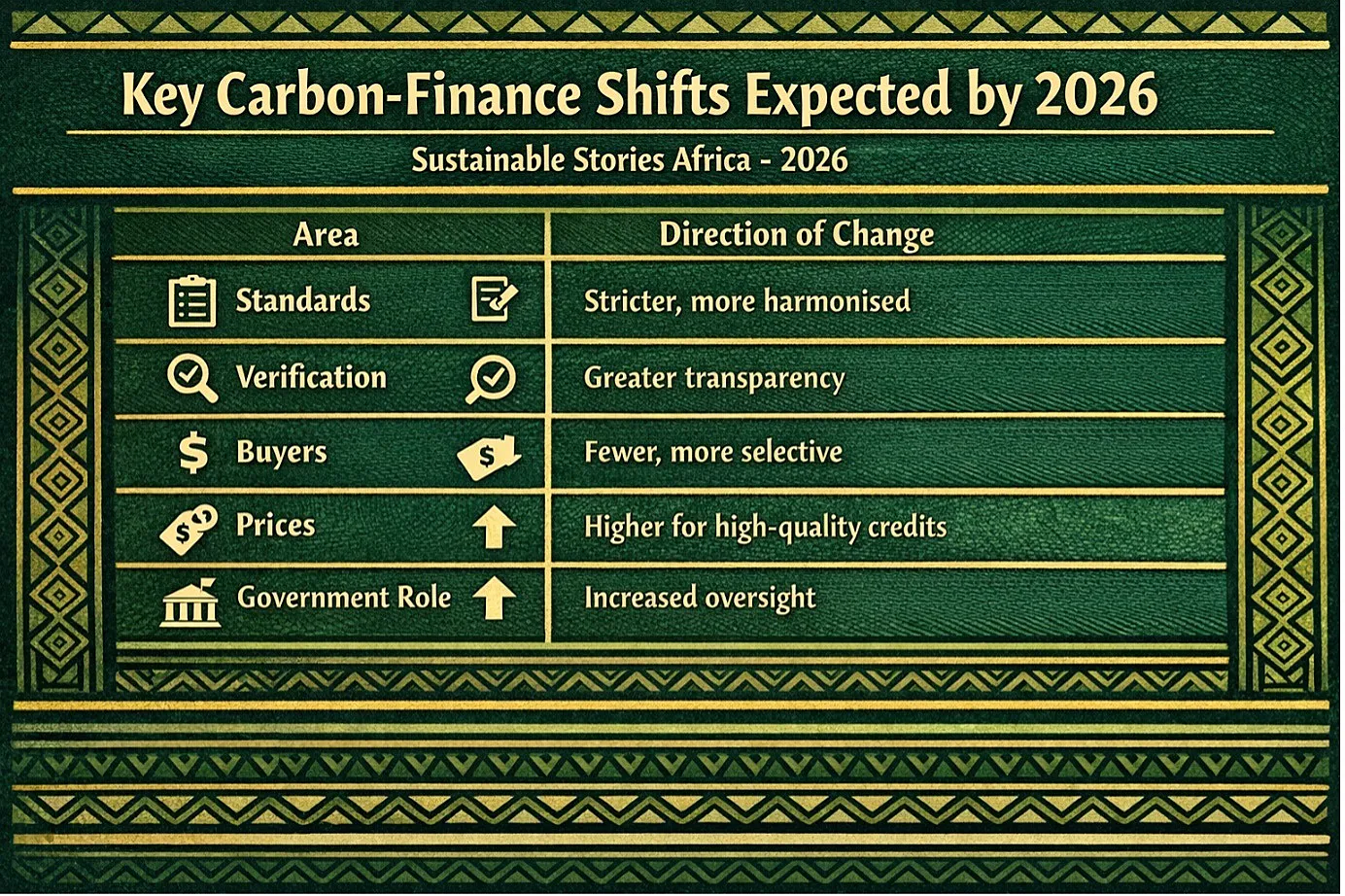
Key Carbon-Finance Shifts Expected by 2026
| Area | Direction of Change |
|---|---|
| Standards | Stricter, more harmonised |
| Verification | Greater transparency |
| Buyers | Fewer, more selective |
| Prices | Higher for high-quality credits |
| Government role | Increased oversight |
Africa's Opportunity and Risk
Africa's comparative advantage lies in scale and diversity: forests, mangroves, grasslands, renewable resources and emerging industrial transitions. Analysts estimate that high-integrity carbon projects could unlock billions of dollars annually if structured properly.
But The Cable's analysis warns that weak governance could undermine this promise. Without clear land-tenure systems, benefit-sharing frameworks and transparent registries, projects risk community backlash or international rejection.
By 2026, markets are likely to penalise countries and developers that cannot demonstrate social and environmental integrity. The result could be a smaller but more credible African carbon-finance ecosystem.
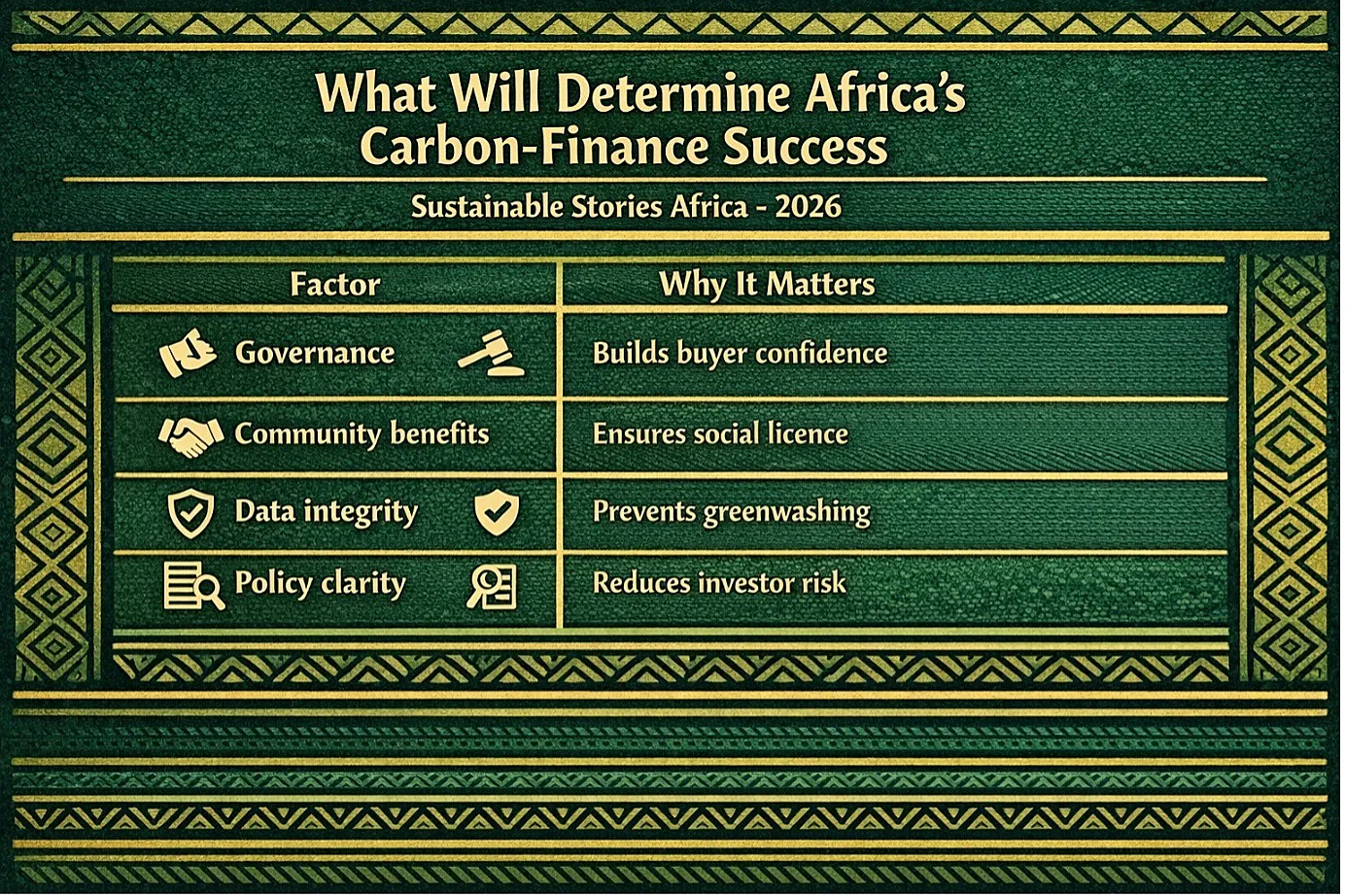
What Will Determine Africa's Carbon-Finance Success
| Factor | Why It Matters |
|---|---|
| Governance | Builds buyer confidence |
| Community benefits | Ensures social licence |
| Data integrity | Prevents greenwashing |
| Policy clarity | Reduces investor risk |
What Governments and Developers Must Do
The coming years demand proactive reform. Governments must clarify ownership of carbon rights, integrate markets into national climate plans and strengthen regulatory institutions.
Developers, meanwhile, must invest in measurement, reporting and verification, as well as design projects that deliver tangible local benefits.
For corporates and investors, 2026 is shaping up to be the moment to reassess carbon strategies, shifting from volume-driven offsets to targeted, high-impact credits aligned with broader decarbonisation plans.
Delay or complacency risks locking Africa out of premium markets just as demand stabilises.
Path Forward – From Volume to Value
By 2026, carbon finance is likely to reward quality over quantity. For Africa, this transition creates new opportunities to reset markets around integrity, development impact and long-term credibility.
If governance, transparency and community outcomes improve in tandem, carbon finance could evolve from a speculative add-on into a meaningful pillar of Africa's climate-finance architecture, supporting both mitigation and sustainable development.
Culled From: https://www.thecable.ng/what-to-anticipate-in-carbon-finance-in-2026/