City Developments Limited has secured a S$300 million sustainability-linked loan from DBS.
The facility links financing to urban farming, microforests, circular materials, water efficiency and nature engagement.
For African cities, the deal shows how banks can turn nature-positive urban development into a measurable financial strategy.
Nature Moves From Ideal To Finance
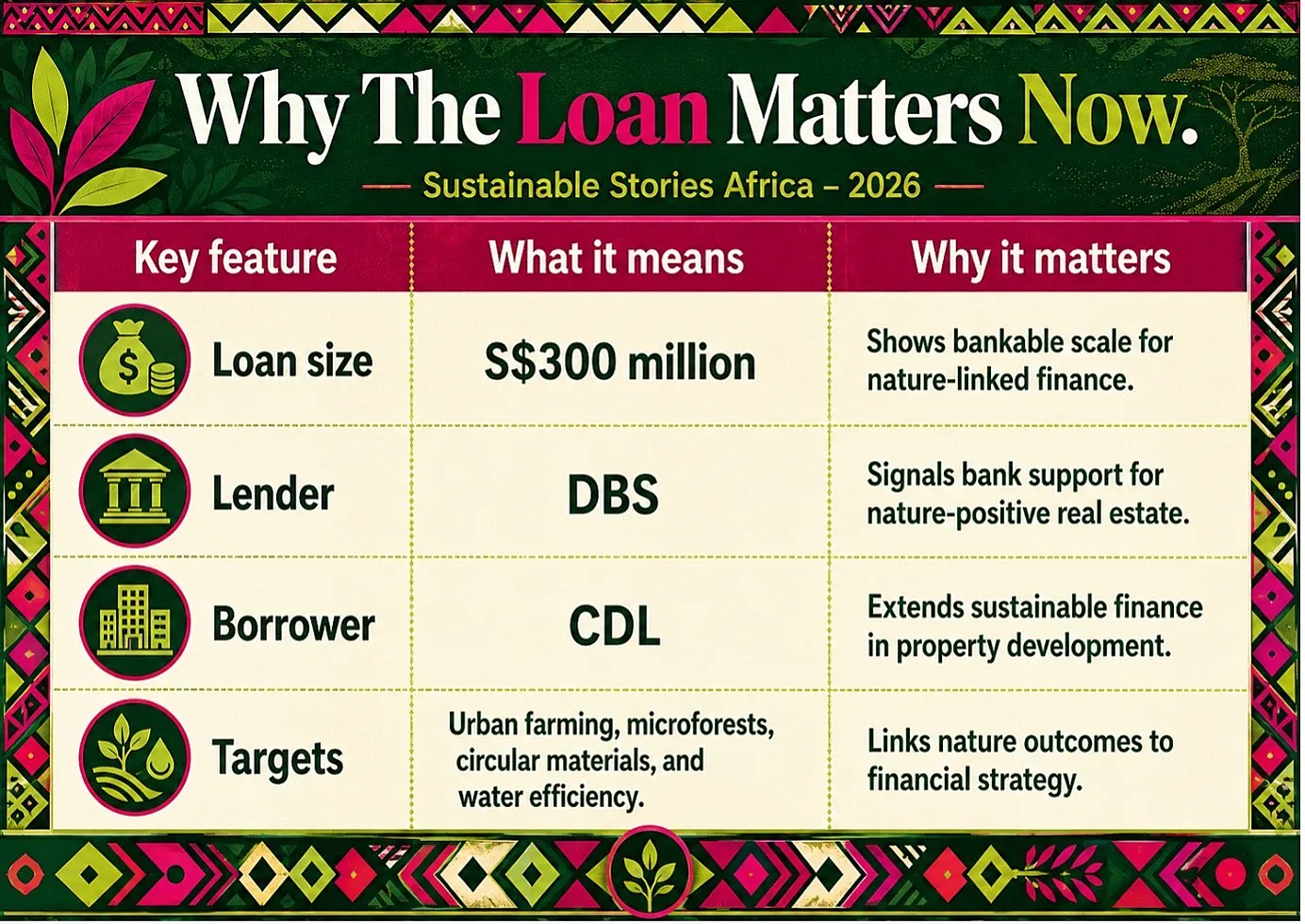
A S$300 million sustainability-linked loan between Singapore’s City Developments Limited and DBS is pushing nature-based urban development deeper into mainstream finance, tying corporate borrowing to targets that include urban farming, native-species microforests, circular materials and water efficiency.
Announced on May 15, 2026, the multi-currency facility will support general corporate funding and working capital needs, including asset redevelopment and sustainability initiatives.
It was structured in line with sustainability-linked loan principles and aligned with Singapore’s Green Plan 2030.
Why The Loan Matters Now
The deal matters because it moves nature from corporate language into measurable finance.
Unlike a traditional green loan tied mainly to the use of proceeds, sustainability-linked loans are tied to borrowing conditions and performance targets.
In CDL’s case, those targets are linked to how buildings, water, materials and biodiversity are managed in dense urban systems.
CDL said it has secured more than S$11 billion in sustainable financing since 2017. Its latest facility follows a S$400 million TNFD targets-aligned sustainability-linked loan with DBS in 2024.
Cities Can Become Climate Infrastructure
For residents, these targets may sound technical. However, they point to everyday urban needs: cooler neighbourhoods, improved water management, greener buildings, more efficient construction and better access to nature inside cities.
In African cities such as Lagos, Nairobi, Accra and Johannesburg, the same pressure is visible.
Rapid urbanisation is stretching drainage, housing, transport and energy systems. Heat, flooding and resource stress are no longer future risks; they are planning realities.
That is why CDL’s model is useful beyond Singapore. It shows that nature-based design can be treated not as decoration, but as infrastructure.
Microforests can reduce heat stress. Water efficiency can lower operating costs. Circular materials can reduce waste.
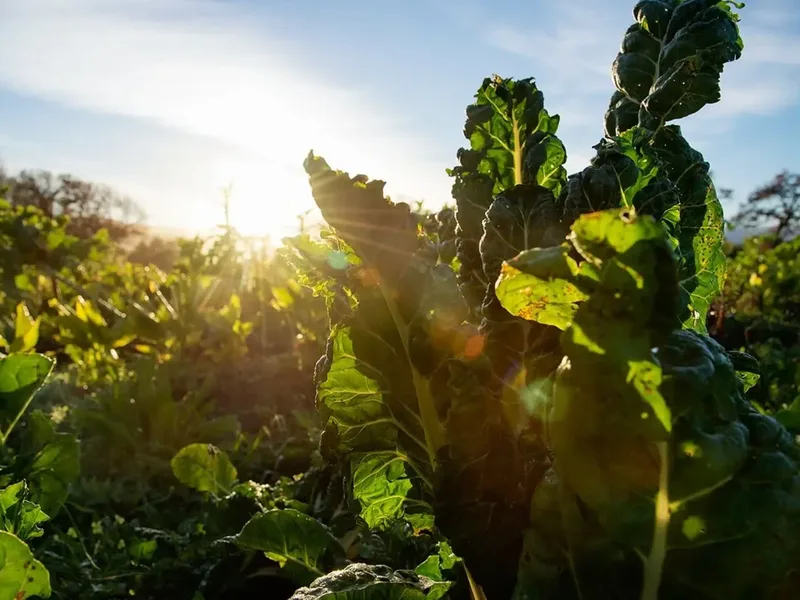
Urban farming can support resilience where food systems face climate and logistics shocks.
Better Finance Can Build Better Cities
The promise of the CDL-DBS facility is not only that a major developer secured funding. It is possible that sustainability performance may increasingly influence the cost and credibility of capital.
CDL’s Group Chief Financial Officer, Yiong Yim Ming, said sustainable financing is both a growth catalyst and an enabler of the transition to a low-carbon, climate-resilient future.
DBS’s Chew Chong Lim said real estate has a critical role in building sustainable futures and that financing can support more resilient urban spaces for businesses, communities and the environment.
For Africa’s real estate and infrastructure markets, the larger lesson is that sustainable finance becomes stronger when targets are practical, measurable, and linked to assets people actually use.
Banks Must Reward Measurable Outcomes
The next step is replication with discipline. Banks, regulators and developers should design sustainability-linked loans around specific targets, independently verifiable and relevant to local climate risks.
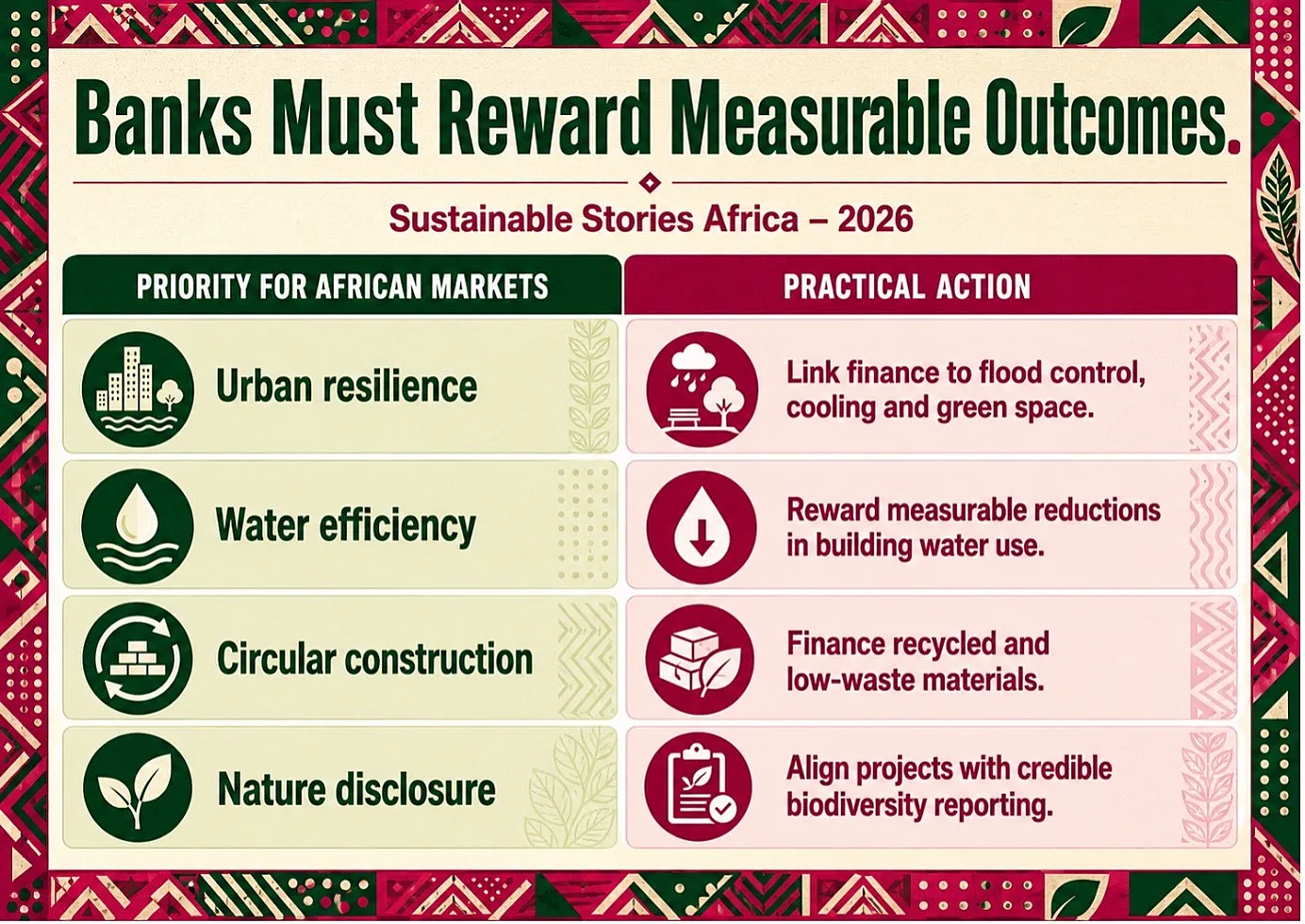
Without strong measurement, nature finance risks becoming branding. With credible targets, it can become a new engine for better cities.
Path Forward – Make Nature Bankable Locally
African markets should adapt this model to local needs: flood-prone districts, water-stressed cities, informal settlements, transport corridors and public buildings.
The priority is not copying Singapore; however, translating the principle: finance should reward projects that make cities cooler, safer, more resource-efficient and more liveable.
Culled From: CDL and DBS Launch S$300 Million Sustainability-Linked Loan Tied to Nature-Based Urban Targets