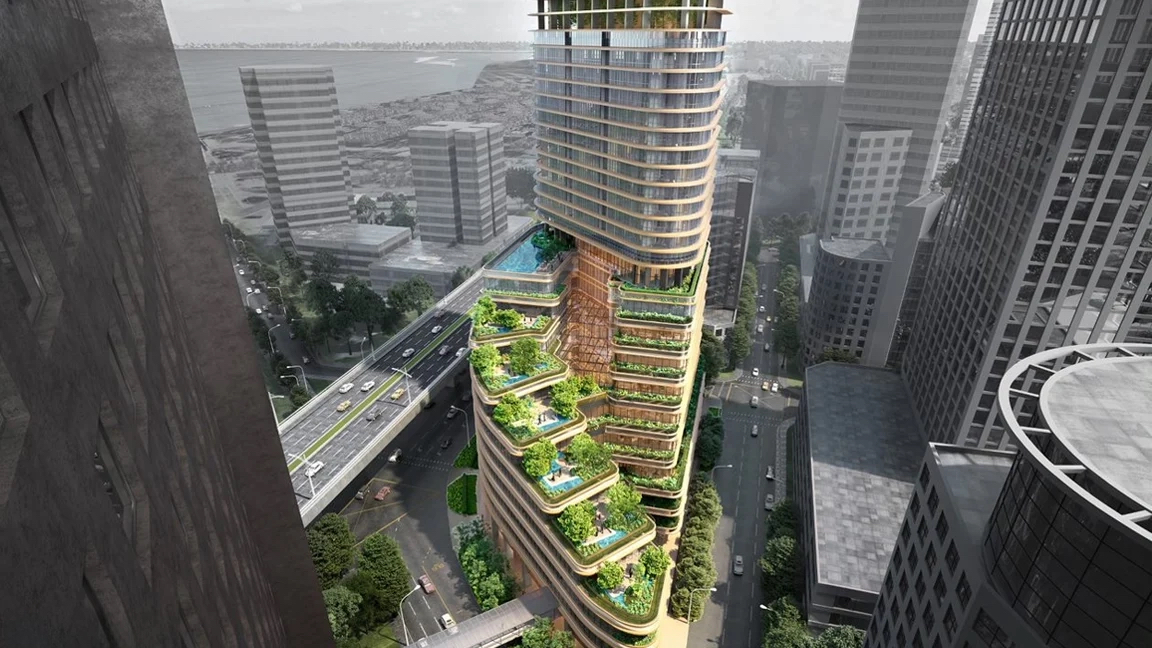
City Developments Limited is positioning sustainability as a core strategy for the real estate business.
Its approach links green buildings, lower operating costs, risk management, access to financing and stakeholder trust.
For African cities facing heat, flooding, housing pressure and infrastructure gaps, the lesson is direct: resilient buildings are becoming economic infrastructure.
Green Buildings Become Market Discipline
In real estate, sustainability is no longer only a branding exercise. It is becoming a financial discipline.
City Developments Limited, one of Singapore’s major real estate groups, has built its sustainability case around a simple commercial argument: greener buildings can reduce operating costs, manage long-term environmental risks, meet tighter regulations and respond to rising expectations from tenants, homebuyers, investors and lenders.
The company’s position matters because buildings sit at the centre of climate risk. They consume energy, use water, shape cities and lock in emissions for decades.
For African markets, where urbanisation is accelerating, and infrastructure deficits remain high, the business case is especially urgent.
The buildings constructed today will determine future power demand, cooling costs, flood exposure and liveability.
From Compliance to Competitive Advantage
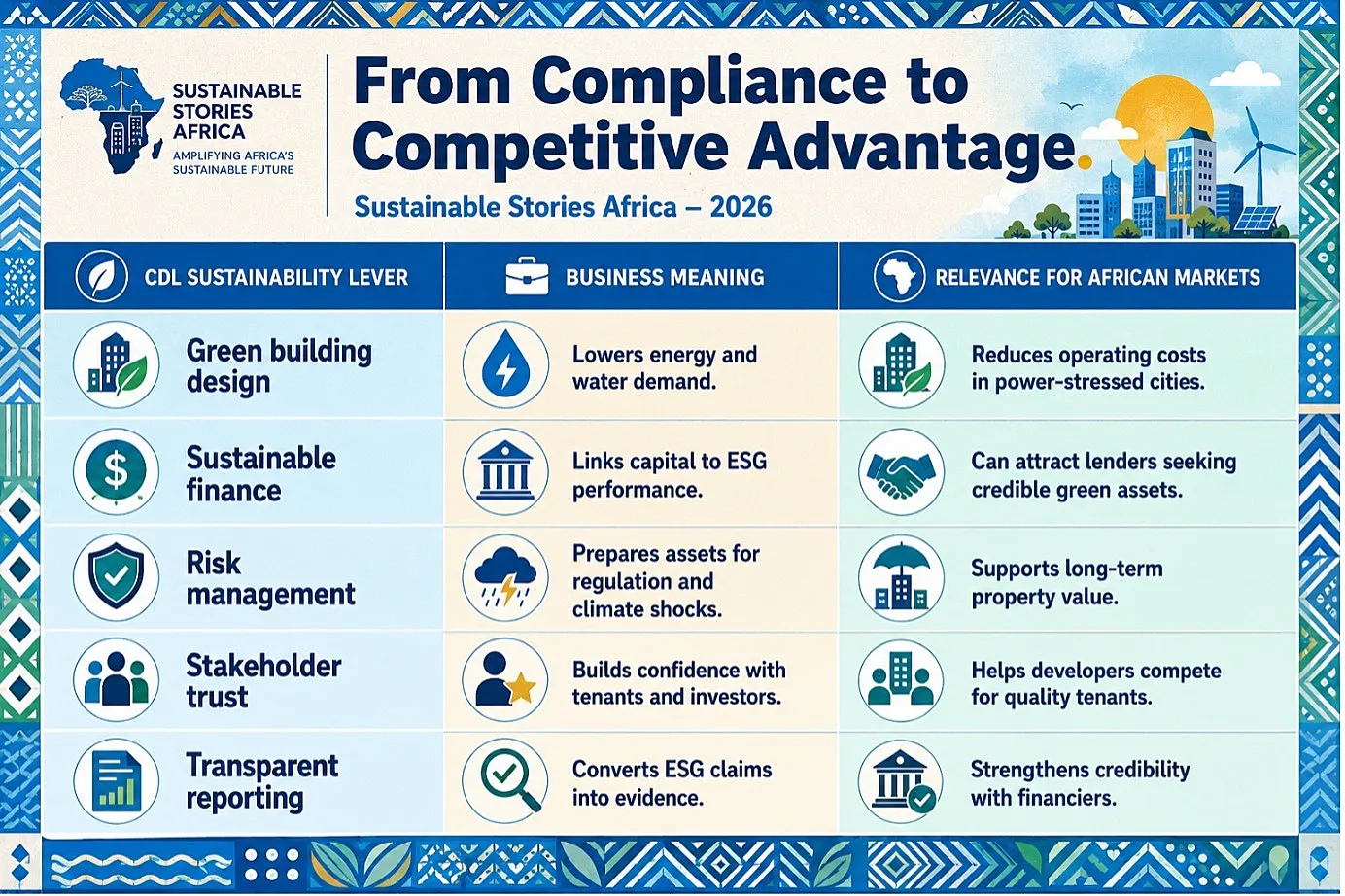
CDL’s approach reflects a wider shift in global real estate. Developers are being judged not only by location, design and rental yield, but also by energy performance, carbon exposure, resilience and disclosure quality.
The company has long presented sustainability as part of business continuity. Its model integrates green design, sustainable financing, stakeholder engagement and transparent reporting.
It also links sustainability performance to investor confidence, arguing that climate-aware buildings are better positioned by their future regulation and market demand.
That logic is increasingly relevant in African cities such as Lagos, Nairobi, Accra and Johannesburg, where property investors face rising energy costs, heat stress, water pressure and climate-linked infrastructure disruption.
A poorly designed building may appear cheaper upfront, but become more expensive over time due to higher power bills, insurance risk, maintenance costs and tenant dissatisfaction.
Better Buildings, Stronger Urban Economies
The positive case is clear. Sustainable real estate can create buildings that are cheaper to operate, healthier to occupy and more robust to climate disruption.
- For tenants, that can mean lower utility bills and more comfortable workspaces.
- For developers, it can mean stronger asset value, improved access to capital and deeper trust with regulators and investors.
- For cities, the benefits go beyond individual buildings.
Efficient buildings reduce pressure on electricity grids. Water-smart developments ease stress on municipal systems. Climate-resilient design can reduce flood losses and protect livelihoods. In practical terms, a green building is not just an ESG asset; it is urban risk management.
However, the downside is equally clear. If sustainability remains optional, cities may continue locking in inefficient buildings that are costly to retrofit later.
That would leave households, businesses and governments paying the bill through higher cooling demand, weaker resilience and declining asset quality.
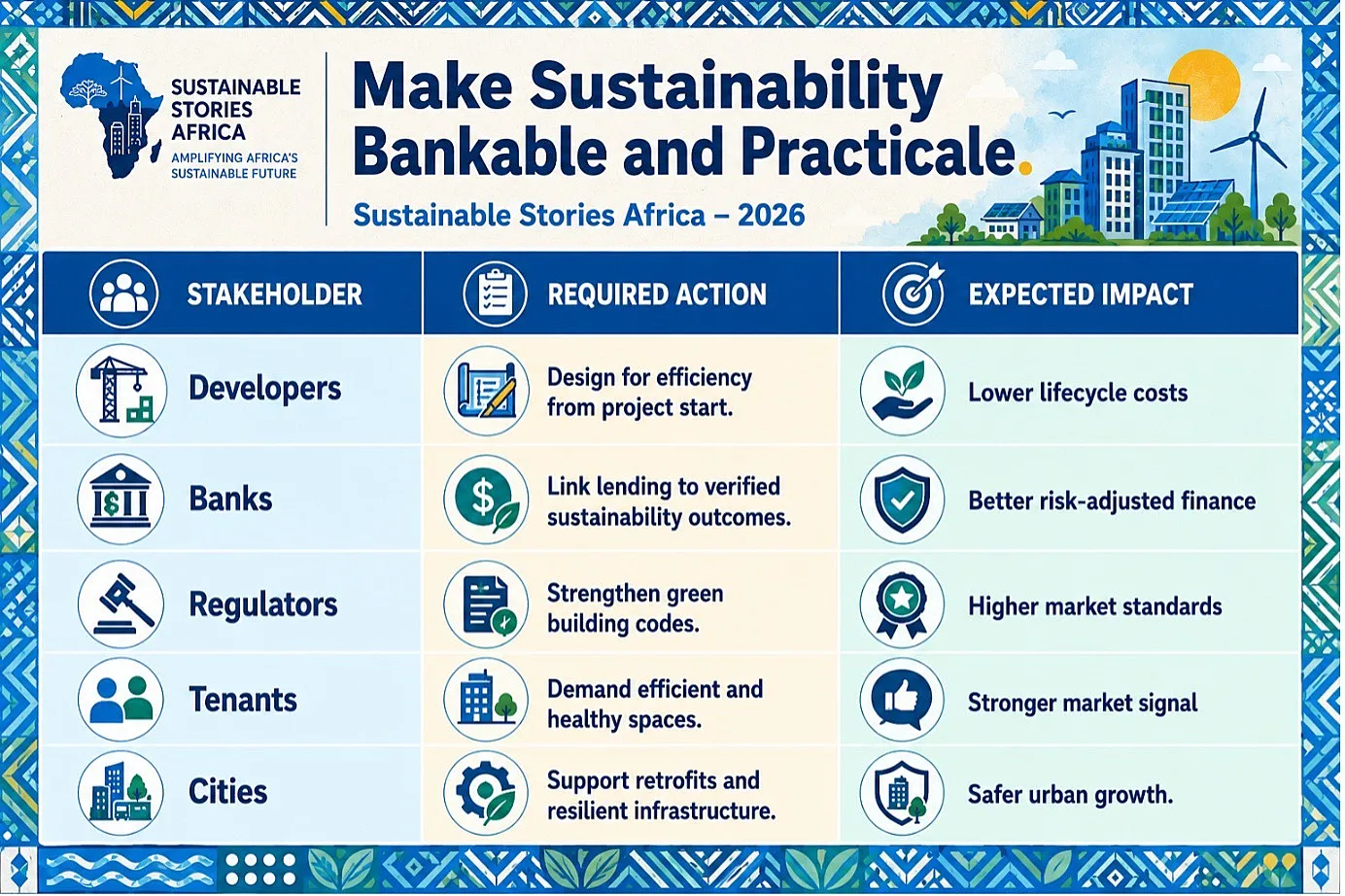
Make Sustainability Bankable and Practical
The next step is to make sustainability easier to finance, measure and scale. Developers need clear building standards, stronger project preparation and early-stage integration of energy, water and resilience planning. Waiting until construction is advanced makes sustainability more expensive and less effective.
Banks and institutional investors also need to sharpen their role. They can reward credible green projects through lower-cost capital, sustainability-linked lending and stronger due diligence. But they must also demand evidence: energy data, emissions reporting, resilience plans and verified performance.
African policymakers can accelerate the shift by updating building codes, supporting green certification, improving grid planning and creating incentives for retrofits. The goal should not be luxury green buildings for a small elite. It should be practical, affordable and resilient real estate that supports inclusive urban growth.
Path Forward – Build Green, Protect Long-Term Value
CDL’s business case shows that sustainability in real estate is moving from aspiration to asset strategy.
The strongest developers will treat climate, energy and resilience as core financial issues.
For African markets, the path forward is practical: build efficiently, finance transparently, regulate consistently and retrofit existing assets.
Sustainable buildings can create a foundation for lower costs, stronger cities and long-term ESG value.
Culled From: CDL's Business Case for Sustainability in Real Estate