CDP has added an ocean category to its global environmental disclosure system, expanding corporate reporting beyond climate, forests, water, biodiversity and plastics.
The move matters because marine ecosystems are increasingly exposed to pollution, warming, overuse and supply chain pressure.
For African coastal economies, the change could sharpen investor attention on fisheries, ports, tourism, shipping, plastics and blue finance.
Ocean Risk Enters Corporate Disclosure
The ocean has moved closer to the centre of global sustainability reporting.
CDP, the environmental disclosure platform used by thousands of companies worldwide, has added an ocean category to its disclosure system, allowing businesses to report ocean-related dependencies, impacts, risks and opportunities as part of the 2026 cycle.
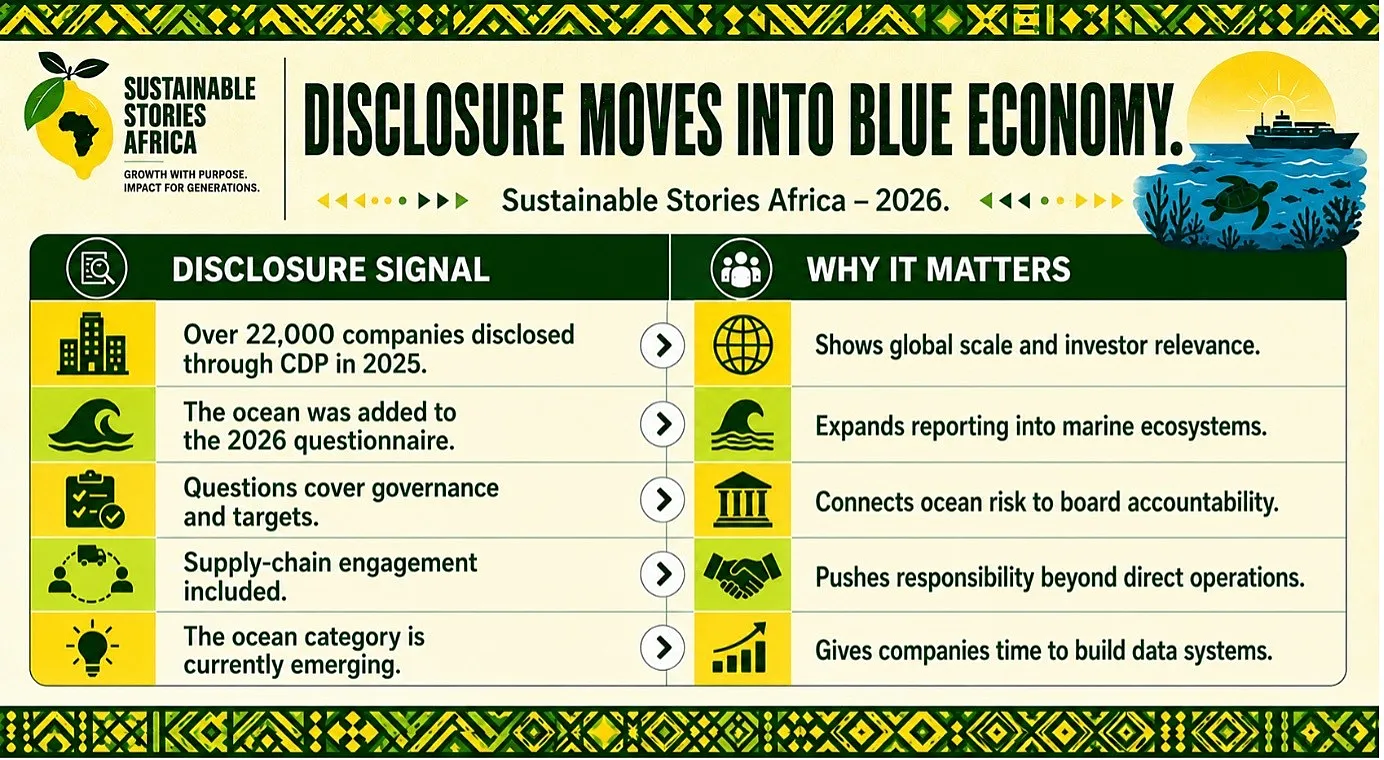
The announcement matters because more than 22,000 companies disclosed environmental data through CDP in 2025, making the platform one of the most influential channels through which investors, lenders, customers and regulators assess corporate environmental performance.
For African markets, the signal is important.
From Lagos ports to Senegalese fisheries, Kenyan tourism, South African shipping corridors and island economies across the Indian Ocean, marine health is not an environmental side issue.
It is infrastructure, food security, jobs, trade and resilience.
Disclosure Moves Into Blue Economy
Until now, many companies have treated ocean issues as secondary to climate emissions, water use or waste. CDP’s expansion changes that reporting logic.
The new ocean questions are expected to cover issues such as board oversight, corporate policies, target setting, supply chain engagement, marine dependencies and business exposure to ocean-related risks.
The category helps close a long-standing data gap: companies may depend heavily on marine ecosystems, but investors often lack consistent information on how those dependencies affect strategy and financial planning.
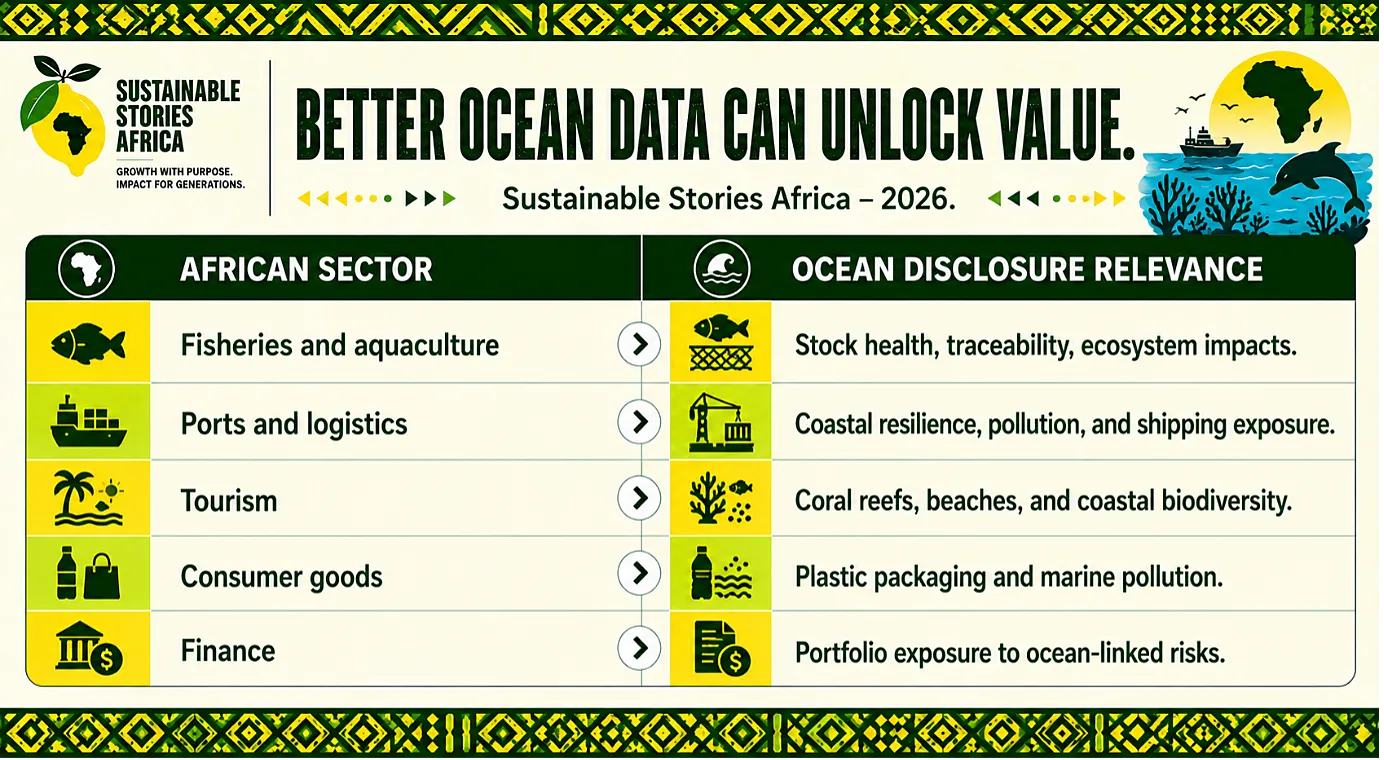
- For a seafood exporter, this may mean reporting exposure to declining fish stocks or traceability weaknesses.
- For a port operator, it may include coastal resilience, dredging impacts or pollution control.
- For a consumer goods company, it may raise questions about plastic packaging that can enter marine environments.
This is especially relevant for Africa’s coastal economies, where ocean-linked sectors support livelihoods but often operate with weak data, fragmented regulation and limited corporate transparency.
Better Ocean Data Can Unlock Value
The opportunity is not only about compliance.
Better ocean disclosure can help companies identify risks earlier, attract sustainability-linked finance, strengthen supply chain resilience and improve trust with regulators and communities.
For investors, ocean data can reveal hidden exposure. A company may appear financially stable but face material risks from coastal flooding, polluted supply chains, declining marine biodiversity or reputational pressure over plastics.
Better disclosure gives capital markets a clearer view of these vulnerabilities.
For African governments, the shift could support blue economy strategies. Countries seeking investment in ports, aquaculture, marine tourism, coastal infrastructure and renewable energy will increasingly need credible environmental data.
CDP’s move reinforces a wider market trend: nature-related reporting is becoming part of mainstream business assessment.
If disclosure is done well, it can support better decisions. If ignored, African companies may face rising scrutiny from global buyers, investors and lenders who increasingly expect environmental risk to be measured, governed and disclosed.
Companies Must Prepare Early
The immediate task for companies is to understand whether ocean issues are material to their operations, supply chains or financing activities.
Boards should ask basic questions now:
- Do we depend on marine ecosystems?
- Do our products, logistics or waste streams affect coastal or ocean environments?
- Do we have policies, targets and data systems that can support credible disclosure?
African regulators and exchanges can also use this moment to deepen guidance on blue economy reporting.
Sustainability rules should not treat ocean risk as separate from climate or biodiversity.
Sea-level rise, plastic pollution, coastal degradation and ecosystem loss are connected risks.
- Development finance institutions, meanwhile, can help by supporting better ocean data, technical capacity and reporting tools for small and medium-sized enterprises.
Without this support, disclosure could become another burden carried mainly by large corporations, leaving smaller coastal businesses outside the transparency shift.
The message for companies is clear: the ocean is becoming financially visible.
Those that prepare early will be better positioned for investors, regulation and resilient growth.
Path Forward – Make Ocean Risk Investment-Ready
CDP’s ocean category should push companies to treat marine ecosystems as strategic business assets, rather than externalities.
The next priority is data credibility, board oversight, supply chain accountability and practical targets.
For Africa, this can strengthen ESG reporting, blue finance and coastal resilience. The companies that understand ocean risk early will be better placed to protect communities, attract capital and build sustainable markets.
Culled From: CDP Adds Ocean Category to Global Disclosure System Covering 22,000 Companies