Civil society groups have challenged the Africa Forward Summit in Nairobi, warning that fossil-fuel influence and limited grassroots participation could weaken its climate credibility.
The summit promised new investment, green industrialisation and financial reform.
But campaigners say Africa’s transition must protect communities, not repeat old extractive models under a cleaner label.
Communities Question Nairobi’s Investment Reset
As the Africa Forward Summit closed in Nairobi on May 12, civil society leaders and climate advocates warned that a gathering designed to redefine Africa-France relations risked excluding the communities most affected by climate change, energy poverty and extractive investment.
The summit, co-hosted by Kenya and France, brought together African heads of state, French President Emmanuel Macron, the African Union, financial institutions, development partners and business leaders to promote a new model of partnership built around investment, innovation and growth.
Its official platform described the summit as a forum for “concrete commitments” across energy transition, green industrialisation, finance reform, agriculture, digital technology, health, peace and security.
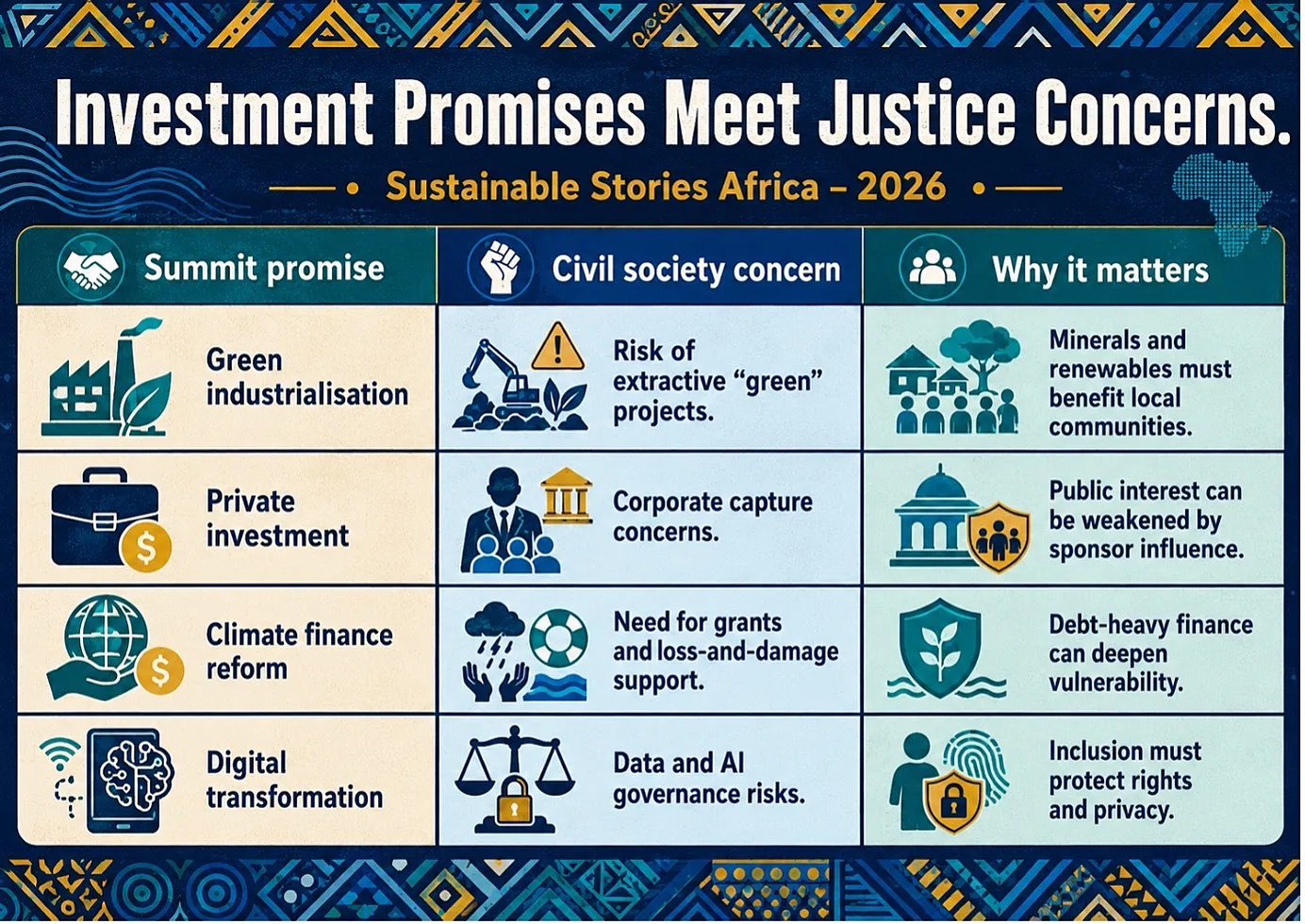
However, campaigners cited by EnviroNews argued that the summit’s business-heavy agenda and TotalEnergies sponsorship raised concerns about corporate capture, especially at a time when African countries are being urged to move faster from fossil dependence to fairer clean-energy systems.
Investment Promises Meet Justice Concerns
The summit produced major investment messaging. Macron announced a €23 billion, or about $27 billion, investment initiative, including roughly €14 billion from French companies and €9 billion from African entities, targeting sectors such as energy, artificial intelligence and agriculture.
African leaders also used the Nairobi platform to push reforms to the global credit system, arguing that Africa’s core barrier is not a lack of opportunity but a distorted risk architecture that raises borrowing costs.
For communities facing droughts, floods, food insecurity and displacement, the issue is practical.
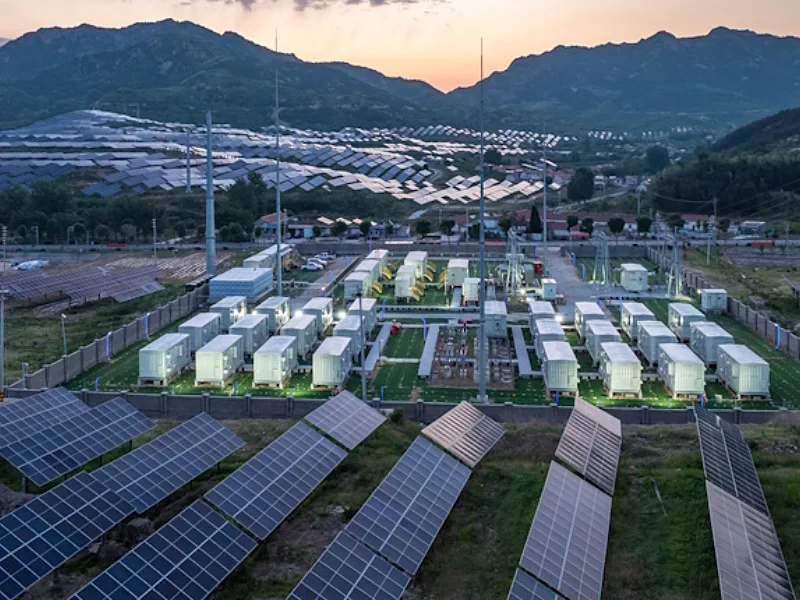
A solar park, mineral corridor or energy deal can create jobs and revenue, but it can also displace farmers, weaken land rights or bypass local ownership if safeguards are weak.
A Fair Transition Can Build Trust
Civil society groups responding to the Nairobi Declaration said the real test would be implementation that benefits women, Indigenous peoples, youth, smallholder farmers, fisherfolk and climate-vulnerable communities.
They warned that Africa’s critical minerals, forests, biodiversity and renewable resources must not become the basis for another cycle of exploitation.
That concern does not reject investment. It demands a better investment model: one that links capital to accountability, local value addition, community consent, transparent contracts and climate justice.
Africa’s clean-energy future could be a development breakthrough if it expands electricity access, supports local manufacturing, protects ecosystems and gives communities a stake in projects.
However, without stronger public oversight, the same transition could reproduce old patterns: foreign capital extracting value while local people carry the risks.
Governments Must Put Communities First
The next step is not to use more diplomatic language. It is an enforceable policy.
African governments and partners should publish project terms, require community consultation, strengthen environmental safeguards, protect land rights, and ensure climate finance reaches local actors.
Development banks and investors should prioritise concessional and grant-based finance for adaptation, clean cooking, decentralised renewables and climate-resilient agriculture.
The Nairobi summit may have opened a new chapter in Africa-France relations. But civil society’s message is direct: Africa cannot be “forward” if its frontline communities are left outside the room.
Path Forward – Put Justice At The Centre
The path forward is community-led implementation: fair finance, transparent contracts, local ownership, safeguards for land and biodiversity, and stronger protection for environmental defenders.
For ESG and sustainability in African markets, the priority is clear: investment must deliver measurable social value, not just headline capital flows.
Africa’s transition will be credible only when communities share power, benefits and accountability.