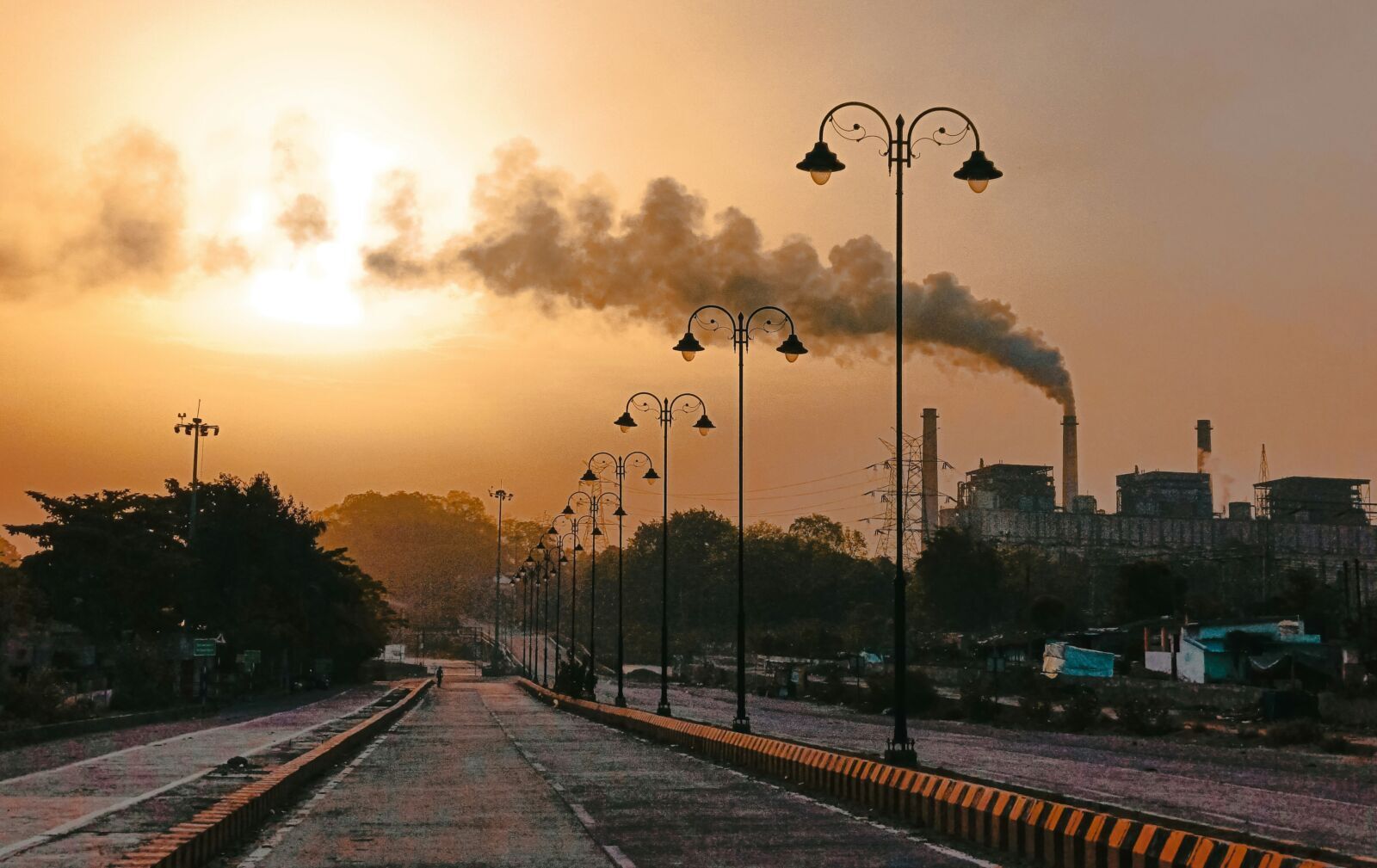
Climate messaging is shifting from doom-heavy warnings to economics, investment and opportunity.
The shift matters because capital helped drive the crisis and now shapes the solution.
For Africa, the story is practical: clean energy can mean jobs, cheaper power, resilience and industrial growth.
Climate Doom Gives Way To Opportunity
The climate conversation is moving into a new phase: away from performative catastrophism and toward the hard economics of capital, markets and delivery.
A commentary by Climate & Capital Media argues that the climate story can no longer be told only through warnings of planetary breakdown.
The science remains urgent; however, the money now matters as much. Capital funded the fossil-fuel system that overheated the planet.
Capital will also decide whether clean energy, storage, resilient infrastructure and green industry scale fast enough.
The article points to former U.S. Vice President Al Gore as a symbol of this shift. Long associated with climate alarm, Gore is now described as speaking more directly about “market forces” and the “spectacular, unprecedented” future of solar energy.
For African markets, this matters because climate action cannot survive as a sacrifice alone.
It must be tied to energy access, jobs, industrial strategy, lower fuel imports, food security and public resilience.
Money Built The Climate Crisis
The central argument is direct: follow the money.
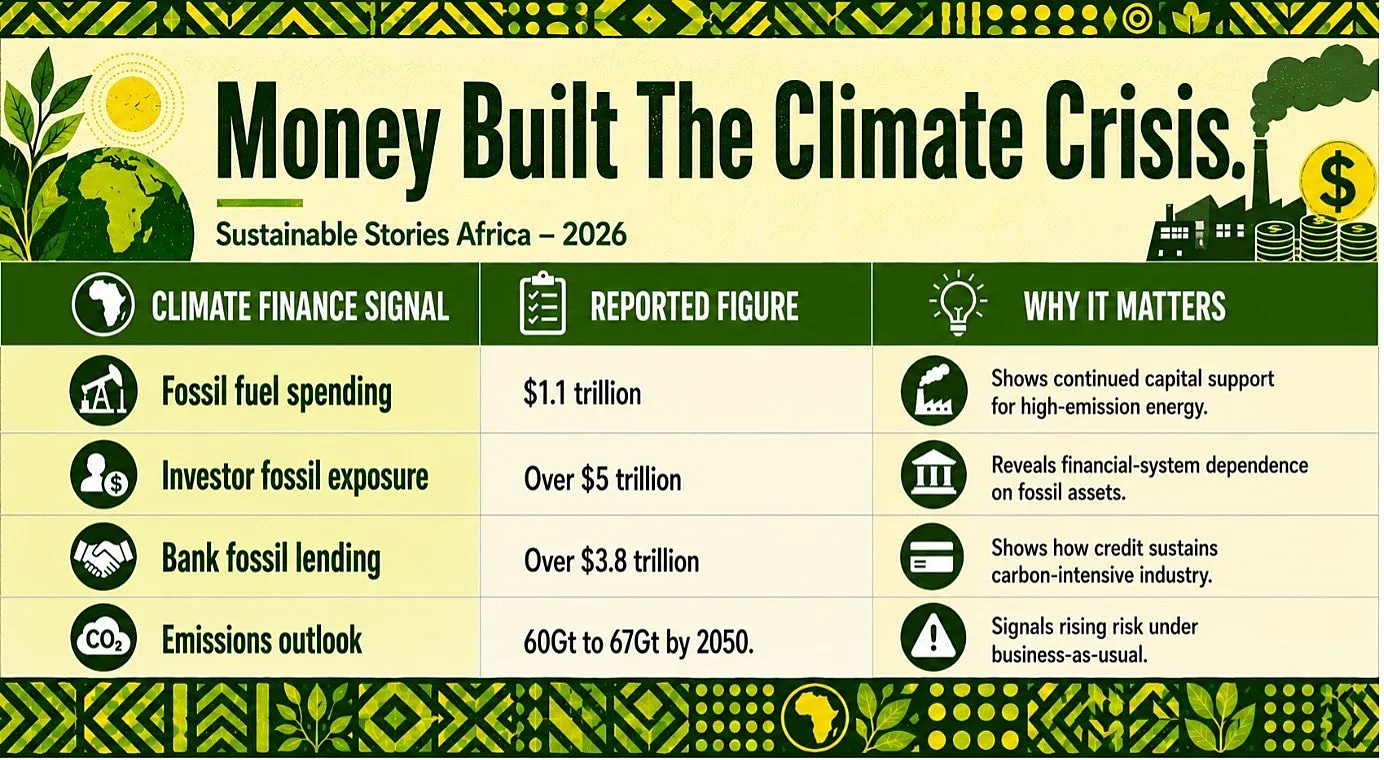
According to figures cited in the commentary, the world spent about $1.1 trillion on fossil fuels last year.
Institutional investors hold more than $5 trillion in fossil fuel-related bonds and stocks.
Banks have also lent more than $3.8 trillion to the industry over time.
That capital has consequences. The Brookings Institution projection cited in the article warns that under a business-as-usual pathway, global greenhouse gas emissions could rise from about 60 gigatons today to 67 gigatons by 2050, moving in the opposite direction from the deep cuts needed to slow warming.
For households in Lagos, Accra or Nairobi, this is not abstract finance. Fossil dependence shows up in diesel costs, electricity tariffs, food inflation and fragile supply chains.
When money locks economies into expensive fuels, citizens pay through higher living costs and weaker productivity.
Clean Energy Offers The Upside
The other side of the story is now too large to ignore.
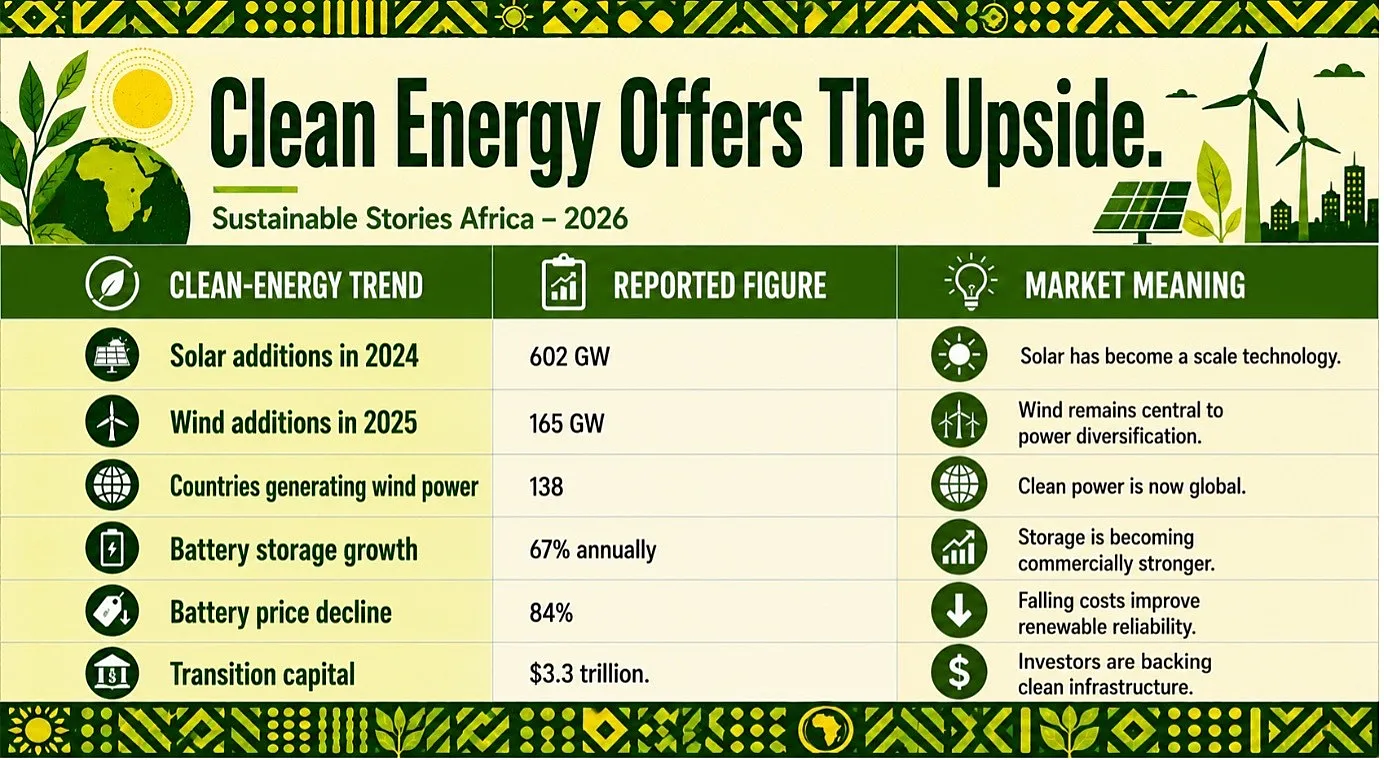
- Solar added 602 gigawatts of new capacity in 2024, roughly equal to all solar capacity installed before 2020.
- Wind added a record 165 gigawatts in 2025, with 138 countries now generating wind power.
- Battery storage has grown by 67% annually over the past decade, while prices have fallen 84%.
The commentary also cites a record $3.3 trillion in fresh capital flowing into the energy transition, with renewables overtaking coal as the world’s largest source of electricity in the first half of 2025.
For Africa, this is the window of opportunity. The continent has abundant solar and wind resources, rising electricity demand and a young workforce.
However, the gains will depend on transmission, bankable projects, local manufacturing, concessional finance and policies that reduce investor risk.
Replace Fear With Practical Delivery
Climate fear may raise awareness; however, it can also exhaust the public. Opportunity, when grounded in facts, can mobilise action connecting climate policy to visible benefits.
That does not mean softening the crisis. It means telling the full story.
Climate change is dangerous; however, climate action can also deliver cheaper power, cleaner air, stronger farms, better cities and new industries.
- For policymakers, the priority is to move from speeches to systems: credible auctions, grid investment, climate-smart agriculture, industrial finance and resilience planning.
- For investors, it means shifting capital away from stranded fossil exposure toward productive transition assets.
- For the media, it means reporting climate as an economic transformation, not a permanent disaster script.
Path Forward – Build Opportunity Around Climate Action
The path forward is to make climate opportunity practical. African markets need clean-energy finance, stronger grids, local value chains and policies that lower costs for households and businesses.
The promise is not blind optimism. It is a disciplined economic strategy: use climate action to build resilience, competitiveness and shared prosperity before fossil dependence becomes more expensive.
Culled From: Peter McKillop, Founder and CEO, Climate & Capital Media