Nigeria's 2025 ClimateLaunchpad wrapped up with a powerful message: Africa's green-business future is already taking shape; idea by idea, founder by founder.
Backed by Climate-KIC and the Nigeria Climate Innovation Centre (NCIC), this year's national finals showcased bold climate-smart solutions.
From 308 applications to three national winners, the initiative demonstrated how early-stage ideas can become viable climate ventures when given structure, mentorship, and a global launchpad.
Climate Launchpad Nigeria 2025: From 308 Ideas to Three National Champions
Nigeria's green innovation ecosystem took centre stage as the nation concluded its annual Climate Launchpad (CLP) competition, one of the world's largest accelerators for early-stage climate entrepreneurs.
Designed to turn climate-smart ideas into scalable businesses, the programme has become a critical pathway for emerging founders seeking global visibility.
Cultivating Climate Solutions in Nigeria's Hubs
The 2025 cycle opened in April and attracted 308 applications, underscoring the growing appetite among young innovators to tackle Nigeria's climate and sustainability challenges.
After a rigorous review, 30 startups secured a place in the digital bootcamp, a structured, multi-week learning experience anchored by certified CLP trainers and NCIC mentors.
During the bootcamp, teams refined their business models, worked on market clarity, and produced video pitch decks for technical review. Out of the 30 teams, 16 startups advanced to the highly anticipated National Finals.
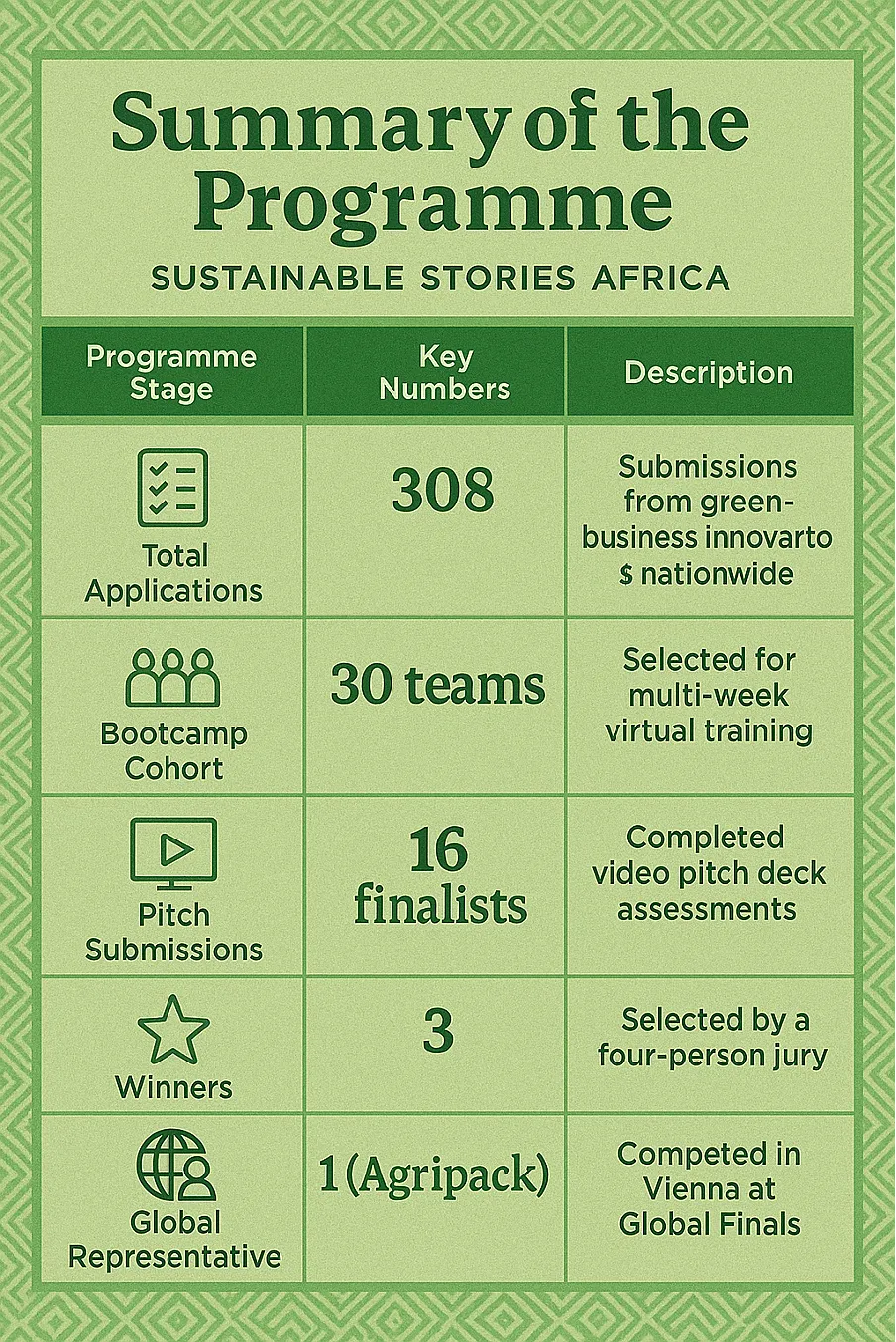
Summary of the Programme
| Programme Stage | Key Numbers | Description |
|---|---|---|
| Total Applications | 308 | Submissions from green-business innovators nationwide |
| Bootcamp Cohort | 30 teams | Selected for multi-week virtual training |
| Pitch Submissions | 16 finalists | Completed video pitch deck assessments |
| Winners | 3 | Selected by a four-person jury |
| Global Representative | 1 (Agripack) | Competed in Vienna at Global Finals |
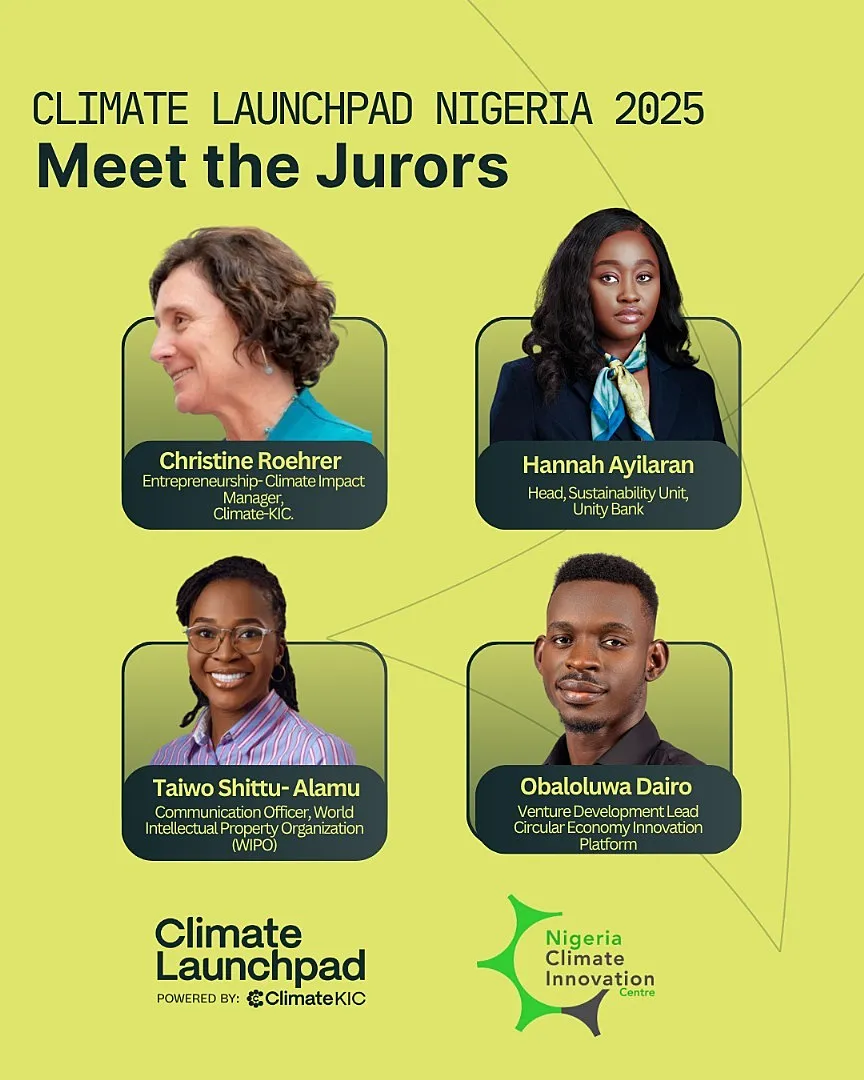
A four-member expert jury - (Christine Roehrer – Entrepreneurship-Climate Impact Manager, Climate-KIC, Hannah Ayilaran, Head, Sustainability Unit, Unity Bank, Taiwo Shittu-Alamu, Communications Officer, World Intellectual Property Organisation and Obaloluwa Dairo, Circular Economy Innovation Platform) presided over the finals, evaluating startups on innovation, climate impact, business viability, and global-scaling potential.
Winners of Climate Launchpad Nigeria 2025
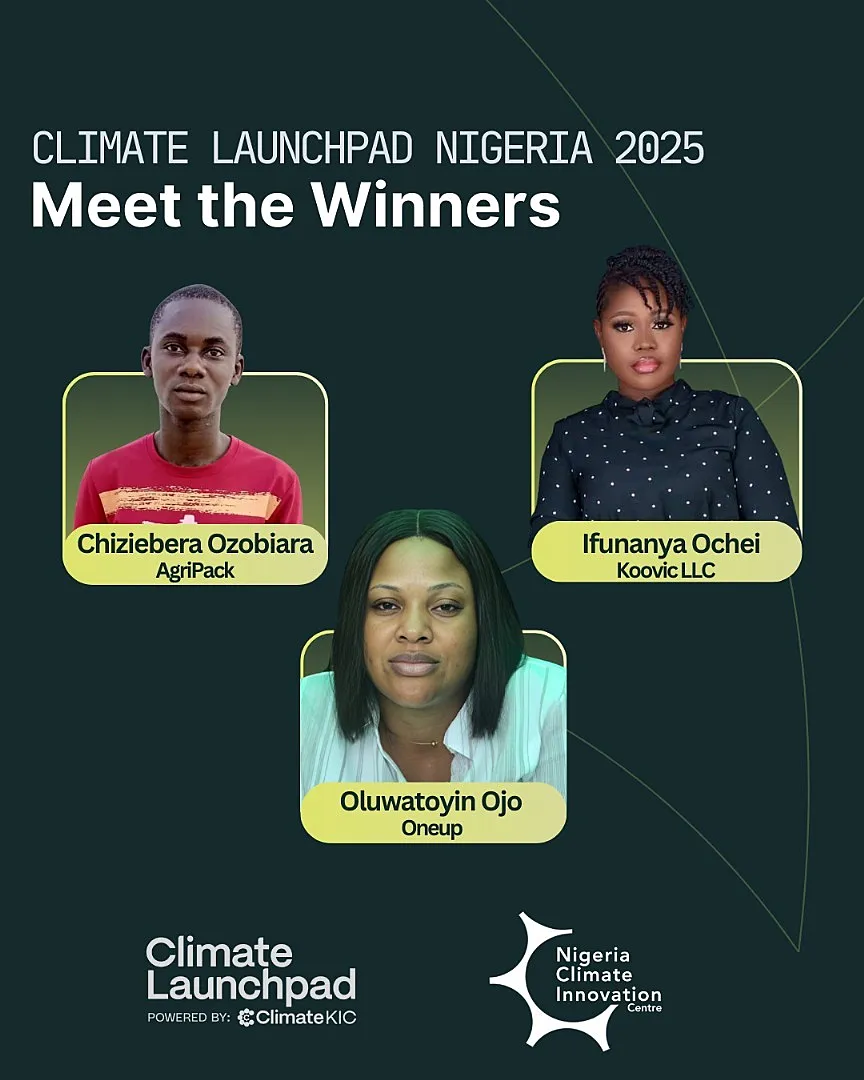
AGRIPACK emerged national champion and progressed to the Global Finals in Vienna, representing Nigeria on the global stage in October 2025. Meanwhile, the two runners-up joined a structured post-bootcamp review session and were also cleared to represent Nigeria internationally.
Building Pathways into Africa's Green Economy
For many founders, Climate Launchpad is more than a competition; it is an entry point into Africa's broader green economy. With technical mentorship, global visibility, and structured training, the programme empowers innovators who would otherwise struggle to secure funding, expertise, or market access.
Nigeria's 2025 cohort demonstrated how climate entrepreneurship can contribute to national priorities, from waste-to-value models to low-carbon agriculture and circular-economy solutions.
Scaling Climate Innovation Through Collaborative Action
This year's programme signals the continued and urgent need to scale climate-focused entrepreneurship by expanding access to technical training, seed funding, and global partnerships.
Stakeholders across public, private, and development sectors are encouraged to collaborate with NCIC and Climate-KIC to sustain momentum and unlock new pathways for impact.
PATH FORWARD
Nigeria's Climate Launchpad 2025 reinforced a clear agenda: support early-stage climate innovators with targeted training, global exposure, and access to capital.
Stakeholders aim to build on the programme's success by expanding technical assistance, strengthening post-bootcamp incubation, and connecting teams to global climate-finance pipelines.
The goal is to ensure that promising ideas, from eco-packaging to renewable-energy solutions, move beyond the pitch stage into fully operational ventures capable of influencing Nigeria's green-economy transition and broader economic impact.