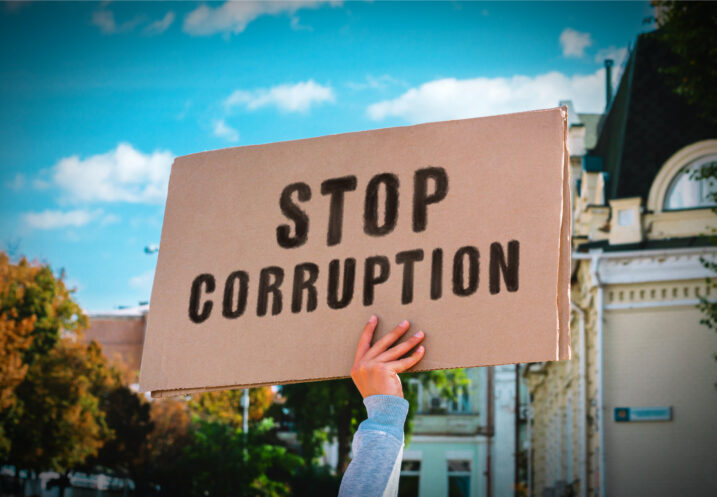
Public concern about corruption is rising unevenly across the world, with some countries seeing it as an urgent national threat while others rank it lower.
The divide matters as governance risk increasingly shapes public trust, investor confidence and institutional legitimacy.
For African and Global South markets, the message is clear: corruption is not only a political issue. It is a development, climate-finance and competitiveness risk.
Corruption Concern Reveals A Global Trust Divide
Public concern about corruption varies sharply across the global landscape, exposing a widening trust divide between countries where citizens see graft as a daily barrier to progress and those where it registers as a less immediate threat.
A new GlobeScan visual, based on a survey of 31,960 members of the general public in July and August 2025, maps relative concern about corruption by country.
The findings show a broad spread in public anxiety, with concern levels ranging from low to high across major economies, emerging markets and developing countries.
The map does not simply show where corruption exists. It shows where corruption feels most serious to citizens.
That distinction matters. In many African, Asian and Latin American markets, corruption is not experienced as an abstract governance failure.
It is felt at a school gate, a hospital counter, a port terminal, a licensing office, a police checkpoint, or inside procurement systems that determine whether roads, power projects and climate investments are delivered.
Why The Corruption Map Matters Now
The GlobeScan map places countries on a relative concern scale, from low to great concern, with a midpoint of 55 and an upper range reaching 92.
Countries across Africa, Latin America, Europe, North America and Asia appear on the map, including Nigeria, South Africa, Kenya, Brazil, Mexico, the United States, India, China, Indonesia, Türkiye and several European economies.
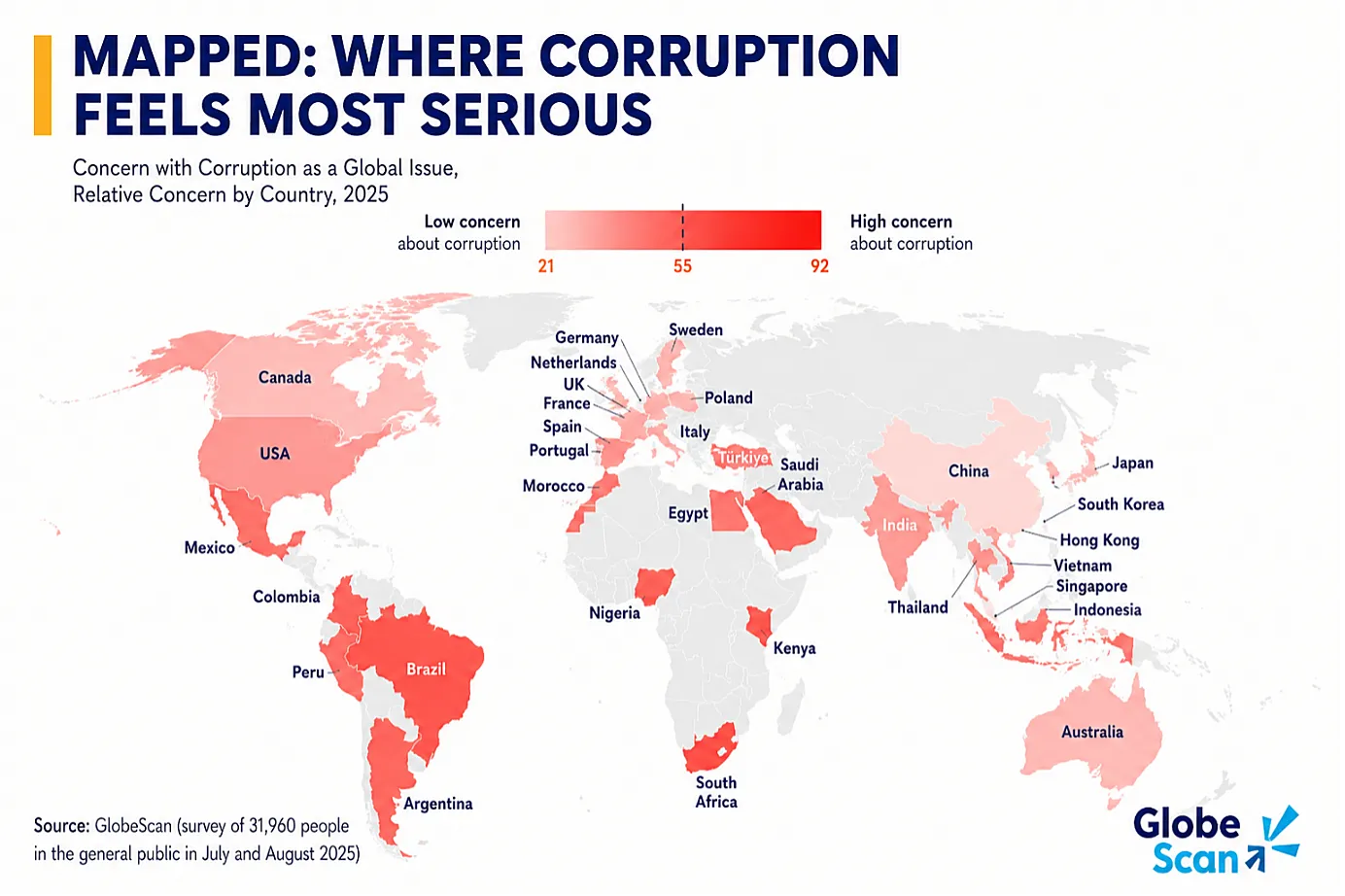
The visual tells an important story: citizens do not experience governance risk evenly.
In some markets, corruption is viewed as one issue among many. In others, it is perceived as a force that shapes access, fairness, business costs and public confidence.
For a market woman in Lagos, a small manufacturer in Nairobi, a young graduate in Accra, or a farmer trying to move produce through a border post, corruption can mean delayed permits, inflated costs, fewer opportunities and weaker public services.
For investors, the same concerns arise in a different language: policy uncertainty, procurement risk, weak enforcement, compliance exposure and higher transaction costs.
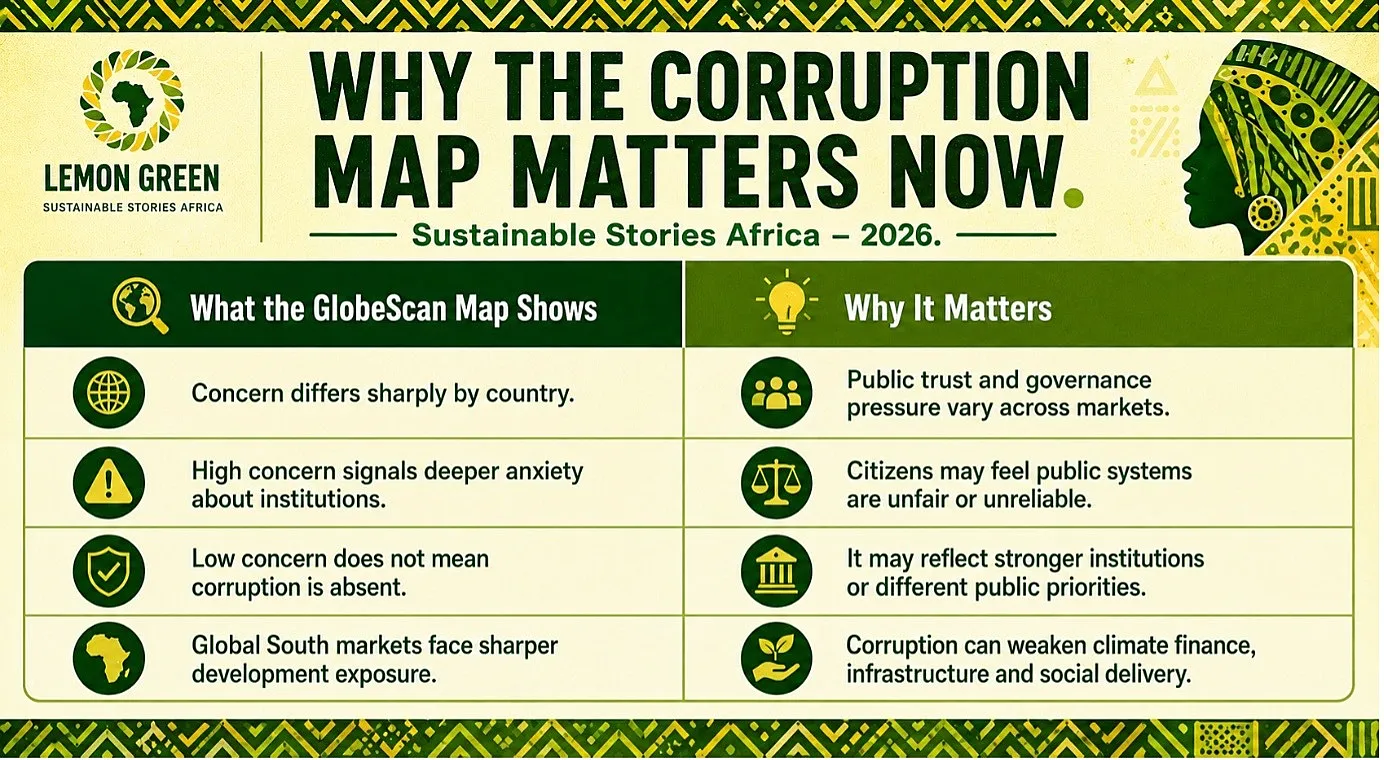
This is especially important for sustainability. African governments are seeking larger flows of climate finance, infrastructure capital and transition investment.
However, those funds require credible institutions, transparent procurement and measurable delivery.
Where perceptions are high, citizens are effectively warning that governance systems must be strengthened before development promises can be trusted.
Better Governance Can Unlock Better Development
The opportunity is significant. If governments and institutions treat corruption concern as a governance early-warning signal, they can rebuild confidence and improve delivery.
Transparent procurement can reduce leakages in infrastructure projects. Stronger public disclosure can improve investor trust.
Better digital systems can limit informal payments. Independent oversight can make climate and development finance more credible.
For African markets, this is not just about ethics. It is about economic performance.
A country that reduces corruption risk can lower the cost of doing business, attract more patient capital, improve tax compliance and strengthen the social contract between citizens and the state.
For businesses, cleaner systems mean fairer competition. For citizens, they mean public services that work without hidden costs.
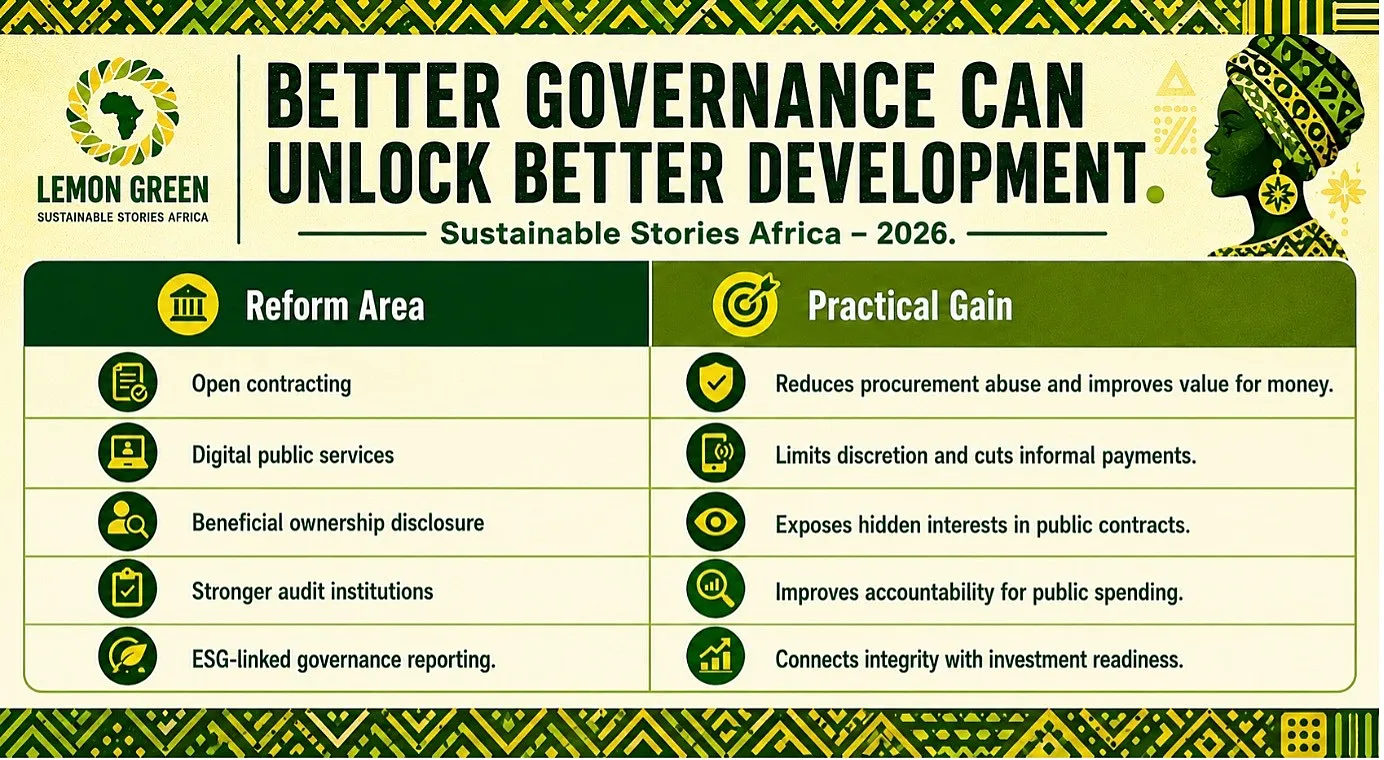
The risk of inaction is equally clear. If corruption concerns remain high, citizens may disengage from institutions, businesses may price in higher risk, and development finance may struggle to reach the communities it is meant to serve.
Integrity Must Become Delivery Infrastructure
Governments, companies, investors and civil society need to treat corruption concerns as a development metric, not just a reputational issue.
- For policymakers, the priority is to make public systems harder to manipulate and easier to monitor. That means open budgets, transparent procurement portals, stronger whistleblower protections and independent anti-corruption institutions.
- For businesses, the task is to move beyond compliance checklists. Corporate integrity must be embedded in supply chains, vendor selection, tax conduct, public-private partnerships and ESG reporting.
- For development partners and financiers, the message is equally direct: anti-corruption safeguards should not delay investment, but they must shape it. Climate finance, infrastructure lending and transition projects should be tied to transparent delivery milestones, public disclosure and community-level accountability.
- For citizens, the power lies in demand. Public concern becomes meaningful when it is converted into pressure for better institutions, stronger oversight and consequences for abuse.
Path Forward – Make Integrity A Growth Asset
Corruption concerns should be treated as a signal for reform, not just a measure of frustration.
African markets can strengthen investor confidence by linking governance reform to climate finance, infrastructure delivery and public accountability.
The path forward is practical: publish contracts, digitise services, protect whistleblowers, enforce disclosure and measure delivery.
Integrity is no longer separate from sustainability. It is the system that makes sustainability credible.
Culled From: Public Concern About Corruption Varies Sharply Across the Global Landscape