Developed countries mobilised $136.7 billion in climate finance for developing economies in 2024, exceeding the $100 billion annual target for the third consecutive year.
The milestone comes after years of delayed delivery and trust deficits in global climate negotiations.
For African communities facing floods, drought, food insecurity and energy gaps, the question is no longer only how much is pledged, but how fairly and quickly finance reaches the ground.
Climate Finance Finally Crosses Trust Line
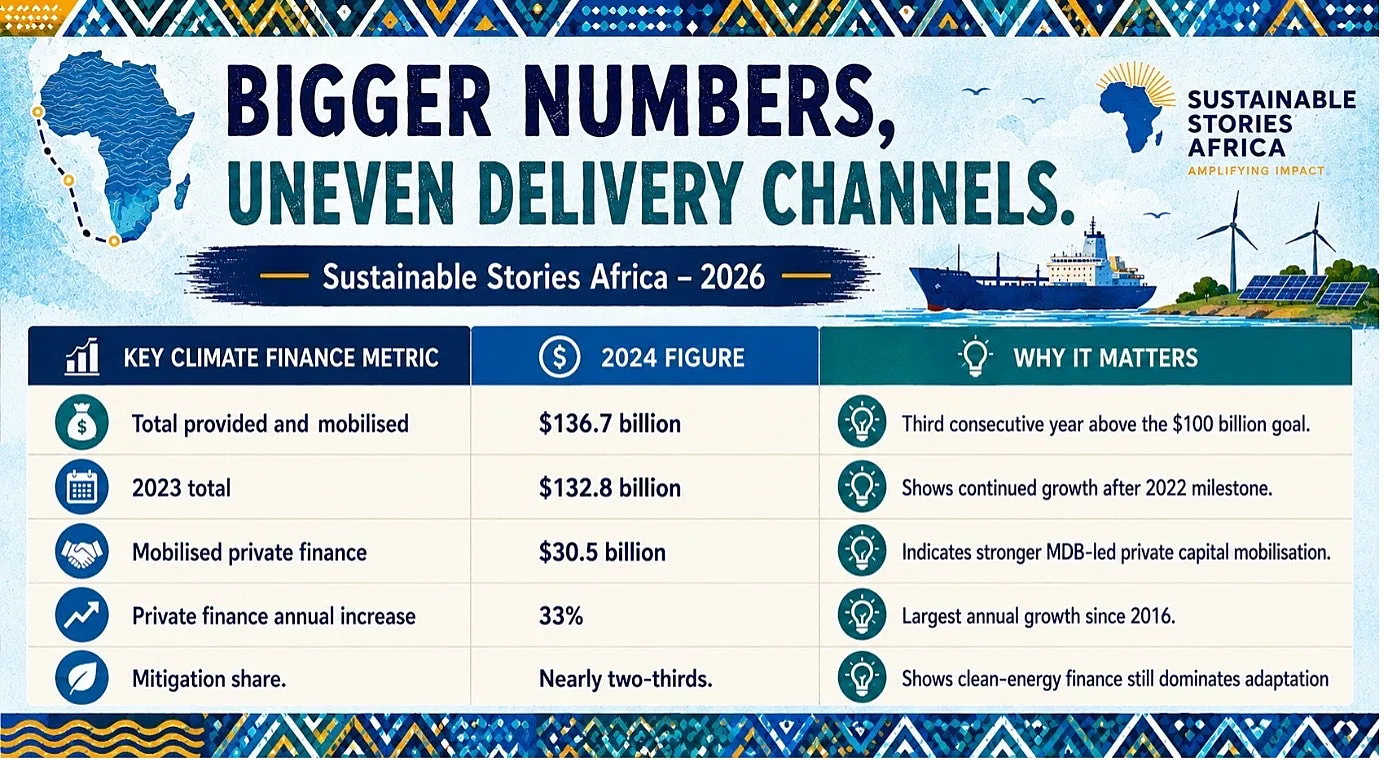
Developed countries have exceeded the long-contested $100 billion annual climate finance goal for the third year in a row, providing and mobilising $136.7 billion for developing countries in 2024, according to new data from the Organisation for Economic Co-operation and Development.
The figure marks another symbolic crossing point in global climate diplomacy. The $100 billion commitment was first made in 2009, expected by 2020, and was only reached in 2022.
In 2024, the total rose from $132.8 billion in 2023, strengthening the argument from donor countries that the system is now moving in the right direction.
However, for Africa and much of the Global South, the headline figure is only the beginning.
The more urgent question is whether the money is affordable, accessible and targeted at the communities already living with climate loss: farmers watching rainfall patterns collapse, coastal residents facing erosion, and cities trying to build drainage systems before the next flood season.
Bigger Numbers, Uneven Delivery Channels
The OECD said climate finance continued to grow in 2024, with public finance still carrying most of the burden.
Mitigation remained the dominant use of climate funds, accounting for nearly two-thirds of total finance, while adaptation finance continued to trail the scale of need in vulnerable economies.
Mobilised private finance offered one of the strongest signals in the report. It reached $30.5 billion in 2024, rising by $7.6 billion, or 33%, from the previous year. This was the largest annual increase since 2016, driven mainly by multilateral development banks through instruments such as direct investment, guarantees and syndicated loans.
For African markets, that shift matters. Private capital can help finance solar mini-grids, resilient agriculture, green transport and industrial decarbonisation.
However, it often flows more easily to middle-income countries and bankable projects than to fragile states, rural adaptation systems or public goods that generate social returns without quick commercial payback.
From Pledges to Resilience Dividends
If delivered well, climate finance can become more than a diplomatic accounting line.
It can help African economies develop cleaner power systems and more reliable food systems that mitigate the challenges of heat and drought, and infrastructure that protects lives rather than collapsing under extreme weather.
The development dividend is clear. A concessional loan can help expand renewable energy.
- A grant can fund early-warning systems.
- A guarantee can unlock private investment for climate-smart agriculture.
- A blended finance structure can make a project viable in a market where risk perception keeps investors away.
However, the risk is equally clear. If climate finance arrives mostly as debt, moves too slowly, or favours mitigation projects over adaptation needs, the world may technically meet its finance target while vulnerable communities remain exposed.
That is the trust gap African negotiators continue to raise: climate finance must be counted not only by volume, but by fairness and usefulness.
Finance Must Reach Vulnerable Economies
The next test is delivery quality.
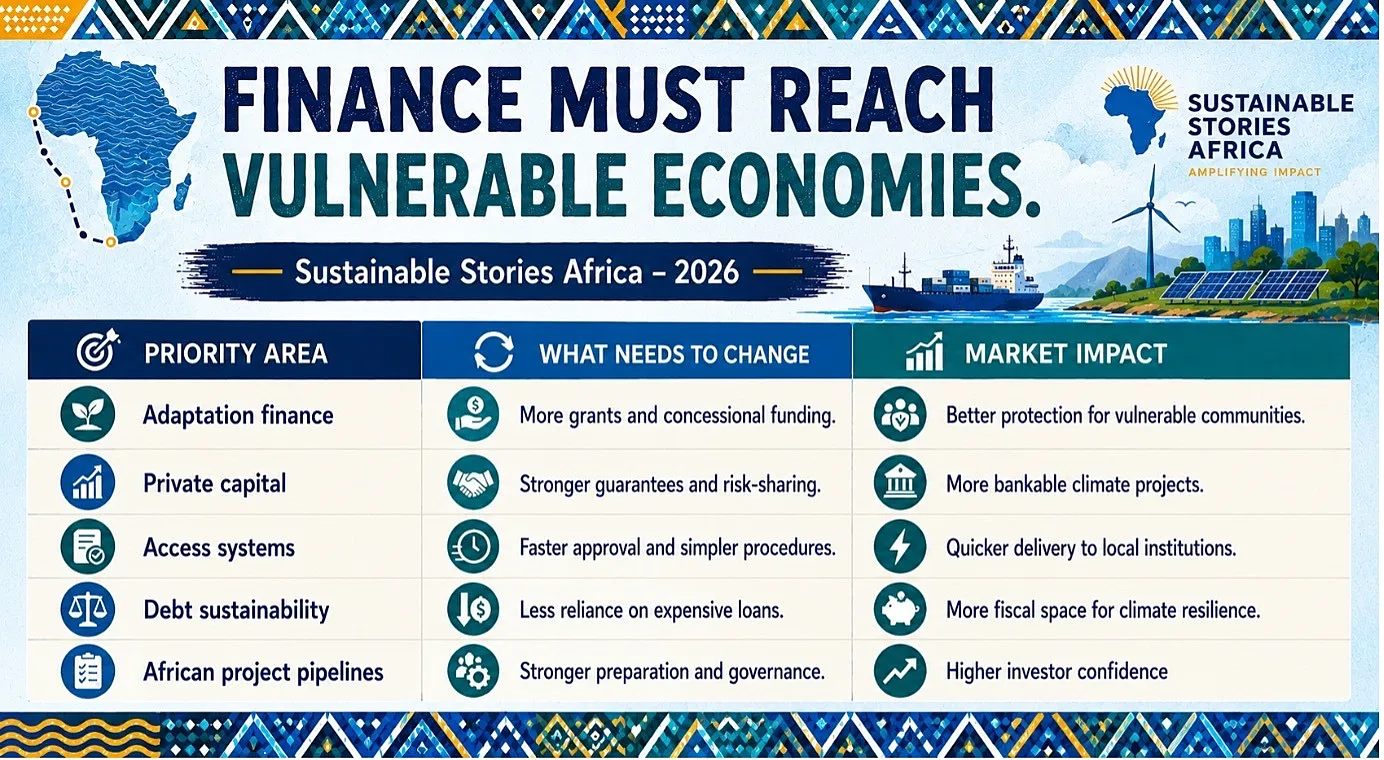
Developed countries, multilateral development banks and climate funds need to simplify access, increase grants and concessional instruments, and expand local-currency finance so that developing countries are not forced to bear climate and exchange-rate risks concurrently.
African policymakers also have work to do. Stronger project preparation, transparent procurement, credible climate plans and bankable pipelines can help countries compete for finance while protecting public value.
Climate finance should not become another fragmented funding maze. It should support national development priorities: energy access, food security, resilient cities, green jobs and industrial transformation.
Path Forward – Make Climate Finance Truly Work
The $136.7 billion figure gives global climate diplomacy a stronger base, but trust will depend on delivery.
African markets need finance that is predictable, affordable and aligned with real adaptation and development priorities.
The path forward is clear: scale grants, mobilise private capital responsibly, strengthen local institutions and measure success by resilience built, emissions avoided, jobs created and communities protected.