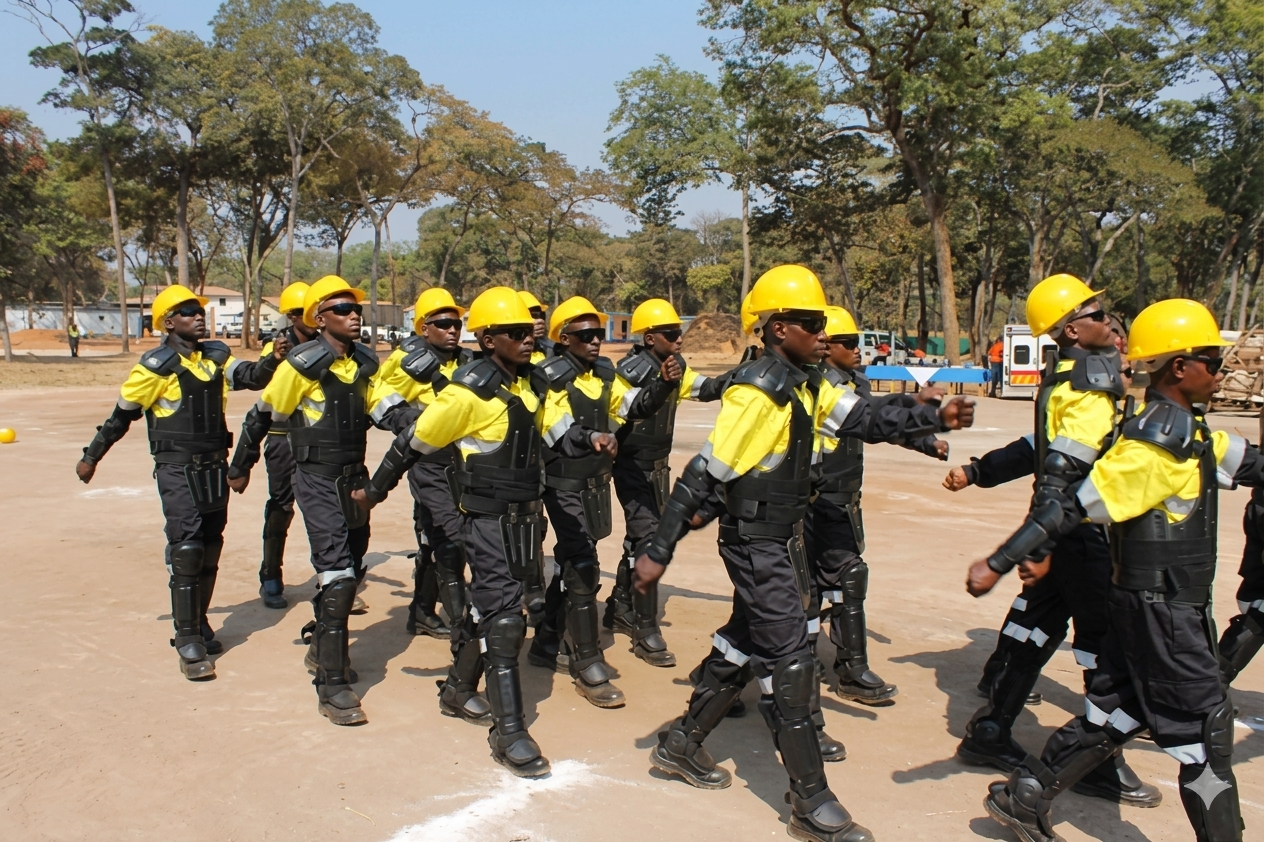
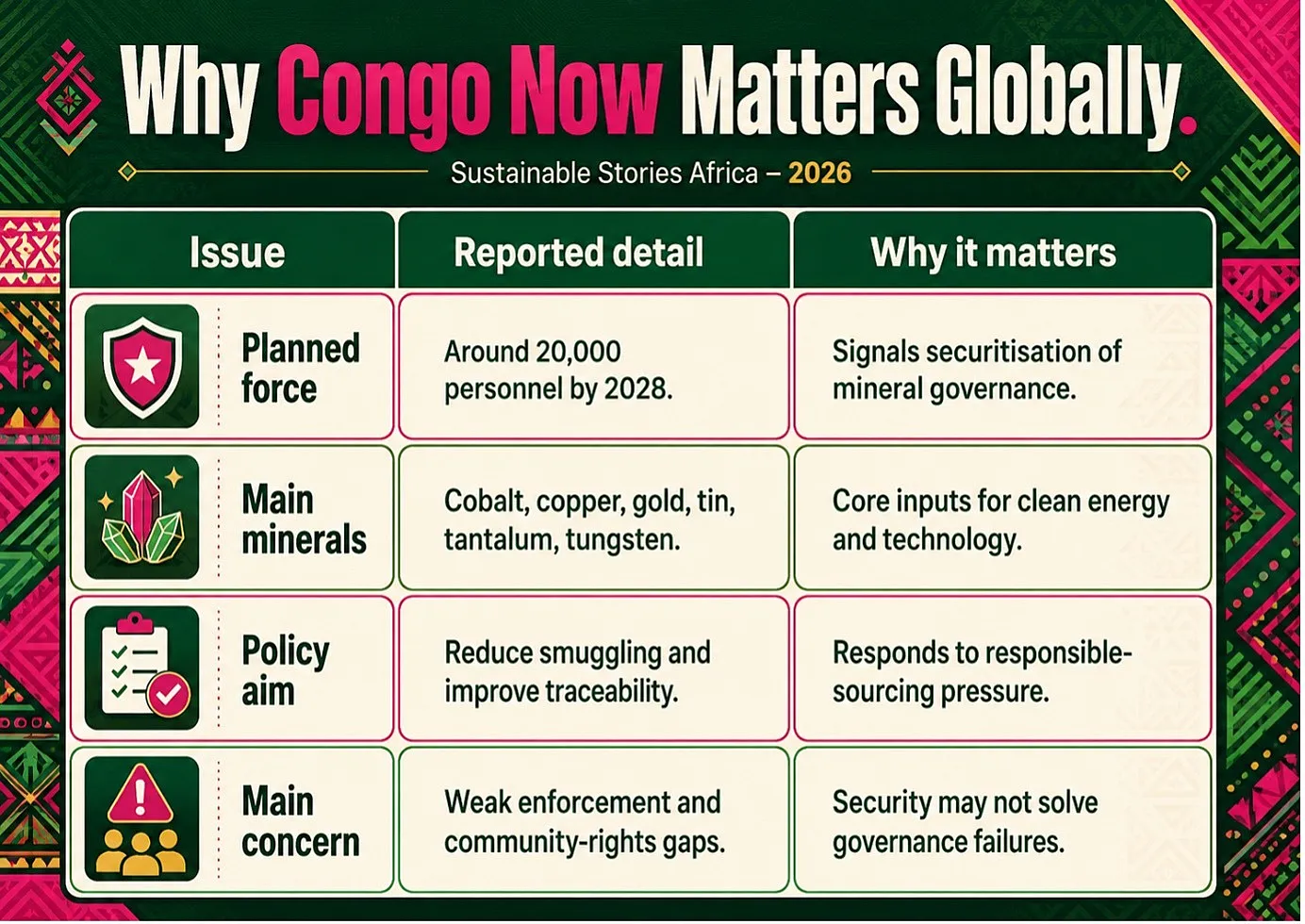
The DRC plans to deploy up to 20,000 mining guards by 2028.
The move seeks to curb smuggling, armed-group influence and weak mineral traceability.
However, experts warn that security alone cannot fix corruption, poor enforcement and failures of community rights in the cobalt-rich mining regions.
Soldiers Enter The Mineral Supply Chain
The Democratic Republic of Congo is preparing to create a new paramilitary “mining guard” to protect critical minerals, mining sites and transport routes, in a move that reflects how strategic cobalt, copper and other transition minerals have become in the global clean-energy race.
Down To Earth reports that the unit could deploy around 20,000 personnel by 2028, with support from the United States and United Arab Emirates.
The plan is designed to reduce smuggling, replace corrupt security forces, strengthen traceability and limit the role of armed groups in mineral-rich areas.
However, researchers cited by Down To Earth warn that security measures alone will not resolve the deeper governance failures that have long shaped mining in the DRC.
Why Congo Now Matters Globally
The DRC is central to the global energy transition because it produces almost three-quarters of global cobalt output and holds major deposits of copper, gold, tantalum, tin and tungsten.
These minerals are linked to electric vehicles, renewable energy systems, batteries and modern technologies.
The geopolitical backdrop is also shifting. Chinese companies dominate much of the DRC’s mining sector, particularly cobalt production, while the US and European Union are seeking more reliable access to critical minerals and reduced dependence on existing supply chains.
Security Alone Cannot Build Trust
For communities near mining corridors, the debate is not abstract. The arrival of armed personnel means protection from illegal trade; however, it can also raise fears of informal taxation, intimidation or exclusion if accountability is weak.
Down To Earth notes that national security forces have previously been deployed around mines, roads and mineral-rich territories, with mixed outcomes.
In some cases, security actors have been linked to illegal mining, informal levies on artisanal miners and abuses against local communities.
The deeper issue is enforcement. The DRC’s 2018 Mining Code expanded state participation, strengthened environmental and social obligations; however, researchers argue that implementation remains weak, transparency is partial, and community consent mechanisms are often procedural rather than rights-based.
Better Governance Can Protect Value
If done well, stronger mine security could help legitimate producers, reduce armed-group influence and make minerals easier to trace. That matters because global companies face rising pressure to prove that their battery and technology supply chains are responsible.
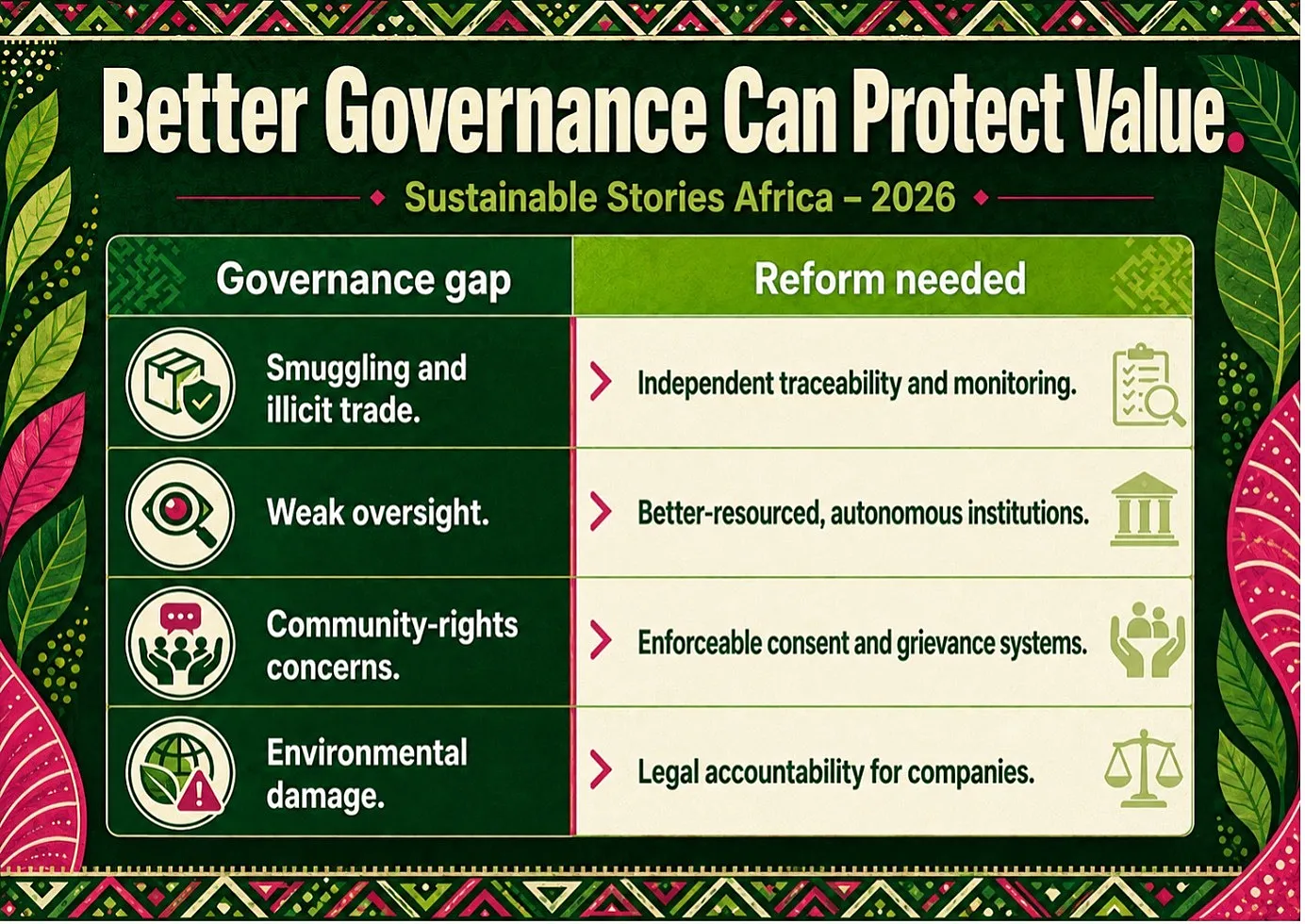
The opportunity is clear: the DRC can convert mineral wealth into stronger bargaining power, better public revenues and more credible participation in high-value supply chains. However, that requires trust, not force alone.
Investors Need More Than Guards
The next step is to make the mining guard accountable within a wider reform programme. That means transparent contracts, public payments data, stronger environmental enforcement, independent audits and community participation before projects proceed.
For Africa’s greater critical minerals agenda, the lesson is that the energy transition will not be just. It must also be governed.
Path Forward – Secure Mines, Protect Rights
The DRC’s mineral future depends on combining security with transparency, enforcement and community rights.
The priority is to make traceability credible, hold companies accountable and ensure mining communities are not treated as obstacles to global supply chains. Critical minerals can power the transition only if governance is verified in the value chain.