Europe’s banking watchdog is preparing to test climate risk inside its 2027 EU-wide banking stress test.
The shift matters because climate exposure is moving from sustainability reporting into core financial supervision.
For African and Global South markets, the message is clear: banks, regulators and companies will need better climate data, stronger risk models and more credible transition plans.
Climate Risk Enters Banking’s Core Test
Climate risk is no longer at the edge of banking supervision. It is moving into the stress test.
The European Banking Authority launched a consultation in June 2026 on its draft methodology for the 2027 EU-wide stress test, introducing climate risk.
The framework will assess how banks cope with adverse economic conditions as they examine exposure to both transition risk and physical climate risk.
The stakes are real. Banks are the arteries of the real economy. When climate shocks hit farms, factories, transport routes and energy systems, losses move into loan books, collateral values and capital planning.
For Africa, this may appear distant. It is not. European banks finance trade, infrastructure and energy projects across emerging markets.
Once climate risk-related issues are integrated into European stress tests, African borrowers, exporters, banks, and sovereign issuers will increasingly feel the consequences.
A Leaner Test With A Wider Lens
The EBA's 2027 stress test framework is not only adding climate risk. It is also reducing the reporting burden.
The draft methodology cuts required data points by approximately 55% compared with the previous EU-wide stress test, partly by relying more on existing supervisory reporting.
The message is deliberate: climate risk integration does not require endless new templates.
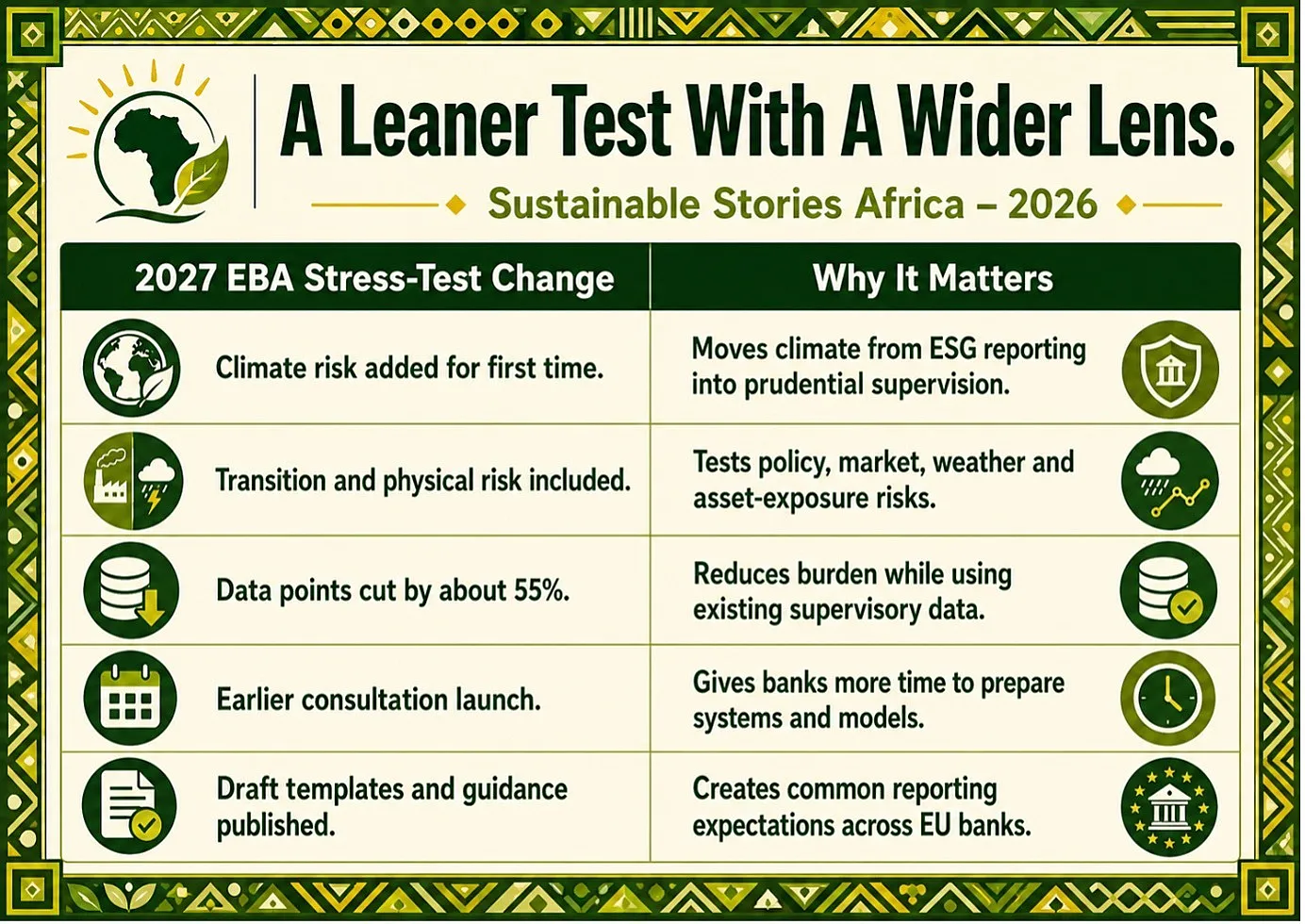
The climate module will examine banks’ exposure to sectors, borrowers and assets vulnerable to carbon costs, energy transition pressures and physical hazards such as floods, droughts, and heat.
Transition risk targets high-emission business models; physical risk targets climate-exposed assets.
For Africa, the implications cut both ways.
- An agribusiness exporting into Europe may face greater scrutiny, with lenders requesting emissions data, water-use information and adaptation plans.
- A renewable energy developer, however, may find that banks with sharper climate-risk tools become better partners for credible transition investment.
Better Supervision Can Support Better Capital
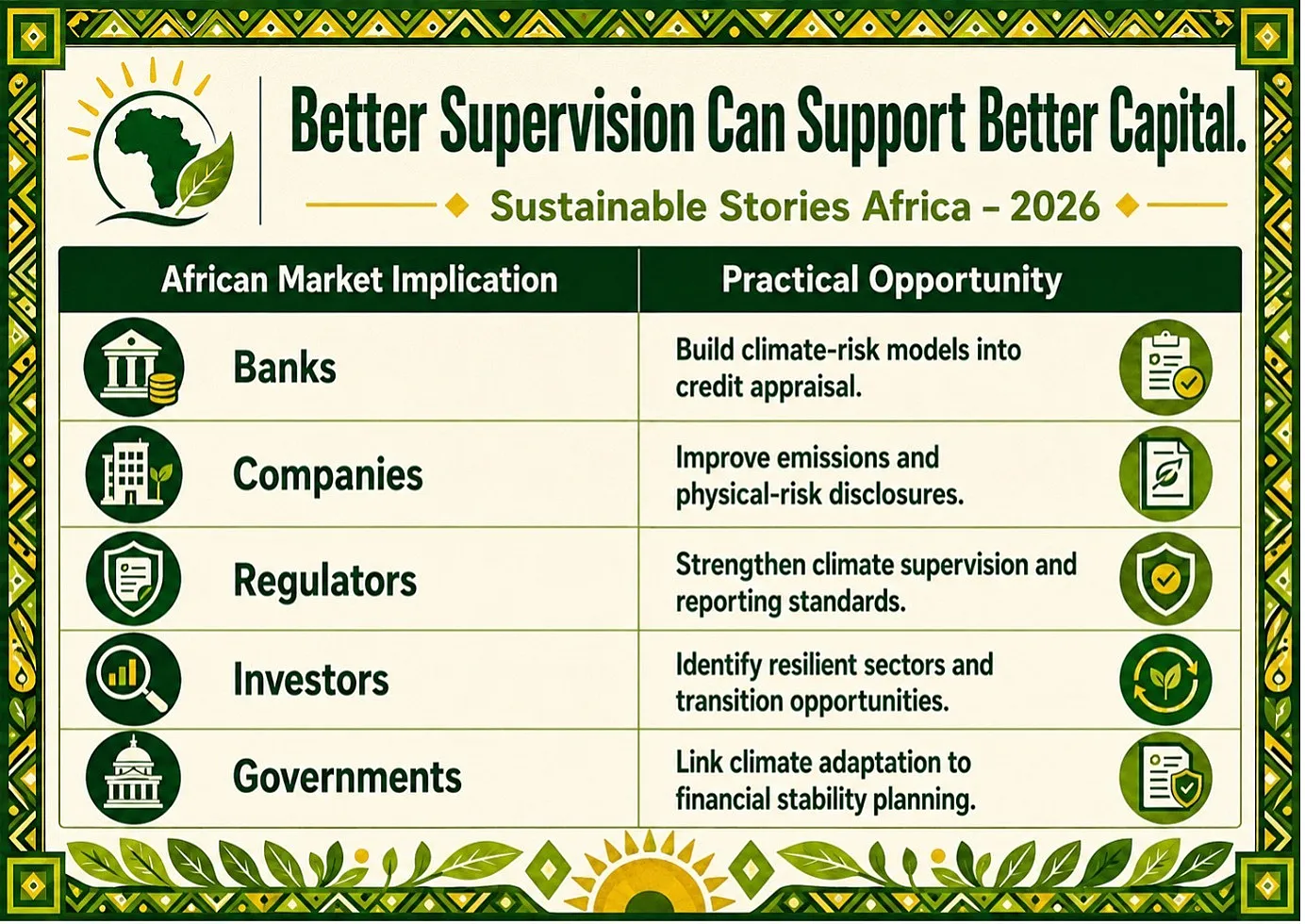
The EBA's climate stress testing framework carries a positive promise: climate risk can become more measurable, more manageable and more financeable.
Better stress testing helps banks identify potential losses before they become crises, enables supervisors to spot systemic vulnerabilities earlier and encourages more accurate risk pricing.
For African markets, the long-term benefit could be significant.
- As banks sharpen their climate-risk tools, capital may flow more confidently into resilient infrastructure, clean energy, sustainable agriculture and transition industries.
- Development finance institutions and commercial banks could apply similar frameworks to identify which projects are exposed, which are adapting and which deserve stronger funding support.
The cost of inaction is equally clear.
- Banks that ignore climate exposure may misprice loans.
- Companies with weak data may face higher funding costs.
- Countries without credible transition frameworks may struggle to attract patient climate capital.
Climate stress testing is not a European compliance story. It is a global shift in how finance will judge resilience.
African Banks Should Prepare Early
African regulators and banks should not wait for climate stress testing to become a local requirement before acting. The path forward is clear across four steps.
- First, data: banks need clearer information on sectoral exposures, borrower emissions, collateral vulnerability and geographic climate risk. Without it, climate risk remains a slogan rather than a credit issue.
- Second, governance: boards and risk committees must embed climate risk into lending, provisioning and capital planning.
- Third, supervisory coordination: central banks, financial regulators and exchanges should develop proportionate climate-risk guidance suited to African market realities.
- Fourth, capacity: institutions need better scenario tools and stronger collaboration across sustainability, credit, risk and strategy teams.
Europe's direction is unambiguous: climate risk is financial risk. African institutions that grasp this early will be better positioned to attract transition finance, negotiate with global lenders and protect portfolios from future shocks.
Path Forward – Climate Risk Becomes Financial Discipline
The EBA’s 2027 framework shows where financial supervision is heading. Climate risk is becoming part of capital resilience, not just corporate sustainability language.
African banks, regulators and companies should use this moment to strengthen data, governance and scenario planning.
The prize is stronger financial stability, better access to climate capital and more resilient economies in a warming world.
Culled From: EBA Integrates Climate Risk into EU Banking Stress Tests for First Time in 2027 Framework