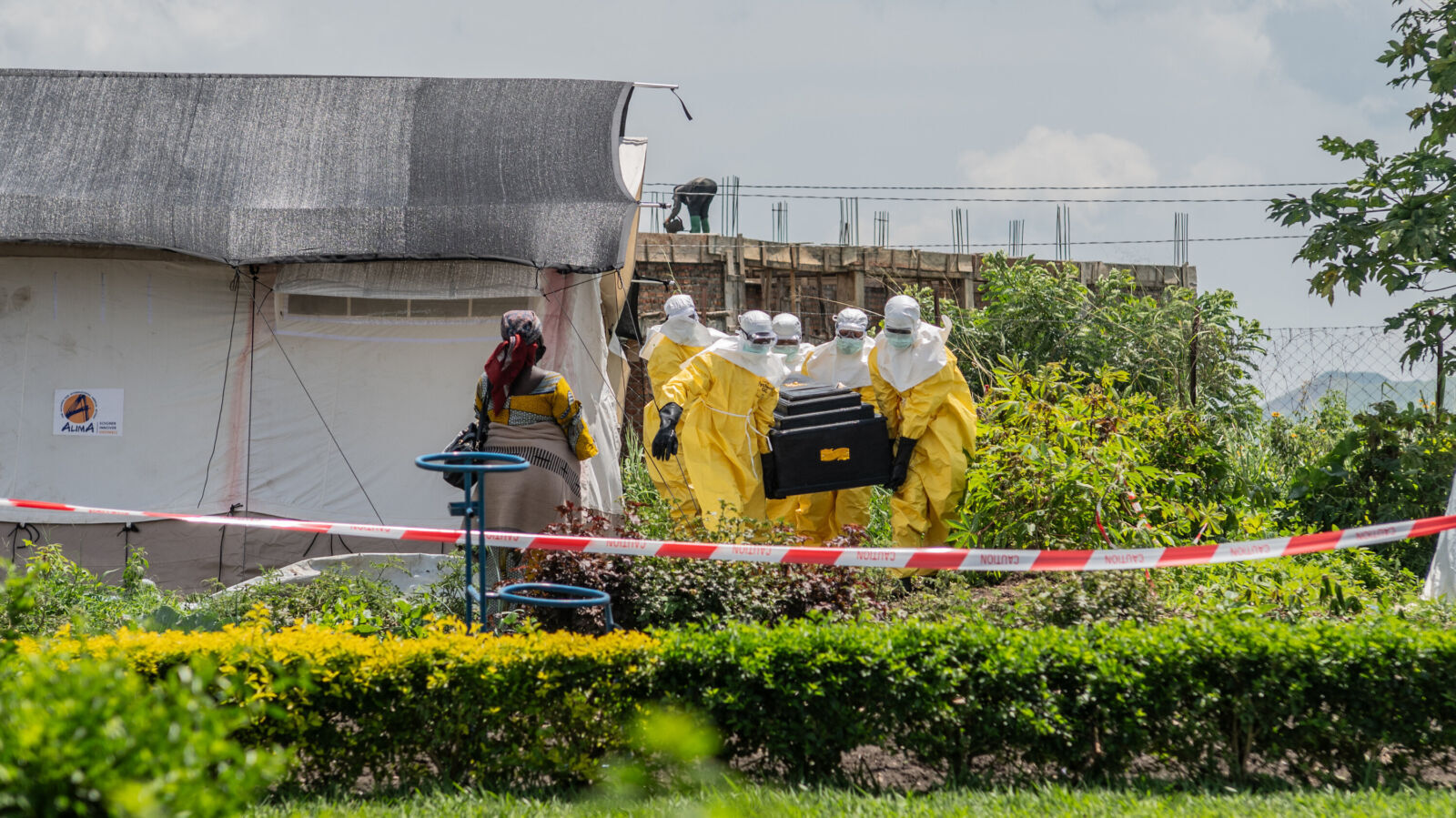
Ebola cases in the Democratic Republic of the Congo have triggered global concern.
The alarm is not only the confirmed toll, but the suspected cases, deaths and cross-border signals.
For families, health workers and border communities, the next few weeks could determine whether containment holds.
Numbers Reveal A Deeper Emergency
A fast-moving Ebola outbreak in the Democratic Republic of the Congo has put researchers and public health officials on high alert, after early data suggested the real scale of infection may be much larger than confirmed laboratory numbers show.
The World Health Organisation declared the outbreak a Public Health Emergency of International Concern on 17 May 2026, citing confirmed cases in DRC and Uganda, suspected deaths, uncertain transmission chains and risk of regional spread.
The outbreak involves the Bundibugyo virus, a rarer Ebola strain for which there is currently no approved vaccine or specific treatment, according to the WHO.
Why Scientists Are Watching Closely
The strongest warning sign is the gap between confirmed and suspected infections.
WHO reported that, as of 16 May 2026, DRC had eight laboratory-confirmed cases, 246 suspected cases and 80 suspected deaths in Ituri Province, while Uganda had reported two confirmed cases, including one death, linked to travel from DRC.
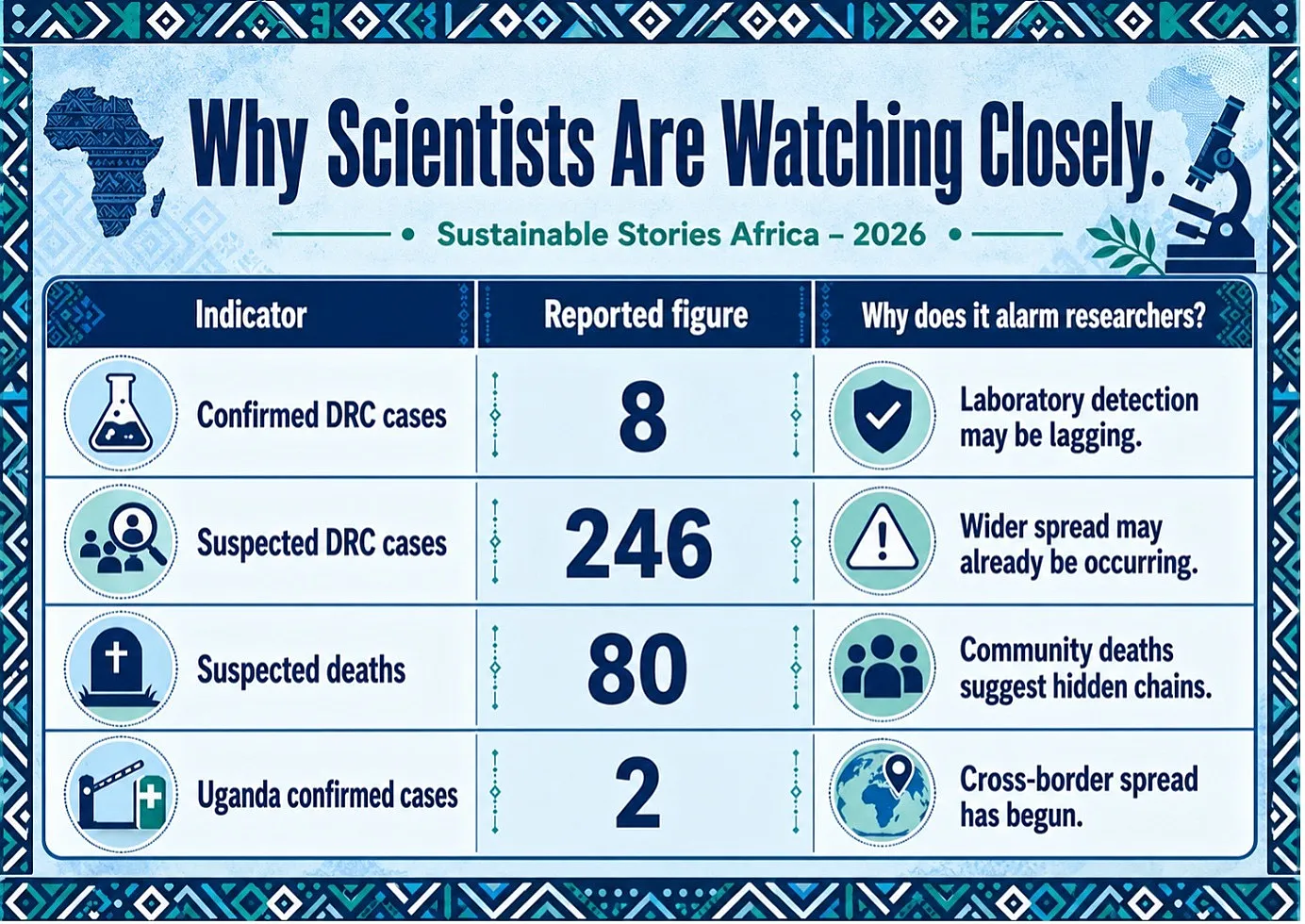
By 22 May 2026, the WHO had raised the national risk level in DRC to “very high,” with 82 confirmed cases, 750 suspected cases and 177 suspected deaths.
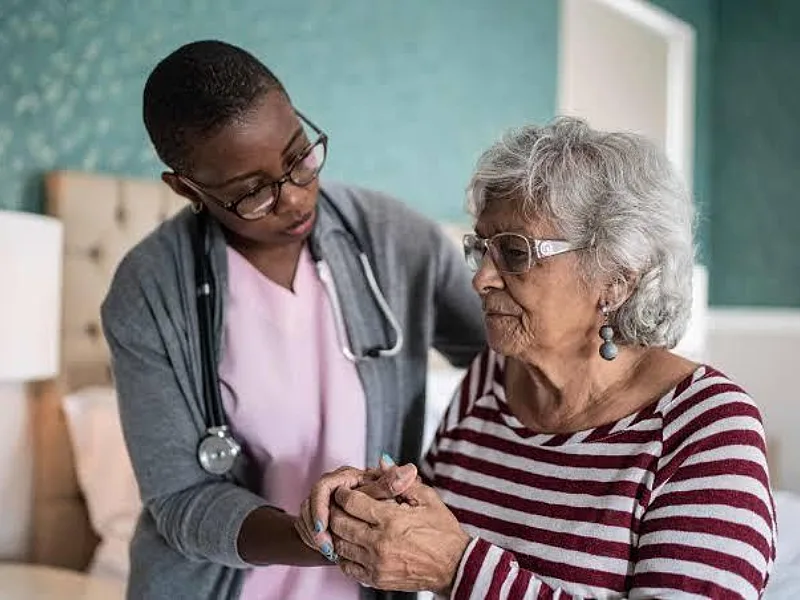
For communities in Ituri, the crisis is not an abstract dataset. It is a clinic running short of staff, a family uncertain whether a fever is malaria or Ebola, and a health worker balancing care with personal risk.
Containment Can Still Save Lives
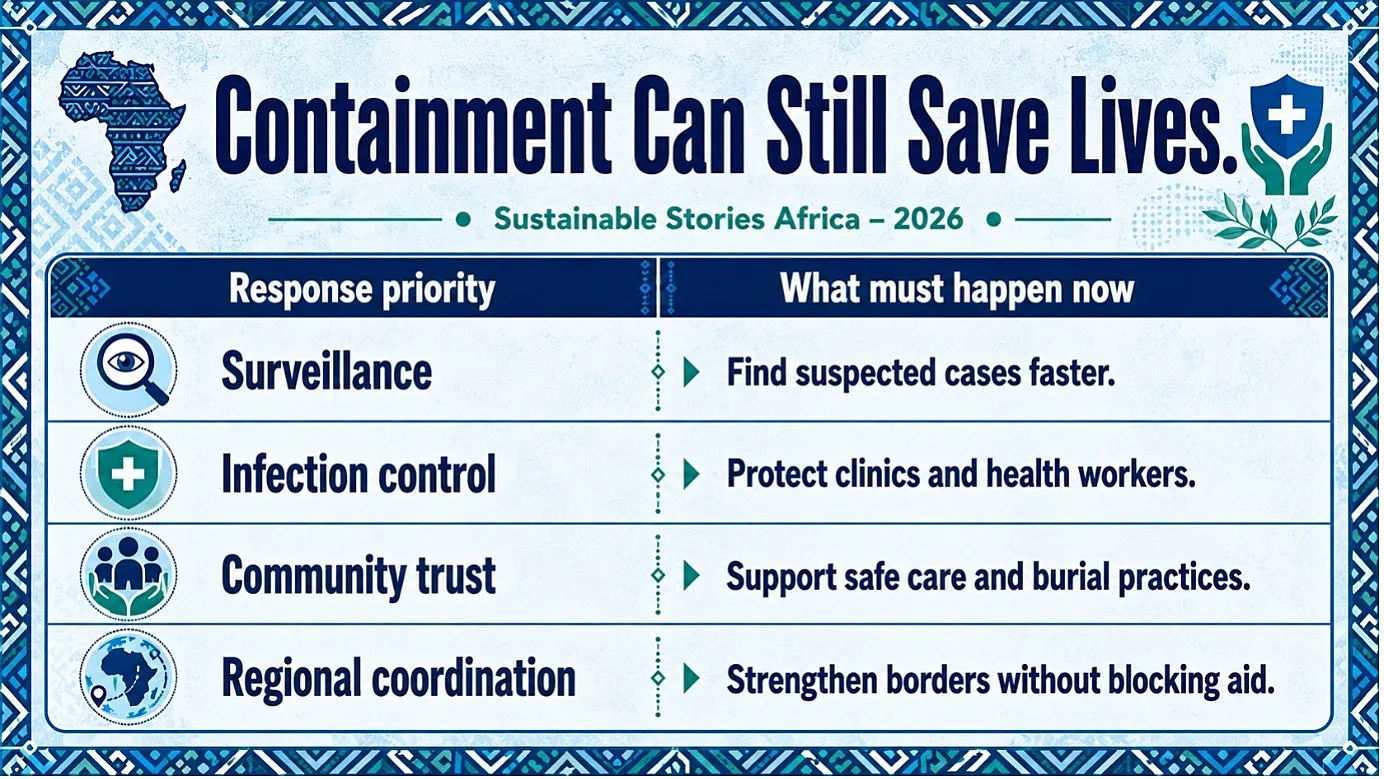
Ebola can be controlled when surveillance, isolation, safe care, contact tracing and trusted community engagement accelerate faster than transmission.
That is the hopeful side of the data: early action can bend the outbreak curve before it overwhelms fragile systems.
However, the warning is clear. WHO said unusual clusters of community deaths, healthcare worker deaths and high positivity among early samples point to a potentially larger outbreak than detected.
The development stakes are high. An Ebola outbreak can shut markets, disrupt schools, weaken hospitals and damage livelihoods long before it reaches national statistics.
Health Security Needs Investment Now
African governments, donors and health agencies need to treat this outbreak as both a medical emergency and a systems test.
That means faster laboratory capacity, transparent risk communication, funding for frontline workers and stronger local trust networks.
Reuters reported that the strain lacks an approved vaccine or treatment, making classical public health tools even more important.
The lesson for policymakers is direct: disease surveillance is infrastructure. It protects lives, trade, schools, investors and public confidence. Underfund it, and outbreaks become economic shocks.
Path Forward – Trust, Speed, and Systems Matter
The priority is rapid containment built around communities, not imposed above them. Surveillance, safe care, local communication and regional coordination must move together.
For African markets, this is an ESG issue too: health resilience protects workers, supply chains and social stability. The data are alarming, but they also show where action must begin.
Culled From: Ebola outbreak: the data that show why researchers are so alarmed