The European Central Bank says emissions linked to its portfolios continued to decline in 2025.
The update matters because the ECB is now using inflation-adjusted emissions metrics for the first time, giving investors a clearer view of real decarbonisation.
For African markets, the signal is direct: climate finance will increasingly depend on cleaner data, credible targets and transparent portfolio reporting.
Climate Reporting Enters A Tougher Phase
The European Central Bank has reported a continued decline in carbon emissions across its Eurosystem monetary policy portfolios and foreign reserves, while introducing new inflation-adjusted climate metrics designed to separate real decarbonisation from accounting effects created by rising prices.
The disclosures, published on 15 June 2026, mark the fourth time the ECB has released climate-related financial data covering the carbon footprint and climate risks of major portfolios. These include Eurosystem monetary policy assets, ECB foreign reserves, the staff pension fund and the ECB’s own funds portfolio.
The most important message is not only that emissions are falling. It is that the ECB is raising the credibility test for climate reporting.
In a world where companies, banks and public institutions increasingly claim progress toward net zero, the ECB’s new approach asks a sharper question: are emissions really falling, or are the numbers improving because inflation has lifted nominal revenues?
For African financial institutions, sovereign issuers and sustainability reporters, that question will become harder to avoid.
Falling Emissions Meet Better Measurement
The European Central Bank said emissions linked to Eurosystem monetary policy portfolios and ECB foreign reserves fell in 2025.
As the portfolios ran off, shrinking by 13&. It also stayed on track to meet interim emissions-reduction targets for corporate bonds held for monetary policy purposes, measured on a relative carbon-intensity basis and aligned with the Paris Agreement and EU climate-neutrality goals.
However, with reinvestments ended, future reductions will depend more on companies cutting their own emissions.
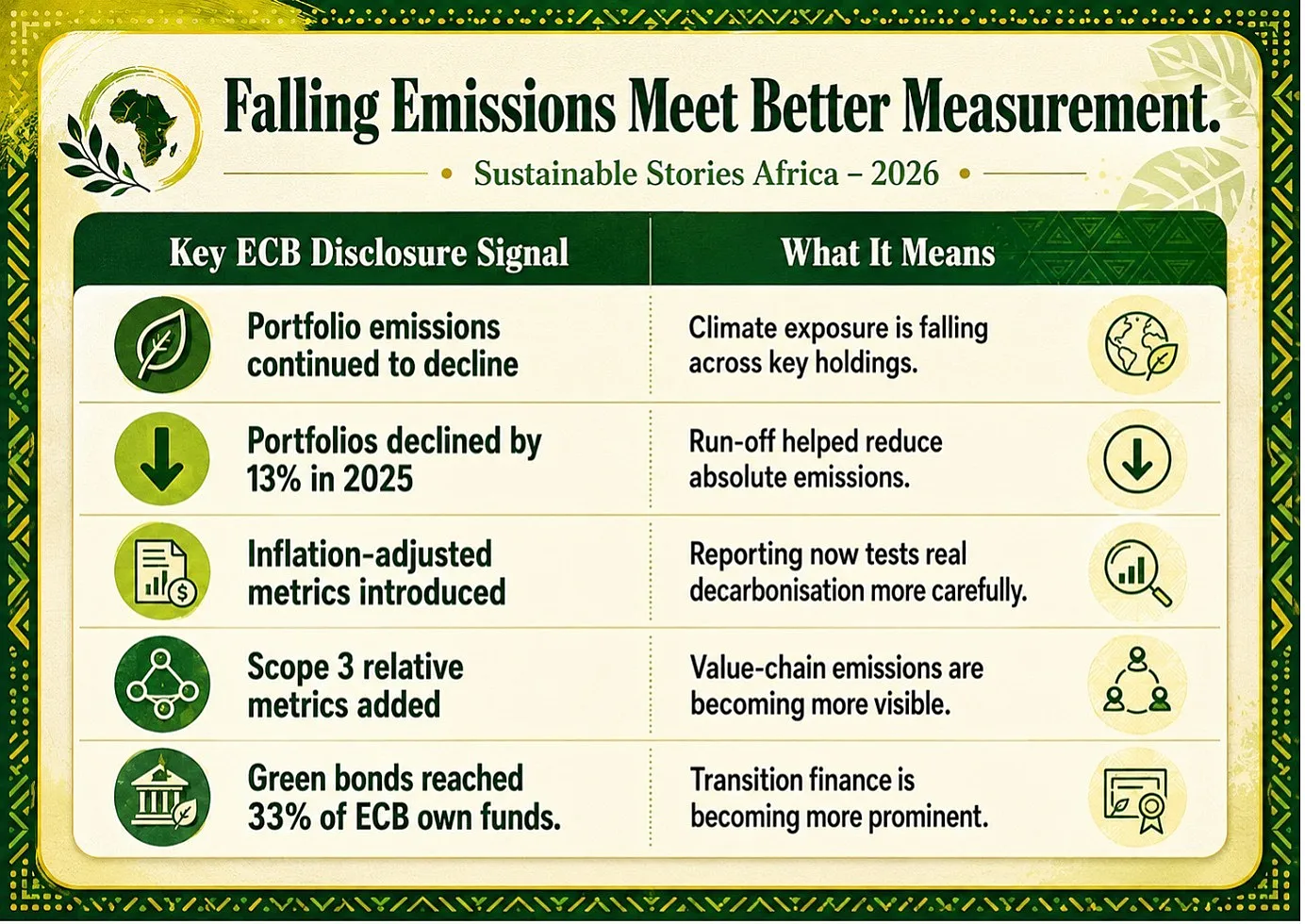
The ECB’s main methodological shift is the use of inflation-adjusted metrics. Standard carbon-intensity measures divide emissions by financial indicators such as revenue, which can increase through inflation even when production changes little.
Adjusting for inflation corrects that distortion. The lesson matters for African markets, where inflation can reshape perceptions of corporate performance, public debt ratios and sustainability indicators, creating false signals of climate progress driven by price changes rather than real emissions cuts on the ground.
Better Data Can Build Better Markets
The ECB's updated climate disclosure signals a shift from broad ambition to verifiable evidence, rewarding issuers that invest in credible emissions data, transition plans and transparent reporting with better access to climate-conscious capital.
For African markets, the opportunity is significant. Stronger climate reporting could help banks assess transition risk, support green bond issuance, improve sovereign sustainability narratives and attract investors seeking credible emerging-market exposure.
The ECB's own funds portfolio illustrates the practical upside. Green bonds rose to of its portfolio by the end of 2025, channelling € billion toward the green transition, with a target of 35% by 2026.
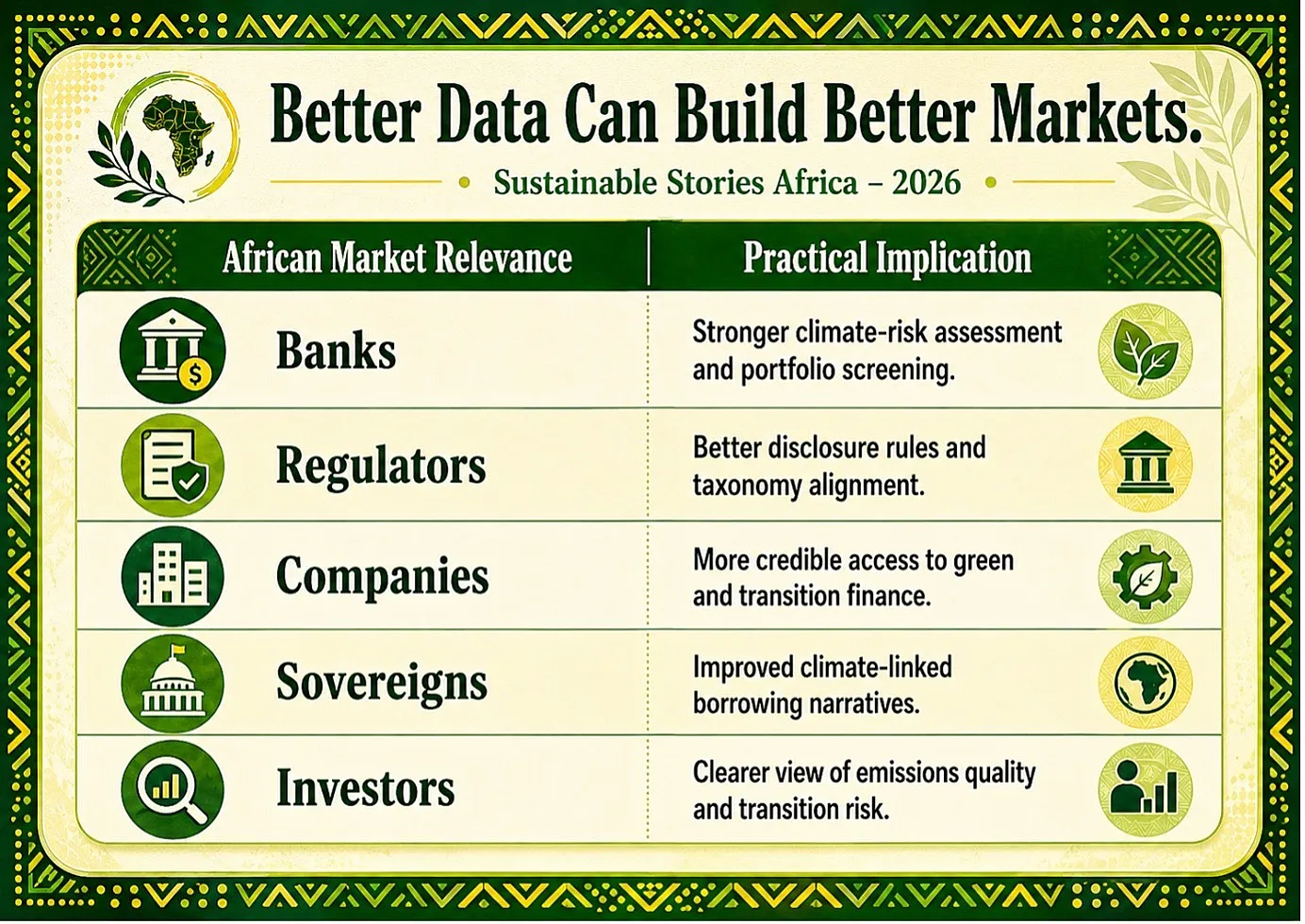
The lesson is clear: climate credibility is becoming a financial asset. Countries and companies that demonstrate real emissions progress will strengthen their position in global capital markets, while those relying on weak data or vague claims face higher scrutiny, slower funding and reputational risk.
Climate Claims Need Stronger Evidence
African regulators, exchanges, banks and listed companies should treat the ECB's updated climate disclosure as an early warning.
The global direction of travel is clear: more precise disclosure, stronger scrutiny of financed emissions and greater attention to the quality of transition claims.
- Future reporting will not only ask whether emissions are falling but also why, how reductions are measured and whether progress can withstand inflation, currency volatility and weak data quality.
The response must be practical.
- Regulators should strengthen disclosure frameworks. Banks should improve financial emissions data and integrate climate risk into portfolio decisions.
- Companies should move beyond narrative ESG reports toward auditable emissions systems.
- For policymakers, the priority is connecting disclosure to real transformation.
The ECB has shown that transparency is no longer about publishing more data. It is about publishing better data.
Path Forward – Stronger Data, Fairer Climate Finance
Africa’s climate-finance opportunity will depend on credible reporting, stronger institutions and better emissions data. Inflation-adjusted metrics show why surface-level progress is no longer enough.
The next step is clear: regulators, companies and financiers must build disclosure systems that prove real decarbonisation, protect investors and direct capital toward projects that reduce emissions while supporting jobs, resilience and inclusive growth.
Culled From: ECB Climate Disclosures Show Continued Portfolio Emissions Decline with New Inflation-Adjusted Metrics