Egypt has successfully issued a JPY 80 billion Sustainability Samurai Bond, supported by a Partial Credit Guarantee from the African Development Bank (AfDB), marking a milestone in Africa's sustainable finance journey.
The transaction diversifies Egypt's funding sources while attracting Japanese institutional investors to sustainable development in Africa.
The deal could reshape how African sovereigns access global capital for climate, infrastructure and inclusive economic growth.
A New Chapter Opens in Sustainable Finance
Africa's sustainable finance story has gained a powerful new chapter—written in Japanese yen.
Egypt has successfully issued a JPY 80 billion Sustainability Samurai Bond, becoming one of the first African sovereigns to access Japan's debt capital market through a sustainability-labelled bond backed by a Partial Credit Guarantee from the African Development Bank (AfDB).
The landmark transaction strengthens Egypt's strategy of diversifying its financing sources while mobilising long-term capital for sustainable development priorities.
More than a sovereign borrowing exercise, the issuance demonstrates how innovative financial partnerships can lower investment risk, broaden investor participation and channel capital towards climate resilience, social development and economic transformation.
For African capital markets, the transaction provides an important proof point that global investors remain willing to finance credible sustainability programmes when supported by robust financial structures.
Diversifying Capital Beyond Traditional Markets
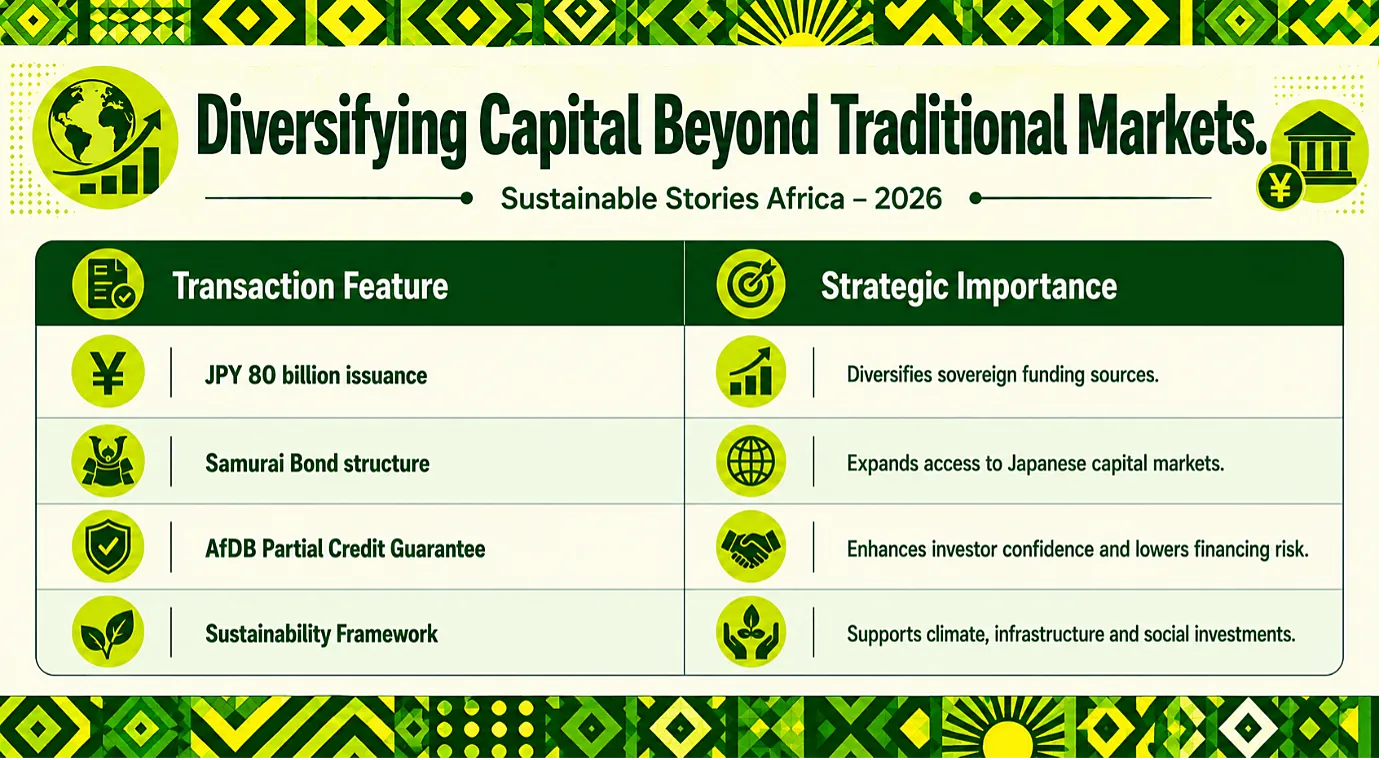
The Samurai Bond represents a strategic evolution in Egypt's sovereign financing strategy.
Rather than relying exclusively on US-dollar or euro-denominated borrowing, Egypt has expanded into Japan's highly sophisticated capital market, diversifying both its investor base and currency exposure.
The African Development Bank's Partial Credit Guarantee played a pivotal role by reducing credit risk and strengthening investor confidence, enabling the transaction to achieve favourable financing conditions.
The proceeds are expected to support projects aligned with Egypt's Sustainability Financing Framework, including investments in renewable energy, clean transportation, climate adaptation, water management and broader sustainable development initiatives.
The issuance also reflects growing momentum in sustainable sovereign finance.
According to the Climate Bonds Initiative, global green, social, sustainability and sustainability-linked bond issuance has surpassed $5 trillion cumulatively, highlighting increasing investor demand for environmentally and socially responsible investments.
For Egypt, the transaction strengthens fiscal resilience by widening financing options.
For Africa, it illustrates how multilateral guarantees can unlock international institutional capital that may otherwise remain inaccessible.
Innovative Finance Unlocks Development Opportunities
The significance of the issuance extends well beyond the bond market.
Lower borrowing costs can translate into greater fiscal space for investments that improve everyday lives, such as modern transport systems, renewable energy infrastructure, clean water projects, healthcare facilities and climate adaptation measures.
The transaction also demonstrates the value of blended finance structures that combine sovereign leadership with multilateral support.
Such partnerships reduce investment risks while encouraging private institutional investors to participate in financing sustainable development across emerging markets.
Without innovative financing mechanisms, however, many African countries may continue facing higher borrowing costs despite significant investment opportunities in climate resilience and sustainable infrastructure.
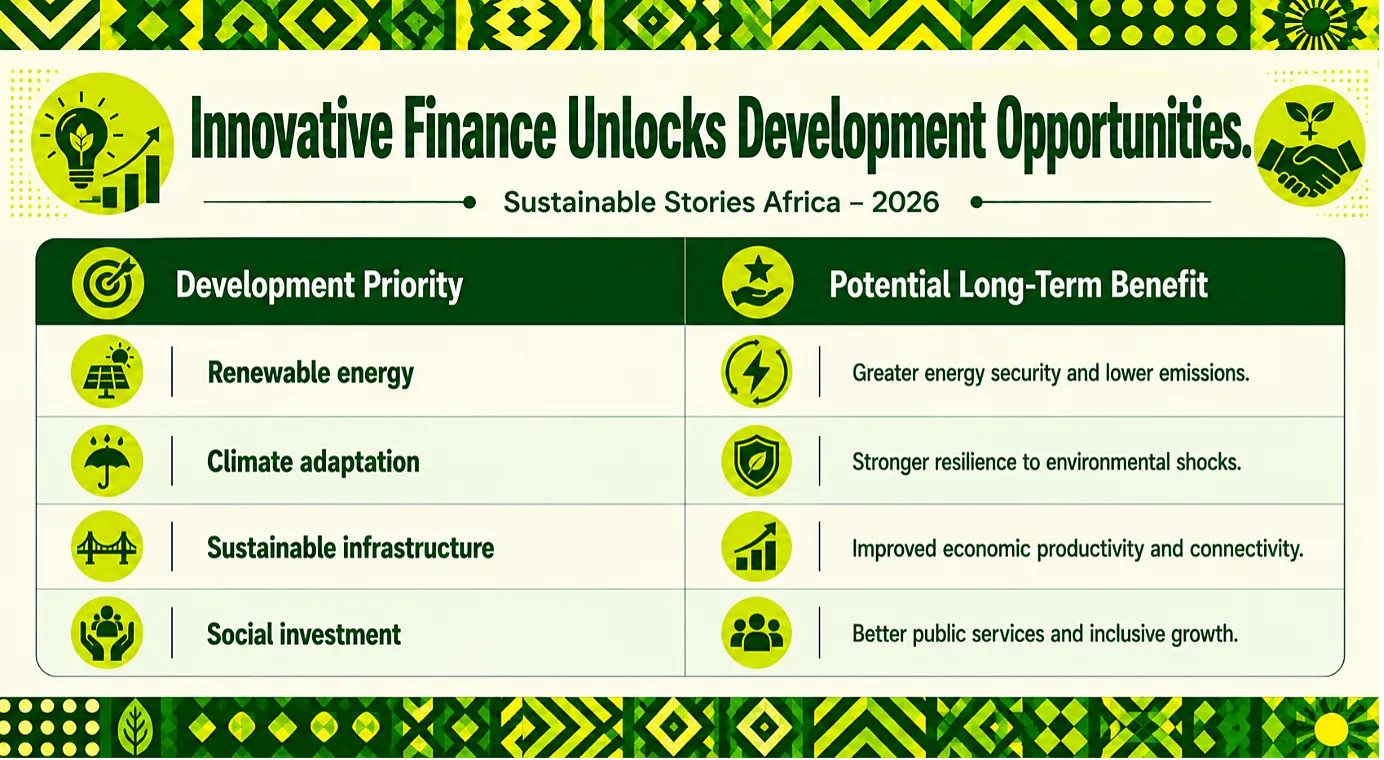
The successful issuance therefore reinforces an important message: financial innovation can be as transformative as technological innovation in advancing sustainable development.
Scaling Innovative Finance Across Africa
Egypt's successful Samurai Bond offers valuable lessons for other African sovereigns seeking to diversify funding sources.
- Governments should continue to strengthen sustainability financing frameworks, improving fiscal transparency and developing pipelines of bankable climate and infrastructure projects.
- Multilateral institutions can expand the use of guarantees and risk-sharing instruments that attract institutional investors into African markets.
Capital markets, meanwhile, have an opportunity to deepen regional collaboration among regions by creating financial products that align investor appetite with sustainable development objectives.
If replicated responsibly, innovative instruments such as sustainability bonds could significantly increase Africa's access to long-term international capital while supporting climate commitments and economic transformation.
Path Forward – Partnerships Expand Sustainable Finance Frontiers
Egypt's Samurai Bond demonstrates how sovereign ambition, multilateral guarantees and international capital markets can work together to finance sustainable development.
Expanding similar financing models across Africa will require stronger project pipelines, transparent governance and continued collaboration among governments, development finance institutions and private investors to accelerate inclusive, climate-resilient economic growth.