The European Union is backing a €690 million upgrade of Egypt’s electricity transmission network.
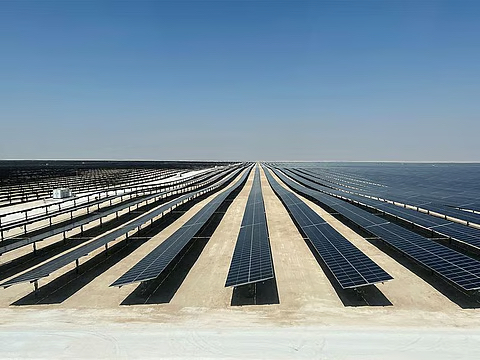
The package matters because it targets the grid bottleneck holding back 22 GW of planned solar and wind capacity.
For Africa, the story is bigger than Egypt: clean power only becomes transformation when infrastructure can move it.
The Grid Becomes The Real Transition Test
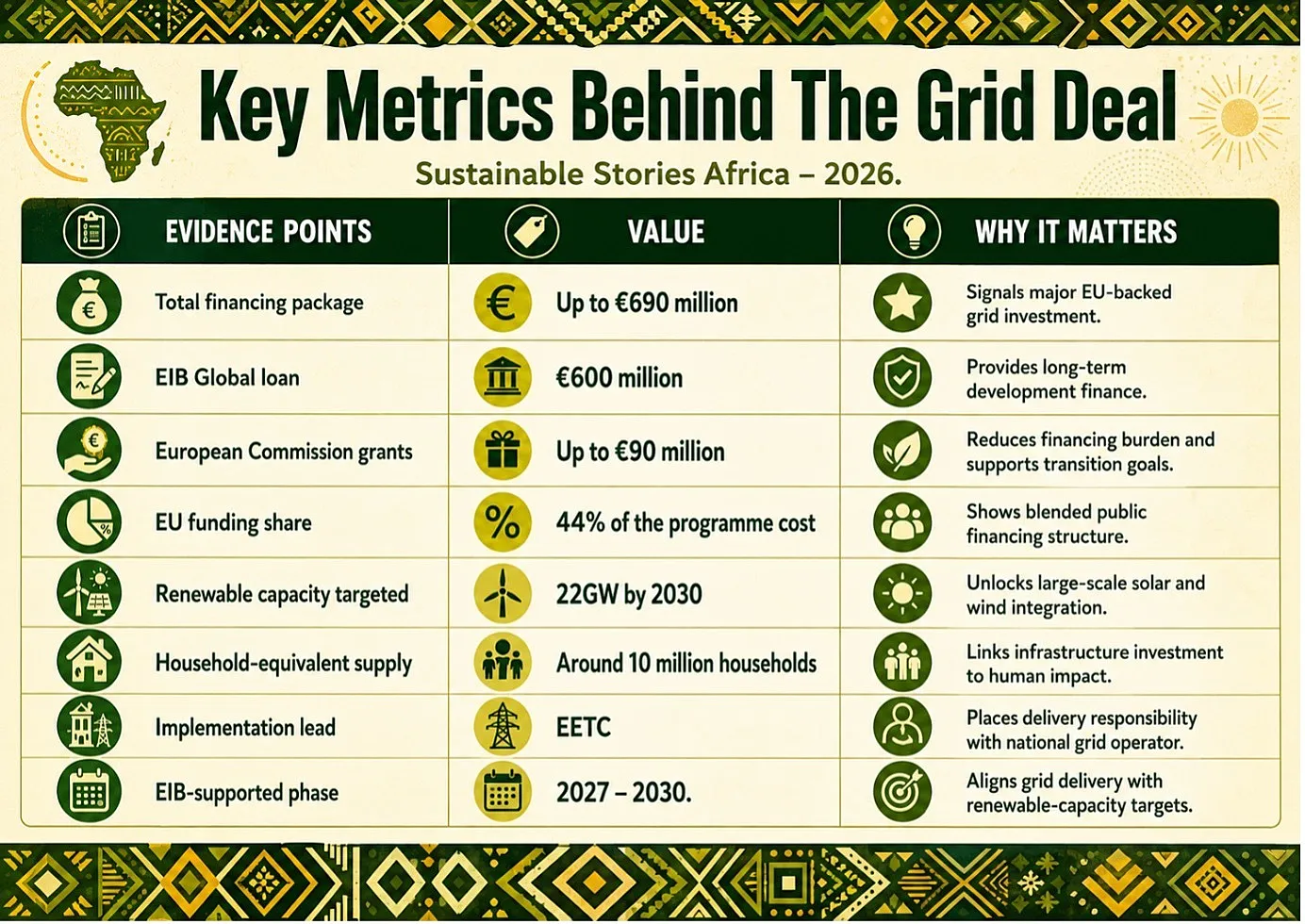
Egypt and the European Union have moved to unlock one of Africa’s largest renewable-energy integration efforts, with a €690 million financing package to modernise Egypt’s electricity transmission network and connect 22 gigawatts of solar and wind power by 2030.
The investment, reported by Businessfront and confirmed by the EU, combines a €600 million loan from EIB Global, the development arm of the European Investment Bank, with up to €90 million in European Commission grants.
The Egyptian Electricity Transmission Company, the state-owned high-voltage grid operator, will lead implementation.
The project is designed to do what generation targets alone cannot: carry clean electricity from resource-rich zones to homes, factories, cities and future export corridors.
If delivered, the additional renewable capacity could supply electricity to nearly 10 million households.
For Egypt, this is a power-sector upgrade. For Africa, it is a warning and a model.
The energy transition will not be won by solar panels and wind turbines alone.
It will be won by grids strong enough to absorb, balance and distribute clean power.
Why Wires Now Matter More
Egypt has spent years positioning itself as a regional energy hub, bridging African, Middle Eastern and Mediterranean ambitions.
Its Red Sea and Gulf of Suez corridors offer strong wind and solar potential; however, utility-scale renewables require transmission infrastructure to make a meaningful shift in the national energy mix.
A new investment programme will fund substations and advanced transmission lines to connect renewable generation zones to the national grid, targeting reduced transmission losses, improved reliability and stronger energy security.
The initiative sits within the broader EU-Egypt Strategic and Comprehensive Partnership, including the Trans-Mediterranean Renewable Energy and Clean-Tech Cooperation Initiative, extending its significance to trade, industrial competitiveness and Mediterranean energy integration.
The timing is deliberate. Egypt aims for renewables to reach 42% of electricity generation by 2030, yet generation capacity alone is insufficient without matching grid infrastructure.
Investors do not simply ask whether a country has sunlight or wind; they ask whether electricity can reach paying customers.
This is the defining infrastructure challenge across Africa.
Solar parks, wind farms and green hydrogen plans mean little where ageing grids, weak substations and transmission gaps stall delivery.
Stronger Grids Can Unlock Growth
If implemented well, Egypt’s grid upgrade can deliver more than cleaner electricity. It can support industrial growth, reduce dependence on fossil-fuel generation, improve system reliability and create new opportunities for local and European companies.
- For households, the promise is simple: more reliable power and a cleaner system.
- For businesses, it is a stronger base for manufacturing, logistics, digital services and climate-sensitive exports.
- For investors, it improves the credibility of renewable pipelines.
- For policymakers, it shows that grid finance is climate finance.
The project also strengthens Egypt’s case as a clean-energy bridge between Africa and Europe.
As Europe looks to diversify energy partnerships and accelerate clean-tech supply chains, North Africa’s geography becomes commercially strategic.
However, that opportunity depends on the infrastructure required to carry power safely, reliably and competitively.
Africa Must Finance The Grid
The lesson for African energy planners is direct: renewable ambition must be matched by grid investment.
- Governments should move transmission planning to the centre of energy-transition strategy, not treat it as an afterthought.
- Development-finance institutions, climate funds and private investors should also expand support for grid infrastructure.
Too often, generation projects attract attention because they are visible and easier to package. Transmission projects are less glamorous; however, they determine whether clean power reaches people.
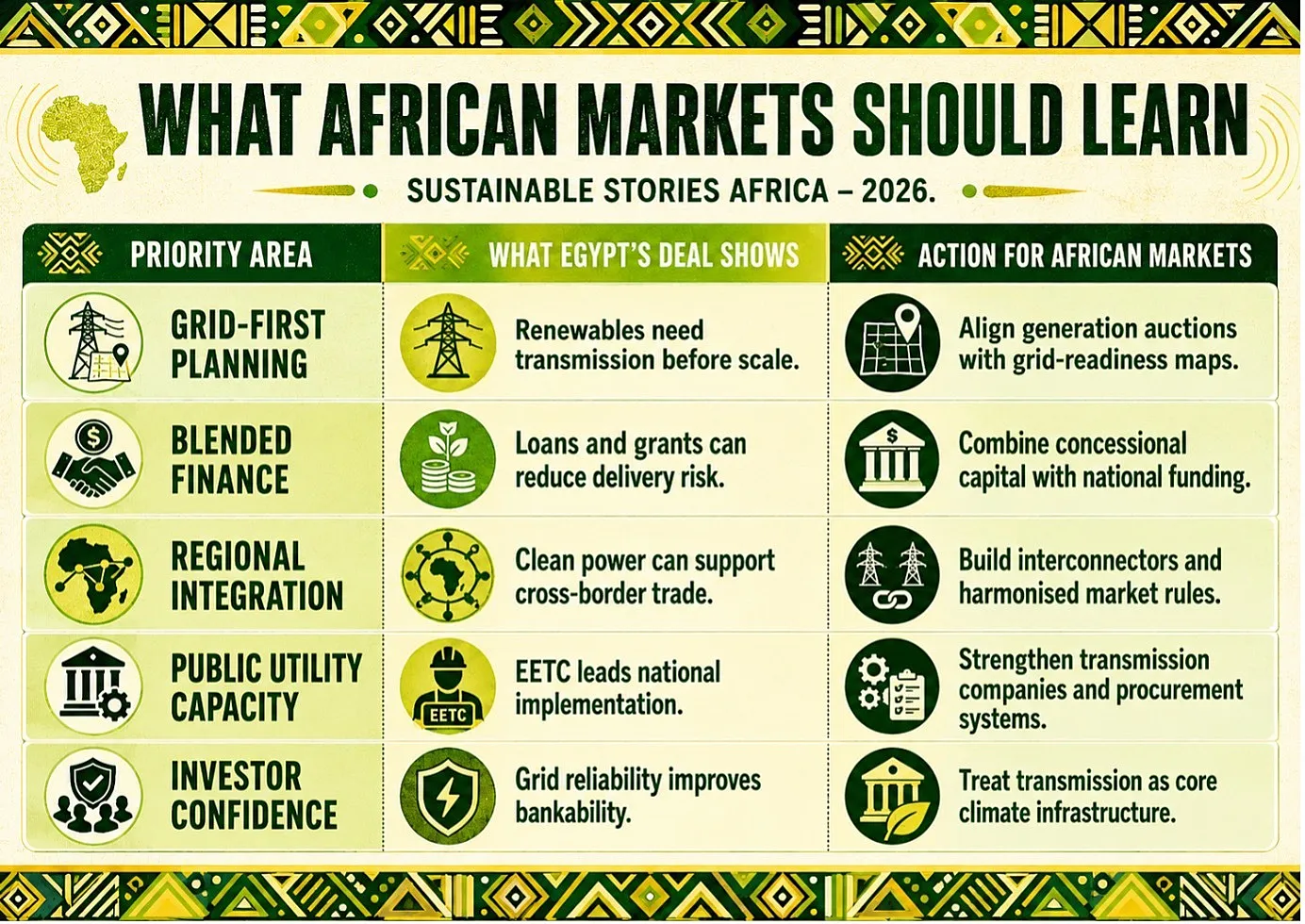
African regulators should also strengthen grid governance. Transparent planning, cost-reflective but fair tariffs, credible procurement, land-access processes and clear connection rules will determine whether grid upgrades attract durable capital.
Path Forward – Build Grids Before Renewable Ambitions Stall
Egypt’s €690 million package should push African energy markets to prioritise transmission, substations, dispatch systems, storage and regional interconnectors alongside generation targets.
The promise is practical: fewer stranded projects, stronger electricity reliability, deeper clean-energy markets and better ESG outcomes.
Africa’s renewable future will depend not only on how much power it can generate, but also on how effectively it can move it.
Culled From: EU backs €690m Egyptian grid upgrade to unlock 22 GW of renewable capacity - Businessfront