The global Energy Storage-as-a-Service market is projected to grow from $2.79 billion in 2026 to $15.36 billion by 2040.
The forecast points to rising demand for flexible, lower-cost storage models as renewables expand.
For Africa, the shift could help businesses, utilities and communities access reliable power without heavy upfront battery costs.
Storage Becomes A Service Economy
The global Energy Storage-as-a-Service market is forecast to grow from $2.79 billion in 2026 to $15.36 billion by 2040, expanding at a 12.96% compound annual growth rate, according to Roots Analysis data reported by OneStop ESG and Yahoo Finance.
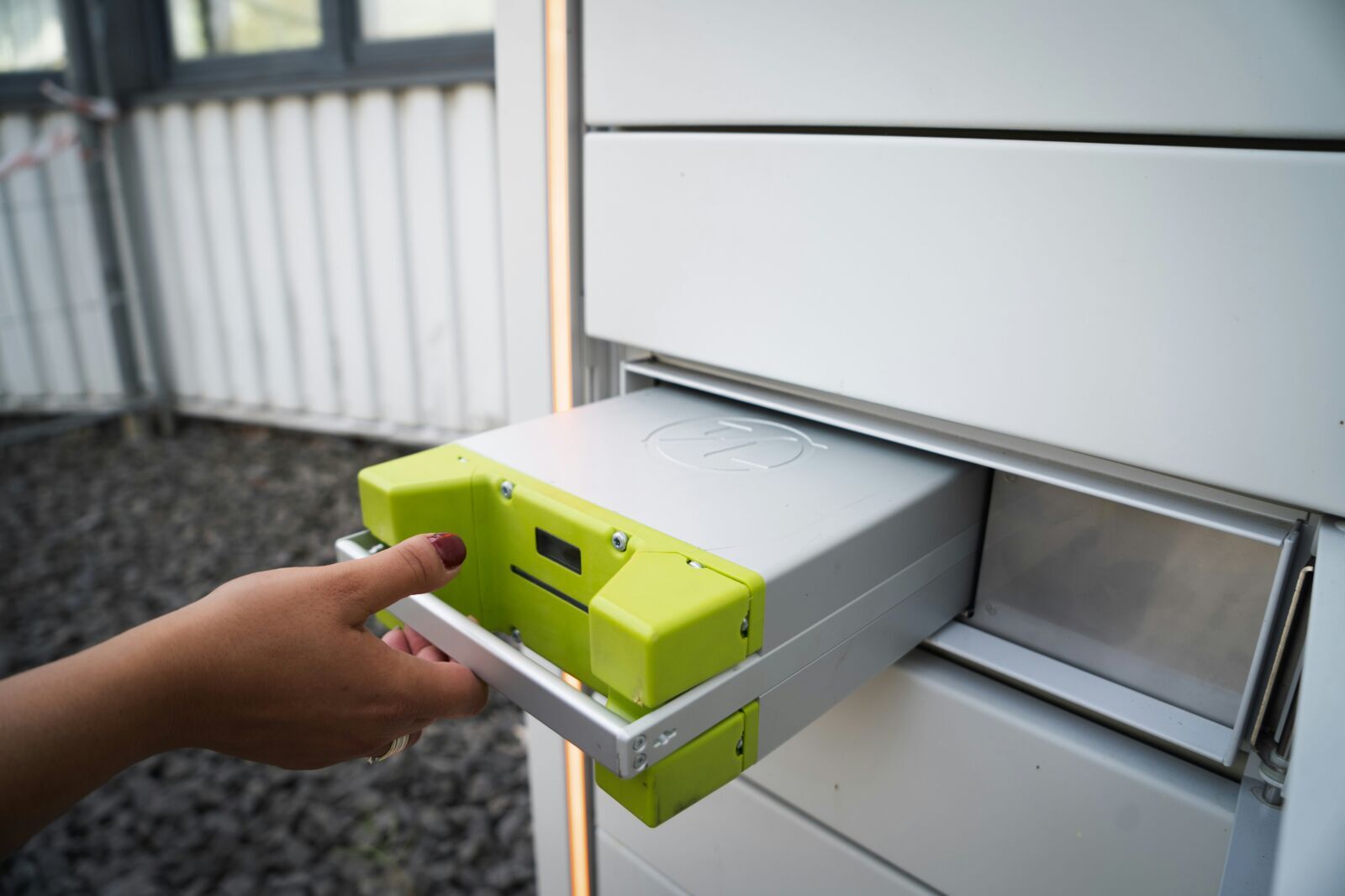
Energy Storage-as-a-Service, or ESaaS, allows third-party providers to own, operate and maintain storage systems for customers, reducing the need for large upfront capital spending.
Why The Market Is Growing
The model is gaining attention because electricity systems are changing faster than many grids can adapt.
Solar and wind are expanding, but their output fluctuates. Businesses need backup power. Utilities need flexibility. Industrial users want lower energy costs and fewer outages.
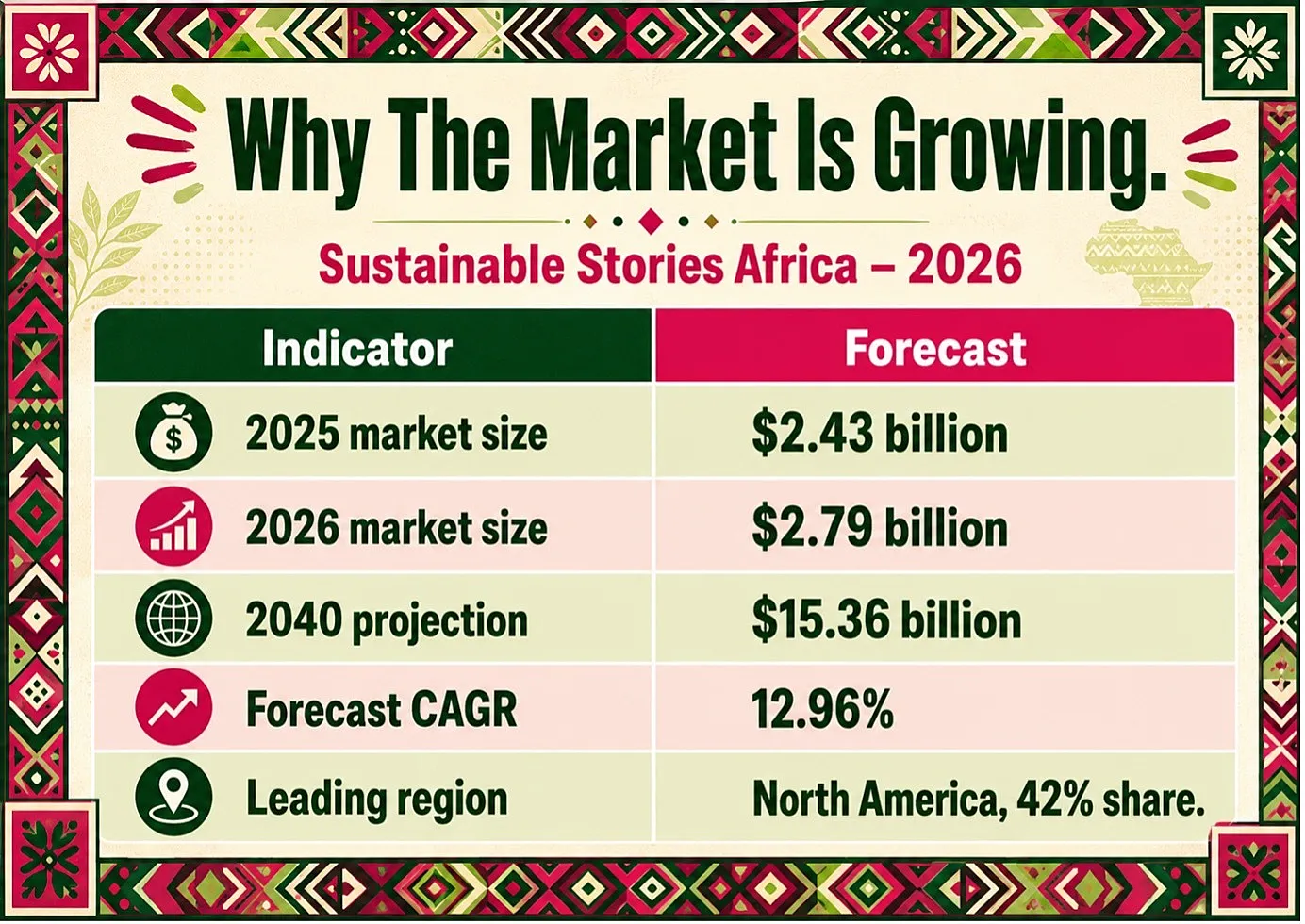
Roots Analysis identifies rising adoption of renewable energy and grid modernisation as major growth drivers. It also reports that customer energy management services account for 32.10% of market revenue, while industrial, residential and commercial users together hold the largest end-use share at 67%.
Africa’s Reliability Gap Creates Demand
For African markets, the story is not only about clean energy. It is about reliable energy.
A factory in Lagos, a cold-room operator in Nairobi or a hospital in Accra does not simply need cheaper electricity.
It needs electricity for production, medicine, food storage, and digital services depend on it.
This is where ESaaS could matter. Instead of buying and maintaining expensive battery systems outright, users can pay for storage as a managed service.
That can convert capital expenditure into operating expenditure, making resilience more accessible to smaller businesses and public institutions.
Grand View Research notes that the Middle East and Africa region is expected to expand at a substantial CAGR from 2025 to 2030, supported by urbanisation, industrialisation and opportunities for renewable-powered microgrids.
Storage Can Unlock Cleaner Growth
The promise is practical: better storage can reduce diesel dependence, stabilise mini-grids, support solar adoption and protect businesses from outages.
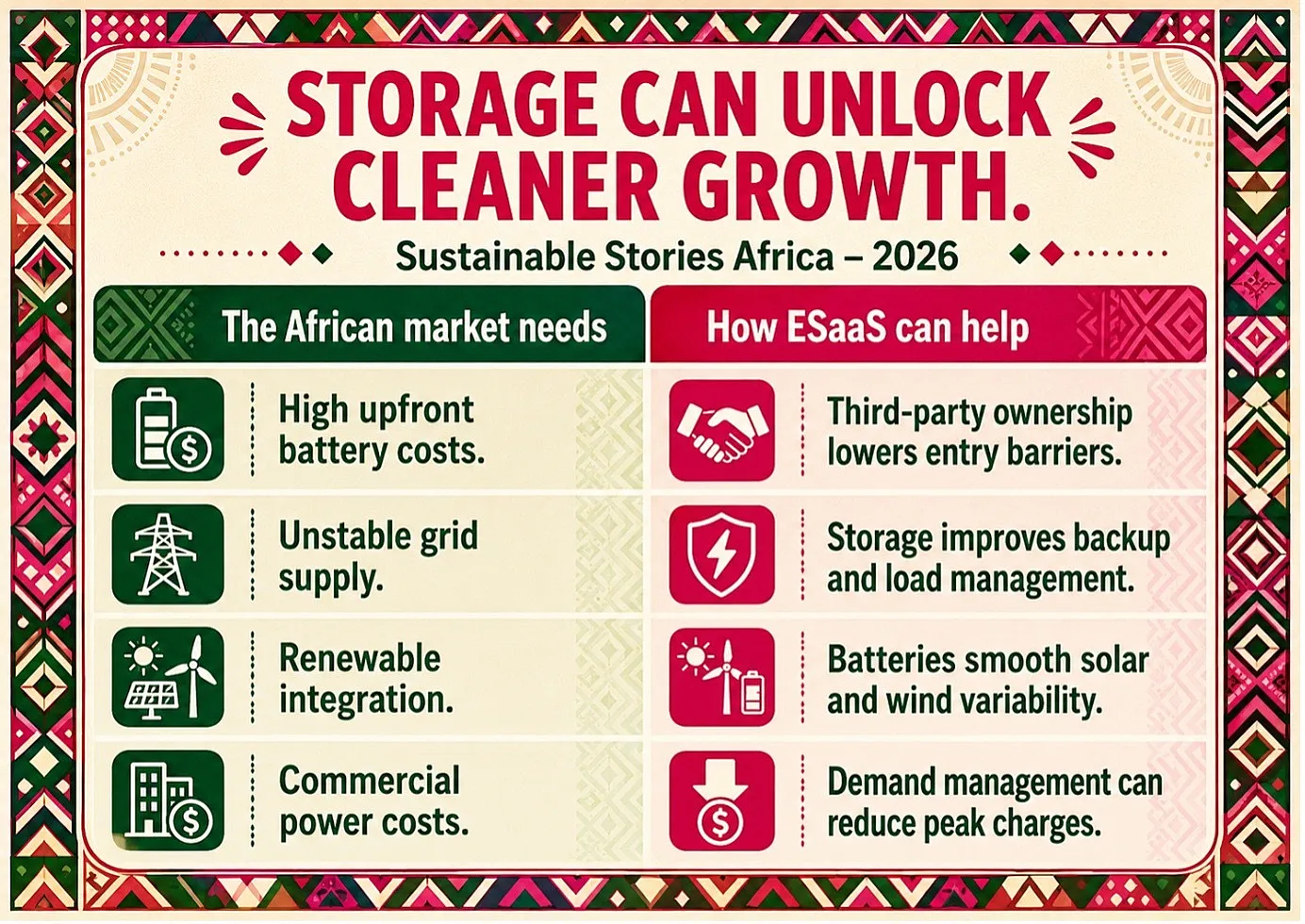
The risk is also clear. Without strong regulation, bankable contracts and technical standards, ESaaS could remain concentrated in wealthier markets while African businesses continue to rely on costly backup systems.
Policymakers Must Enable Storage Markets
The next step is to make storage investable. African regulators should clarify licensing rules, support tariff structures that reward flexibility, and enable long-term contracts for commercial, industrial and mini-grid users.
Banks and development finance institutions can also help by de-risking projects early, especially where storage supports health facilities, agriculture value chains, data centres and productive-use energy.
Path Forward – Make Storage Affordable, Scalable, Bankable
Africa should treat Energy Storage-as-a-Service as power-sector infrastructure, rather than a niche technology.
The priority is to build regulations, financing tools and project pipelines that allow businesses and communities to access reliable storage without prohibitive upfront costs. Well done, ESaaS can turn cleaner electricity into dependable electricity.
Culled From: Energy Storage as a Service Market to Reach $15.36 Billion by 2040 at 12.96% CAGR