Enugu State has launched Nigeria's first state-regulated retail electricity market, reshaping how homes and businesses receive power under the 2023 Electricity Act.
Its inaugural license, issued to FIT Facility Management, signals a bold decentralisation shift.
The move offers a replicable framework for other Nigerian states, attracting investors, tightening regulatory clarity, and proving that private capital can drive last-mile electrification sustainably.
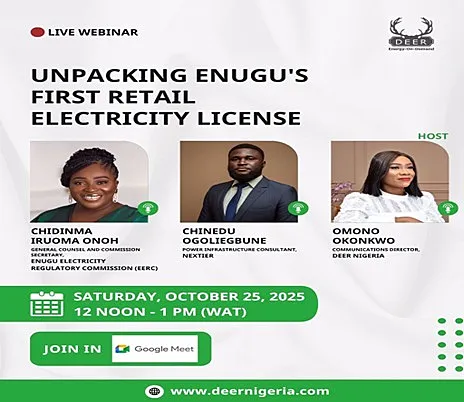
This was clearly addressed at the Deer On Demand webinar themed "Unpacking Enugu's First Retail Electricity Licence", which was held in October 2025.
Power Shift Begins in Enugu
Enugu State has become the first mover in Nigeria's decentralised energy landscape, issuing the country's first state-level retail electricity licence to FIT Facility Management Ltd under the 2023 Electricity Act.
The landmark approval, completed within 60 days, marks a decisive break from federal monopoly structures and signals a new era of competitive electricity markets across subnational Nigeria.
How the Model Works and Why It Matters
FIT now supplies 24-hour power to Heliu Residences by sourcing electricity from multiple channels, the national grid, Tempo Energy Solutions, and renewables, using smart meters to guarantee revenue, reduce theft, and build consumer trust.
The Enugu Electricity Regulatory Commission (EERC) designed the licensing framework from scratch, establishing a template for tariff simulation, asset delineation, and operational standards.
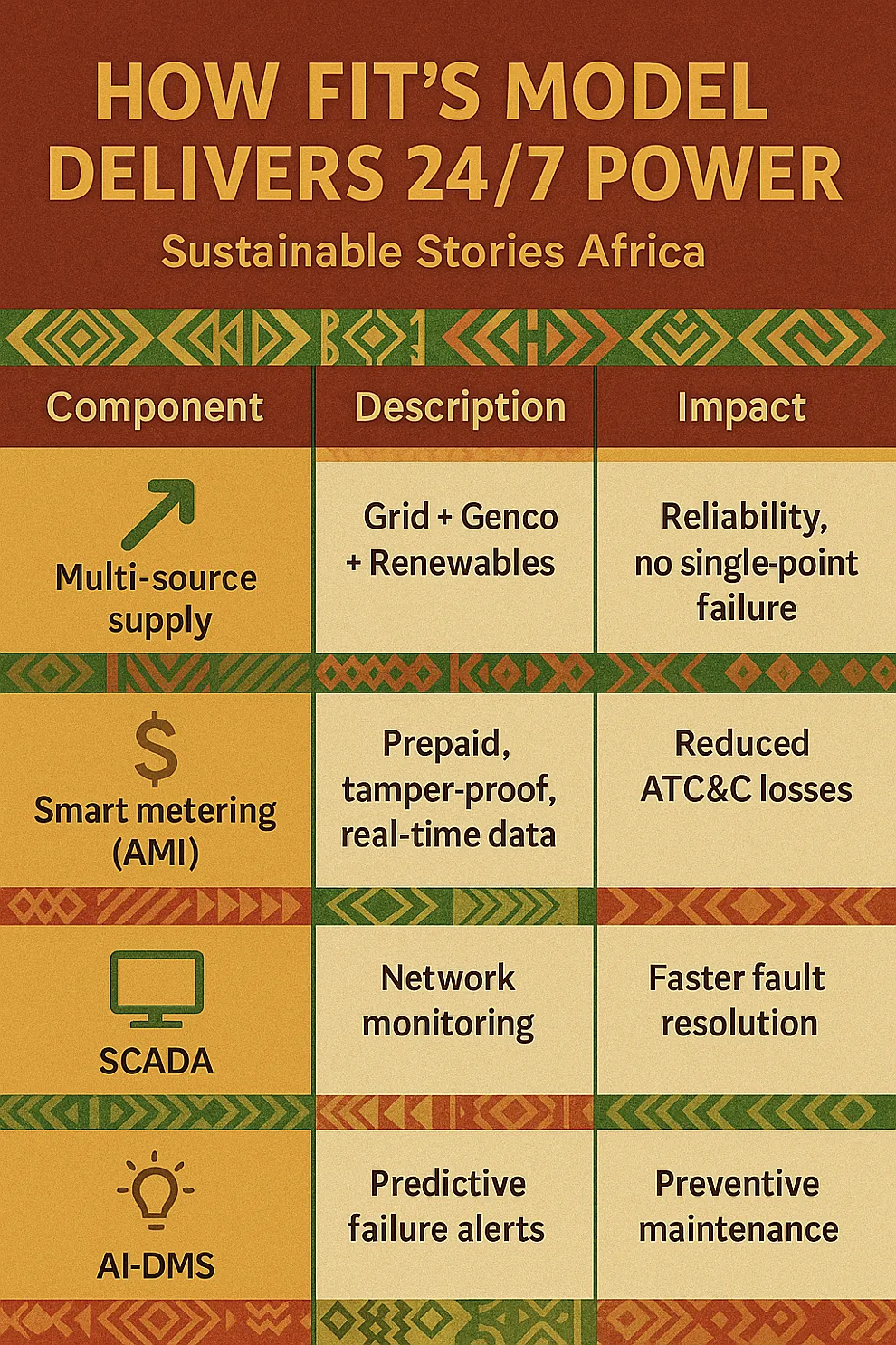
How FIT's Model Delivers 24/7 Power
| Component | Description | Impact |
|---|---|---|
| Multi-source supply | Grid + Genco + Renewables | Reliability, no single-point failure |
| Smart metering (AMI) | Prepaid, tamper-proof, real-time data | Reduced ATC&C losses |
| SCADA | Network monitoring | Faster fault resolution |
| AI-DMS | Predictive failure alerts | Preventive maintenance |
FIT's success is already spurring new license applications, pushing existing distributors to improve service quality and creating fresh opportunities for private investors in poles, wires, and metering infrastructure.
A Replicable Model for States and Investors
For states seeking to power industrial clusters or underserved communities, the Enugu model offers a tested pathway.
It enhances energy reliability, attracts capital, and supports state-level electrification mandates, particularly Enugu's goal to serve 113 unserved and underserved communities.
Investors now have clarity: state-regulated markets can be bankable, competitive, and scalable.
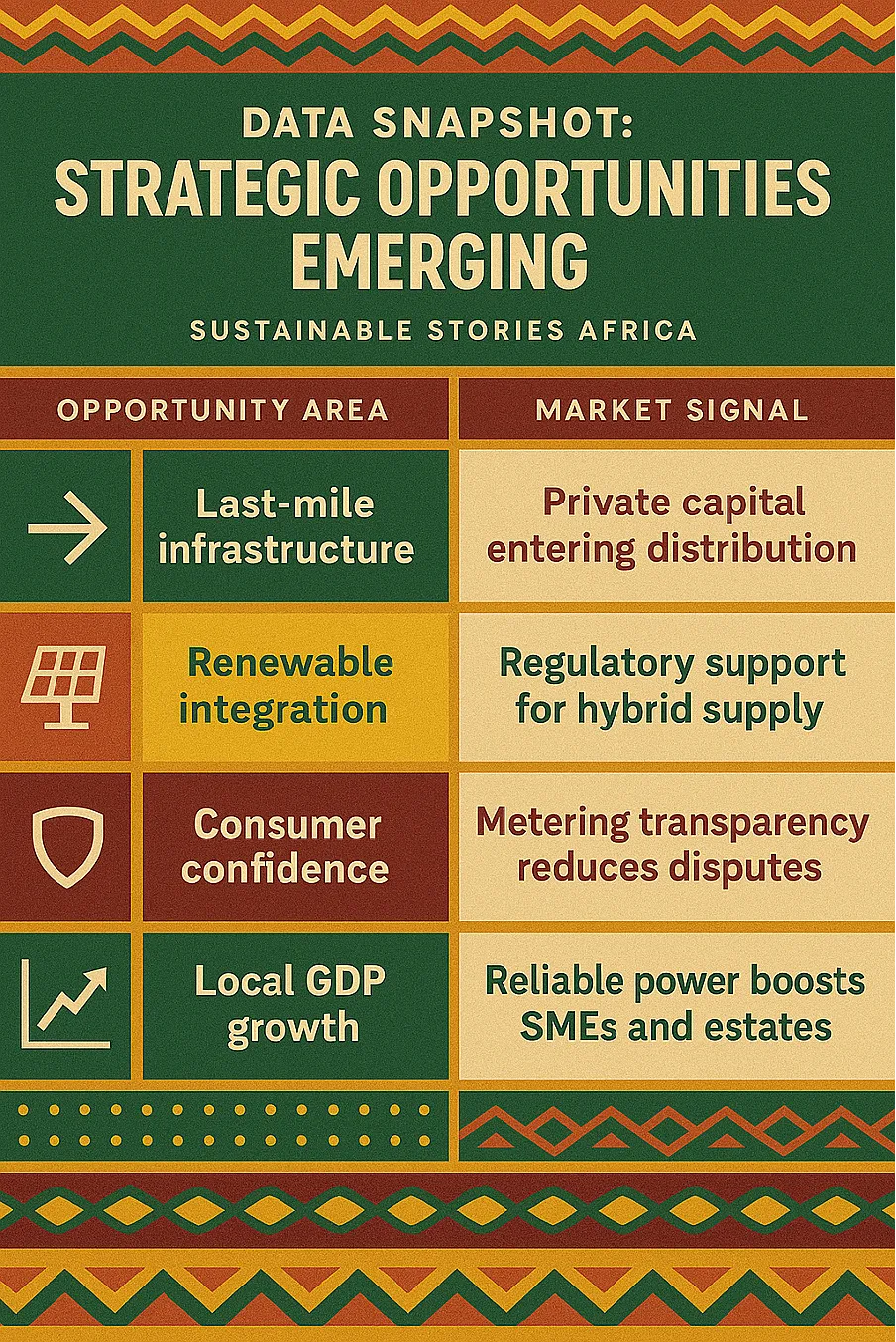
Data Snapshot: Strategic Opportunities Emerging
| Opportunity Area | Market Signal |
|---|---|
| Last-mile infrastructure | Private capital entering distribution |
| Renewable integration | Regulatory support for hybrid supply |
| Consumer confidence | Metering transparency reduces disputes |
| Local GDP growth | Reliable power boosts SMEs and estates |
What Comes Next for Stakeholders
The EERC is courting investors, offering guidance through licensing and compliance.
Yet challenges remain in capacity building, consumer sensitisation, and defining asset ownership between legacy DISCOs and new retailers.
Town halls, technology upgrades, and enforcement training are among the tools Enugu is deploying to stabilise the fledgling market.
Path Forward – Building Competitive State Power Markets
Enugu State's next phase focuses on strengthening regulatory enforcement, scaling investor onboarding, and expanding retail licensing to new estates and industrial clusters. Capacity development for operators and the Commission will anchor market stability.
The state also plans accelerated metering, clearer asset delineation rules, and targeted community sensitisation to shift consumer behaviour. If sustained, this model could anchor Nigeria's transition toward state-driven, technology-optimised electricity markets.