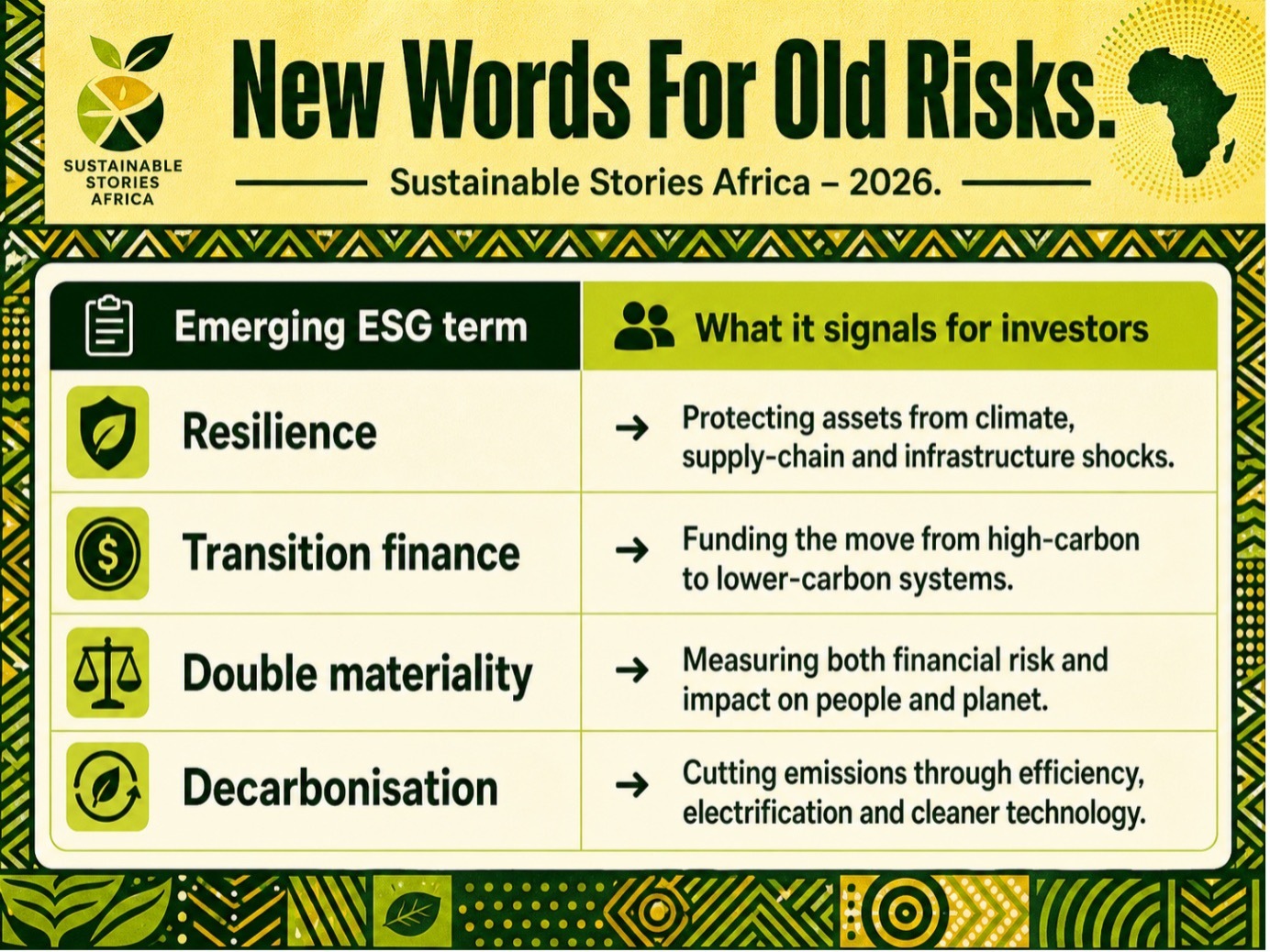
ESG investing is not disappearing. It is being rebranded as resilience, transition finance, adaptation, double materiality and decarbonisation.
The shift matters in 2026 because political pressure has made the ESG label contested, even as climate and governance risks become harder to ignore.
For African markets, the question is no longer whether ESG sounds popular, but whether capital can price risk, protect communities and finance long-term resilience.
ESG Changes Name, Not Purpose
What is changing in 2026 is the language of sustainability investing, not the underlying financial logic.
According to Climate and Capital Media, investors, asset managers and corporate finance teams are increasingly moving away from the ESG label while keeping the same analytical tools embedded in risk, valuation, underwriting and investment decisions.
The new vocabulary is more technical and less politically exposed: resilience, transition, adaptation, repricing, double materiality and decarbonisation.
The shift comes as global energy transition investment reached $2.3 trillion in 2025, with BloombergNEF projecting average annual investment of $2.9 trillion over the next five years, Climate and Capital Media reported.
New Words For Old Risks
The ESG acronym has become politically loaded, especially in the United States; however, the risks it tracks have become more financially material. Climate and Capital Media notes that “resilience” is now one of the most common replacement terms, alongside “transition” and “adaptation.”
For Africa and the Global South, this language matters. A bank financing solar mini-grids, a pension fund backing climate-resilient infrastructure, or a manufacturer managing water risk may avoid the ESG label.
The financial questions remain the same: Will this asset survive climate shocks? Will regulation change its cost base? Will poor governance destroy value?
Climate and Capital Media cites sustainability experts who argue that ESG is becoming an “underwriting discipline” rather than a branding overlay.
That distinction is critical. It means that carbon exposure, water stress, labour safety, board failure and climate vulnerability are increasingly being transformed to cash-flow, insurance, credit and valuation terms.
Better Language Can Unlock Better Capital
The positive opportunity is that rebranding may make sustainability finance more practical. Instead of treating ESG as a moral badge, investors can treat it as a risk-pricing discipline.
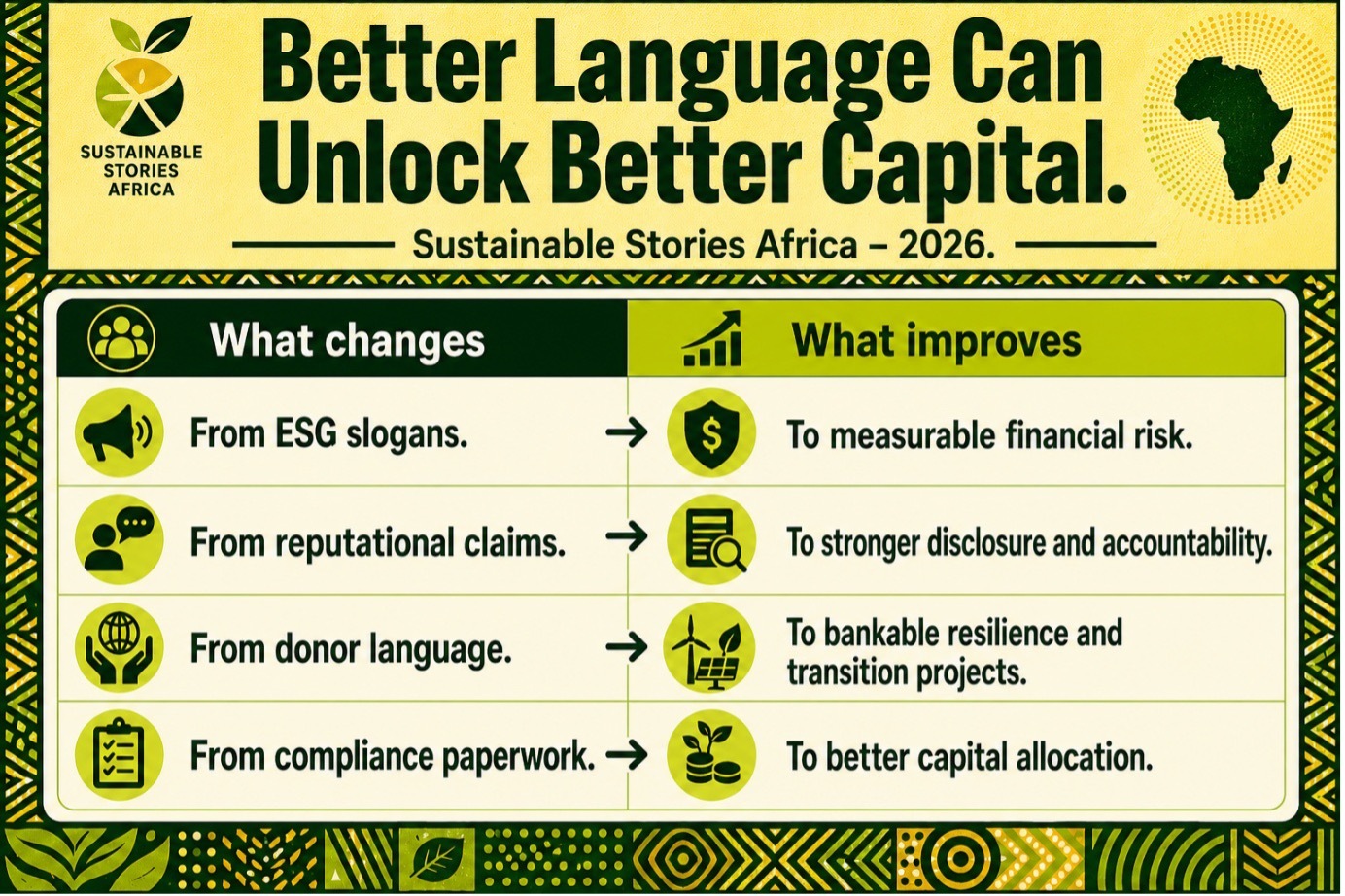
For African markets, that could support stronger investment cases for clean power, climate-smart agriculture, resilient roads, water systems, health infrastructure and sustainable industrial policy.
It could also help companies explain sustainability in language that boards, lenders and regulators already understand: earnings durability, asset protection, cost reduction, regulatory readiness and market access.
The danger is that rebranding becomes another way to hide weak commitments. If ESG disappears as merely a label, while disclosure, governance and community protections also weaken, markets could face more greenwashing, stranded assets and public distrust.
Reprice Risk, Protect People
The next step is not to defend three letters. It is to strengthen the systems behind them.
African regulators should push for clear sustainability disclosure that reflects local realities. Investors should integrate climate, social and governance risks into credit and valuation models.
Companies should move beyond public relations and build measurable resilience into operations, supply chains and board oversight.
For citizens and communities, the stakes are practical. A poorly governed infrastructure project can raise tariffs without improving access. A climate-exposed farm loan can fail after one flood season. A company that ignores water, labour or emissions risk may look profitable until the shock arrives.
The new ESG should therefore be judged by outcomes: better capital, stronger institutions, lower risk, more resilient communities and clearer accountability.
Path Forward – Make Sustainability Finance Locally Accountable
The future of ESG in Africa should be practical, measurable and locally grounded. Resilience, transition finance and double materiality must connect capital markets with real community outcomes.
The priority now is disciplined disclosure, credible data, stronger regulation and investment that protects both financial value and human development.
Culled From: The new ESG: Rebranding sustainability investing in 2026 - Climate and Capital Media